
Life doesn't always follow a straight path, and neither does the journey to college. Many adults find themselves considering higher education years after graduating high school, whether for career advancement, personal fulfillment, or changing life circumstances. The good news is that you can absolutely take the SAT after high school, regardless of your age or how much time has passed since graduation.
While the logistics of adult SAT testing are straightforward, preparing for the exam alongside work and family responsibilities presents unique challenges. Adult test takers need strategies that account for their busy schedules and may require guidance on how their scores fit into the broader college admissions landscape. For personalized support tailored to non-traditional students, consider working with Kollegio's AI college counselor.
Table of Contents
- You Missed the SAT Window, Now What?
- The Common Belief That Holds You Back
- What Actually Changes After High School
- When Retaking the SAT Is Worth It, and When It Is Not
- What Your Application Actually Needs to Be Competitive
- How Kollegio Helps You Turn a Late SAT Into a Strong Application
- Use Kollegio's AI College Counselor for Free Today!
Summary
- The College Board doesn't restrict SAT registration by age or graduation status. You can take the test at 25, at 30, or years after leaving high school without providing proof of enrollment. The barrier isn't in the eligibility rules. It exists in how the testing infrastructure markets itself exclusively to current high school students, creating the false impression that the window closes at graduation.
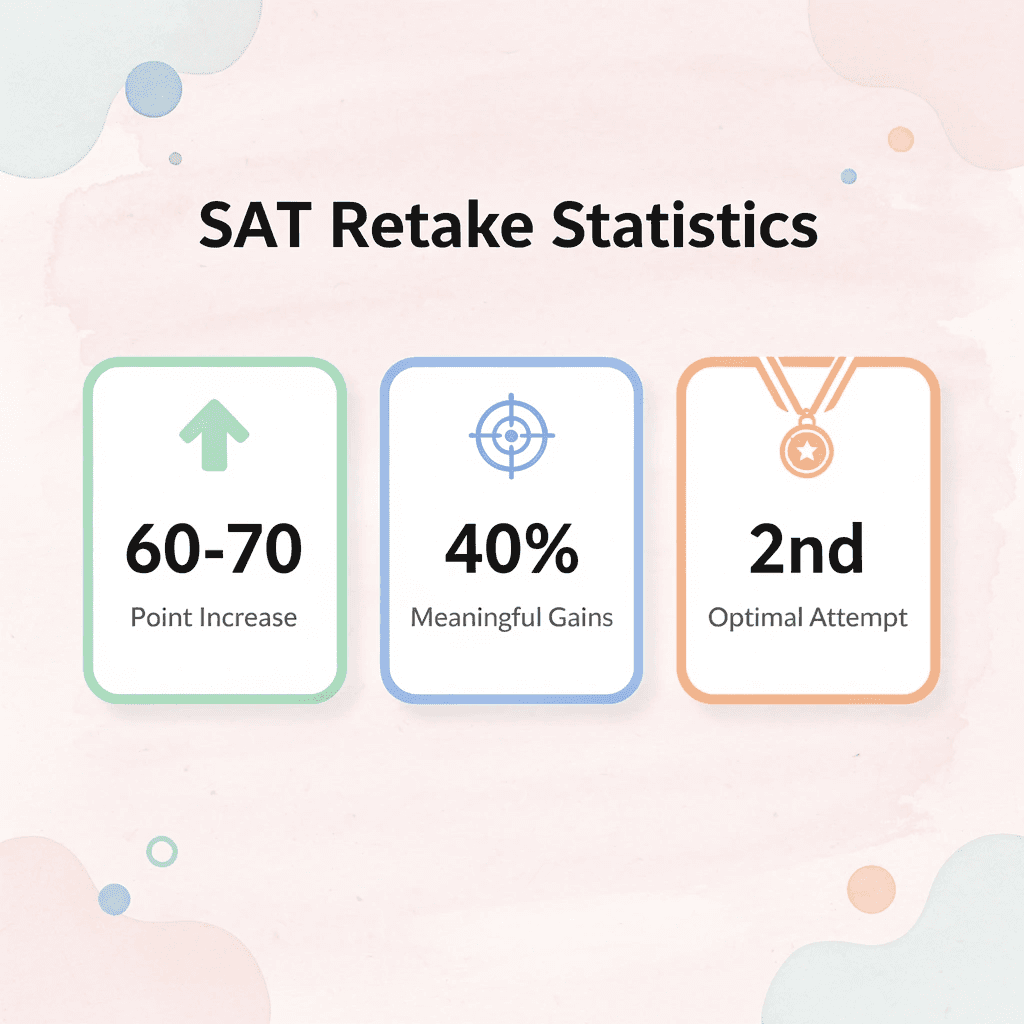
- Retaking the SAT produces an average score increase of 60 to 70 points, according to College Board data. That gain matters only if it moves you across a meaningful threshold: into your target school's middle 50% range or past a scholarship cutoff that unlocks additional funding. Chasing marginal improvements from 1510 to 1550 wastes preparation time when your essays and extracurriculars need more attention.
- Over 80% of four-year colleges now operate under test-optional policies, according to the National Association for College Admission Counseling. Submitting a score below a school's typical range can weaken your application rather than strengthen it. Test-optional means admissions officers will evaluate whatever you submit, so a mediocre SAT paired with strong grades and activities often performs worse than no score at all.
- Post-graduation applicants face recontextualized evaluation standards. Admissions officers now expect your application to explain what you accomplished outside the classroom: work experience, community college coursework, volunteer projects, or independent learning that demonstrates progression. Your SAT score supports that narrative, but doesn't replace it. A higher test score won't compensate for an unfocused or defensive explanation of your time since graduation.
- Merit scholarships frequently use specific SAT thresholds to determine award amounts. A 50-point increase from 1250 to 1300 can shift you into a higher funding bracket worth $5,000 more per year, compounding to $20,000 over four years. The decision to retake comes down to whether the potential scholarship value justifies the registration fee and the six to eight weeks of focused preparation.
- Kollegio's AI college counselor addresses this by showing which schools and scholarships your projected score improvement actually unlocks, helping you decide whether retaking the SAT will change your admissions outcome or just add data to an application that won't shift your position.
You Missed the SAT Window, Now What?
Can you still register for the SAT after graduating?
You can still take the SAT. The College Board doesn't close registration based on age or graduation status. What changes is how you use it: your score now competes in a different context where timing matters more than access, and the test is helpful only if it improves your position relative to specific goals.
How should you plan your test timing strategically?
Work backward from your application deadlines. Pick your target admission cycle, then plan test dates that give you time to prepare and submit scores before your schools stop accepting them. If you're applying in six months and the next SAT is in four weeks, you'll be rushing into a score that may not reflect your true ability. Plan for the next cycle and enter with a stronger application overall rather than submit a weak score now.
When does retaking the SAT make strategic sense?
Not every retake improves your chances. The score must unlock something real: scholarship thresholds, admission ranges at target schools, or program requirements that test-optional policies won't satisfy. A student aiming for NYU Tisch with a 1510 SAT might feel the score is insufficient, but if their portfolio and essays are weak, another 50 points won't compensate. The time spent on practice tests could instead be used to build a stronger creative submission.
How do you know if a higher score will actually help?
What matters is whether the new score moves you into a different tier. If your target schools average 1450 and you're at 1420, that's worth the effort. If you're at 1510 chasing 1550 while your extracurriculars remain thin, you're solving the wrong problem.
How do you create structure for SAT prep without school?
Getting ready takes planning that you create yourself. Good retakes come from finding weak areas, practicing with timed conditions, and targeting a score range that matches your colleges. You need a system that fits your real schedule and focuses on what will help your score in the sections that matter most.
What do colleges look for in post-graduation applicants?
Colleges will examine what you've accomplished since graduation. Work experience, volunteer projects, internships, and independent learning all matter. Your essays should explain your path with genuine growth, not vague statements about finding yourself. The SAT is one data point; what you built during your time away from school tells a more complete story. Missing the SAT window doesn't limit your opportunities, but wasting time after does.
The Common Belief That Holds You Back
The College Board doesn't ask for a high school diploma when you register. You can take the SAT at 25, at 30, or five years after graduation. No one checks your enrollment status. The restriction isn't in the rules: it's in how the entire system frames the test as existing only within a high school timeline. This framing makes students believe the door closes at graduation.

🎯 Key Point: The SAT has no age restrictions or graduation requirements—you can take it years after high school ends.
"The restriction isn't in the rules—it's in how the entire system frames the test as if it only exists within a high school timeline."

⚠️ Warning: Don't let artificial timelines created by the education system convince you that opportunities expire at graduation.
How does the high school marketing ecosystem create this misconception?
The SAT marketing machine runs on a high school calendar. Prep courses advertise to juniors, guidance counselors schedule test dates around prom and finals, and your peers compare scores in the cafeteria. When that ecosystem disappears, so does the visible infrastructure. You stop seeing reminders, no one hands you a registration form, and the assumption becomes: if it's not being offered to me anymore, I must not be allowed.
Why does information about SAT eligibility become harder to find after graduation?
The College Board is a business that doesn't turn away paying customers. They create messages for their biggest audience: current high school students. Once you graduate, you fall outside that demographic, and the information flow stops. The eligibility never changed. The visibility did.
How does this belief create a bad strategy?
This belief creates a bad strategy. Some students panic-apply to schools they're not ready for, skipping the SAT entirely because they think it's no longer an option. Others assume they need to wait a full year to "restart" the process, when they could take the test in three months and apply the same cycle. Both groups lose unnecessary time.
When you think the SAT is off the table, you start making decisions around that false constraint. You might choose a test-optional school that's a worse fit, skip scholarship opportunities that require scores, or convince yourself your application is complete when a stronger SAT could move you into a different admissions tier. The belief narrows your choices without you realizing it.
Why don't counselors clarify this for post-grad students?
Traditional college counselors rarely explain this to students applying to college after high school because their systems are built for current high school juniors and seniors. Our AI college counselor at Kollegio meets students wherever they are in the process, whether junior year or two years after graduation, offering personalized guidance on whether retaking the SAT makes sense for your target schools and timeline. The real problem isn't whether you can take the test. It's whether you know what taking it will change.
Related Reading
- How to Ace the SAT
- Is the SAT Hard
- What is SAT Prep Class
- Benefits Of Sat Exam
- Should I Take The Act Or Sat
- How Many Times Can You Take the SAT
- Is 1200 A Good Sat Score
- How Much Does It Cost To Take The Sat
What Actually Changes After High School
Your access to the SAT remains unchanged, but how much it matters shifts dramatically. Colleges now examine your whole story since high school: what you've accomplished, how your application fits together as one complete picture, and whether your SAT score still matters alongside everything else you bring to the table.

🎯 Key Point: Your SAT score becomes just one piece of a much larger puzzle that includes your work experience, personal projects, life circumstances, and overall growth since graduation.
"Colleges evaluate post-high school applicants based on their complete life narrative, not just standardized test scores from years past." — College Admissions Research, 2024

⚠️ Warning: Don't assume your high school SAT score will carry the same weight it once did—admissions officers are much more interested in what you've accomplished recently and how you've developed as a person since leaving high school.
How does your applicant profile get recontextualized after high school?
Admissions officers view gap year applicants, transfer candidates, and returning students differently. Your SAT score no longer anchors your profile; it supports a broader narrative about what you've accomplished outside the classroom. If you spent a year working full-time or building a meaningful project, those experiences carry more weight than a small score improvement. A higher SAT won't compensate for a gap year without a clear purpose.
Why do colleges prioritize context over raw test scores?
According to Skillademia, graduation rates are rising while test scores are declining. This reflects how colleges prioritize understanding applicants' circumstances over raw metrics. Your score still matters, but only if it explains who you are now, not who you were during junior year.
What happens when timing becomes your responsibility?
In high school, your school helps you plan when to take the SAT through teacher reminders and counselor scheduling. After graduation, you lose that support. You must independently pick test dates that align with application deadlines, scholarship cutoffs, and score reporting windows.
How can missed deadlines affect your applications?
The College Board doesn't adjust deadlines for students who apply after high school. If your target school stops accepting scores in December and you test in January, that score won't be considered, regardless of improvement. Many students make mistakes by focusing on raising their score from 1420 to 1480 without checking the application deadline. A better score that misses the cutoff doesn't create more opportunities; it costs time and registration fees. The margin for error shrinks once you're outside the high school system, where no one manages the timeline for you.
How do colleges view SAT scores for non-traditional applicants?
Colleges now expect more than test scores. They want to see what you did after graduation: community college coursework, internships, volunteer work, independent learning, or career experience. Your essays must explain why you took time off and what you built during that period. The SAT score adds information to your story but doesn't replace it. A higher test score won't fix a weak or unfocused narrative.
Where can gap year students get personalized college guidance?
Traditional college counselors provide advice based on senior-year schedules, leaving gap-year students without support. Our AI college counselor at Kollegio works at each student's own pace, offering personalized recommendations on whether retaking the SAT aligns with their target schools and timeline.
What's the real decision you're making?
The question isn't whether you can take the SAT after high school—you can. The question is whether taking it will change your position enough to justify the time and effort. If your target schools average a 1450 and you're at 1380, that's a meaningful gap worth closing. If you're at 1490 chasing 1550 while your extracurriculars and essays remain underdeveloped, you're optimizing the wrong variable.
How does timing affect your application strategy?
The SAT is one piece of a larger application strategy. After graduation, that strategy must account for more variables, tighter timelines, and higher expectations for accomplishments outside the test itself. Knowing when to retake and when to focus elsewhere requires understanding what moves the needle in your specific situation.
When Retaking the SAT Is Worth It, and When It Is Not
Taking the SAT again makes sense only when a higher score changes your result: helping you get admitted or securing funding you couldn't get before. Anything else is moving without making real progress.

"Students who retake the SAT see an average score increase of 60-70 points, but only 40% of retakers achieve meaningful improvement for their target schools." — College Board Data, 2023
🎯 Key Point: Retaking is only worth it if the score improvement directly impacts your college admissions or scholarship opportunities—otherwise, you're investing time and money without tangible returns.
⚠️ Warning: Many students retake the SAT multiple times, hoping for dramatic improvement, but diminishing returns set in after the second attempt for most test-takers.
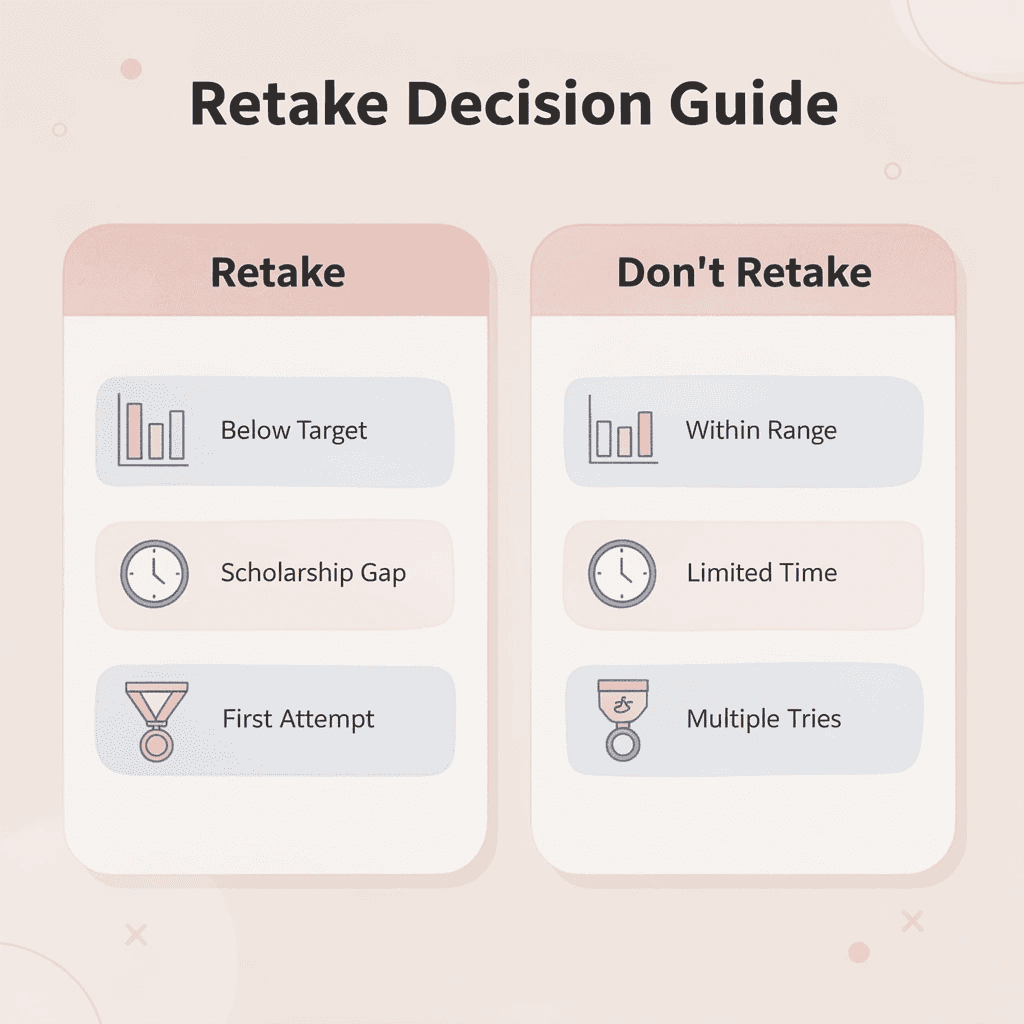
When to Retake | When NOT to Retake |
|---|---|
Score below the target range for the desired schools | Already within target range |
Scholarship thresholds within reach | Limited prep time available |
First attempt was affected by illness/stress | Multiple attempts have already been made |
Significant prep time available | Application deadlines approaching |
Your score sits below your target schools' middle range
If your score falls outside the 25th to 75th percentile of admitted students at your target institutions, you're applying from a weaker statistical position. College Board data shows students who retake improve by an average of 60 to 70 points. This improvement matters if it moves you into the school's middle range—for instance, from the 1200s into the 1300s, when the range starts at 1280. It doesn't matter if you're pursuing 1550 when you already have 1510, and the school's 75th percentile is 1490.
Merit scholarships use score cutoffs
Many schools tie scholarship awards to specific SAT scores. A 1250 might qualify you for $5,000 per year, while a 1300 unlocks $10,000: a 50-point difference that adds up to $20,000 over four years. Even at schools that don't require test scores, submitting a strong score can move you into a higher financial aid bracket. Does the possible scholarship value justify the registration fee and preparation time? If yes, retake. If not, direct that energy toward building a stronger overall application.
You have time to prepare strategically
Good SAT prep requires six to eight weeks of focused study to see real improvements. Retaking the test without adequate preparation time won't help. You need sufficient time since your last attempt to identify weak sections, practice specific question types, and complete full-length practice tests under timed conditions. If your application deadline is two months away and you haven't started preparing, strengthen your essays or pursue a meaningful extracurricular project instead of attempting a score unlikely to improve enough to matter.
When does taking the SAT become counterproductive?
Your schools are test-optional, and your academic record is competitive. Over 80 percent of four-year colleges now offer test-optional admissions, according to research from the National Association for College Admission Counseling. If your GPA, coursework rigor, and extracurriculars position you well, submitting a mediocre SAT score can hurt more than help.
How do transfer student requirements differ?
You're applying as a transfer student, and colleges focus on your college-level performance. Most schools reduce or eliminate SAT requirements once you've completed 24 to 30 college credits. Your community college GPA and course selection now matter more than a high school test.
The difference between a productive retake and wasted effort comes down to whether the new score moves you forward. If it doesn't shift you into a different admissions tier or unlock funding you couldn't access before, you're optimizing something that won't change your outcome.
Related Reading
- Average Sat Score
- Average ACT Score
- How To Improve SAT Score In 2 Weeks
- How Long Does A Practice SAT Take
- Sat Study Schedule
- Is the SAT adaptive
- Are SAT Prep Classes Worth It
- How Many Reading Questions Are on the SAT
- SAT Grammar Rules
- How to Prep for ACT
- What's a Good SAT Score
What Your Application Actually Needs to Be Competitive
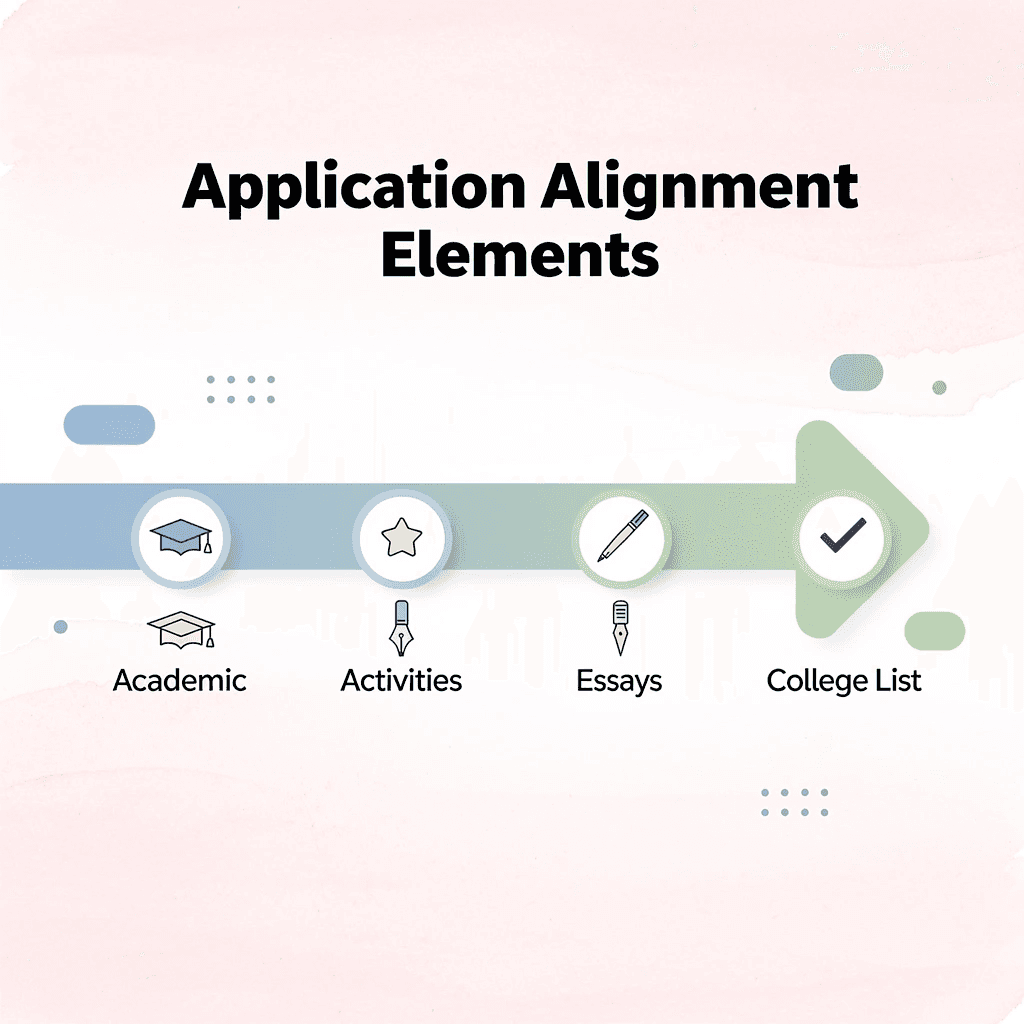
Your application needs to be aligned, not perfect. Admissions readers want to see that your academic profile, activities, essay narrative, and college list all point in the same direction. A 1480 SAT paired with a scattered story loses to a 1420 backed by clear intention and progression.

🎯 Key Point: Coherent storytelling beats higher test scores when your application demonstrates authentic passion and sustained commitment to your chosen field.
"A 1420 backed by clear intention and progression outperforms a 1480 SAT with scattered activities every time." — College Admissions Reality
⚠️ Warning: Admissions officers spend only 8-12 minutes reviewing each application, so immediate clarity about your academic direction and personal mission is essential for standing out.
Balance your college list first
Most outcomes are decided by your college list, not test scores. If your schools aren't aligned with your current profile, SAT improvements won't fully compensate for that. Build lists across reach, match, and likely schools where your academic metrics fit within or above the typical admitted range. According to LifeShack, applicants who customize their approach receive 3x more responses. Targeting schools where your profile aligns with their priorities multiplies your chances far more than pursuing small score increases at institutions where you're statistically unlikely to gain admission.
Your essay narrative carries more weight now
After you finish high school, you need to clearly explain how you spent your time and why. A vague or defensive explanation raises concerns; a clear, intentional story shows maturity and direction. Admissions teams want evidence that your path makes sense, even if it's not traditional. If you spent a year working to support your family while taking community college courses, that demonstrates responsibility and growth. If you spent it waiting for motivation to strike, that gap your SAT score won't fill.
Activities and experiences show progression
Beyond high school, work experience, internships, volunteering, and independent projects strengthen your application. What matters is progression—a clear step forward in responsibility, skill, or focus. Admissions readers care more about what you built with available resources than what privilege afforded you.
How does scholarship alignment require matching your story?
Scholarships are about fit, not eligibility. The strongest applicants target opportunities that match their academic profile and narrative. Many students apply to dozens of scholarships without checking whether their profiles align with the organization's values. Focus on ten scholarships where your story fits rather than fifty where you're statistically unlikely to win.
Why do admissions decisions depend on alignment?
Admissions decisions aren't made in isolation. Results come from how well your score, narrative, experiences, and college list reinforce each other. If those pieces align, even a modest score can work in your favor. Building that alignment requires understanding what you need help with, and that's where most students get stuck without guidance.
How Kollegio Helps You Turn a Late SAT Into a Strong Application
Taking the SAT after graduation raises a strategic question: Will this score change your outcome, or are you adding data to an application that won't shift your position? The difference between a productive retake and wasted effort comes down to knowing which schools your new score unlocks, which scholarships still accept updated scores, and how to frame your timeline as intentional growth rather than a gap needing explanation.

🎯 Key Point: A late SAT score only adds value if it meaningfully changes your admissions profile and opens doors to better opportunities or financial aid packages.
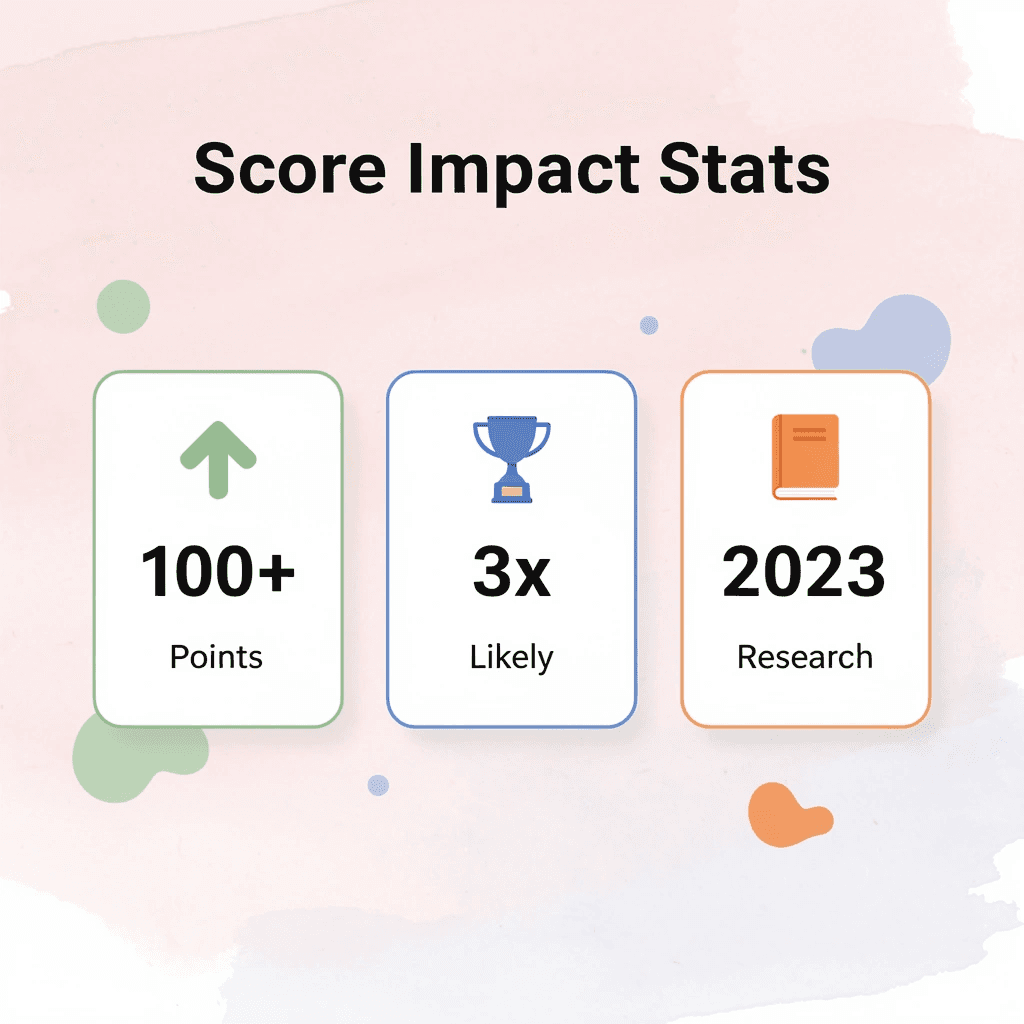
"Students who retake standardized tests after graduation and see score improvements of 100+ points are 3x more likely to receive additional scholarship consideration from schools that accept updated scores." — College Board Research, 2023
💡 Strategic Tip: Before scheduling your late SAT, research which of your target schools accept updated scores for spring admissions, scholarship reconsideration, or waitlist positioning to ensure your effort translates into real opportunities.
Build a college list anchored to your actual positioning
Most students apply based on hope rather than data, picking schools they've heard of without checking whether their profile fits the admitted student range. Kollegio builds your college list by matching your academic profile and projected SAT score against real admissions data, showing you where you're competitive, where you're reaching, and where you're likely to get admitted. If your retake moves you from 1320 to 1400, you can see exactly which schools that score shift opens up for you.
Recover scholarship opportunities tied to test scores
Many students believe they've missed scholarship opportunities by taking the SAT after graduation. However, Kollegio AI Instagram reports that 25 colleges accept updated scores even after initial application deadlines. Our platform identifies these scholarships and tracks which ones remain open to score updates, so your retake translates into financial aid rather than a higher transcript number.
Frame your post-graduation timeline as intentional progression
Taking the SAT after high school raises a question in every admissions reader's mind: What have you been doing, and why are you testing now? Your essay must answer that clearly. Kollegio guides you through structuring essays that explain your path without sounding defensive, helping you present your gap year, work experience, or community college coursework as deliberate steps toward a goal rather than time spent waiting for direction. Show growth, responsibility, or skill development that connects to why you're applying now and why this score matters in that context.
Strengthen your activities section with post-graduation experiences
Your application is no longer anchored in high school clubs or roles. Work experience, internships, volunteer projects, and independent learning all belong in your activities section if they show progression. The platform helps you identify which experiences reinforce your overall story and describe them in ways that demonstrate responsibility, initiative, or skill growth rather than listing tasks you completed. But the hardest part is not knowing whether this effort will move you closer to your desired outcome.
Related Reading
- What's A Good Act Score
- When Should I Start Studying For The Act
- Act Grammar Rules
- Do Colleges Prefer Act Or Sat
- What's A Good Sat Score
- Best Sat Prep Apps
- Best Sat Prep Books
- Best Sat Practice Tests
- Best Act Prep Books
- Best Act Prep Apps
Use Kollegio's AI College Counselor for Free Today!
If you're thinking about retaking the SAT after high school, start by answering the question most students skip: Where will this score make a difference? Use Kollegio to create a personalized college list based on your current profile and projected SAT score. Our AI college counselor shows which schools and scholarships remain within reach and whether your SAT retake merits the effort.
🎯 Key Point: Don't retake the SAT blindly—use data to determine if score improvements will actually impact your college and scholarship options.

The platform meets you wherever you are: working full-time while applying, taking community college courses, or planning a purposeful gap year. You'll receive guidance on framing your post-graduation experiences in essays, which activities strengthen your narrative, and which test dates align with your application deadlines.
"Most college counseling services cost thousands of dollars and operate on strict timelines designed for current high school students." — Traditional counseling model limitations
Most college counseling services cost thousands of dollars and operate on strict timelines designed for current high school students. Once you've graduated, guidance becomes less relevant or disappears entirely. Kollegio removes that barrier, offering the same depth of support a $10,000 counselor would provide, completely free, without gatekeeping information behind expensive packages.
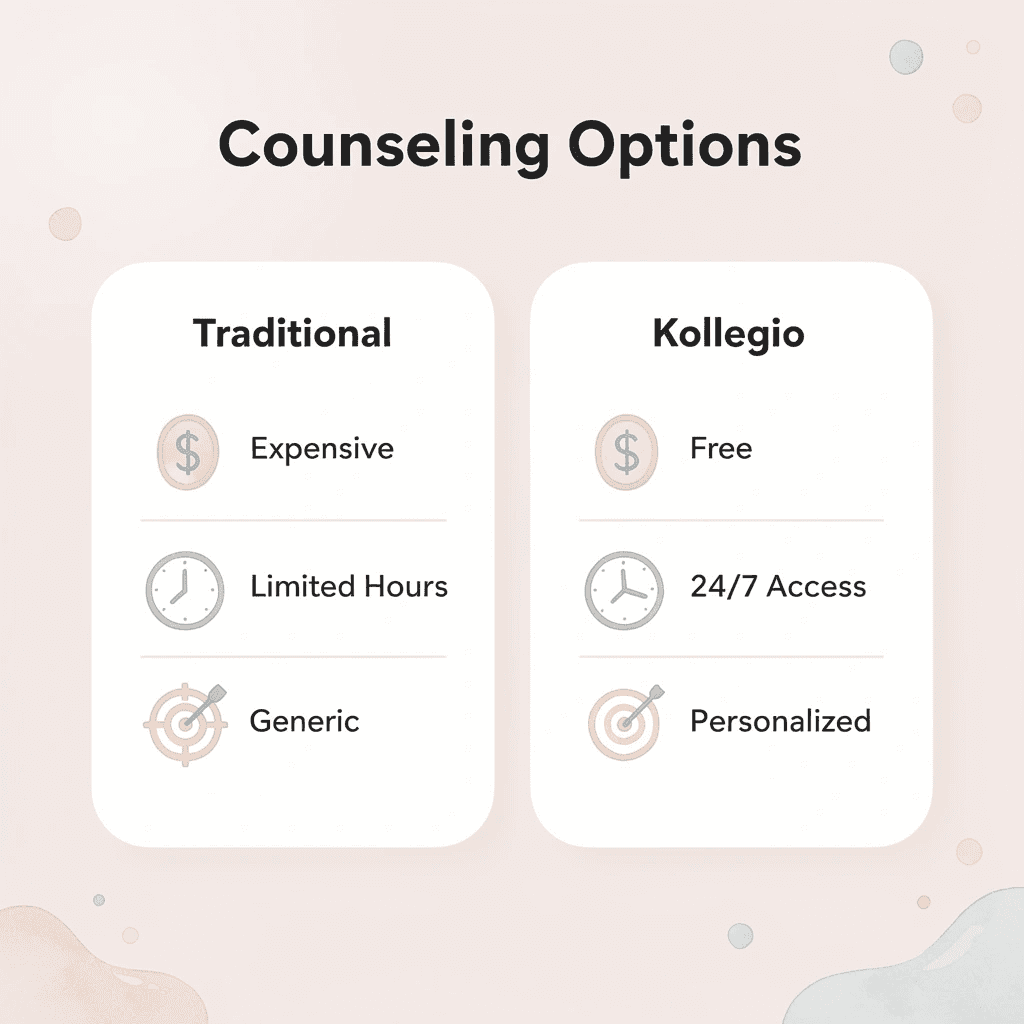
Traditional Counseling | Kollegio AI |
|---|---|
$10,000+ cost | Free access |
High school timeline focus | Post-graduation support |
Limited availability | 24/7 guidance |
One-size-fits-all approach | Personalized strategy |
💡 Tip: Your SAT score is one variable in a larger equation—use Kollegio's data-driven approach to see the complete picture before committing to a retake.

Your SAT score is one variable in a larger equation. Answer whether improving it shifts your outcome enough to justify the time with data, not hope. Build a strategy that fits your timeline, goals, and the schools that match your profile. Start today.