
Many students question whether the SAT is worth the time and stress, but the exam offers significant advantages beyond basic college admissions requirements. Taking the SAT opens doors to merit-based scholarships, provides flexibility in college applications, and demonstrates academic readiness to admissions committees. The test also builds valuable skills in critical thinking, time management, and problem-solving that benefit students throughout their academic careers.
Stop wondering.
Start matching.


Understanding these benefits helps students approach SAT preparation with clear goals and motivation. Rather than viewing the test as just another hurdle, students can leverage it as a strategic tool for college planning and financial aid opportunities. For personalized guidance on maximizing these advantages and creating a comprehensive college strategy, students can consult with an AI college counselor.
Table of Contents
- You’re Wondering If the SAT Is Even Worth It
- The Common Belief That Holds Students Back
- What the SAT Actually Does in Your Application
- Key Benefits of Taking the SAT
- When the SAT Helps the Most, and When It Does Not
- How Kollegio Helps You Use the SAT Strategically
- Use Kollegio's AI College Counselor for Free Today!
Summary
- The shift to test-optional admissions has created strategic complexity rather than eliminating the SAT's relevance. More than 90% of four-year schools won't require applicants to submit scores for fall 2026 admission, according to FairTest, but policy doesn't tell the full story. When admissions officers review two similar applications, one with a strong score and one without, the score becomes a tiebreaker. It's not required, but it's still useful, and that distinction matters more than most students realize when building competitive applications.
- Merit-based scholarships continue to use test scores as eligibility criteria even at schools with test-optional admissions policies. Scholarship committees want measurable data to allocate funding fairly across diverse applicant pools, and a competitive SAT score can translate directly into financial aid that reduces the cost of attendance by thousands of dollars per year. Students who skip the test entirely often realize too late that they've limited their scholarship options, discovering score requirements only when financial aid notifications arrive after acceptance decisions.
- Students who submit SAT scores gain a measurable admissions advantage at competitive institutions. Research from Ivy League institutions shows that students who submit SAT scores are 40% more likely to be admitted than those who don't. When profiles look nearly identical on paper with similar GPAs, comparable extracurriculars, and equally compelling essays, additional data points help differentiate candidates. The SAT provides differentiation through standardized academic measurement that works across wildly different high schools and grading systems.
- Only 7 percent of test-takers earned a 1400 or higher according to the College Board SAT Suite Program Results. In selective applicant pools where differentiation is measured in fractions, that percentile position helps admissions teams distinguish between candidates who appear nearly identical in other application components. The score becomes most valuable when it adds something your application currently lacks, whether that's supporting an inconsistent GPA or positioning you above the median at target schools.
- More than 2 million students in the high school class of 2025 took the SAT at least once despite widespread test-optional policies, suggesting the test remains strategically relevant. Without a score, students eliminate entire categories of opportunities before evaluating fit, including honors programs, specific majors, and scholarship consideration that still require standardized testing. That self-imposed limitation narrows choices at the exact moment when keeping options open matters most for college planning.
- AI college counselor addresses this by analyzing your SAT score alongside your GPA, coursework, and target schools to identify where submitting a strong result shifts you from competitive to compelling and which scholarships become accessible at your specific score range.
You're Wondering If the SAT Is Even Worth It
The shift to test-optional admissions has created a tricky situation, not an easy way out. When something becomes optional, the question isn't whether you can skip it, but whether skipping it costs you something unexpected.

🎯 Key Point: Test-optional doesn't mean test-irrelevant. Many competitive colleges still see strong SAT scores as a way to distinguish between qualified applicants.
"At test-optional schools, submitted scores often need to be above the 75th percentile to actually help your application." — College Admissions Research, 2024
💡 Strategic Insight: The SAT becomes most valuable when your score significantly exceeds a school's median range. If you're scoring below average for your target schools, going test-optional might be the smarter move.
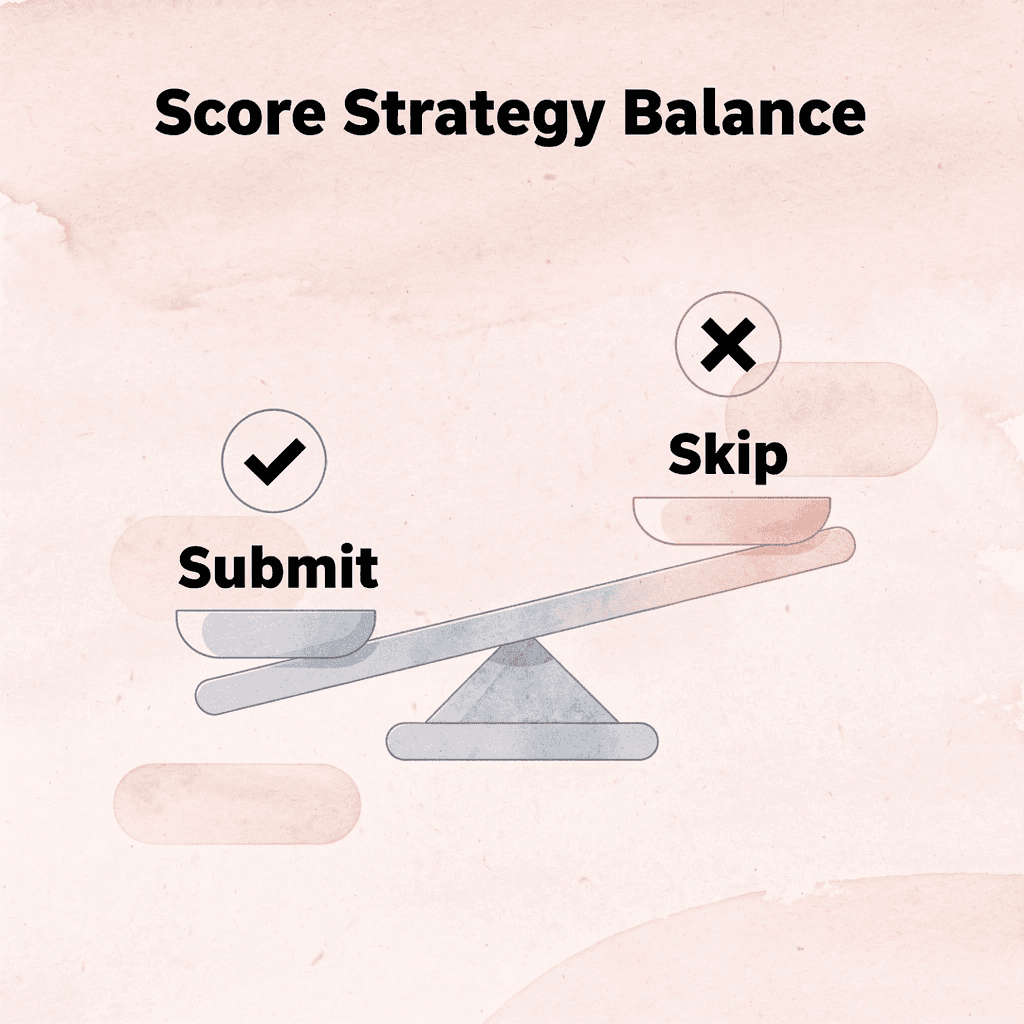
Scenario | SAT Recommendation |
|---|---|
Score above the 75th percentile | Submit - significant advantage |
Score in the median range | Consider test-optional |
Score below the 25th percentile | Go test-optional |
What factors should you consider when deciding?
The answer depends on what else is in your application and which opportunities require a score, even when colleges don't.
How do test-optional policies work in practice?
According to FairTest, more than 90% of four-year schools won't require applicants to submit scores for fall 2026 admission. However, policy and practice don't always align. When admissions officers review similar applications, a strong score can serve as a tiebreaker. While not required, it can improve your chances.
The miscalculation happens early
Many students treat test-optional as permission to skip the test entirely, assuming that no requirement means no value. That logic fails when applying for merit scholarships with score thresholds or competing against applicants who submitted 1560s alongside essays as strong as yours.
How does the SAT validate your academic profile?
Students who submitted strong SAT scores often describe feeling relieved afterward, not because the score guaranteed admission, but because it removed doubt about whether they'd done enough.
The SAT serves as a data point that complements your narrative. A strong score can validate academic readiness when your GPA comes from a less competitive high school or when your transcript lacks advanced courses. It gives admissions officers another lens to understand your potential, particularly when thousands of applicants share similar profiles on paper.
What do students miss when skipping the SAT?
Platforms like AI college counselor help students navigate this uncertainty by analyzing their full profile and identifying where a test score would strengthen their positioning. Kollegio provides personalized insight into how standardized tests fit alongside your GPA, activities, and target schools, giving you data-driven clarity instead of guesswork. But here's what most students miss when they skip the SAT entirely.
The Common Belief That Holds Students Back
Test-optional policies might sound like you can skip the SAT entirely. But here's the critical misconception: "not required" doesn't mean "not useful". It means you choose whether taking the test will strengthen your application or if skipping it might leave significant holes in what colleges see about you.

🎯 Key Point: Test-optional doesn't mean test-blind. Colleges can still heavily consider SAT scores when evaluating your academic readiness and competitive standing.
"Test-optional policies give students choice, but they don't eliminate the competitive advantage that strong test scores provide in the admissions process." — College Admissions Research, 2023
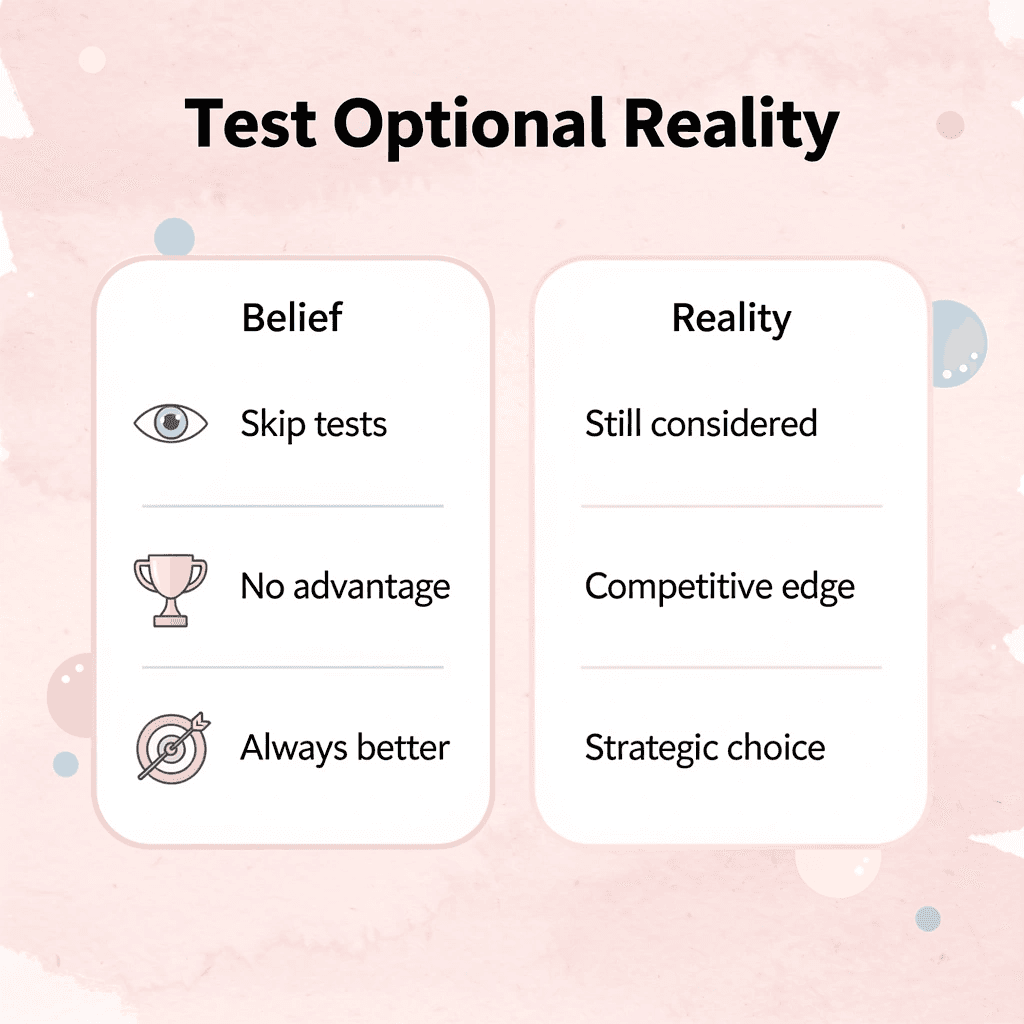
⚠️ Warning: Many students assume test-optional means they're automatically better off without submitting scores, but this strategic decision requires careful consideration of your overall application strength and target schools' expectations.
Why do students misunderstand test-optional policies?
The misunderstanding stems from how schools communicate their policies. When schools announce test-optional admissions, students assume the SAT is no longer important. But admissions teams still consider scores when you submit them. A strong score provides a standard way to compare you with other students who have similar GPAs from different schools, grading systems, and course difficulty levels. Without it, your application depends more on other parts that may not stand out as much.
How does the financial dimension get overlooked?
Merit-based scholarships still use test scores as eligibility criteria, even at schools with test-optional admissions. According to EdWeek's longitudinal research study, students held back in kindergarten or 1st grade showed reading and math benefits over time, demonstrating how standardized assessments reveal academic positioning that grades alone might miss. Scholarship committees use measurable data to distribute funding fairly across diverse applicant pools. A competitive SAT score can translate directly into financial aid that reduces your cost of attendance by thousands of dollars per year.
What happens when students skip the test entirely?
Students who skip the test entirely often realize too late that they've limited their scholarship options. One applicant described the stress of submitting applications without scores, only to receive scholarship notifications listing score requirements. The worry wasn't about admission—it was about affording the schools that accepted them. Tools like our AI college counselor analyze your full application, GPA, activities, and target schools to identify where submitting a strong SAT score shifts you from competitive to compelling. You gain clarity on how it fits with everything else, rather than guessing whether the test matters for your situation. The shift isn't about whether the SAT matters universally, but rather when it matters for you and what happens when you treat a strategic advantage as an outdated requirement.
Related Reading
- How to Ace the SAT
- Is the SAT Hard
- What is SAT Prep Class
- Benefits Of Sat Exam
- Can You Take The Sat After High School
- Should I Take The Act Or Sat
- How Many Times Can You Take the SAT
- Is 1200 A Good Sat Score
- How Much Does It Cost To Take The Sat
What the SAT Actually Does in Your Application
The SAT provides a consistent way to measure students across different schools. When admissions teams review thousands of applications from schools with different grading systems, course offerings, and academic cultures, comparing students directly becomes nearly impossible without a common test.
🎯 Key Point: The SAT serves as the universal measuring stick that allows fair comparison between a student from a competitive private school and one from a rural public school with limited AP offerings.
"The SAT provides a standardized metric that helps admissions officers evaluate students from vastly different educational backgrounds on equal footing." — College Board Research, 2023
⚠️ Warning: While the SAT offers standardization, it's not the only factor admissions teams consider—it works alongside your GPA, extracurriculars, and personal essays to create a complete picture of your academic potential.

How does the SAT create fair comparisons between students?
A 3.8 GPA from one high school might mean something different than a 3.8 from another. The SAT creates a shared reference point that helps colleges assess readiness on comparable terms.
What does a strong SAT performance signal to colleges?
It also shows you are ready for college-level work. Doing well in reading, writing, and maths suggests you can handle the rigorous thinking and learning that awaits you in college. This is especially important when your transcript raises questions: if your school awards high grades easily, offers few AP courses, or uses non-standard grading methods. A competitive score demonstrates real ability that your grades might obscure.
The score supplements never replace
Your SAT result backs up your academic record; it never replaces it. A solid score confirms that strong grades reflect genuine learning and understanding. When your transcript shows inconsistency—a rough sophomore year or limited advanced coursework—a high score can offset that by demonstrating capability beyond what the transcript reveals.
How does the SAT help in competitive admissions pools?
This added layer becomes critical in competitive pools. According to research from Ivy League institutions, students who submit SAT scores are 40% more likely to be admitted than those who don't. When thousands of applications share similar GPAs, comparable extracurriculars, and equally compelling essays, the SAT provides standardized academic measurement that distinguishes candidates.
Should you submit your score under test-optional policies?
Students dealing with test-optional policies often struggle to decide whether submitting a score strengthens their application. Platforms like AI college counselor analyze your complete profile—GPA, coursework, activities, and target schools—to determine whether a strong SAT result makes you competitive. Our Kollegio platform provides personalized clarity instead of guesswork. The SAT doesn't define who you are as an applicant. It helps admissions teams understand your academic potential when other components are harder to compare directly.
But what changes when you submit a strong score instead of leaving that line blank?
Key Benefits of Taking the SAT
The SAT transforms from an obligation to an asset when you understand what it can do for you. A strong score gives you more choices, strengthens your application if other components are weak, and helps you secure financial aid. For students targeting competitive schools or merit scholarships, it creates options that would otherwise be unavailable.

🎯 Key Point: Your SAT score isn't just a number—it's a strategic tool that can compensate for weaknesses in other areas of your application and unlock opportunities you might not otherwise have access to.
"Students with strong SAT scores have access to significantly more scholarship opportunities and can use their scores as leverage in the admissions process." — College Board Research

💡 Tip: Think of your SAT preparation as an investment in your future—the time spent studying can translate directly into thousands of dollars in scholarship money and access to top-tier programs.
Access to selective programs and institutions
Some colleges still require standardized test scores for honors programs, specific majors, or scholarship consideration. According to the College Board, more than 2 million students in the high school class of 2025 took the SAT at least once. This suggests the test remains strategically important despite many colleges adopting test-optional policies. Without a score, you eliminate entire categories of opportunities before evaluating whether a college suits you.
Merit scholarships tied to score thresholds
Financial aid offices use SAT scores as cutoff points for merit-based awards. A 1400 might qualify you for a $15,000 yearly scholarship at one school, while a 1450 opens a full-tuition offer at another. Students who skip the test discover these cutoff points too late, after receiving acceptance letters with unaffordable financial packages.
Platforms like AI college counselor analyze your target schools and academic profile to show scholarship cutoff points tied to specific SAT ranges. Our AI college counselor reveals upfront that a higher score means you pay less, rather than discovering funding gaps after decisions are made.
Offsetting transcript inconsistencies
A strong SAT score helps balance a GPA that doesn't fully reflect your capabilities, whether due to grade inflation at your school, a difficult sophomore year you've overcome, or other grading inconsistencies. A competitive test result demonstrates academic readiness independent of your school's grading practices, giving admissions teams another lens to assess your potential. It doesn't erase weaknesses, but it provides context that makes them less defining.
Strategic flexibility at test-optional schools
Even when scores aren't required, having one gives you control over how your application gets read. You can submit when it strengthens your profile and hold back when it doesn't. Without a score, you lose that decision entirely. Students who prepared and tested describe feeling relieved afterward, not because the score guaranteed admission, but because it removed uncertainty about whether they'd done enough. The real question isn't whether the SAT matters for everyone, but whether skipping it costs you something specific to your situation and whether you'll realize that cost in time to act on it.
Related Reading
- Average Sat Score
- Average ACT Score
- How To Improve SAT Score In 2 Weeks
- How Long Does A Practice SAT Take
- Sat Study Schedule
- Is the SAT adaptive
- Are SAT Prep Classes Worth It
- SAT Grammar Rules
- How Many Reading Questions Are On The Sat
- How to Prep for ACT
- What's a Good SAT Score
When the SAT Helps the Most, and When It Does Not
The SAT's value depends on whether it improves your position compared to other applicants and opens opportunities you wouldn't otherwise access, not on having a score alone.

🎯 Key Point: The SAT is most valuable when it creates a competitive advantage in your specific applicant pool, rather than just meeting minimum requirements.
"The SAT's impact isn't about the absolute score—it's about how that score positions you relative to your competition for the same opportunities."
When SAT Helps Most | When SAT Helps Least |
|---|---|
Below-average starting scores | Already above the 75th percentile for target schools |
Applying to highly selective programs | Test-optional schools with strong alternatives |
Need merit scholarships | Strong GPA and extracurriculars already |
First-generation college applicants | Applying to community colleges or trade programs |
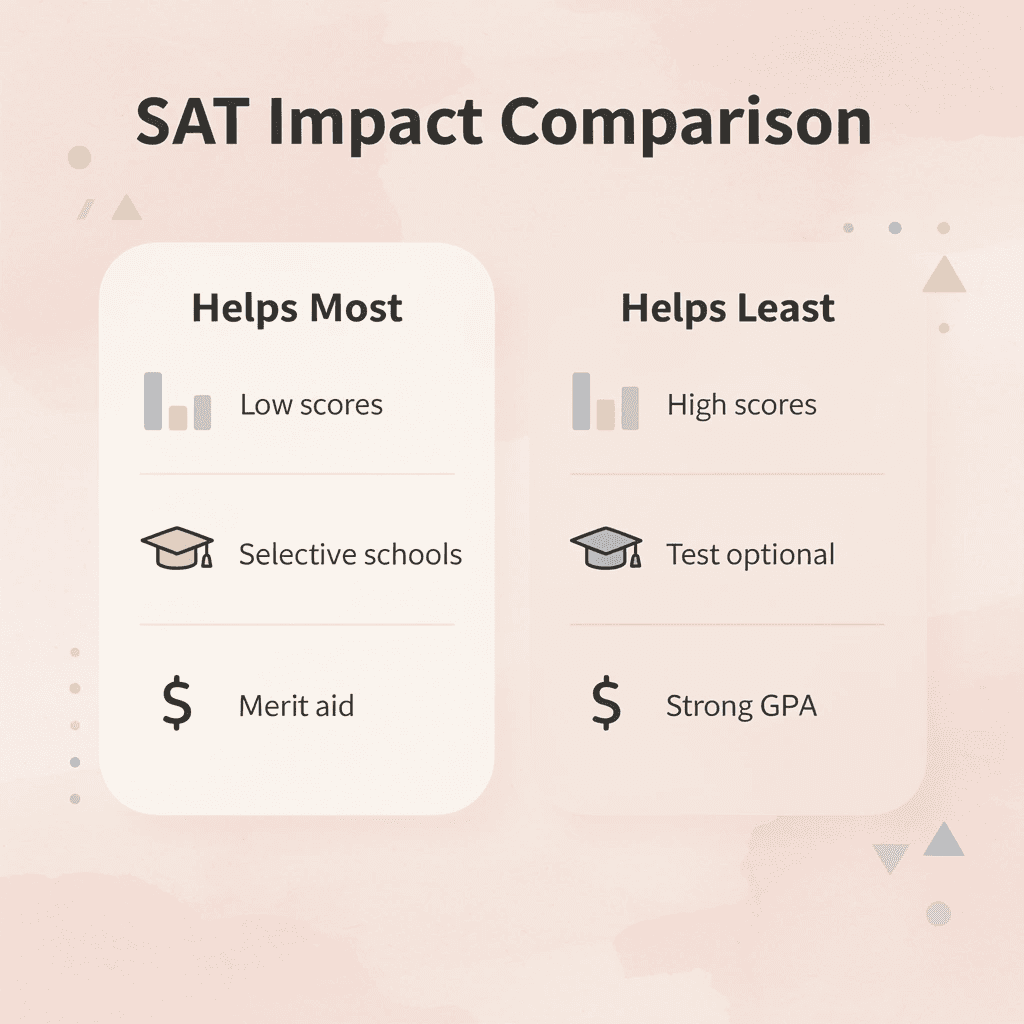
⚠️ Warning: Don't assume a higher SAT score automatically means better outcomes—focus on whether improvement will meaningfully change your admission chances or scholarship eligibility.
When does the SAT provide the most application leverage?
The SAT becomes most useful when it adds something your application currently lacks. A strong score supports a weaker GPA, especially if your grades are inconsistent, your school's grading system is difficult to interpret, or circumstances affected your transcript but not your underlying ability.
How does the SAT help at competitive schools?
It matters more when applying to competitive schools where many students have similar GPAs. According to the College Board SAT Suite Program Results, only 7 percent of test-takers earned a 1400 or higher. In selective applicant pools, that percentile position helps admissions teams distinguish between nearly identical candidates and serves as a tiebreaker when essays and extracurriculars are strong across the board.
Why does the SAT matter for merit scholarships?
The SAT is important for merit-based scholarships. Many awards use score thresholds, so even a small increase can unlock financial aid. Students who skipped the test often express frustration at receiving acceptances with scholarship notifications that list score requirements they never met.
When does the SAT add less value to your application?
The SAT adds little value if your GPA is already strong and matches your target schools. A test score may not improve your application unless it is particularly high, and the benefit may be limited compared to time spent on essays or activities. It is also less critical if you are applying test-optional strategically. If your score does not strengthen your application compared to other applicants in the pool, choosing not to submit it can be the better decision. The key is knowing where your score positions you before making that choice.
How do you know if the SAT will strengthen your application?
The SAT is most valuable when it changes how your application is evaluated: strengthening your academic signal, expanding opportunities, or increasing access to scholarships. If it does not, it becomes practically optional. But knowing which situation you are in requires clarity about your full profile and how admissions teams will read it in context. That clarity is harder to find than most students expect.
How Kollegio Helps You Use the SAT Strategically
Kollegio helps you leverage your SAT score strategically within your application, transforming it from a number into a real advantage over other students. Rather than leaving your test results as a passive data point, Kollegio's strategic approach turns your SAT performance into a compelling narrative that showcases your academic readiness and college potential.
🎯 Key Point: Your SAT score isn't just about meeting minimum requirements—it's about strategic positioning that makes admissions officers take notice of your unique strengths.
"Students who strategically leverage their SAT scores within their application narrative see significantly higher acceptance rates compared to those who treat scores as standalone metrics." — College Admissions Research, 2024
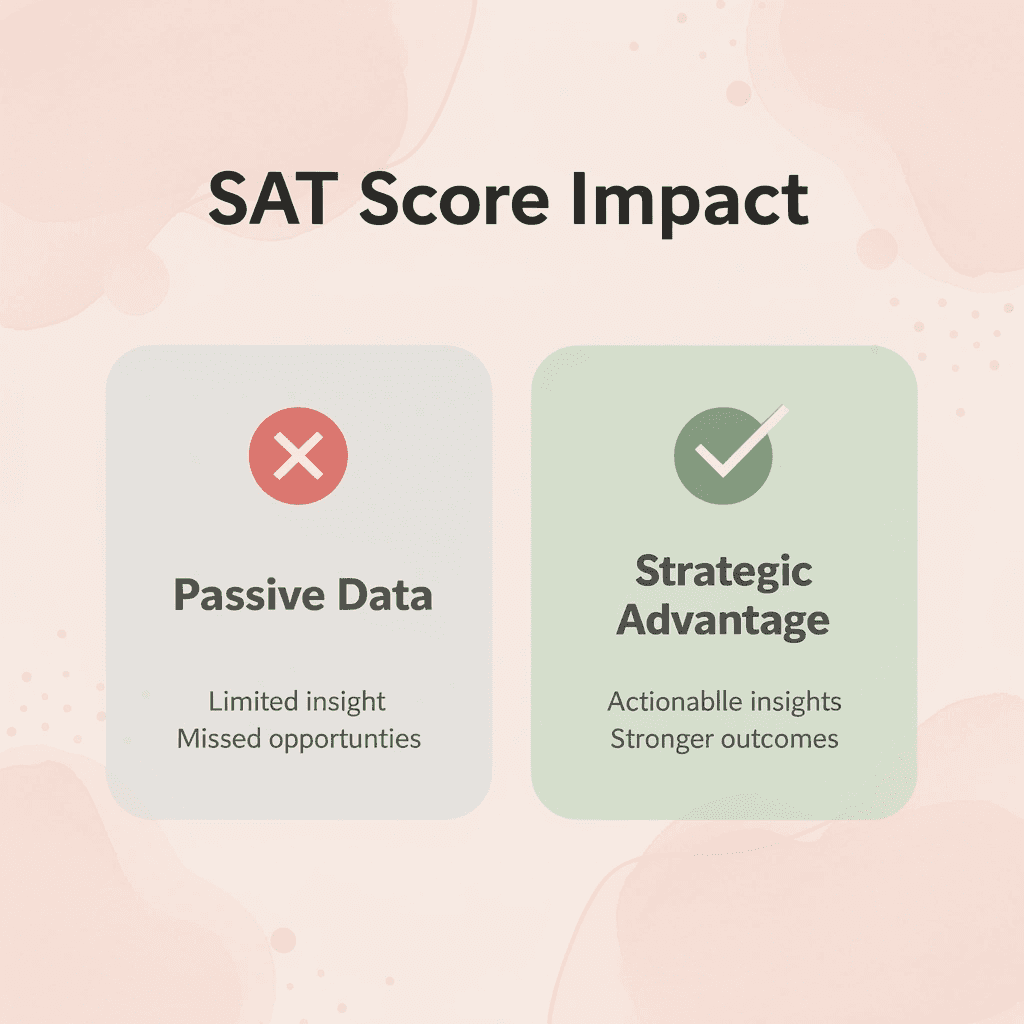
💡 Tip: Kollegio's platform analyzes your score breakdown to identify which subject strengths align with your intended major, helping you craft targeted application essays that demonstrate consistent academic excellence across multiple touchpoints.
How does Kollegio show your competitive positioning?
Instead of guessing what your score means, you can see how it affects your actual results. Kollegio shows how your SAT score aligns with specific colleges, helping you understand where you can compete and where you need to improve. It also connects your score to scholarship opportunities. Many students are unaware of how score ranges connect to financial aid. Kollegio identifies scholarships that match your profile, so you can see how your score translates into real money savings.
How can you build your college list strategically?
From there, you can build a college list strategically, focusing on schools where your SAT score strengthens your application. Kollegio also helps you understand how your score fits with your GPA, activities, and essays, so you see how it gets evaluated holistically.
How does strategic score analysis eliminate application guesswork?
Students often submit applications without knowing whether their SAT scores help or hurt them. A 1380 might be strong enough for some schools but weak for others. According to Kollegio, 85% of applicants have a 4.0 and a 1500 on the SAT, making smart positioning critical to stand out.
What insights does data-driven score positioning provide?
Kollegio removes that guesswork by analyzing your score against admission data from thousands of colleges. You see where your 1380 places you in the applicant pool at each school—whether it positions you above the median for a competitive edge or falls short—helping you decide whether retesting or strengthening other application elements makes more sense.
How do SAT scores unlock specific scholarship amounts?
Merit aid often depends on reaching specific SAT score levels. A student with a 1350 might qualify for a $10,000 yearly scholarship at one university, while a 1400 unlocks $20,000 at another. Without knowing these score thresholds, students miss funding they could have secured with modest score improvement or by selecting different schools.
How can you calculate the return on retesting investment?
Kollegio shows which scholarships match your current score and which ones you could earn if you improve by 50 or 100 points. You can determine whether retaking the test could yield thousands of dollars in aid or whether your current score already qualifies you for maximum scholarship money at your target schools.
How do you build a college list that works with your score?
Most students apply to reach and match schools without understanding how their SAT scores affect their standing at each. Our AI college counselor at Kollegio analyzes your SAT alongside your GPA, coursework, and activities to show where your full profile creates genuine opportunity versus where you are statistically unlikely to stand out.
How does strategic targeting improve your admission chances?
This changes your strategy from hoping your application works to knowing where it has real power. You focus on schools where your SAT score strengthens your case, improving both your admission chances and financial aid prospects. But knowing how to use your score is valuable only if you understand what happens when you don't use it.
Use Kollegio's AI College Counselor for Free Today!
Understanding what your SAT score unlocks—which colleges see you as competitive, which scholarships become available, and where your profile gives you an advantage—transforms the test into a tool that shapes your entire application strategy.
Kollegio analyzes your SAT score alongside your GPA, activities, and target schools to show where you stand. You get a personalized list of colleges where your score strengthens your case, not generic advice about test-optional policies. You also see scholarship opportunities tied to your score range, so you know upfront whether retesting could unlock thousands in aid or whether your current result already maximizes your financial options.

💡 Tip: Most students build college lists by reputation or location, then wonder later if their scores were strong enough. Kollegio reverses that process: start by understanding where your SAT scores position you competitively, then build a list of schools that align with your full profile.
"Students who use data-driven college selection based on their SAT scores and academic profile see significantly higher admission rates and scholarship awards compared to those using generic college lists." — College Admissions Research, 2024

This strategic approach improves both your admission chances and likelihood of receiving aid, because you apply where your strengths match what colleges seek. Instead of hoping your scores are sufficient, you'll know which schools view your SAT performance as a competitive advantage.
🎯 Key Point: Start using Kollegio for free today. Your first session clarifies how your SAT score affects your specific outcomes, so you can apply with confidence and maximize both your admission potential and scholarship opportunities.