
How Many Times Can You Take the SAT? Retake Limits, Strategy
Students who receive disappointing SAT scores often wonder whether retaking the test will help or hurt their college applications. Colleges don't penalize multiple attempts, and most students see score improvements on subsequent tests. Understanding retake limits and developing a strategic testing timeline can make the difference between reaching target scores and falling short of admission goals.
How to Ace the SAT? Smart SAT planning requires knowing when retakes make sense and when they don't. Students need personalized strategies that account for their score gaps, application deadlines, and realistic improvement potential rather than generic advice that may not fit their situation. For tailored guidance on creating an effective testing timeline and prep strategy, students can work with Kollegio's AI college counselor.
Summary
- Most students take the SAT 2-3 times, according to CollegeVine's analysis of testing patterns, and this range typically captures the window when meaningful improvement occurs. The largest score jumps usually occur between the first and second attempt rather than after repeated retakes, revealing that repetition alone doesn't drive results without strategic changes to preparation.
- Students who retake the SAT improve their scores by an average of 40 to 80 points according to College Board data. This improvement range often represents the difference between reaching the 25th percentile and hitting the median for selective schools, which can meaningfully shift admissions competitiveness. However, these gains only materialize when something fundamental changes between attempts, such as addressing specific content gaps or refining time-management strategies.
- Score improvements tend to plateau after a few attempts unless the preparation approach changes significantly. Without targeted work on weak areas, each retake becomes a repetition of the last, consuming months that could be spent strengthening other application components, such as essays, activities, and teacher relationships. The tradeoff between testing time and other application priorities becomes critical as deadlines approach.
- Many colleges use superscoring, combining the best section scores across multiple test dates to create the strongest composite result. This policy reduces the downside of retaking since a lower second attempt doesn't erase a strong first score at most schools. The digital SAT takes 2 hours and 14 minutes of test time according to Thrive Education Partners, but each attempt requires additional preparation, travel, and mental recovery beyond the Saturday morning test window.
- Scholarship eligibility often hinges on specific score thresholds where even a 10-point increase can unlock thousands of dollars in automatic merit aid. Students sitting just below these cutoffs face a clear calculation about whether focused preparation and one strategic retake could change their financial outcome. This makes the retake decision less about maximizing scores and more about identifying concrete opportunities that a higher score would unlock.
- Kollegio's AI college counselor helps students determine whether a retake makes strategic sense by analyzing their current scores against target school profiles and scholarship thresholds, showing exactly what a higher score would change in their application outcomes.
You’re Not Sure How Many Times You Should Take the SAT
You've taken the SAT once, or you're planning to, and now you're wondering what comes next. Should you retake it? If so, how many times is enough?

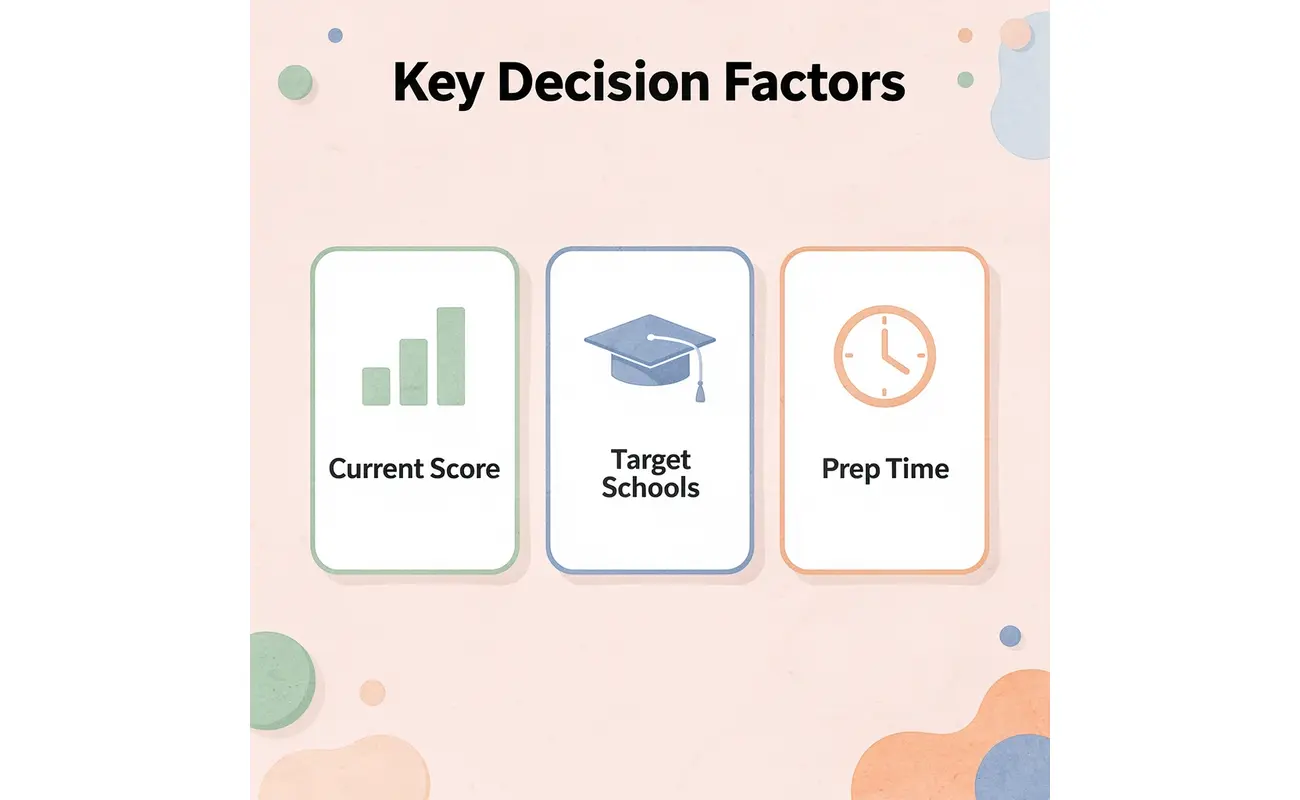
💡 Tip: The answer depends on your current score, target schools, and available prep time - not generic advice.
Most advice doesn't help. Some say take it as many times as possible. Others say focus on one or two attempts. Neither tells you what applies to your situation.
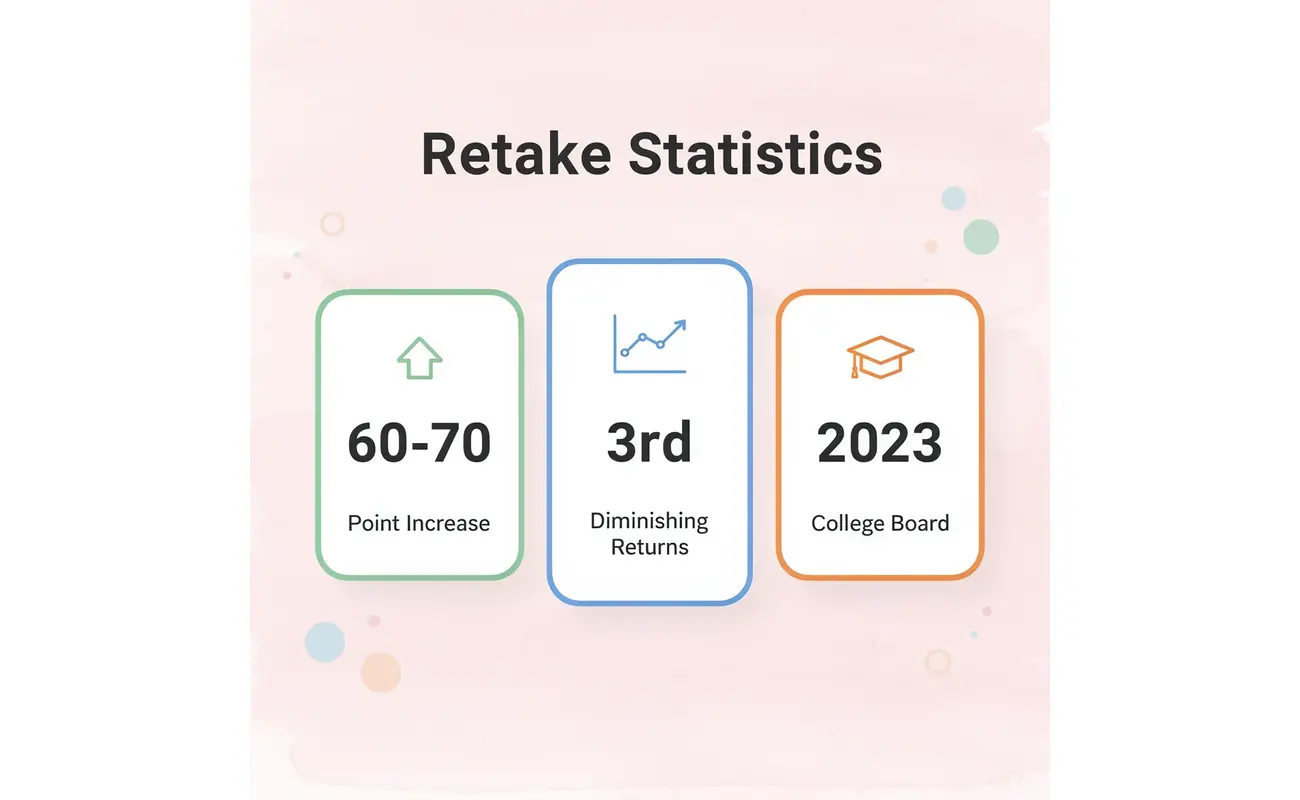
"Students who retake the SAT see an average score increase of 60-70 points, but diminishing returns set in after the third attempt." — College Board Research, 2023
🎯 Key Point: Your retake strategy should be based on your score gap to target schools, not what worked for someone else.
The Two Risks You're Balancing
You're balancing two competing pressures: avoiding wasted time on retakes without meaningful improvement, and not missing the chance to improve your score. Even a modest increase can change which colleges you're competitive for or unlock scholarship opportunities. This tension explains why most students take the SAT 2-3 times, according to CollegeVine's analysis of testing patterns.
But more attempts don't always lead to better results. Without a clear strategy, students fall into two patterns: stopping after one attempt despite scoring below their potential, or retaking multiple times without changing their preparation approach. Both waste time or squander opportunity.
Why Generic Advice Falls Short
The problem is knowing when a retake will help your situation. Students can take the SAT as many times as they want, but general timelines don't account for their starting score, improvement rate, or application deadlines.
When does a retake actually make sense?
A retake makes sense when you've identified what went wrong and made a plan to fix it. It doesn't make sense when you're hoping repetition alone will raise your score. Most students don't realize the decision requires understanding what changed between attempts and whether you've done the work to make the next one count.
How can you move beyond guesswork?
Tools like Kollegio's AI college counselor help students move past generic advice by analyzing their score patterns, target schools, and preparation timeline to determine whether another attempt makes sense. The AI college counselor provides recommendations based on thousands of data points about what drives score improvement between test dates, delivering personalized guidance instead of guesswork.
The Common Belief That Holds Students Back
The advice sounds practical: take the SAT as many times as possible to get your highest score. But taking it more times doesn't automatically yield a higher score. Score improvement depends on what changes between test dates. If you retake the SAT with the same preparation gaps, weak content areas, and strategy, you'll get the same result.
⚠️ Warning: Retaking the SAT without addressing your preparation gaps is like expecting different results from the same approach—it rarely works.
"Score improvement depends on what changes between test dates—not just the number of attempts." — Test Preparation Research, 2023
🎯 Key Point: SAT improvement hinges on strategic changes to your preparation method, content mastery, and test-taking approach between each test date, not the number of attempts.

The Data Tells a Different Story
According to the College Board, most students who retake the SAT see small improvements that level off after a few tries. The biggest score jumps occur between the first and second test. Repeating the same approach yields diminishing returns.
The belief persists because students hear "retaking helps" without learning how to retake effectively. The default approach becomes simple repetition: taking the test repeatedly.
What happens when students retake without a plan?
Without targeted preparation, each retake repeats the last attempt. One student described bombing a practice test the day before their exam: "My brain was fried. I had nothing left in the tank." They'd spent weeks taking full-length practice tests back-to-back, assuming volume would translate into performance. Instead, exam fatigue drained the mental capacity they needed most.
How does this pattern waste valuable time?
This pattern wastes time. Students spend months retaking the SAT without changing results, while essays, activities, and deadlines go neglected. One student captured this after scoring a 32 on the ACT: "Got a 32 on April ACT 💔. Retaking in June and shooting for a 35/36 if possible. PLEASE let me know how to study math." The frustration wasn't the score itself, but not knowing what needed to change to make the next attempt worthwhile.
The Shift That Actually Works
Taking the SAT again works when you have a plan, not when you take it repeatedly without direction. Figure out what specific things you're struggling with (like having trouble with quadratic equations or understanding what you read when racing against the clock), practice those things in a focused way, and give yourself enough time between attempts for your new strategies to stick.
How can you make retaking strategic instead of repetitive?
Platforms like Kollegio's AI college counselor help students move past guessing by analyzing score patterns and preparation timelines to determine whether another attempt makes strategic sense. The AI counselor provides personalized retake recommendations based on your unique test performance.
The familiar approach treats retakes as a numbers game; the strategic approach treats them as a diagnostic tool. One wastes time hoping repetition produces different results, while the other builds a plan around the specific reasons your score didn't reflect your ability initially.
What should you understand before deciding to retake?
Understanding when to retake a test matters only if you first understand what the testing system allows and what most students misunderstand about those rules.
Related Reading
- How to Ace the SAT
- Is the SAT Hard
- What is SAT Prep Class
- Benefits Of Sat Exam
- Can You Take The Sat After High School
- Should I Take The Act Or Sat
- Is 1200 A Good Sat Score
- How Much Does It Cost To Take The Sat
What the SAT Actually Allows
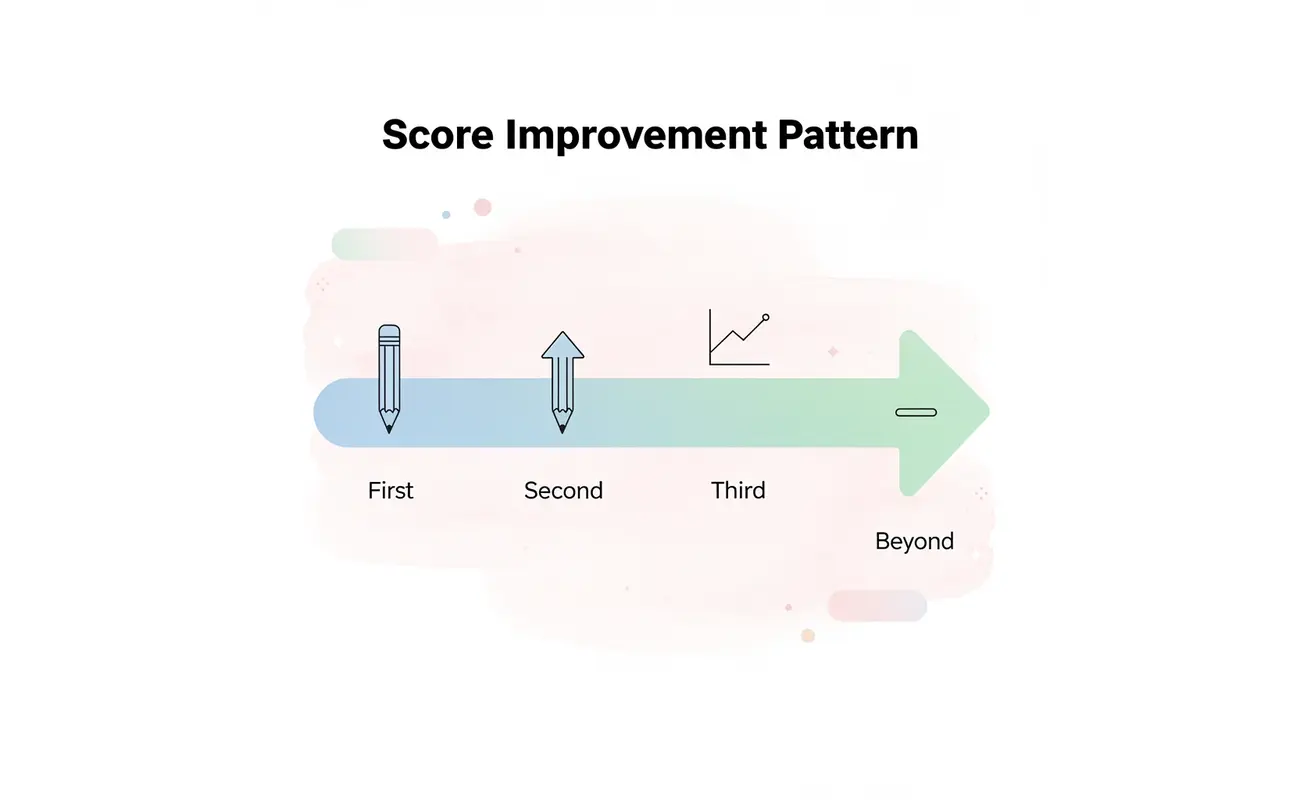
You can take the SAT as many times as test dates are available, with no official limit from the College Board. Most students take it two to three times, with meaningful improvement occurring between the first and second attempts. Beyond that, gains tend to flatten unless your preparation approach changes fundamentally.
🎯 Key Point: The College Board places no restrictions on how many times you can retake the SAT, giving you unlimited opportunities to improve your score.

"Most students see their biggest score improvements between their first and second SAT attempts, with gains typically flattening after the third try." — College Board Testing Data
💡 Tip: If you're planning multiple attempts, focus on changing your study strategy rather than simply repeating the same preparation methods that didn't work the first time.
How Colleges Actually Evaluate Multiple Scores
Many schools focus on your highest score, not your average. Others use superscoring, where they combine your best section scores across multiple test dates to create your strongest overall result. This changes how retakes work: you're building toward a better composite outcome one section at a time, rather than starting from scratch.
This policy reduces the downside of retaking: a lower second attempt doesn't erase a strong first score at most schools. However, unlimited attempts don't produce unlimited benefit.
What are the practical limitations of taking the SAT multiple times?
Each retake requires time for preparation, scheduling, and recovery. According to Thrive Education Partners, the digital SAT has a total test time of 2 hours and 14 minutes. Add travel, mental preparation, and post-test fatigue, and each attempt consumes an entire day. After a certain point, score improvements plateau, especially if your study approach doesn't change between attempts.
How do you determine if another SAT attempt is worth it?
The decision isn't how many times you can take the SAT, but how many times you should, based on realistic improvement potential and application impact. Platforms like Kollegio's AI college counselor help students move past guesswork by analyzing score patterns, target school requirements, and preparation timelines to determine whether another attempt makes strategic sense, drawing on thousands of data points about what drives meaningful score increases between test dates.
Related Reading
- Average Sat Score
- Average ACT Score
- How To Improve SAT Score In 2 Weeks
- How Long Does A Practice SAT Take
- Sat Study Schedule
- Is the SAT adaptive
- Are SAT Prep Classes Worth It
- How Many Reading Questions Are on the SAT
- SAT Grammar Rules
- How to Prep for ACT
- What's a Good SAT Score
When Retaking the SAT Makes Sense
Take the SAT again when your score doesn't reflect what you can do, and you've identified what went wrong: missing knowledge in specific math topics, running out of time, or test anxiety. Without understanding the problem, retaking the test is a mere hope rather than a strategy.
🎯 Key Point: The real question isn't whether you're allowed to take it again, but whether taking it again will actually change what happens with your college applications.

⚠️ Warning: Don't retake the SAT without a clear improvement plan - random retakes rarely lead to meaningful score increases.

Your score falls below your target schools' median range
If your score is below the typical range for colleges on your list, even a small improvement can make you more competitive. According to the College Board, students who retake the SAT improve their scores by an average of 40 to 80 points, often the difference between the 25th percentile and the median for selective schools.
To improve, you need to make changes between attempts: better understanding of question types, stronger timing strategies, or focused practice in weak areas. Without that change, the second attempt will be the same as the first.
You have enough time to prepare differently and submit scores
Timing determines whether retaking the test is feasible. You need sufficient time to register for another test date, identify what hindered your performance, address those issues, and practice new strategies before test day. A rushed retake adds stress without providing a genuine opportunity to improve.
Application deadlines tighten this timeline further. As you approach submission deadlines, retaking the test competes with essays, supplemental materials, and other application components for your attention. Consider whether a higher score justifies the additional time and stress.
When does retaking the SAT not make strategic sense?
If your score is already in or above the typical range for your target schools, retaking the test probably won't help. Your time is better spent strengthening other parts of your application: essays, leadership activities, or building relationships with teachers.
The same logic applies if you're not changing how you prepare: taking the test again with the same study habits and content gaps usually produces the same outcome.
How can you avoid the cycle of repeated attempts without improvement?
One student captured this after multiple attempts: "I kept thinking the next time would be different, but I never actually changed what I was doing." That cycle wastes months that could strengthen other parts of your application while your score stagnates.
Platforms like Kollegio's AI college counselor help students determine whether retesting makes strategic sense by analyzing score patterns, target school requirements, and preparation timelines. Rather than hoping, you receive a recommendation based on data about what drives score increases and whether your situation supports meaningful improvement.
But knowing when to retake matters only if you also know when to stop.
How Many Times Is Too Many
There is no official limit on how many times you can take the SAT, but retaking stops helping after a certain point. For most students, two to three attempts are optimal, reflecting how score improvements work.

🎯 Key Point: The first retake often brings the biggest gain because you're more familiar with the test format, pacing, and question patterns. By the third attempt, improvements depend on bigger changes in preparation, like mastering specific content areas or refining time management strategies. Beyond that, gains become smaller and less predictable.
⚠️ Warning: Taking the SAT more than three times can lead to diminishing returns and may even signal to colleges that you're struggling to improve your test-taking skills.
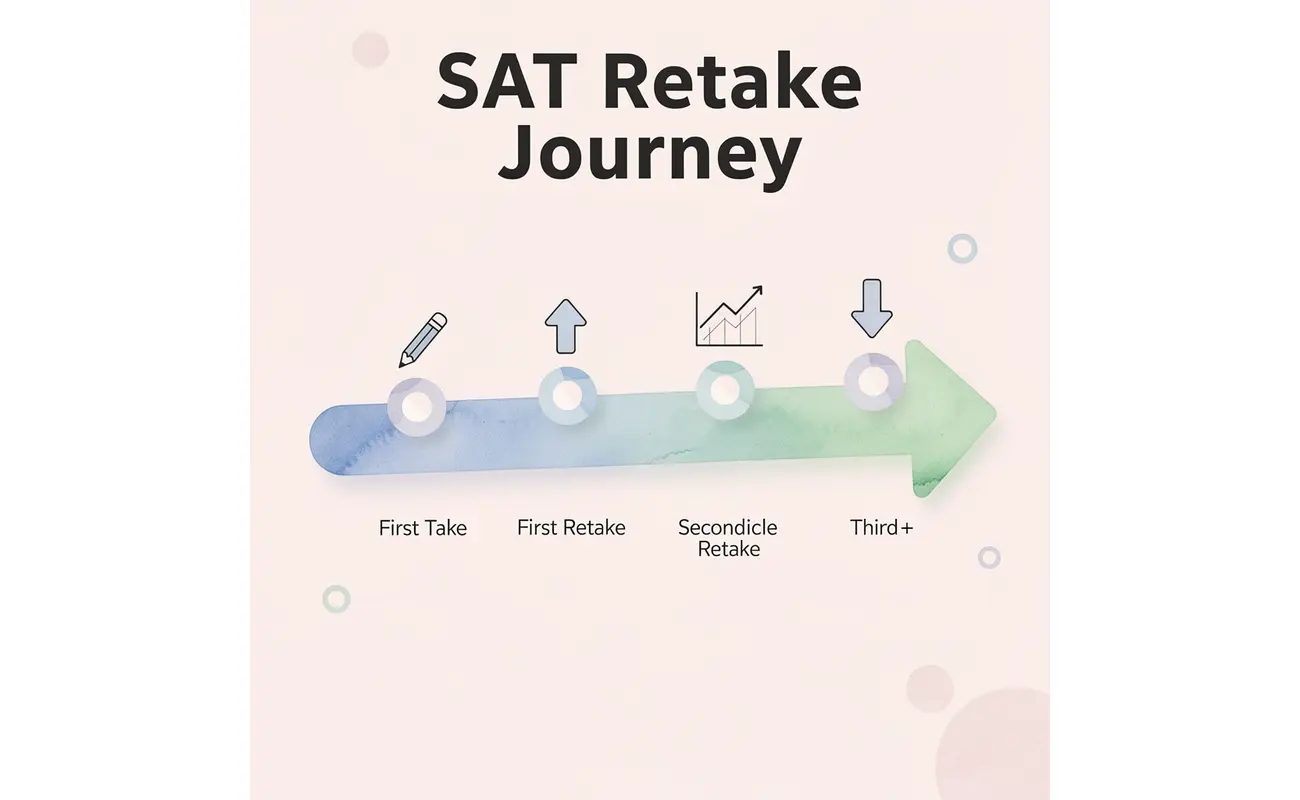
"Students who take the SAT 2-3 times see the most significant score improvements, with diminishing returns after the third attempt." — College Board Data Analysis
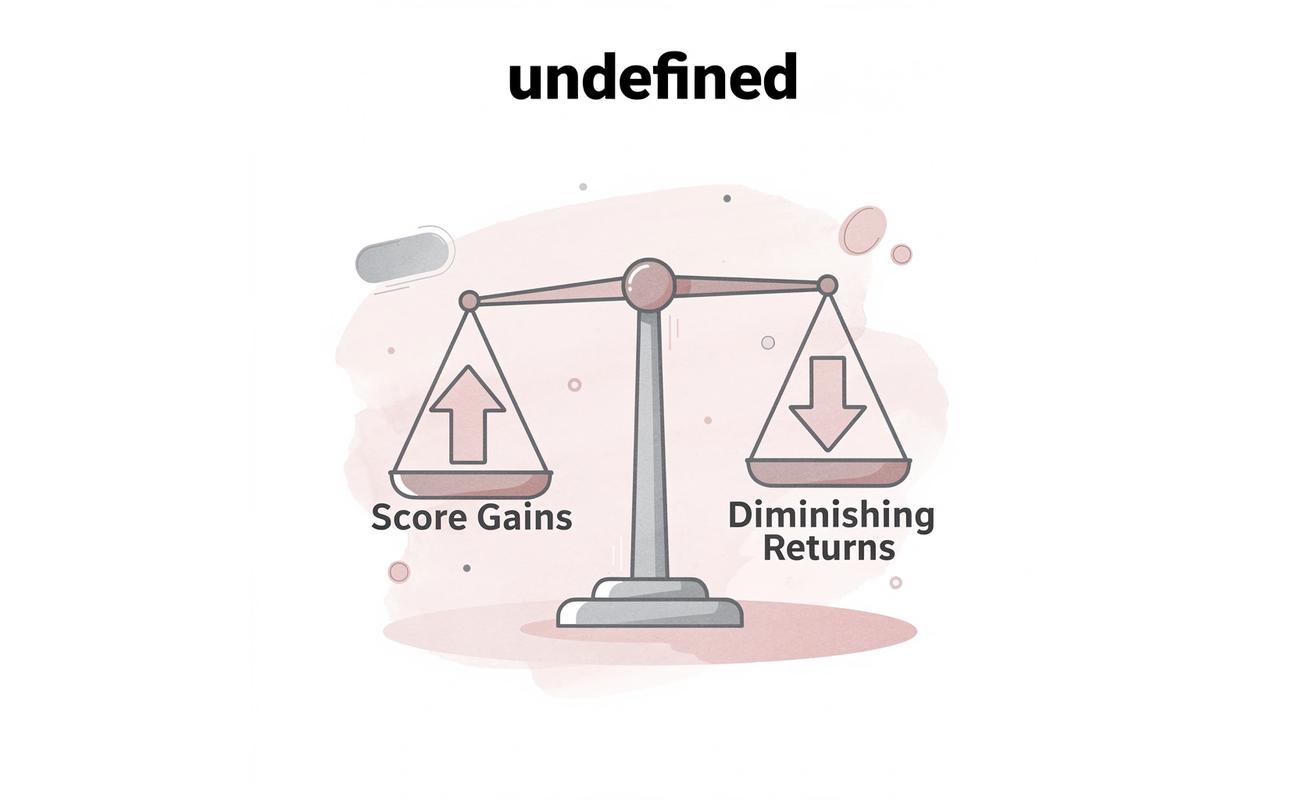
The tradeoff nobody talks about
Every additional attempt takes time, preparation, and energy away from other application components (essays, activities, deadlines) that often matter as much or more. While colleges typically focus on your best score, taking the SAT four or more times can look excessive, especially if your score barely improves between tests.
What strategic retakes actually look like
One student takes the SAT once and stops below their target. Another takes it five times without changing strategy—their score barely moves. A third takes it three times, adjusting their prep each attempt and improving steadily to a competitive score. The difference is not effort. It is a strategy.
How many strategic retakes actually work best?
Strategic retakes—usually two to three well-prepared attempts—outperform frequent, unplanned ones. The question is not how many times you can take the SAT, but how many times you should, based on whether you've addressed the specific reasons your score didn't reflect your ability.
When will your next attempt change your outcome?
Knowing the right number of attempts matters only if you can determine when the next one will change your outcome.
How Kollegio Helps You Decide When to Retake the SAT
The hardest part about retaking the SAT is knowing whether it will help. Most students guess: they look at their score, feel uncertain, and either retake blindly or skip the opportunity without understanding what either choice costs them.

🎯 Key Point: Don't guess about SAT retakes—use data to make informed decisions that maximize your admission chances.
Our Kollegio AI college counselor removes that guesswork by showing how your score positions you against the actual admission profiles of schools on your list. Rather than wondering if your score is "good enough," you see whether that number strengthens your application or holds it back.

"The difference between guessing and knowing can determine whether a student wastes time on unnecessary retakes or misses opportunities that could strengthen their application." — College Admission Data Analysis, 2024
💡 Tip: Use Kollegio's AI analysis to compare your current SAT score against your target schools' actual admission data—not just published ranges that can be misleading.
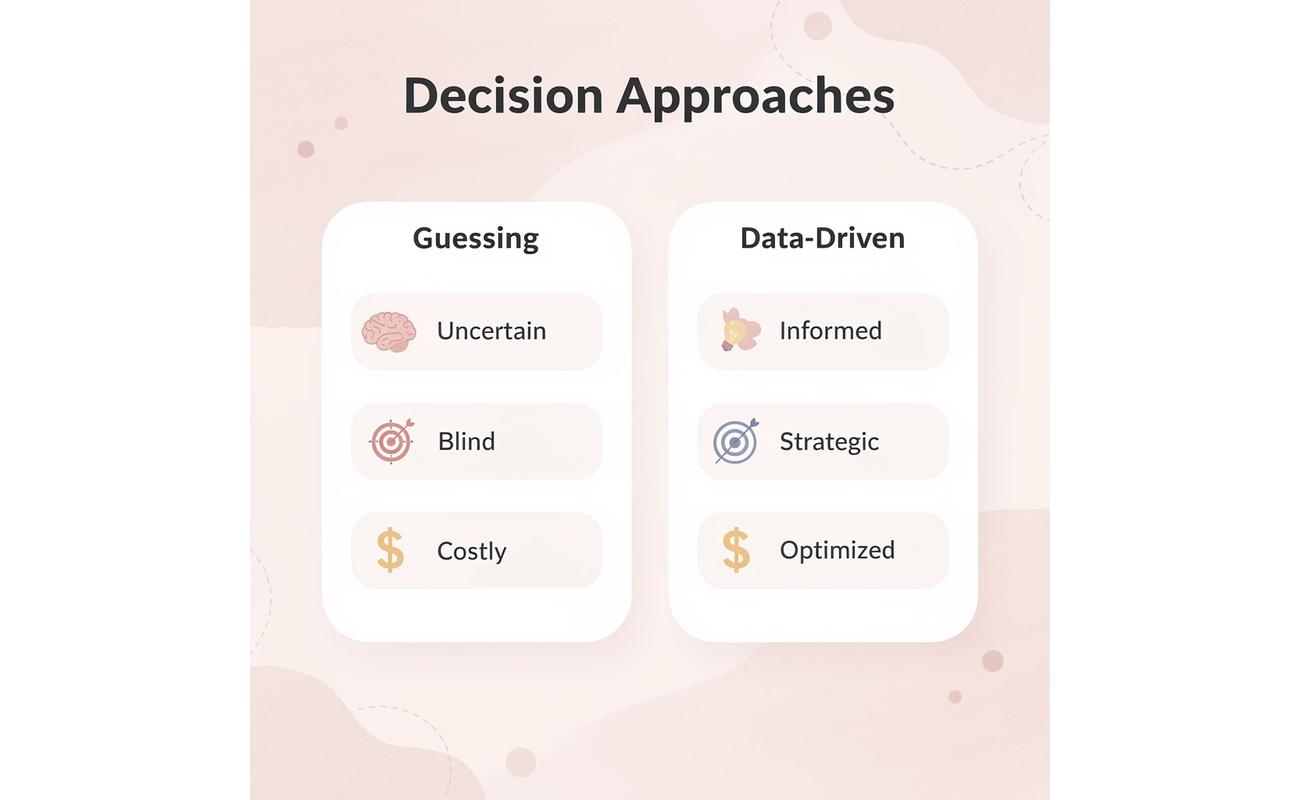
When your score positions you below the median
If your current score falls below your target colleges' typical range, the platform shows exactly where you stand and what improvement could unlock. According to the UWorld College Prep Blog, students who retake the SAT improve by an average of 40 to 70 points, enough to move from the 25th percentile to the median at selective schools and to change how admissions officers view their academic readiness.
But improvement only matters if it moves your application forward. If your score already sits within the competitive range, another attempt may not be worth the time. The platform helps you see that tradeoff clearly, so you retake based on data, not anxiety.
Finding scholarships tied to score thresholds
Many scholarships have specific score cutoffs. A student at 1390 might miss automatic merit aid starting at 1400—a ten-point gap worth thousands of dollars. The platform matches your profile to scholarships with clear score requirements, so you know whether a small increase unlocks financial support.
One student discovered they were below a state scholarship threshold. They targeted weak content areas, retook the exam, and improved enough to qualify. That single retake changed their financial outcome because they knew what the next attempt needed to accomplish.
How do you avoid the reflexive retake cycle?
The familiar approach treats retakes as a reflex: take the test, feel disappointed, sign up for the next date without identifying what went wrong. As application deadlines approach, this cycle wastes weeks that could be spent strengthening essays, activities, or relationships with teachers.
According to EdisonOS, students typically need six to twelve weeks between attempts to address content gaps and solidify new strategies. Platforms like Kollegio's AI college counselor help students build a retake plan based on their current profile, preparation timeline, and available runway for meaningful improvement before scores are due.
What comes after deciding to retake?
You are retaking the SAT because you know it will strengthen your application, and you have the time to do so.
But knowing when to retake only works if you also know what comes next.
Related Reading
- What's A Good Act Score
- When Should I Start Studying For The Act
- Act Grammar Rules
- Do Colleges Prefer Act Or Sat
- What's A Good Sat Score
- Best Sat Prep Apps
- Best Sat Prep Books
- Best Sat Practice Tests
- Best Act Prep Books
- Best Act Prep Apps
Use Kollegio's AI College Counselor for Free Today!
Use Kollegio for free to compare your current SAT score against your target colleges. In your first session, you'll see whether retaking the SAT will improve your chances, so you can focus your effort where it counts.
🎯 Key Point: Kollegio transforms the retake decision from anxiety into strategy by showing you exactly what your next attempt needs to accomplish.

The platform shows you exactly where you stand in the applicant pool for schools on your list. You'll see whether a higher score shifts your position from reach to target or unlocks scholarship thresholds you didn't know existed. That clarity transforms the retake decision from anxiety into strategy, because you know what the next attempt must accomplish before you commit the time.
"Clarity turns the retake decision from anxiety into strategy - you know what your next attempt needs to accomplish before you commit the time."
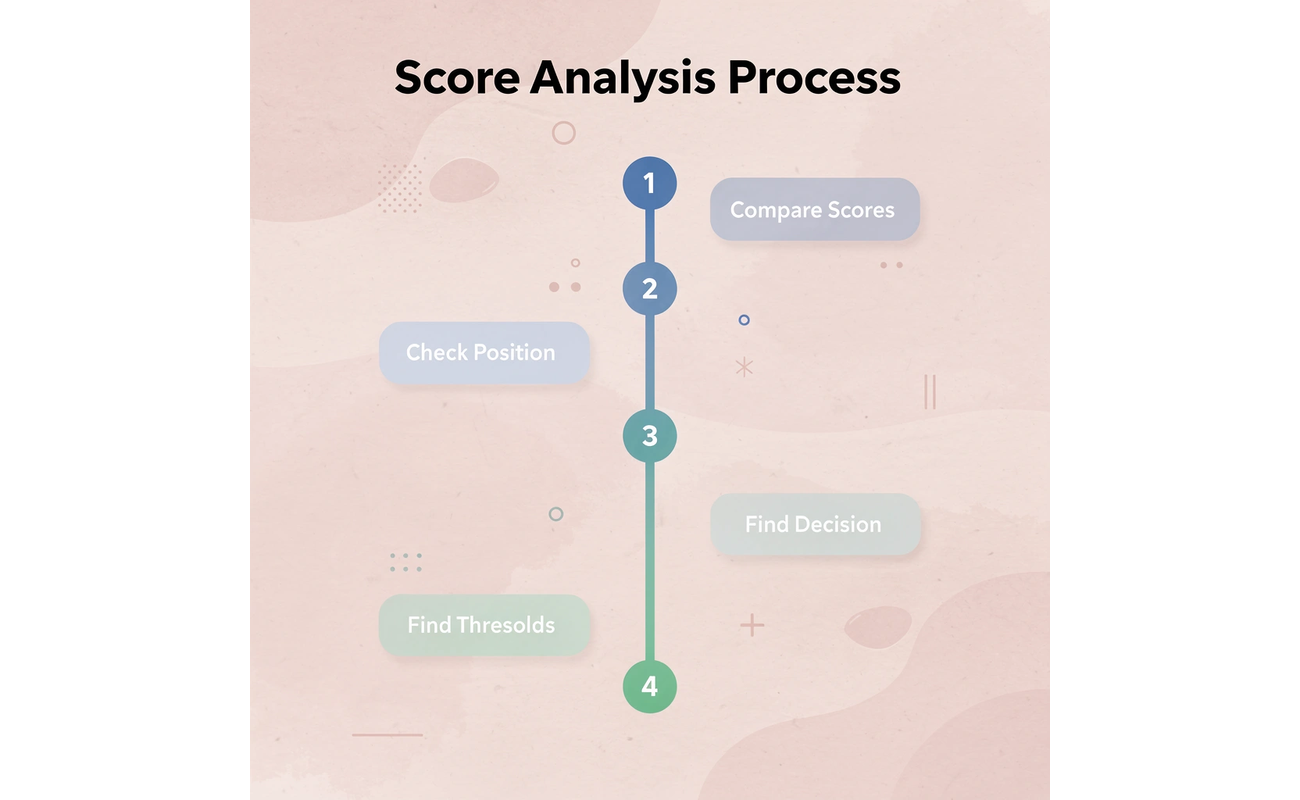
💡 Tip: Use your first free session to identify specific score thresholds that could shift your college prospects or unlock scholarship opportunities.

Author
Senan KhawajaSenan Khawaja is the Co-Founder and CEO of Kollegio, an AI-native college counseling and institutional recruiting platform serving roughly 250,000 students across 190 countries. A Stanford graduate, repeat founder, and Forbes 30 Under 30 honoree with World Bank experience, Senan launched Kollegio to democratize elite college counseling—addressing the 400:1 student-to-counselor ratio in public schools. Under his leadership, Kollegio has secured 22+ institutional partners with a 100% renewal rate and backing from Reach Capital, JFF Ventures, and ECMC Group. He was also selected for OpenAI's inaugural ChatGPT Futures Class of 2026. Senan is based in New York City.