
How Much Does It Cost to Take the SAT? Full Breakdown
You've decided to take the SAT, but before you register, there's a practical question that deserves a clear answer: what will this test actually cost you? Understanding SAT fees, registration costs, and additional expenses like score reports or late fees matters because these numbers add up quickly. Budgeting properly becomes part of your preparation strategy, helping you make informed decisions with your money so you can focus your energy where it counts.
The complete picture includes everything from basic registration to optional add-ons, giving you clarity on what to expect financially. Managing college prep expenses alongside everything else on your plate can feel overwhelming, but Kollegio's AI college counselor can help you plan your testing timeline, understand fee waivers you might qualify for, and organize your SAT budget within your broader college application strategy.
Summary
- The SAT's real cost isn't the $68 registration fee. It's the compounding expenses from multiple attempts, prep courses, and score reports that push most students into the $200 to $600 range. According to the College Board's 2025 report, over 2 million students in the class of 2025 took the SAT at least once, with two or three attempts becoming standard for competitive applicants. That alone means $136 to $204 in registration fees before factoring in late charges, test center changes, or international surcharges that add $30 to $43 per transaction.
- Preparation costs create the widest spending gap in the entire SAT process. Self-study using free resources costs $0 to $100, while private tutoring exceeds $5,000 for intensive coaching. Most students fall somewhere between these extremes, paying $100 to $500 for online programs or $1,000+ for structured courses. The problem isn't the range itself; it's that families spend without knowing which investments actually improve scores, leading to either underspending on ineffective materials or overspending on premium services that don't deliver commensurate results.
- Score reporting fees accumulate quietly when students don't plan ahead. You get four free reports if you designate schools during registration or within nine days after the test. After that window closes, each additional report costs $12 to $15. Apply to ten or twelve colleges without early planning, and you're paying $60 to $120 in score-sending fees alone. Rush reporting adds another $31 per order when deadlines catch you off guard, turning what looks like a minor administrative detail into a high cost.
- Students overspend not because they want to, but because they assume paying more automatically leads to better scores. This fear-driven spending pushes families toward comprehensive prep courses that cover everything, even when students only struggle in one or two areas. According to the College Board's 2025 SAT Suite Program Results, only 7 percent of test-takers earned a 1400 or higher, a benchmark that requires precision rather than volume. Yet most prep programs sell broad packages when what students actually need is diagnostic clarity about specific gaps, then focused practice on those weaknesses.
- The average SAT score is approximately 1050 out of 1600, according to C2 Education. Students starting near that benchmark and aiming for 1200 or higher can close most of the gap using free official practice materials, provided they use them strategically rather than passively. The difference isn't in resource quality; it's in the consistent repetition of weak areas rather than scattered consumption of content. Targeted practice costs less and produces better results than comprehensive coverage of material students already understand.
- Fee waivers through the College Board eliminate registration costs entirely for eligible students, including those from low-income backgrounds or participating in qualifying assistance programs. These waivers cover full registration fees, additional score reports beyond the initial free ones, and up to two Saturday test date changes at no extra cost. In some cases, students can take the SAT through programs like SAT School Day, where the test is paid for by their school or district, making early conversations with school counselors critical for families trying to reduce total expenses.
- AI college counselor addresses this by mapping current SAT scores to personalized college lists and scholarship matches, helping students identify where their existing scores are already competitive and whether retaking changes outcomes, actually, which prevents unnecessary registration fees and unfocused prep spending.
The SAT Isn’t “Just a Test Fee”
The Hidden Layers Behind a Single Test
You register for the SAT, pay around $68, and assume you're finished. But that's only the beginning of the costs. The real cost shows up in the choices you make before, during, and after test day. According to the College Board's 2025 SAT Suite of Assessments Annual Report, more than 2 million students in the high school class of 2025 took the SAT at least once, with many taking it multiple times.
How do multiple test attempts affect your budget?
Two or three attempts are standard for selective schools, pushing your testing budget to $136 or $204. Test prep costs can escalate significantly. Some students use free resources like Khan Academy or library books, while others pay for structured programs ranging from $200 for basic online courses to over $2,000 for intensive tutoring. Without understanding what improves scores, students risk overspending on prep that fails to deliver proportional results.
What additional fees should you expect beyond registration?
Score reports add another layer. You get a few free if you designate schools early, but each additional report costs money. If you're applying to ten or twelve colleges without planning ahead, those fees accumulate quickly. Late registration, test date changes, and switching test centers all carry charges that accumulate with last-minute decisions. What looks like a single $68 expense becomes a variable budget that shifts based on how many times you test, your preparation approach, and deadline management. The SAT isn't expensive because the test itself is costly; it's expensive because everything surrounding it is, and most families don't anticipate this until they're already committed.
Related Reading
- How to Ace the SAT
- Is the SAT Hard
- What is SAT Prep Class
- Benefits Of Sat Exam
- Can You Take The Sat After High School
- Should I Take The Act Or Sat
- How Many Times Can You Take the SAT
The Real Cost Breakdown (Line by Line)
The SAT's actual price isn't one number—it's a series of charges that add up based on timing, location, and how many schools you send scores to. The registration fee starts at $68 for students in the United States, but late fees, international student charges, score reports, and retakes add up quickly. Most students pay between $200 and $600 total, though costs rise when you add test prep and multiple attempts.
💡 Tip: The base $68 fee is the starting point. Most families should budget $400–$ 500 to cover score reports, potential retakes, and prep materials.
🔑 Takeaway: Understanding the full cost structure helps families budget appropriately and avoid surprise charges during the application process.

Registration and Testing Fees
The base registration is $68 in the United States. International students pay an additional $43, bringing the total to $111. Late registration costs $30 to $38 extra, while changing your test center or date adds $29 to $34. A single scheduling mistake can push your cost up by 50 percent before you take the test.
Score Reporting Costs
You get four free score reports if you choose schools during registration or within nine days after the test. Each extra report costs around $15. Applying to ten schools without planning ahead costs $60 to $90 in score-sending fees alone. Rush reporting adds another $31 per order. These charges accumulate quickly when managing a broad application list.
Retake Expenses
Most students take the SAT more than once. Two or three attempts are standard, particularly for competitive schools. Each retake costs the full registration fee: $136 for two domestic attempts, $204 for three. International students pay $111 per test, totaling $333 for three attempts before prep or reports. Retaking represents a financial commitment that compounds with every other cost in the process.
What are the different preparation cost options?
Self-study using free resources like Khan Academy or library books costs $0 to $100. Online prep programs range from $100 to $500. Private tutoring starts around $1,000 and can exceed $5,000 for intensive, personalized coaching. Without clear guidance on what improves scores, families either spend too little on ineffective materials or too much on premium services that don't deliver results matching the cost. Prep is the single biggest cost variable in the SAT process.
How can AI tools help optimize preparation spending?
Platforms like AI college counselor help students determine which test prep investments match their current score level and target schools, reducing confusion about spending. Our Kollegio platform guides students toward test prep strategies that align with their goals and budget. By matching students with personalized study plans and scholarship opportunities, these tools streamline a process that traditionally required expensive private counseling.
What determines your total SAT cost?
The total cost of taking the SAT isn't fixed—it's a function of how many times you test, how you prepare, and how you manage deadlines. A low-cost path runs $68 to $200, a typical path lands between $200 and $600, and a high-investment path exceeds $1,000. The difference isn't the test itself; it's everything you do around it.
Why Most Students Overspend on the SAT
Most students spend too much money on the SAT because they assume paying more automatically leads to better scores. That assumption drives most unnecessary costs.

🎯 Key Point: The SAT feels like a high-stakes investment, but higher spending doesn't guarantee better results.
Fear causes this excessive spending. The SAT feels high stakes, so students invest in prep to reduce risk. Parents reinforce it, peers discuss courses they're taking, and prep companies market score increases as purchasable. The default decision becomes: spend more to be safe.

"Students often believe that expensive prep courses automatically translate to higher SAT scores, but this assumption drives most unnecessary educational spending."
⚠️ Warning: Higher costs don't always mean better preparation or improved scores.
But results don't always justify the cost.
Why doesn't spending more guarantee better scores?
How much you improve your score depends on how specifically you practice, not on how much money you spend. Many students enroll in full prep courses covering everything, even when they struggle in only one or two areas, spending hundreds or thousands of pounds on unused material.
What happens when strategy is missing?
The same pattern shows up with retakes: instead of identifying what went wrong, students retake the test, hoping for better results. Without a clear strategy, scores barely improve while costs double. A common scenario: a student pays $1,500 for a prep course, studies broadly without targeting weak areas, and takes the SAT twice. Their score improves by about 40 points—not from lack of effort, but from unfocused effort. Money is spent without a clear connection to results.
Why do students buy coverage instead of precision?
Students often buy coverage—more material, more tests, more attempts—without knowing which of these improves their scores. According to the College Board's 2025 SAT Suite Program Results, 7 percent of test-takers earned a 1400 or higher. That benchmark requires precision, not volume. Most prep programs sell comprehensive packages to help students identify weak areas and focus on those gaps.
How can technology eliminate expensive guesswork?
Platforms like AI college counselor identify which prep investments match a student's current score level and target schools. Personalized study plans address specific gaps rather than generic curriculum, eliminating the guesswork that traditionally required expensive private counseling. This gap between spending and strategy turns the SAT from manageable into expensive. Understanding why students overspend doesn't reveal where the money goes or which expenses you can control.
Related Reading
- Average Sat Score
- Average ACT Score
- How To Improve SAT Score In 2 Weeks
- How Long Does A Practice SAT Take
- Sat Study Schedule
- Is the SAT adaptive
- Are SAT Prep Classes Worth It
- How Many Reading Questions Are on the SAT
- SAT Grammar Rules
- How to Prep for ACT
- What's a Good SAT Score
What Actually Determines Your Total SAT Cost
Your SAT cost is the sum of three choices: how many times you take the test, how you prepare for it, and how you send your scores to schools. Each decision either keeps spending controlled or lets it multiply. The difference between a $200 total and a $1,500 total depends on whether those choices follow a clear plan or react to anxiety and missed deadlines.
Cost Factor | Budget Option | High-Cost Scenario |
|---|---|---|
Test Attempts | 1-2 times | 4+ times |
Prep Method | Free resources | Premium tutoring |
Score Sending | 4 free sends | Rush/additional sends |
Number of Attempts
Every registration costs the full fee. One test in the United States costs $68; two tests cost $136; three tests cost $204. International students pay $111, $222, and $333, respectively. Costs increase linearly, but the real problem is retaking the test without identifying what went wrong. Students often register for another test expecting automatic improvement when they need focused practice on specific weak areas. This pattern drives costs up without matching score gains.
Prep Strategy
This is where spending either stays reasonable or gets out of control. Preparation costs can range from $0 using free resources to over $5,000 for intensive private tutoring. Broad prep courses cover everything, including material you already understand, but you pay for their completeness when you need to focus on your specific gaps. Score improvement comes from fixing knowledge gaps, not consuming more content. Two students can spend vastly different amounts and achieve similar results: one focused on weak areas, while the other bought a comprehensive course without targeting their needs.
College Application Strategy
Score reporting is the cost driver most students overlook. You receive four free reports if you designate schools early. After that, each additional school costs about $15. Apply to eight schools without planning, and you're paying $60 extra. Apply to twelve, and it's $120. Rush reporting costs $31 per order if deadlines catch you off guard. What appears to be a minor administrative detail becomes costly when decisions are made late or without a timeline.
What's the most cost-effective approach to SAT planning?
Students who treat the SAT as a connected system—test strategy, prep plan, application timeline—spend less and score better than those treating it as a single event. At every stage, from retakes to prep to score sending, clarity reduces unnecessary cost. The question isn't whether you'll spend money, but whether you'll spend it on things that improve your outcome or on reactive decisions made under pressure. But knowing where costs add up doesn't tell you how to avoid them without sacrificing results.
How to Reduce SAT Costs Without Hurting Your Score
Reducing your SAT cost is about ensuring every dollar improves your score or application outcome. Most overspending occurs when students do more than necessary—the goal is to do what works, nothing extra.

🎯 Key Point: The most expensive SAT prep isn't always the most effective. Focus on proven strategies that deliver measurable score improvements, not premium packages with unnecessary features.
"Students who focus on targeted prep strategies see 25% better score improvements per dollar spent compared to those using comprehensive premium packages." — College Board Research, 2023
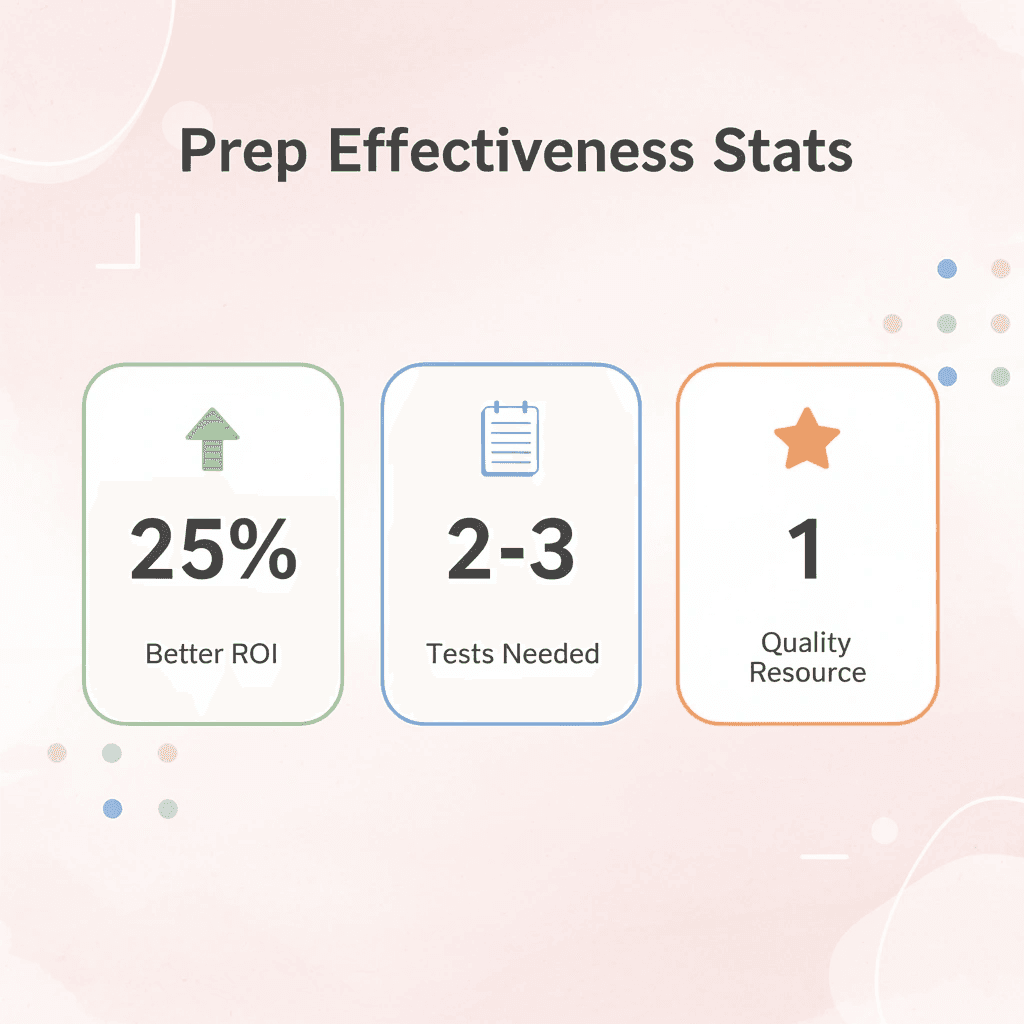
⚠️ Warning: Avoid the common trap of buying multiple prep courses or excessive practice tests. Most students only need 2-3 official practice tests and one quality prep resource to see significant score gains.
Start with a Diagnostic Test
Take a diagnostic test before spending any money. It shows exactly where you're losing points and prevents guesswork. If your math score is strong but reading is holding you back, your prep should match that. Focused practice is more efficient and cheaper: you spend less time and avoid paying for material that doesn't improve your score.
Set a Clear Target Score and Timeline
Decide what score you need based on your college list, prepare specifically for it, and aim to reach it in one or two attempts. Each additional attempt costs an additional full registration fee. Retaking without a clear improvement plan usually yields small gains. Students who work backward from a target score spend less overall because they know when to stop testing.
Use Free Resources Strategically
High-quality official practice materials can close significant score gaps through consistent, strategic use. According to C2 Education, the average SAT score is around 1050 out of 1600. If you're starting near that benchmark and aiming for 1200 or higher, structured use of free tools can bridge most of that gap without paid courses. The key is focused repetition on weak areas, not passive content consumption.
How do AI tools help optimize prep budgets?
Most students sign up for full courses covering everything, including sections they already know well. Platforms like AI college counselor identify which prep investments match your current score and target schools, eliminating confusion about spending. Our personalized study plans and scholarship matching replace the decision-making process that traditionally required expensive private counseling.
Send Scores Selectively
You get a limited number of free score reports. If you want more reports, you will need to pay an extra fee. Build your college list first, then send scores only to schools whose admitted student profiles match your SAT range. This avoids paying to send scores to schools where admission is unlikely.
Check for Fee Waivers
Students who qualify, including those from low-income families or in certain assistance programs, can take the SAT for free through College Board fee waivers. These waivers cover full registration, extra score reports beyond the first free ones, and up to two test date changes. You can also take the SAT through programs like SAT School Day, where your school or district covers the cost. Contact your school counselor early, as waiting too long may cause you to miss these benefits.
How Kollegio Helps You Avoid Wasted SAT Costs
Most students spend too much money because they lack a clear plan. Kollegio closes this gap by letting you make decisions based on your profile and goals rather than guessing through prep, retakes, and applications.

🎯 Key Point: Having a data-driven strategy eliminates the costly cycle of blind retakes and unnecessary prep courses that can cost families hundreds or thousands of dollars.
"Strategic planning based on your actual performance profile can save families $500-2000 in unnecessary SAT-related expenses." — College Prep Industry Analysis

💡 Tip: Use Kollegio's insights to determine if your current SAT score already meets your target schools' requirements before investing in additional prep or retake fees.
Building Your College List First
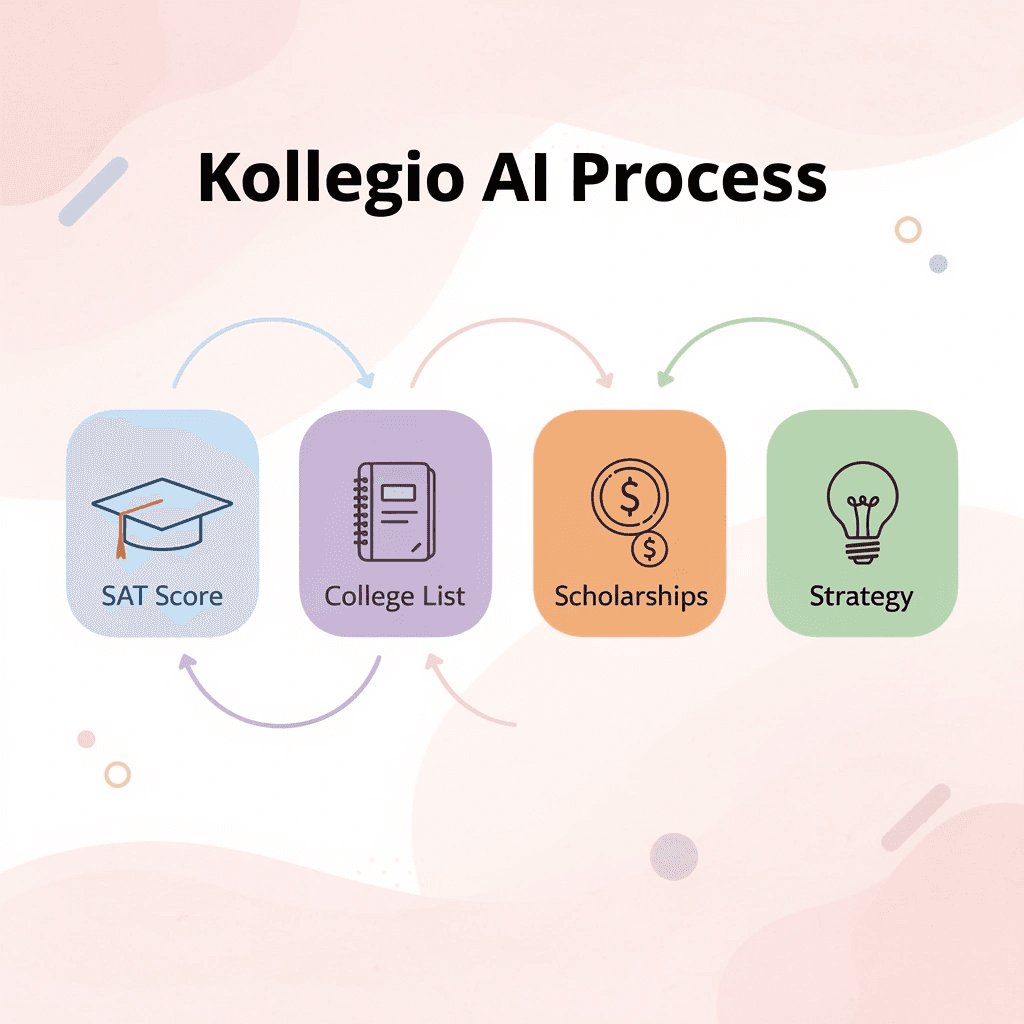
You can build a personalized college list based on your current SAT score, which changes how you think about retakes. A student with a 1280 might discover they're within range for fifteen schools, making a third test attempt optional rather than required.
Connecting Scores to Scholarships
You can find scholarships that match your academic profile, reducing the pressure to retake the SAT for marginal improvements. When a 1250 score qualifies you for specific merit awards at your target schools, the need to reach 1300 through another $68 registration fee disappears. Better positioning often beats a slightly higher score.
Focused Preparation Instead of Broad Coverage
You get structured guidance on what to improve. Rather than paying for broad prep or jumping between resources, you can focus on specific areas that impact your score. Students whose math section is strong but reading comprehension needs work can spend time and money accordingly, rather than enrolling in comprehensive courses that cover everything equally.
How can you plan your application strategy to avoid unnecessary costs?
You can plan your entire application strategy in one place, helping you avoid unnecessary costs from sending scores to too many schools. When your college list, scholarship targets, and application timeline are visible together, you send scores only to schools where they strengthen your candidacy.
How can you make smarter decisions with your current score?
Instead of taking the SAT a third time, use Kollegio's AI college counselor to find schools and scholarships where your current score qualifies. Our AI college counselor helps you shift from pursuing a higher number to making smarter choices with the score you have, reducing wasted money and effort. But knowing the tools exist means nothing without using them.
Use Kollegio's AI College Counselor for Free Today!
Your first step is clarity: know whether your current score meets your target schools' requirements or whether retaking will change your actual outcome. Without that critical insight, you're spending based on anxiety, not strategy.

🎯 Key Point: Use Kollegio to map your SAT score to a personalized college list and scholarship matches in one session. You'll learn exactly where your score is competitive, which schools align with your profile, and whether another test attempt is actually worth the cost. That single conversation can save you hundreds of dollars in unnecessary retakes, unfocused prep, or score reports sent to schools where you weren't a strong fit. Our AI college counselor is completely free and provides the strategic clarity that traditionally required expensive private counseling.
"Strategic clarity about college fit can save students hundreds of dollars in unnecessary test prep and application costs." — College Planning Research, 2024
💡 Tip: Most students treat the SAT as something to survive. You can navigate it with precision instead. The difference isn't effort—it's having the right information at the right time, then acting before costs multiply.
✅ Best Practice: Get your personalized college strategy before investing in additional test prep or retakes.
Related Reading

Author
Senan KhawajaSenan Khawaja is the Co-Founder and CEO of Kollegio, an AI-native college counseling and institutional recruiting platform serving roughly 250,000 students across 190 countries. A Stanford graduate, repeat founder, and Forbes 30 Under 30 honoree with World Bank experience, Senan launched Kollegio to democratize elite college counseling—addressing the 400:1 student-to-counselor ratio in public schools. Under his leadership, Kollegio has secured 22+ institutional partners with a 100% renewal rate and backing from Reach Capital, JFF Ventures, and ECMC Group. He was also selected for OpenAI's inaugural ChatGPT Futures Class of 2026. Senan is based in New York City.