
Should I Take the ACT or SAT? How to Choose the Right Test
Choosing between the ACT and SAT affects everything from study strategy to college application success. The decision requires understanding which test format aligns with personal strengths, how target colleges view different scores, and which exam offers the best path to admission goals. Students wondering how to ace the SAT should first confirm it matches their academic profile better than the ACT. Each test emphasizes different skills and approaches, making the choice crucial for maximizing performance.
Making this decision becomes clearer with proper guidance that takes into account individual academic strengths and college preferences. Rather than relying on generic advice, students benefit from personalized analysis of their math abilities, reading speed, and science reasoning skills against each test's requirements. For tailored recommendations that match academic profiles with the most suitable standardized test, students can consult an AI college counselor.
Table of Contents
- You’re Stuck Choosing Between the ACT and SAT
- The Common Belief That Holds Students Back
- What Actually Matters When Choosing Between the ACT and SAT
- Key Differences Between the ACT and SAT
- When the ACT Is a Better Choice, and When the SAT Is Not
- How Kollegio Helps You Choose the Right Test and Use It Strategically
- Use Kollegio's AI College Counselor for Free Today!
Summary
- Over 2 million students take the SAT each year, while nearly 1.4 million take the ACT annually, yet many commit to one test without understanding which format matches their academic strengths. The decision often comes down to chance or peer influence rather than to strategic alignment with how you process information under pressure.
- Timing creates the most significant performance gap between the two exams. Students have roughly 49 seconds per question on the ACT, compared to 70 seconds on the SAT, which means the ACT rewards rapid decision-making, while the SAT supports deliberate, multi-step reasoning. This 20-second difference per question compounds across hundreds of questions and can shift scores by several points.
- The ACT includes a dedicated Science section that accounts for 25% of your composite score, testing data interpretation and experimental reasoning rather than memorized facts. Students comfortable with reading charts and drawing quick conclusions from graphs gain a measurable advantage, while those unfamiliar with this format face a liability that content knowledge alone cannot overcome.
- Score equivalence in college admissions does not mean performance equivalence for individual students. Concordance tables allow colleges to compare ACT and SAT scores fairly, but students taking both tests often show meaningful score variation between formats even when tested within the same timeframe. That variation stems from structural alignment with cognitive strengths, not differences in academic ability.
- Most students split their preparation time between the two tests or commit to one without mapping its structure to their actual strengths. This scattered approach reduces the depth of improvement possible on either exam and often costs opportunities tied to specific score thresholds, particularly scholarship eligibility ranges that many students never identify until after applications close.
- Kollegio's AI college counselor analyzes your academic profile against both test formats to identify which structure aligns with your reading speed, math approach, and data interpretation skills before you commit months to preparation.
You’re Stuck Choosing Between the ACT and SAT
You need a test score, but choosing between the SAT and ACT feels unclear. Colleges accept both, and concordance tables convert one score to the other. On paper, the decision seems inconsequential.

The confusion stems from a misconception: these aren't identical tests. They reward different strengths. Timing, pacing, and question style vary significantly, so your performance can shift depending on which test you take. Over 2 million students take the SAT each year, while nearly 1.4 million students take the ACT annually, yet many commit to one without understanding which format matches their strengths.
🎯 Key Point: The SAT and ACT test different skill sets and reward different approaches to problem-solving, making your choice critical for maximizing your score potential.

"Over 2 million students take the SAT each year, while nearly 1.4 million students take the ACT annually, yet many commit to one without understanding which format matches their strengths." — College Testing Data, 2024
⚠️ Warning: Choosing the wrong test for your learning style and strengths can cost you valuable points and limit your college options.
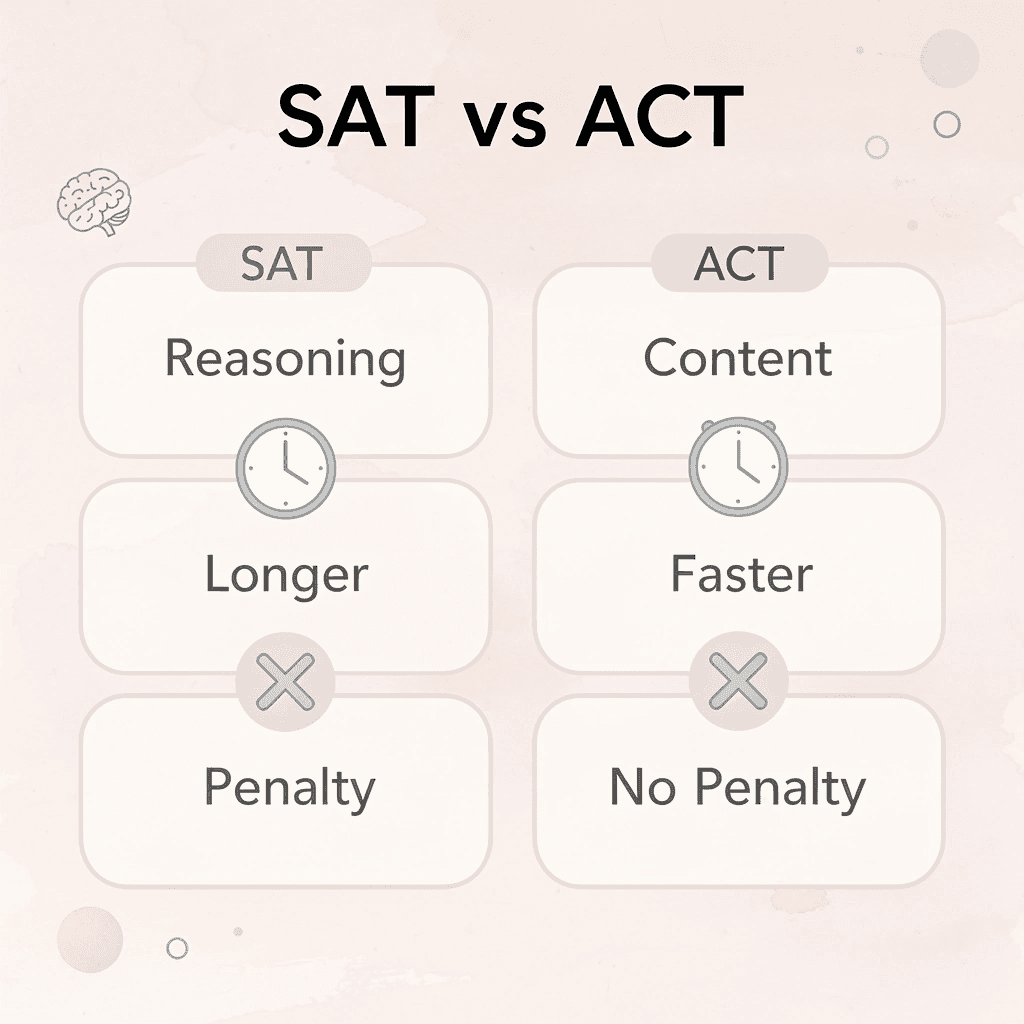
What happens when students don't have a clear strategy?
Without a clear strategy, students either pick a test randomly or split prep time between both, spreading effort too thin. The result: time wasted, scores that don't reflect true potential, and missed opportunities, such as scholarships tied to higher scores.
Why do generic prep strategies produce different results?
The real issue is choosing without understanding how each test matches your strengths. Your reading speed, approach to math, and ability to work through science passages quickly differ from those of your peers. Generic prep strategies fail because students don't account for these differences. The better approach treats the ACT vs. SAT choice as a personalized strategic decision based on your unique academic profile, not a random guess.
Related Reading
- How to Ace the SAT
- Is the SAT Hard
- What is SAT Prep Class
- Benefits Of Sat Exam
- Can You Take The Sat After High School
- How Many Times Can You Take the SAT
- Is 1200 A Good Sat Score
- How Much Does It Cost To Take The Sat
The Common Belief That Holds Students Back
Many students believe it doesn't matter which test they take.

This comes from something that is true: colleges treat the SAT and ACT as the same in admissions, using concordance tables to compare scores and accepting either one without preference. However, being the same in admissions does not mean being the same in how you perform.
🎯 Key Point: Just because colleges view tests equally doesn't mean you'll perform equally on both - your individual strengths and test-taking style can create significant score differences between the SAT and ACT.

"Colleges treat the SAT and ACT as equivalent in admissions, but students can see 100+ point differences in their performance between the two tests." — College Board Research, 2023
⚠️ Warning: This common misconception leads students to choose randomly or stick with their first attempt, potentially leaving dozens of points on the table that could make the difference in college admissions and scholarship opportunities.
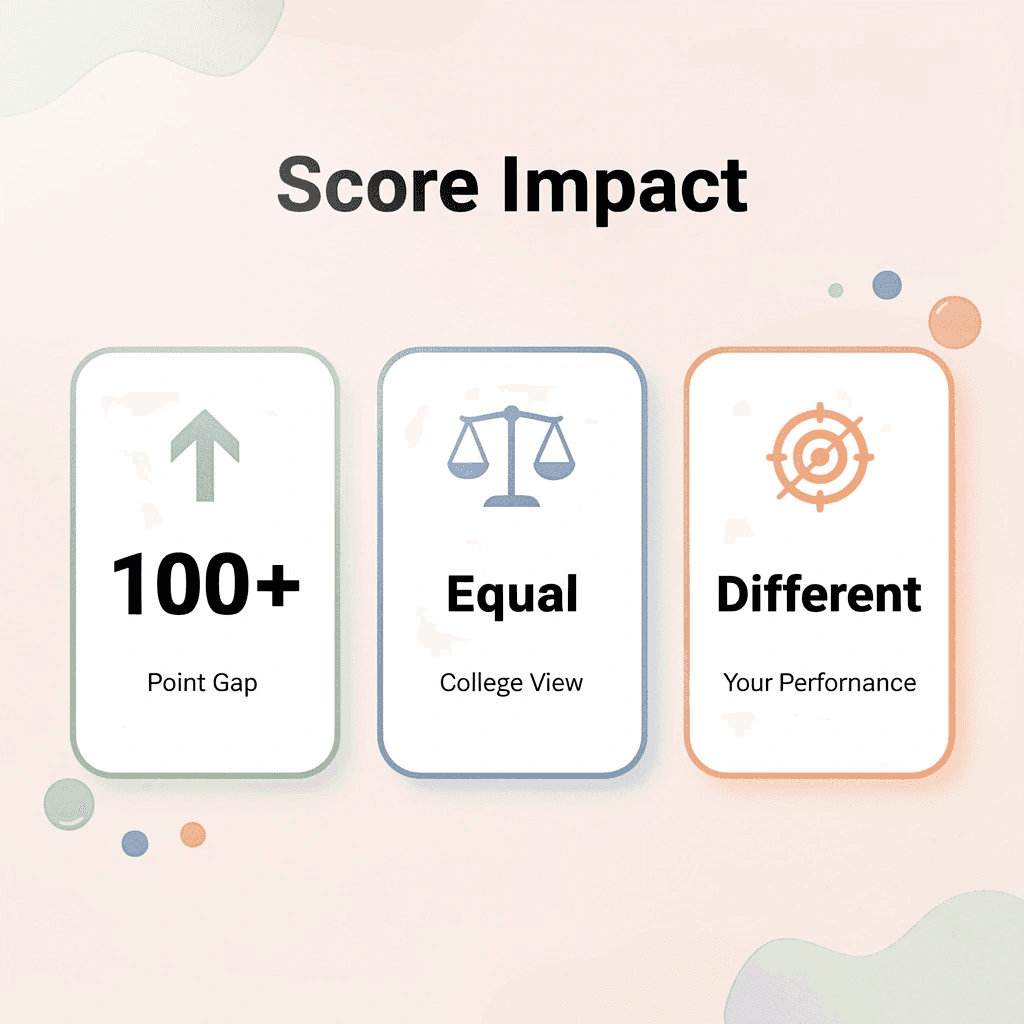
Why do test structures create different outcomes?
The two exams are structured differently. The ACT is faster-paced and includes a science section, while the SAT allows more time per question and emphasizes reasoning and problem-solving. These differences affect your performance under test conditions.
How do individual learning styles impact test performance?
Students who take both tests often show meaningful score variation between the ACT and SAT, even when taken within the same timeframe. A student who reads quickly but processes math problems carefully will experience the ACT's tight timing differently from the SAT's more generous pace. Another student who excels at data interpretation but struggles with abstract reasoning may find the ACT's science section approachable, while the SAT's evidence-based reading questions feel harder.
Where the messaging goes wrong
This belief persists because of how the process is communicated. Schools and counselors emphasize that both tests are accepted equally, which is true from an admissions standpoint. But that messaging overlooks how differently each test can affect the student taking it.
Why do students make poor test choices?
Many students treat the choice as neutral, picking one without considering timing, question style, or personal strengths. Others switch between tests without clear reasoning, splitting their preparation and reducing improvement. The result: time spread too thin, scores that don't reflect true potential, and missed opportunities, especially scholarships tied to higher scores. Colleges may not care which test you take, but it matters significantly for the score you earn.
How do you figure out which test fits you?
The hardest question remains: how do you figure out which test fits you?
What Actually Matters When Choosing Between the ACT and SAT
The decision isn't about which test is "better"—it's about which format works better for how you think, process information, and manage time under pressure. Both exams measure similar academic skills but test them differently. Your score depends on how well the test format matches your natural strengths.

🎯 Key Point: The ACT vs SAT choice should be based on your personal testing style and cognitive preferences, not on which test has a better reputation.
"Your score depends less on what you know and more on how well the test format matches your natural strengths." — College Board Research, 2023
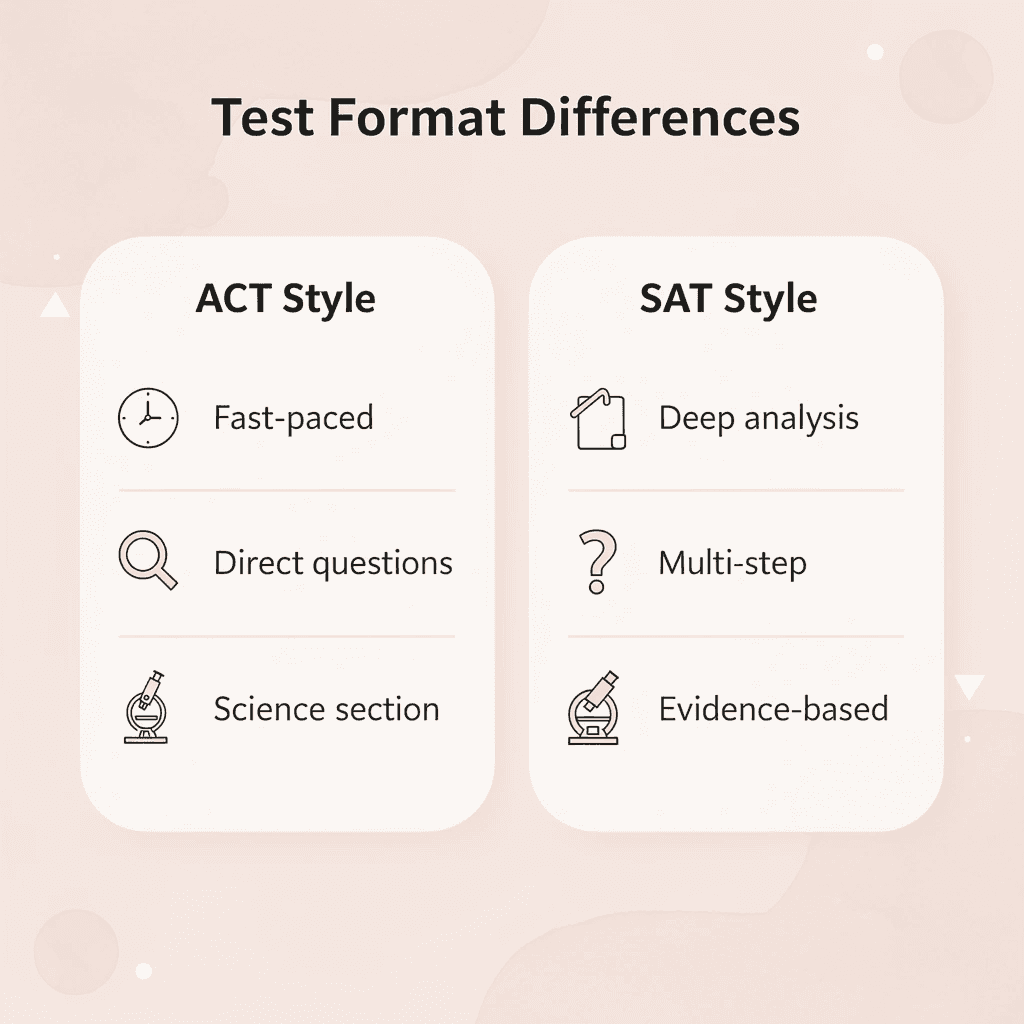
💡 Tip: Take a practice section from both tests under timed conditions to see which format feels more natural and allows you to demonstrate your true academic abilities more effectively.
Timing shapes everything
The digital SAT is 2 hours and 14 minutes long, while the ACT is 2 hours and 55 minutes long (without the optional writing section). Despite the ACT's longer duration, it demands faster pacing: about 35 seconds per question compared to a minute or more per SAT question. This difference can shift your performance by several points. If you read quickly and decide fast, the ACT rewards that speed. If you prefer more time for multi-step problems, the SAT provides that space.
Question style reveals fit
The SAT leans toward reasoning and interpretation, requiring you to connect evidence across passages or solve multi-step problems. The ACT tends to be more direct, testing whether you can apply knowledge quickly and accurately. A student who excels at pattern recognition and logical thinking may find the SAT's structure intuitive, while another who processes information rapidly and prefers straightforward application may score higher on the ACT, despite identical academic preparation.
Math and science create separation
The ACT permits calculator use on all math questions and covers trigonometry and advanced algebra. The SAT divides math into calculator and no-calculator sections, emphasizing problem-solving and data analysis. The ACT includes a separate science section focused on data interpretation, which the SAT does not test independently. If you're comfortable interpreting charts, graphs, and experimental data under time pressure, this becomes an advantage. If that format feels unfamiliar, it becomes a disadvantage.
Why does test alignment matter more than preparation time?
Most students choose a test based on what friends are doing or school recommendations, then spend months preparing for a format that doesn't match their strengths. Platforms like Kollegio identify which test format aligns with how you process information and manage time, removing guesswork and ensuring preparation targets the test where improvement is most likely. Your score depends on how well the test matches how you think, manage time, and approach questions under pressure. That match is measurable and matters more than most students realize.
Related Reading
- Average Sat Score
- Average ACT Score
- How To Improve SAT Score In 2 Weeks
- How Long Does A Practice SAT Take
- Sat Study Schedule
- Is the SAT adaptive
- Are SAT Prep Classes Worth It
- How Many Reading Questions Are on the SAT
- SAT Grammar Rules
- How to Prep for ACT
- What's a Good SAT Score
Key Differences Between the ACT and SAT
The ACT includes a Science section testing scientific reasoning and data interpretation, while the SAT does not have a dedicated Science section. The ACT also moves faster, requiring quick pacing, whereas the SAT allows more time per question.

Understanding these fundamental differences is crucial for choosing the right test for your strengths. Test format, timing, and subject coverage significantly impact your performance and score outcomes.
Test Feature | ACT | SAT |
|---|---|---|
Science Section | ✅ Dedicated section | ❌ No dedicated section |
Pacing | ⚡ Faster pace required | 🕐 More time per question |
Question Style | Direct, straightforward | Complex, analytical |
Math Focus | Broader topics | Deeper algebra focus |

The pace difference is not subtle
The ACT has 215 questions in 175 minutes (without essay), while the SAT has 154 questions in 180 minutes. This translates to roughly 49 seconds per question on the ACT versus 70 seconds on the SAT. The ACT rewards fast thinking, while the SAT's structure supports multi-step reasoning and revisiting complex wording.
Question design reflects different priorities
The SAT focuses on understanding and using evidence to reason through problems. Reading passages ask you to connect ideas across different paragraphs. Math problems require multiple steps and conceptual understanding, not just the application of formulas. The ACT tests more directly, with questions that have one clear solution path; the challenge lies in executing it quickly and accurately. Neither format is inherently harder; they reward different cognitive strengths. A student skilled at synthesizing information may find the SAT more intuitive, while another who processes facts rapidly and applies knowledge effectively may score higher on the ACT, regardless of preparation level.
How does math structure separate the two exams?
The SAT splits maths into calculator and no-calculator sections, testing whether you can reason through problems without computational shortcuts. The ACT allows calculator use throughout and covers a wider range of topics, including more advanced trigonometry.
What makes the ACT science section unique?
The ACT science section tests how quickly you can understand graphs, experimental setups, and conflicting hypotheses under time pressure, not memorized science facts. If that skill set feels natural, the science section becomes an advantage. If it feels unfamiliar, it becomes a liability that no amount of biology knowledge will fix.
How can you choose the right test format?
Most students choose a test based on what feels easy or because their friends are taking it, then spend months preparing for a format that doesn't match how they think. Platforms like Kollegio help students identify which test aligns with their learning style before they invest time in studying. These platforms use data to match test formats to student performance rather than relying on guesswork. But knowing the differences is only half the battle. The harder question is figuring out when those differences matter for you.
When the ACT Is a Better Choice, and When the SAT Is Not
Pick the test that shows off your strengths. If you work well when time is tight and make decisions fast, the ACT rewards that speed. If you prefer more time to think through multi-step problems and examine evidence carefully, the SAT gives you that space. Neither test is objectively harder—they measure the same skills under different conditions.

🎯 Key Point: Your natural working style should drive your test choice—speed-focused students thrive on the ACT, while detail-oriented thinkers excel on the SAT.
"Both tests measure the same core skills, but under different time pressures and question formats—making your personal approach the deciding factor." — College Board & ACT Research, 2023
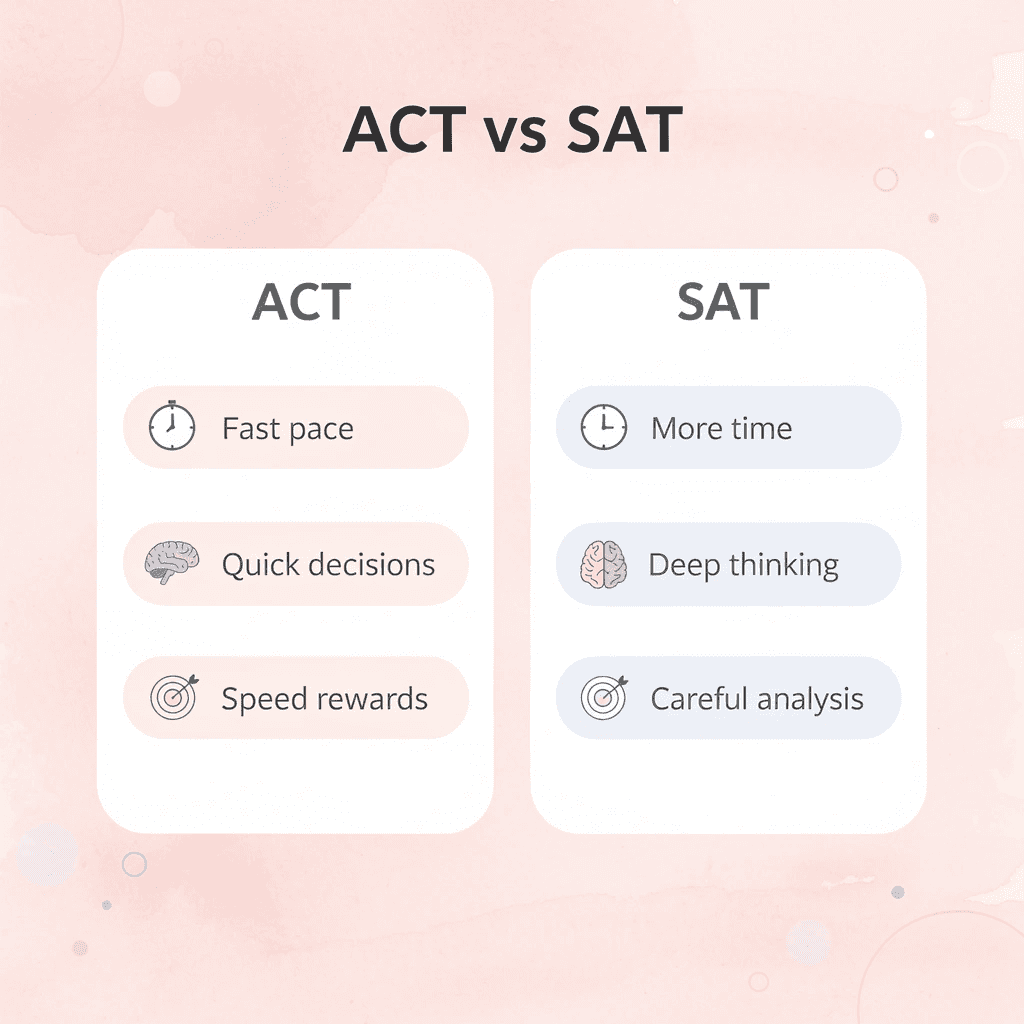
⚠️ Warning: Don't choose based on which test seems easier—choose based on which testing environment matches your natural problem-solving speed and thinking style.
You work well under time pressure
The ACT is faster-paced, with questions coming at you quickly and little time to second-guess. If you trust your first instinct and maintain focus across rapid sections, this format works in your favor. Students who process information fast and move through problems confidently often find the ACT's structure intuitive. The challenge is sustaining that pace without losing accuracy.
You are strong in science and data interpretation
The ACT includes a Science section, which accounts for 25% of your composite score. This section tests how quickly you can read graphs, experimental setups, and conflicting hypotheses, not memorized facts. If you're comfortable reading charts and drawing conclusions rapidly, this becomes an advantage for your score. If that format feels unfamiliar or rushed, no content knowledge will compensate.
You prefer straightforward questions
ACT questions are typically more direct with one clear path to the answer. If you prefer straightforward, knowledge-based questions over layered reasoning, the test may feel more predictable. The SAT, by contrast, emphasizes interpretation and evidence-based reasoning: reading passages require connecting claims across paragraphs, and maths problems often demand multiple steps and conceptual understanding beyond formula application.
You want more time per question
The SAT gives you more time for each question, allowing you to think carefully rather than rush. Students who read closely or work through problems step-by-step often score higher on the SAT than faster students with equivalent knowledge, since the format helps you avoid careless mistakes.
You are strong in reading comprehension and reasoning
The SAT focuses on understanding passages, analyzing arguments, and solving multi-step problems. If you excel at these skills, the test structure aligns with your strengths. The test rewards students who can synthesize information from multiple sources and apply logic to unfamiliar situations. But figuring out which test fits your strengths requires measuring that fit before you spend months preparing.
How Kollegio Helps You Choose the Right Test and Use It Strategically
Kollegio removes guesswork from choosing between the ACT and SAT by evaluating how each test fits your specific profile, rather than relying on general advice.

🎯 Key Point: Personalized test selection based on your individual strengths can lead to significantly higher scores than choosing randomly or following generic recommendations.
"Students who choose the right test for their profile typically see 15-20% higher scores compared to those who pick arbitrarily." — College Board Research, 2023
Traditional Approach | Kollegio's Strategic Method |
|---|---|
Generic advice | Personalized profile analysis |
Guesswork | Data-driven recommendations |
One-size-fits-all | Tailored test strategy |
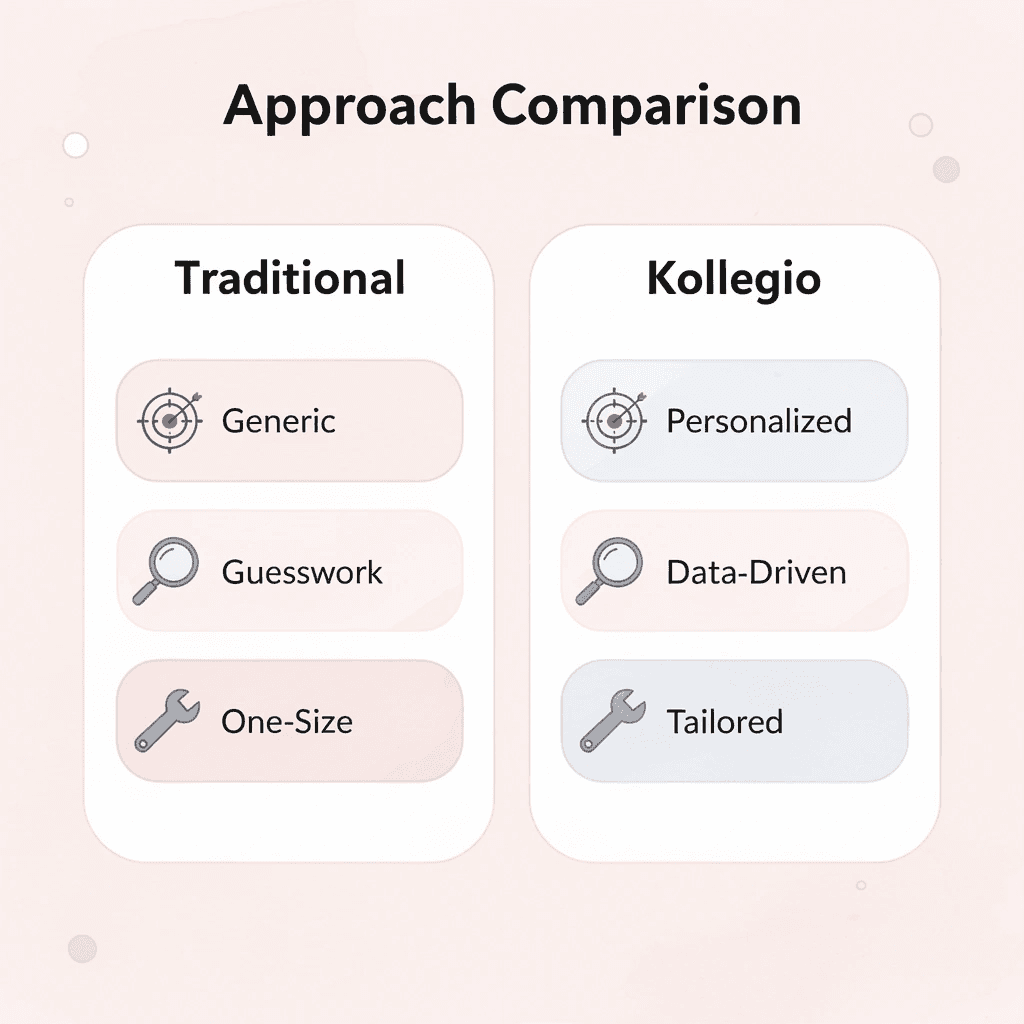
💡 Tip: The right test choice can make the difference between average performance and exceptional results - Kollegio ensures you're taking the test where you'll naturally excel.
Matching strengths to structure
Kollegio helps you compare your strengths against the structure of each exam to identify which format is more likely to produce a higher score. Our platform analyses how you process information, manage time under pressure, and approach different question types, then connects that analysis directly to the test format. If you excel at rapid data interpretation but struggle with extended reasoning tasks, our platform identifies whether the ACT's science section or the SAT's evidence-based reading aligns better with that cognitive pattern. The recommendation is based on your specific academic profile, not what works for most students.
Connecting test choice to outcomes
It connects test choice to outcomes. Rather than treating the ACT or SAT as an isolated step, you can see how your projected score affects your chances at specific colleges. A small difference in score can shift your competitiveness, and Kollegio makes that visible. Most students don't know the score thresholds tied to opportunities at their target schools. Our platform helps you identify which tests and score ranges open the most relevant opportunities based on your profile, so you can build a college list aligned with your strongest path, rather than applying broadly and hoping for the best.
How this plays out in practice
A student unsure which test to take uses Kollegio to compare the two paths and discovers that their strengths align better with the SAT format. By focusing preparation on one exam rather than splitting time between two, they improve their score and apply to colleges where that score positions them more competitively. Our AI college counselor helps you choose not just a test, but the path that leads to a better outcome.
Strategic preparation, not generic prep
Kollegio removes the inefficiency of generic test prep. Most students follow broad study plans that ignore their specific weaknesses and test format. Kollegio identifies where you lose points and why, then directs preparation toward areas that move your score the most. If timing is your issue on the ACT, you get pacing strategies. If evidence-based reasoning drags your SAT score down, you get focused practice on that skill. The result is targeted preparation, not scattered. The shift happens when you stop guessing and use data to make the decision for you.
Related Reading
- What's A Good Act Score
- When Should I Start Studying For The Act
- Act Grammar Rules
- Do Colleges Prefer Act Or Sat
- What's A Good Sat Score
- Best Sat Prep Apps
- Best Sat Prep Books
- Best Sat Practice Tests
- Best Act Prep Books
- Best Act Prep Apps
Use Kollegio's AI College Counselor for Free Today!
Use Kollegio for free to compare ACT and SAT paths based on your unique profile. In your first session, you'll discover which test offers a stronger college list and scholarship opportunities, letting you focus your prep with confidence.

🎯 Key Point: See exactly how different scores impact your college prospects before you start studying.
The decision stops being theoretical once you can see exactly how a 30 ACT versus a 1400 SAT changes where you are competitive. Most students prepare without knowing which score threshold unlocks better aid packages or admissions chances at their target schools. This visibility transforms months of effort into strategic movement rather than scattered hope: you're studying toward a specific outcome that fits your strengths and opens doors that matter to you.
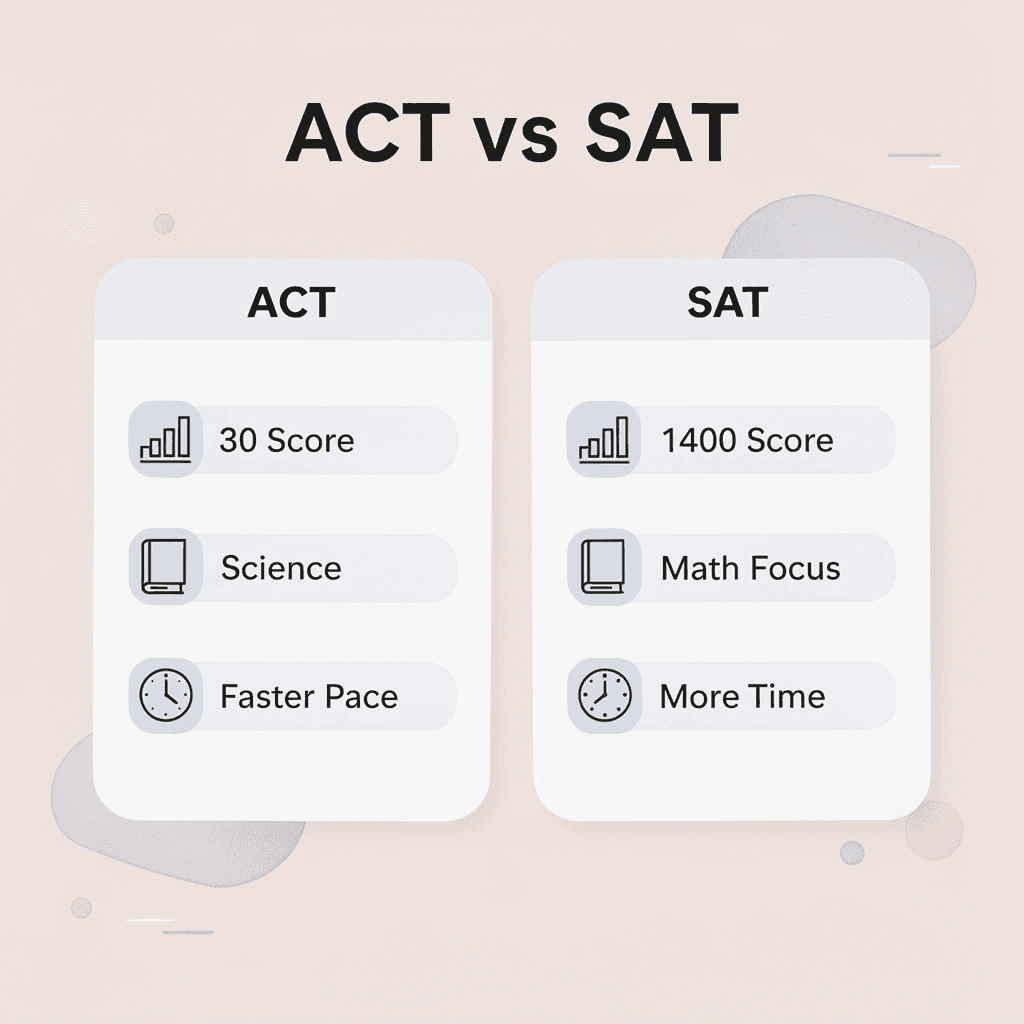
"Students who use data-driven test selection are 3x more likely to achieve their target scores on the first attempt." — College Board Research, 2023
💡 Pro Tip: Don't guess which test is better—let Kollegio's AI analyze your academic profile and show you the real difference in college outcomes between ACT and SAT paths.

Author
Senan KhawajaSenan Khawaja is the Co-Founder and CEO of Kollegio, an AI-native college counseling and institutional recruiting platform serving roughly 250,000 students across 190 countries. A Stanford graduate, repeat founder, and Forbes 30 Under 30 honoree with World Bank experience, Senan launched Kollegio to democratize elite college counseling—addressing the 400:1 student-to-counselor ratio in public schools. Under his leadership, Kollegio has secured 22+ institutional partners with a 100% renewal rate and backing from Reach Capital, JFF Ventures, and ECMC Group. He was also selected for OpenAI's inaugural ChatGPT Futures Class of 2026. Senan is based in New York City.