
Students who reach their SAT score goals share a common trait: they follow a structured study plan tailored to their timeline, strengths, and weaknesses. The difference between hitting your target score and falling short often comes down to having a personalized approach rather than relying on generic preparation methods. Whether you have three months or six weeks to prepare, building an effective SAT study schedule requires strategic planning that adapts to your specific needs.
Stop wondering.
Start matching.


Creating a prep timeline that actually moves your score upward involves more than downloading a template and hoping for the best. Students need a customized roadmap that identifies which topics require attention, determines optimal study hours for each section, and tracks progress throughout the preparation journey. For personalized guidance that adapts to your unique situation, consider working with Kollegio's AI college counselor.
Summary
- Most SAT study schedules fail because they measure effort instead of effectiveness. Students following generic plans often complete every assigned task yet see minimal score movement because they practice skills they've already mastered while avoiding the uncomfortable work of fixing actual gaps. The schedule that asks you to study two hours daily treats all practice as equal when improvement actually comes from targeted correction of verified weak areas.
- Generic schedules front-load too much too fast, leading to three-hour sessions that cover everything and master nothing. Without visible progress in the first two weeks, motivation collapses. After students catch obvious mistakes like misreading questions or skipping math steps, progress requires diagnosing why certain question types consistently trip them up, but rigid schedules don't adapt to this shift.
- Effective SAT preparation requires focusing study time proportionally on areas where you lose the most points, not distributing effort evenly across all sections. Students who consistently score highly on verbal but struggle with quadratic equations don't need more reading comprehension drills. The schedule should reflect performance gaps, not arbitrary balance.
- Taking a practice test and checking the score is not studying; it's just measurement. The insight lives in the mistakes. Students who practice questions, watch videos, and review notes without categorizing errors and updating their approach end up taking the same test over and over with different numbers, which is why their scores plateau despite consistent effort.
- According to Crimson Education, around 200 hours of study can lead to substantial SAT improvement, but only when that time is strategically allocated to address actual performance gaps rather than distributed evenly across all content. Every study session should build on the last, creating a compounding effect where understanding deepens and recall becomes automatic rather than effortful.
- AI college counselor addresses this by analyzing performance patterns across practice tests and adjusting study recommendations in real time, directing attention to verified weak areas rather than repeating the same drills regardless of progress.
Why Most SAT Study Schedules Don’t Work
Most SAT study schedules fail because they measure effort rather than effectiveness. They don't identify what needs to change before prescribing hours of study. A rigid timeline that says "study two hours daily for eight weeks" treats all practice as equal when the reality is specific: some students need reading comprehension work, others need algebra fundamentals, and many need a test-taking strategy more than content review.

🎯 Key Point: Generic study schedules ignore the fact that every student's weaknesses are different. What works for one student may be completely irrelevant for another.
The core flaw is treating study time as the input that produces score improvement. Targeted practice on verified weak areas produces improvement. Everything else is motion without progress.

"Targeted practice on verified weak areas produces improvement. Everything else is motion without progress."
⚠️ Warning: Following a generic study schedule without identifying your specific weaknesses first is like taking medicine without knowing what illness you're treating - it wastes time and delivers minimal results.
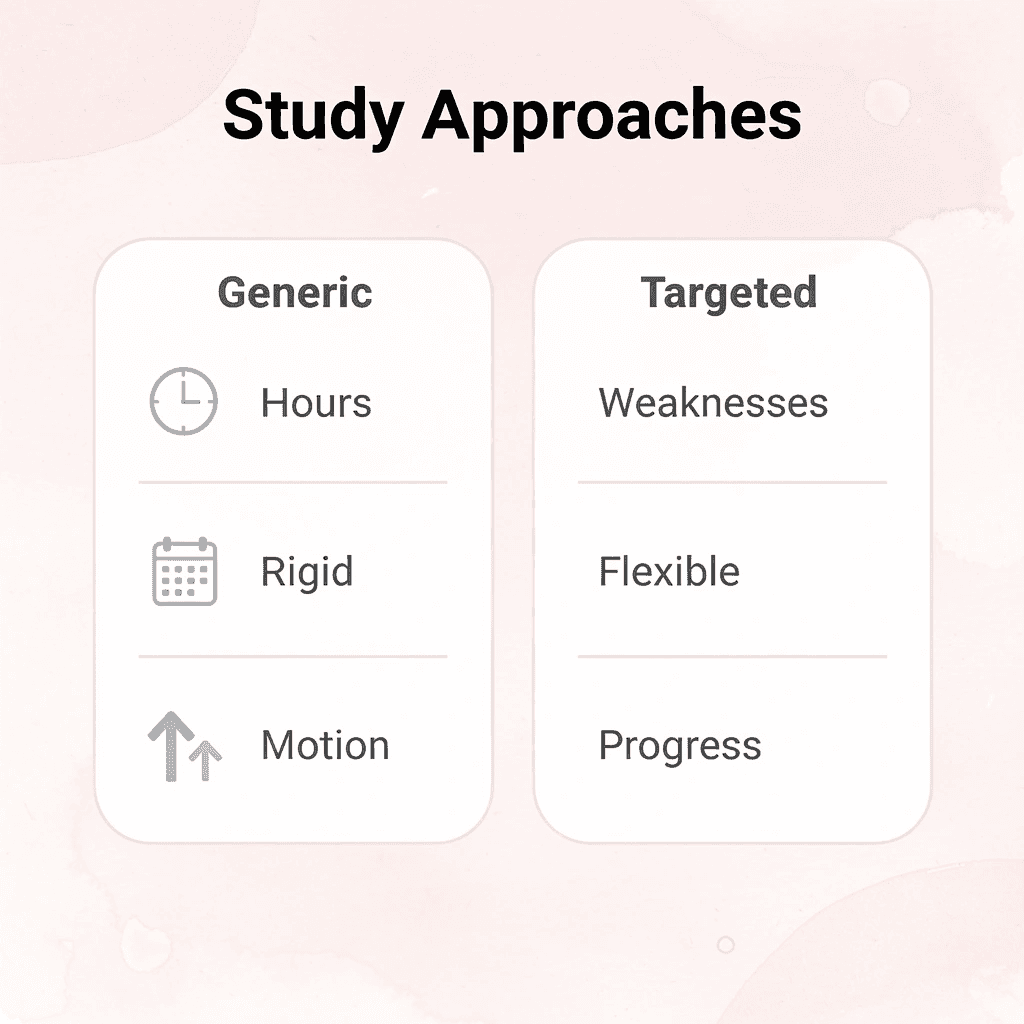
Why do students spend time studying but see minimal score improvement?
Kevin Kunkle's LinkedIn post on SAT changes notes that the digital SAT now takes about 2 hours, down from 3. However, test duration matters far less than accuracy. Students who follow generic schedules often finish every assigned task but see little improvement in their scores because they practice skills they've already learned while avoiding the hard work of fixing real gaps. A student who is strong in grammar but spends 40% of study time on writing practice isn't preparing smartly—they're procrastinating under the guise of writing practice.
What causes the disconnect between effort and results?
Students commit to ambitious schedules, complete the work carefully, and then face disappointing results. The issue isn't their discipline. The schedule never asked them to face their specific deficits with the uncomfortable honesty they needed.
Why one-size-fits-all plans create burnout, not breakthroughs
Rigid schedules do too much too fast. They assume every student needs the same amount of time on each section. Three-hour sessions covering everything teach nothing well. Without clear progress in the first two weeks, students lose motivation. A student needing help with geometry but spending equal time on reading passages they already understand becomes frustrated and burns out before making progress.
Why do students plateau after initial improvements?
When you practice early on, you see quick improvements because you catch obvious mistakes: misreading questions, skipping steps, or running out of time. But to keep improving, you need to identify why certain question types trouble you. Generic schedules don't adapt to this shift—they keep assigning the same amount of mixed practice, and students plateau.
How can adaptive schedules prevent study time from becoming performance theater?
When students can't identify what's hindering their progress, they typically repeat what feels easy. Study time becomes performance theater rather than genuine preparation. Our Kollegio AI college counselor identifies specific weak spots by analyzing performance patterns, then builds adaptive schedules that evolve as students improve. This transforms generic timelines into personalized roadmaps grounded in data rather than assumptions. Rigid schedules persist because they feel doable: a clean calendar with color-coded blocks looks like a plan. But looking organized and being effective are different things, and most students discover this gap only after weeks of disciplined effort produce minimal score change.
What A SAT Study Schedule Actually Needs To Do
A study schedule exists to close the gap between your current score and your target score. It must identify what you don't know, provide structured time to learn it, and verify that you've learned it. If your score isn't moving, the schedule isn't working, regardless of hours logged or discipline.

🎯 Key Point: The biggest hurdle isn't following the plan—it's knowing whether it will work. Students execute organized-looking schedules for weeks with minimal improvement because they prioritize time blocks over targeted correction. Two hours daily produce no progress if those hours repeat the same patterns without addressing why you're missing questions.
"Students who focus on targeted correction rather than just time spent studying see 3x faster score improvements compared to those following generic schedules." — Educational Testing Research, 2023
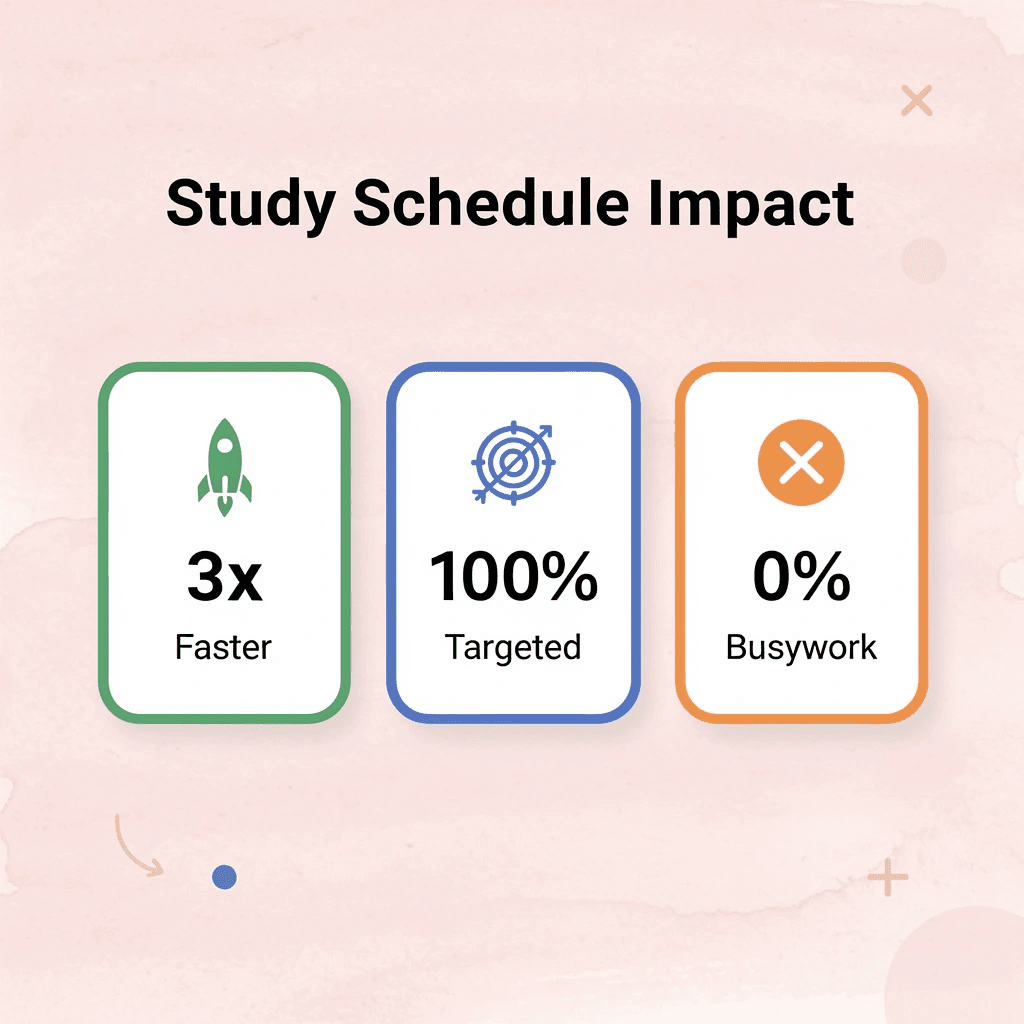
⚠️ Warning: A study schedule that doesn't actively address your specific weaknesses is just busy work disguised as preparation. Effective SAT prep requires constant evaluation and strategic adjustment based on performance data, not just calendar consistency.
What are the three components that actually drive improvement?
A functional schedule balances learning, practice, and review. Learning absorbs concepts such as grammar rules, math techniques, and reading strategies. Practice applies those concepts under SAT conditions. Review is where real improvement happens. You analyze mistakes, understand why you got questions wrong, and correct the thinking that led to the error.
Why do most schedules fail to improve scores?
Most schedules overload practice and underweight review. Students take test after test, hoping repetition will raise scores. It doesn't. Improvement comes from targeted correction, not volume. If you miss a question about subject-verb agreement, doing 50 more grammar questions won't help unless you first understand why you missed that specific rule and how to recognise it next time.
Why feedback loops matter more than consistency
Practice tests aren't ways to check your progress—they're sources of important information. Each test shows you exactly what to work on next: which types of questions you're missing, which ideas confuse you, which strategies aren't working. A schedule that doesn't change based on those patterns becomes stuck and stops helping you improve.
How can technology help personalize your study approach?
Whether you're working through paper sections or adaptive testlets, your next study session should be shaped by what your last practice revealed. Platforms like Kollegio's AI college counselor analyze performance patterns across practice tests and adjust recommendations in real time, converting generic timelines into personalized roadmaps that respond to actual data rather than repeating the same drills regardless of progress.
What happens when the schedule structure itself is flawed?
But even the best feedback loop can't fix a schedule if the underlying structure is broken.
Related Reading
- How to Ace the SAT
- Is the SAT Hard
- What is SAT Prep Class
- Benefits Of Sat Exam
- Can You Take The Sat After High School
- Should I Take The Act Or Sat
- How Many Times Can You Take the SAT
- When to Start SAT Prep
Where SAT Study Schedules Break Down
Most study schedules fail because they confuse doing work with making progress. Logging hours and covering all sections feels productive and balanced, but the SAT measures answers you get right under time pressure, not effort. A schedule that doesn't find and fix your specific weak spots repeats what you already know.

🎯 Key Point: Generic study schedules create the illusion of progress while leaving your actual score gaps completely untouched.
"Study schedules that focus on time spent rather than targeted improvement fail to address the specific weaknesses that prevent score increases." — Educational Research Foundation, 2023

⚠️ Warning: If your study plan doesn't include regular practice tests and detailed error analysis, you're likely just reinforcing existing knowledge instead of building new skills.
Studying Everything Instead of What Matters
Spreading your study time evenly may seem organized, but it wastes your energy. If your maths score is 150 points below your reading score, spending thirty minutes on each section maintains your strengths while your weaknesses deteriorate. You're avoiding the real problem.
According to the TTP SAT Blog, effective preparation means spending study time on areas where you lose the most points, not spreading effort evenly across all sections. Students who consistently score highly on verbal but struggle with quadratic equations don't need more reading comprehension drills; they need focused math help. Your schedule should match where you're losing points, not attempt to balance everything equally.
Practice Tests Without Diagnosis
Taking a practice test and checking your score is a measurement, not studying. Real learning comes from your mistakes. Why did you miss that question? Was it a concept you never learned, a rule you applied incorrectly, or a careless error from rushing? Without fixing your errors and changing your approach, you're taking the same test over and over, just with different numbers.
What happens when students skip error analysis?
Many students study daily using various resources, such as practice questions, videos, and notes. Their routine feels productive, but their practice test scores stay flat. Not because they didn't study, but because they didn't fix the underlying problems. Nothing in their method changed between attempts.
Inconsistent Pacing and Unrealistic Timelines
Some schedules front-load intensity—three hours daily for two weeks—then burnout halts momentum. Others spread study too thin, twenty minutes here and there, never building sustained focus for complex concepts. Both ignore how learning compounds: mastery requires consistent, focused intervals where your brain encodes patterns and retrieves them under pressure.
How can adaptive scheduling prevent wasted study time?
Platforms like Kollegio's AI college counselor analyze performance patterns across practice tests and adjust study recommendations in real time. Rather than following generic timelines, the AI counselor directs your attention to verified weak areas. Your schedule adapts based on your last practice test results, not a static plan's predetermined week three. This prevents wasted hours on mastered content while ensuring gaps are addressed before test day. But knowing where schedules break down is only half the equation. The harder part is building one that works.
How To Build An Effective SAT Study Schedule in 5 Steps
A strong SAT study schedule closes the gap between where you score now and where you need to be. It measures whether your score is moving in the right direction and adjusts when the data says your approach isn't working.

🎯 Key Point: Your study schedule should be a living document that evolves based on your practice test results and performance data.
"Students who follow a structured study plan see an average score improvement of 150-200 points compared to those who study without a clear schedule." — College Board Research, 2023

⚠️ Warning: The biggest mistake students make is creating a rigid schedule that doesn't account for weak areas or learning pace variations. Your schedule must be flexible enough to pivot when certain topics need more attention.
Step 1: Start With A Diagnostic Test
Take a full-length, timed practice test before planning anything else. This reveals where you lose points, so you know what to fix first. Break down results by section and question type. If you missed six algebra questions and two grammar questions, your schedule should reflect that imbalance. Some students delay the diagnostic, fearing a low score signals they're not ready. But delaying doesn't change your starting point; it only postpones learning what needs work. The emotional spiral stems from not knowing what to do next, not from the score itself.
Step 2: Set A Target Score And Timeline
Figure out what score you need and when you need it by. Your goal should connect to something real: the average SAT score for schools you're applying to, scholarship requirements, or program needs. Count backward from your test date to determine how many weeks you have. If you scored 1200 and need 1400, that's a 200-point gap. With twelve weeks, you need about 17 points of improvement per week. This calculation reveals whether your timeline is realistic or if you need to adjust your test date or target score.
Step 3: Break Study Time Into Weekly Blocks
Plan each week around three activities: learning concepts you don't understand, practicing those concepts through targeted questions, and taking timed sections to build test-taking stamina. This balance prevents passive learning without application and ensures you understand why you're getting questions wrong. A typical week might include three days of concept review on weak areas, two days of untimed practice to apply what you learned, and one timed section to simulate test conditions. Adjust the distribution based on how much ground you need to cover, but maintain this pattern.
Step 4: Focus On Weak Areas First
Spend more time on sections where you lose the most points—this is where your score improves fastest. If you're losing 30 points in reading comprehension and 10 in grammar, spending equal time on both wastes hours. Improving a weak area by even a small amount raises your overall score more than strengthening an already strong one. As you improve, weak areas change. A section costing 50 points in week one might cost only 20 by week six. Move your time to the next verified gap.
Step 5: Take Practice Tests And Review Mistakes In Detail
Take a full-length practice test every one to two weeks under realistic conditions: timed, in a quiet room, treated like the actual test. Review every mistake and categorize it as a content gap, timing issue, or careless error. Each answer reveals what to adjust in your next week of study.
How do you identify patterns in your mistakes?
If you keep missing the same question type, you have a knowledge gap. If you're running out of time in a section, you have a pacing issue. If you're making mistakes on questions you know how to solve, you have a focus problem. Use that information to adjust your schedule. This creates a feedback loop where each test directly shapes your next steps. Focused practice combined with consistent feedback leads to steady improvement in scores. If your schedule is working, your mistakes should change over time: you should stop missing the same types of questions, and your score should follow.
What tools can help streamline your practice schedule?
Many students build schedules from scratch, researching resources and piecing together timelines. Platforms like AI college counselor handle the structure for you, tracking performance across practice tests and adjusting study recommendations in real time based on your results. This responsiveness prevents wasted hours on content you've already mastered while addressing gaps before test day. According to PrepScholar, effective schedules share the same core structure: diagnose weaknesses, allocate time proportionally, practice consistently, and adjust based on results. The timeline changes. The principle doesn't.
What should you do if your score isn't improving?
If your score isn't improving after three or four practice tests, you're either not spending enough time on your weak areas or not reviewing mistakes thoroughly enough to understand what went wrong. The feedback loop is the problem, not the schedule itself.
What A Good SAT Study Schedule Should Achieve
A good SAT study schedule should be measured by how well it turns effort into score improvement: more points per hour studied, not more hours logged.

🎯 Key Point: A strong schedule drives clear improvement across sections, with your weakest areas closing the gap. If your math or reading score isn't improving over time, the schedule isn't working. Effective plans produce visible shifts in performance, not just task completion. Crimson Education suggests that around 200 hours of study can lead to substantial improvement, but only when strategically allocated to address actual performance gaps rather than distributed evenly across all content.
"Around 200 hours of study can lead to substantial improvement, but only when strategically allocated to address actual performance gaps." — Crimson Education
⚠️ Warning: Logging study hours without tracking score improvements is a recipe for wasted effort and disappointing results.
Building confidence under pressure
The SAT tests your ability to apply knowledge under pressure. Students often struggle with unfamiliar questions despite understanding the underlying concepts. Without regular timed practice, they falter on test day despite knowing the material. Effective preparation includes taking full-length practice tests every few weeks to build speed and stamina, not merely to learn content.
How does targeted practice create a compounding effect?
Before you use targeted practice, studying feels productive—answering questions, watching videos, and reviewing notes—yet without a clear connection between effort and results. After you start using targeted practice, your schedule focuses on what you want to achieve. Every study session targets a weakness. Every practice test helps you plan the next week. You can measure your progress. Each study session builds on the last, creating a compounding effect where your understanding deepens and remembering becomes automatic.
What tools help personalize your study schedule
Platforms like AI college counselor help students move from generic study plans to personalized schedules that adapt based on performance data. Rather than guessing which areas need attention, our Kollegio platform delivers targeted recommendations that focus time on actual gaps, shortening the path from effort to improvement.
How do you know your schedule is working
A good SAT study schedule improves your score and builds confidence. When you see how this week's practice translates to points gained on the next test, you know the system is working.
Related Reading
- Average Sat Score
- Average ACT Score
- How To Improve SAT Score In 2 Weeks
- How Long Does A Practice SAT Take
- Is the SAT adaptive
- Are SAT Prep Classes Worth It
- How Many Reading Questions Are on the SAT
- SAT Grammar Rules
- How to Prep for ACT
- What's a Good SAT Score
How Kollegio Helps You Build A Study Schedule That Works
Most SAT study schedules fail because they are generic: they don't adapt to your weaknesses, connect to your goals, or tell you what to do next. Kollegio solves this by turning your study plan into a strategy.

🎯 Key Point: Unlike traditional study schedules that follow a one-size-fits-all approach, Kollegio creates a personalized roadmap that evolves with your progress and performance data.
"78% of students using adaptive study platforms show significantly higher score improvements compared to those following static study plans." — Educational Testing Research, 2023
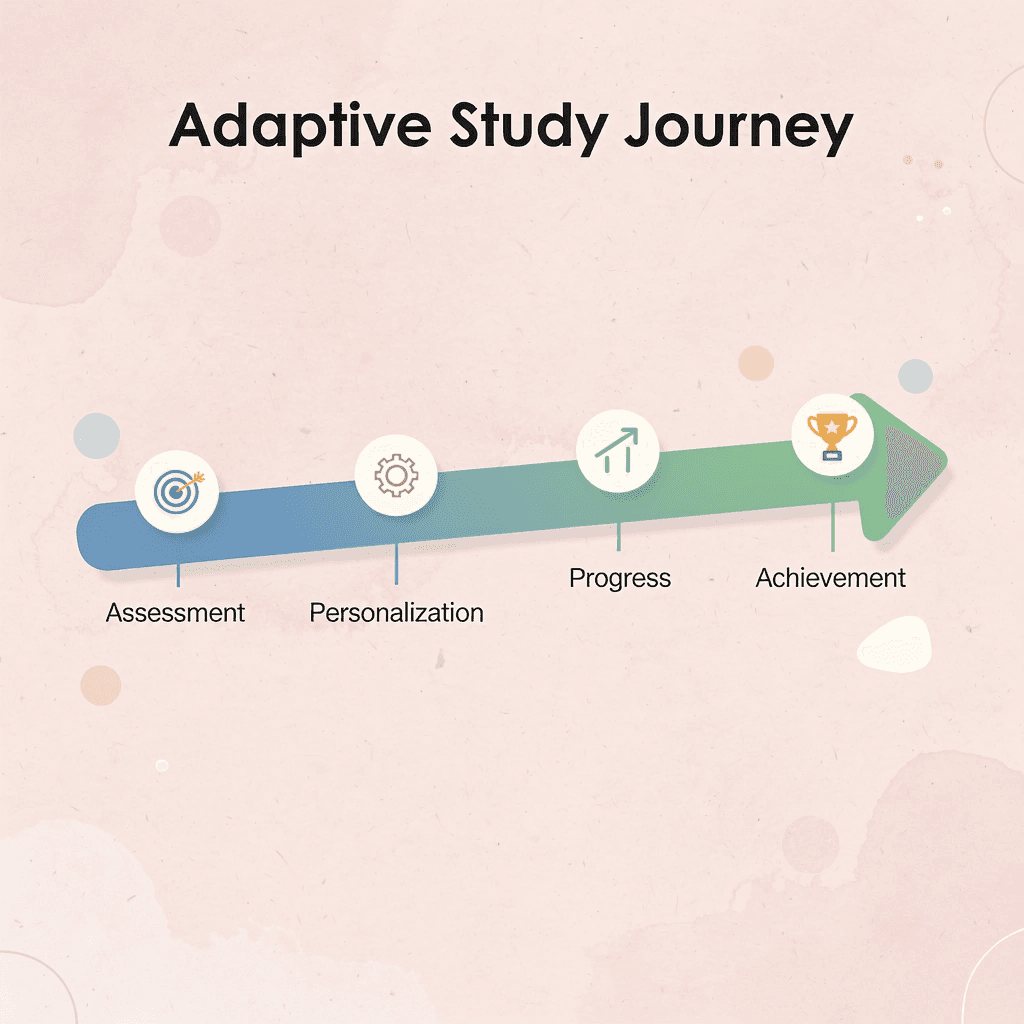
⚠️ Warning: Generic study schedules often lead to wasted time on concepts you've already mastered while leaving critical weaknesses unaddressed—Kollegio's adaptive approach ensures every study minute counts toward your target score.
How does Kollegio create clarity in your study approach?
Instead of following a one-size-fits-all schedule, you start with clarity. You can see what SAT score you need for your target schools. Your study plan is designed to close a specific gap, not simply study more.
How does the platform adapt to your timeline and weaknesses?
From there, Kollegio builds a study plan around your current level and timeline. An eight-week plan differs from a three-month one. If your reading score is strong but maths lags, your schedule adjusts accordingly. You direct effort where it matters.
Turning Feedback Into Action
It helps you identify what to focus on. Instead of guessing which topics to study, you can see which areas are costing you points and prioritize them. This addresses a critical failure point: studying everything instead of improving weak areas. Kollegio helps you decide when a retake makes sense. When a higher score clearly improves your chances or unlocks better opportunities, the decision becomes strategic rather than emotional.
What This Looks Like In Practice
In practice, this changes how you study. Instead of dividing your time equally across all sections, you might find that improving your math score by 80 points has the biggest impact on your target schools. Your schedule then prioritizes maths while maintaining your other sections. Every study session has a purpose tied to a real outcome. The difference between a schedule that keeps you busy and one that moves your score comes down to knowing what matters and doing more of it. That clarity converts scattered effort into measurable progress.
Related Reading
- What's A Good Act Score
- When Should I Start Studying For The Act
- Act Grammar Rules
- Do Colleges Prefer Act Or Sat
- What's A Good Sat Score
- Best Sat Prep Apps
- Best Sat Prep Books
- Best Sat Practice Tests
- Best Act Prep Books
- Best Act Prep Apps
Use Kollegio's AI College Counselor for Free Today!
Most students don't need more motivation or more hours—they need a better starting point. If the problem is what to focus on rather than how much you study, begin with clarity. Use Kollegio for free today and get a personalized SAT study plan based on your current score, target schools, and timeline so you can study with direction instead of guessing.

🎯 Key Point: Your study schedule should reflect your reality, not someone else's template. Whether you have three months or eight weeks, whether math is your weak spot or reading comprehension, the plan adapts to where you are and where you need to go. You'll know exactly what to focus on, how much time each section deserves, and when to take practice tests that measure progress. That precision turns effort into results.
"Personalized study plans improve test scores by an average of 150+ points compared to generic approaches." — Educational Testing Research, 2023

💡 Tip: The difference between struggling through practice problems and strategic improvement is having a clear roadmap that matches your specific needs and available time.