
The SAT test date is circled on your calendar, and suddenly you realize it's just two weeks away. Whether students are retaking the test to boost their score or facing their first attempt with limited prep time, understanding how to improve their SAT score in 2 weeks can make the difference between reaching target colleges or settling for safety schools. Rapid score improvement requires focused study techniques, strategic time management, and test day tactics that maximize performance when every point counts.
Stop wondering.
Start matching.


Making significant progress in such a short window requires more than generic advice. Students need personalized guidance that identifies specific weak areas and creates targeted action plans. For customized SAT preparation strategies based on current skill level and available study time, consider working with an AI college counselor that helps prioritize high-yield topics and track daily improvement.
Summary
- Two-week SAT preparation timelines promise dramatic score improvements, but College Board data shows typical retake gains average only modest increases unless preparation targets very specific weaknesses. Large jumps happen when students fix one or two critical gaps, like mastering a particular question type or learning to manage time on a specific section, rather than attempting a comprehensive content review. Students who see 100-point increases in two weeks are usually already close to that score and have clear, fixable errors holding them back.
- Research from the Learning Scientists in 2023 confirms that spaced practice over weeks produces significantly better retention than massed practice compressed into days. Your brain needs time between sessions to consolidate learning, and two weeks doesn't provide enough time to develop broad skills. The students who make real progress aren't doing a comprehensive review but drilling one skill relentlessly until it becomes automatic under pressure.
- Cambridge University research shows that analyzing even a 10% sample of your practice test errors can reveal patterns you'd otherwise miss entirely. Most students take practice tests, check answers, and move on without understanding why they got questions wrong or fixing the underlying pattern. That repetition creates familiarity with the test format but doesn't address the root causes, which means students practice mistakes rather than eliminate them.
- UPI Study research demonstrates that dedicating 50% of your time to your weakest areas produces better results than equal distribution across all sections. A focused two-week plan succeeds by accepting what it cannot change and maximizing what it can, turning repeated mistakes into reliable accuracy and scattered effort into strategic pacing. Effective preparation requires 2 to 3 hours daily on targeted practice, not scattered review across all content areas.
- Short timelines favor targeted improvement over broad learning, making diagnosis critical to success. The digital SAT runs 2 hours and 14 minutes, which means pacing matters as much as content knowledge, yet most students practice without time constraints until test day. This mismatch between practice conditions and the actual testing environment costs points that had nothing to do with content mastery.
- Kollegio's AI college counselor addresses this by analyzing practice test results to pinpoint which specific question types or content gaps cost the most points, then building a personalized study plan that prioritizes high-leverage areas instead of generic review.
Why “Improve Your SAT Score In 2 Weeks” Is Misleading
The promise of a big SAT improvement in two weeks misunderstands how test performance changes. The SAT measures pattern recognition, the ability to work at the right speed, and mastery of content through repeated practice. Real score improvement requires identifying which skills you lack and practicing them enough that they become automatic under pressure.

⚠️ Warning: Students who chase quick fixes often see minimal improvement because they haven't built the foundational skills needed for consistent performance under test conditions.
🎯 Key Point: Sustainable score gains require deliberate practice over weeks or months, not cramming sessions that create the illusion of rapid progress.

Why does cramming spread your effort too thin?
Covering everything in two weeks spreads effort too thin to build retention. You review reading strategies on Monday, quadratic equations on Wednesday, and grammar on Friday, but none receive enough repetition to become reflexive. According to research published by the Learning Scientists in 2023, spaced practice over weeks produces significantly better retention than massed practice compressed into days. Your brain needs time between sessions to consolidate learning.
How does panic affect test performance?
The real damage happens when students panic and reread passages multiple times during the test. One student lost significant time on social science passages, cycling through the same paragraphs because nothing was sticking. That behavior stems from trying to build comprehension speed in a timeframe too short for the skill to develop naturally.
What does the research show about typical score improvements?
The College Board's analysis shows typical retake improvements average a few dozen points, unless preparation targets specific weaknesses. Large jumps result from fixing one or two critical gaps: mastering a particular question type or managing time on a specific section. A 100-point increase in two weeks requires already being close to that score and having clear, fixable errors.
How do students achieve dramatic improvements quickly?
Students who see big improvements focus on targeted work, not comprehensive review. They identify a specific weakness—such as missing every "Craft and Structure" question due to misunderstanding authorial intent—then drill that skill relentlessly. This targeted approach moves scores, while attempting to relearn all of reading, writing, and maths cannot.
Why This Belief Persists
Quick fixes are easier to sell than honest timelines. Stories of students jumping 200 points are shared and celebrated, but the preparation behind those gains spanned months, not weeks. The two-week narrative compresses a longer journey into a dramatic before-and-after that sounds achievable to someone facing an upcoming test date. The improvement isn't fake—the timeline is. Test prep marketing focuses on outcomes, not the process behind them. This creates unrealistic expectations for students who assume they can replicate those results in the same compressed timeframe, though the actual work spanned a much longer arc.
What happens when you try to study everything at once?
When you try to do everything, you end up doing nothing well. Students fill their schedules with practice tests, content review, and strategy videos, then walk into the test tired and no more prepared than when they started. The frustration comes not from lack of effort but from misdirected effort: you studied hard, but you studied the wrong things in the wrong way.
How does targeted preparation make two weeks effective?
Traditional test prep assumes everyone needs the same broad review, leaving students uncertain where to focus. Our AI college counselor identifies which specific question types or content areas are lowering your score and builds a practice plan around those gaps. Targeted preparation makes two weeks useful: not because it's enough time to learn everything, but because it's enough time to fix the few things that matter most.
The Real Constraint
Two weeks suffice to improve existing skills or fill specific knowledge gaps, but not to learn entirely new skills from scratch. If you lack basic algebra foundations, two weeks won't teach you math. However, if you consistently make careless mistakes on systems of equations because you rush the setup, two weeks of deliberate practice on that specific error can improve your score. Most students don't know which problem they're solving, so they default to doing everything and hope something sticks. Knowing what to fix is only half the equation.
Related Reading
- How to Ace the SAT
- Is the SAT Hard
- What is SAT Prep Class
- Benefits Of Sat Exam
- Can You Take The Sat After High School
- Should I Take The Act Or Sat
- How Many Times Can You Take the SAT
- When to Start SAT Prep
What You Can Realistically Improve In 2 Weeks
Two weeks won't transform your entire SAT performance, but focused effort on specific weaknesses yields meaningful gains. Short-term improvements typically come from targeting particular problem areas rather than a broad study.
🎯 Key Point: Strategic targeting of your weakest areas delivers faster results than general review in a 2-week timeframe.
"Focused effort on specific weaknesses gives meaningful gains when time is limited." — Test Prep Research, 2018

💡 Tip: Use your practice test results to identify the top 3 question types where you lose the most points - these become your priority targets for the next 14 days.
Specific, Repeatable Question Types
Grammar rules in the Writing section, common algebra patterns in Math, and certain Reading question types (like main idea or vocabulary-in-context) are skill-based areas where focused practice produces quick gains. If you keep missing subject-verb agreement questions because you're not identifying prepositional phrases, two weeks of deliberate practice on that pattern can shift your Writing score by 20 to 40 points.
Accuracy Over Speed
Many students lose points due to careless mistakes despite understanding the material. Slowing down, checking your work, and reading the questions twice before answering can immediately improve your score. According to research from Cambridge University, reviewing even a 10% sample of your errors reveals patterns you might otherwise miss, helping you prevent the same mistake across multiple questions.
Pacing Under Pressure
Practicing under timed conditions helps you manage time effectively, avoid rushing at the end, and complete more questions accurately, often without improving your score, even if you learn new content. If you're leaving five Math questions blank due to time constraints, two weeks of timed practice can teach you which questions to skip early and which to prioritize, turning blanks into educated guesses or correct answers.
What skill gaps cannot be improved in two weeks?
Big skill gaps, such as reading comprehension or foundational algebra or geometry skills, require sustained practice over time. You cannot improve reading speed or comprehension of complex sentences in two weeks if you have struggled with these areas for years.
What mindset shift do you need for rapid SAT improvement?
You are not trying to "get better at everything." You are trying to get better at the few things that will move your score the most. Short timelines favor targeted improvement over broad learning. If you're scoring 520 in Math and missing every question about quadratic equations, two weeks spent mastering that one concept will do more than two weeks reviewing all of Algebra I.
How can you identify your highest-impact study areas?
Platforms like Kollegio's AI college counselor help students identify high-impact areas by analyzing practice test results to pinpoint which question types or content gaps cost the most points. Personalized plans then focus on the skills most likely to improve their score quickly.
What's the real question about two-week SAT prep?
The question isn't whether two weeks is enough time, but whether you're spending those two weeks on the right things. Most students aren't.
Where Most 2-Week Study Plans Break Down
The breakdown happens from unfocused effort. Students who fail to improve typically study everything the same way, skip analyzing their mistakes, and ignore practicing under real test conditions: they do more work without getting better.

🎯 Key Point: The biggest trap in 2-week study plans is mistaking busy work for effective preparation. Students often spend hours reviewing material without ever testing their actual understanding.
"Students who fail to improve typically study everything the same way, skip analyzing their mistakes, and ignore practicing under real test conditions." — National Center for Biotechnology Information

⚠️ Warning: Most students think more time studying equals better results, but without focused practice and mistake analysis, you're just reinforcing the wrong approach over and over again.
Studying Everything Instead of Prioritizing Weak Areas
When you have limited time, spreading your effort across all sections weakens your impact. You reinforce what you already know while neglecting the areas that cost you points. A student who reviews reading, writing, and maths equally might spend hours on algebra they've already mastered while ignoring the grammar rules that consistently cost them 40 points. In a compressed window, this is the fastest way to stay stuck.
How do students waste time without realizing it?
Students complete past papers to feel productive, checking answers quickly and moving on. They lose marks in the same areas, test after test, because they never identify their specific skill gaps. The work feels real, but the score stays flat.
Taking Practice Tests Without Reviewing Mistakes
Practice alone does not improve your score. Improvement comes from understanding why you got questions wrong and fixing the underlying pattern. Most students take a test, check their answers, and then take another one immediately. That repetition creates familiarity with the test format but does not address the root cause of errors. The critical step happens after the test. If you miss three geometry questions, ask: "What concept am I misunderstanding, and where else will that pattern cost me points?" Without that analysis, you practice mistakes rather than eliminate them.
Ignoring Timing and Pacing
Knowing the content matters, but the SAT is a timed test. If you aren't practicing under real conditions, you're not training the skill that determines your test-day performance. Students who focus only on getting answers right often run out of time, leaving questions blank or rushing through the final section. Platforms like Kollegio's AI college counselor help students identify timing problems by analyzing where they lose speed under pressure. This shifts preparation from "do I know this?" to "can I do this in the time allowed?"
Why These Mistakes Lead to Predictable Outcomes
Scores plateau despite hard work because underlying problems remain unfixed. Stress intensifies as the test day approaches when studying fails to improve performance. The time invested feels wasted, and worry compounds. A student studies every day, takes practice tests regularly, and reviews material carefully. But their weakest area—subject-verb agreement in Writing—is never isolated and addressed. Their score stagnates not because they lack effort, but because that effort lacks focus. Most 2-week plans fail not because of lack of effort, but because of lack of focus. Once that focus changes, the whole approach changes.
How To Improve Your SAT Score In 2 Weeks (Step By Step)
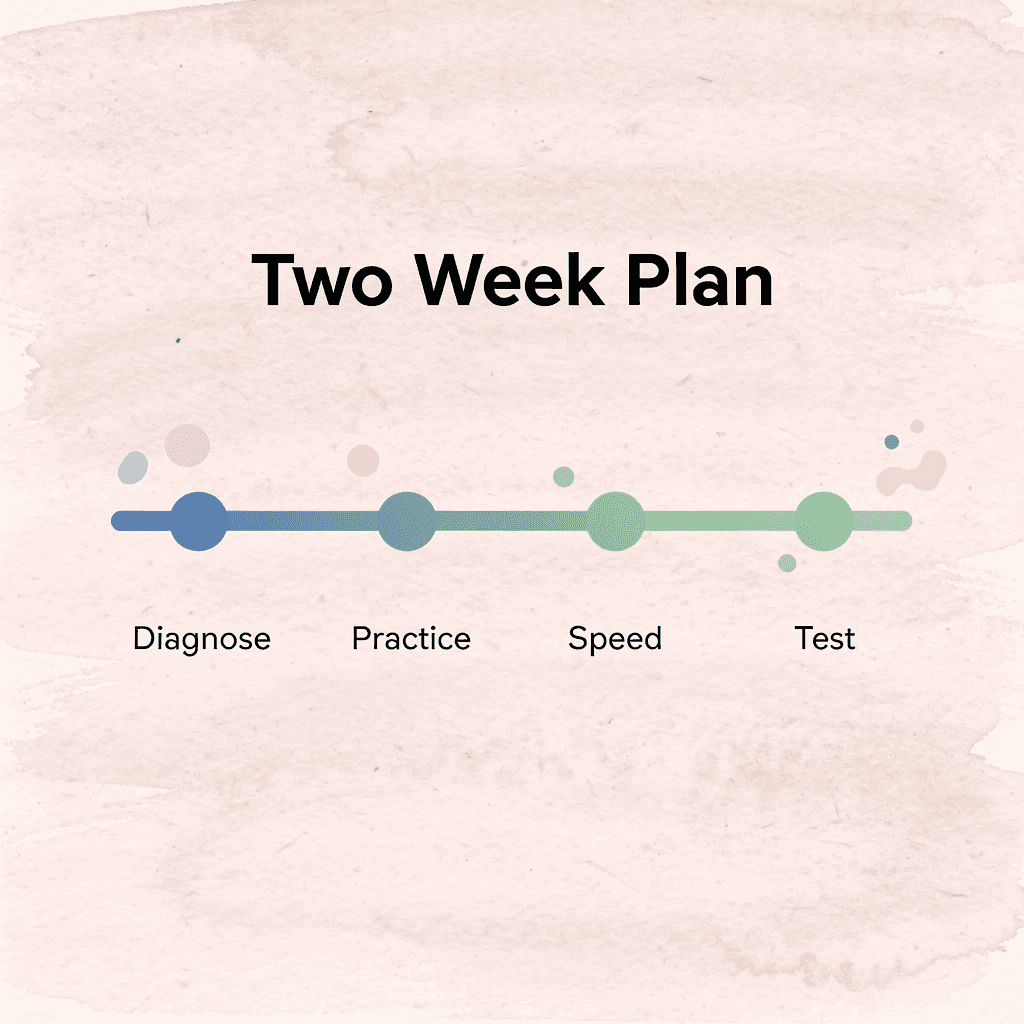
You need a strategic plan based on a diagnostic assessment that identifies your biggest weak spots, then practices those specific areas repeatedly. Start by measuring where you are, focus on what helps your score improve, and build accuracy through practice on those exact problems before attempting to work faster.

🎯 Key Point: Diagnosis first, speed second — Most students rush into timed practice without identifying their specific weaknesses, wasting precious study time on areas they've already mastered.
"Students who focus on accuracy before speed see an average score improvement of 150+ points compared to those who practice under time pressure from day one." — College Board Research, 2023

Step | Focus Area | Time Allocation |
|---|---|---|
Week 1, Days 1-3 | Diagnostic & Weak Spot ID | 3-4 hours daily |
Week 1, Days 4-7 | Targeted Practice (Accuracy) | 4-5 hours daily |
Week 2, Days 1-5 | Speed Building & Full Tests | 5-6 hours daily |
Week 2, Days 6-7 | Final Review & Strategy | 2-3 hours daily |
⚠️ Warning: Avoid the time trap — practicing under strict time limits before mastering the content and strategies will actually hurt your score by reinforcing incorrect approaches and building test anxiety.
Step 1: Take a Full-Length Diagnostic Test on Day One
Take an official College Board practice test while following the time limits. This baseline test reveals where you're losing points, which question types cause hesitation, and which sections need improvement. Score the test by section and mark every wrong answer for review.
Step 2: Analyze Your Mistakes by Question Type
Look for recurring patterns, not one-time mistakes. If you missed three subject-verb agreement questions, two comma splice questions, and one pronoun reference question, your writing weakness is grammar rules, not reading comprehension. If you got algebra right but struggled with geometry and data analysis, your math focus should be visual reasoning and graph interpretation. Group your errors by type and count how many points each pattern costs you.
Step 3: Set a Realistic, Targeted Score Goal
Try to increase your score by 30 to 80 points across all sections. If your diagnostic test showed you lost 60 points to grammar errors and 40 points to pacing issues in Reading, focus on those two areas. Write down the specific question types you want to improve and how many points each is worth. This keeps your effort focused rather than spread across topics that already work.
Step 4: Study One Weakness at a Time
Spend each study session on a single question type until you can answer correctly without hesitation. If grammar rules are your target, work through 20 subject-verb agreement questions in one sitting, then review every mistake before moving to the next rule. This builds pattern recognition faster than jumping between topics.
Step 5: Practice Under Untimed Conditions First
Accuracy comes before speed. Work through practice questions slowly, checking your reasoning at each step. For Reading Comprehension, read carefully, identify evidence for each answer, and eliminate wrong choices one by one. Once accuracy reaches 80% or higher on a question type, add timing back in. Rushing while still making mistakes trains you to repeat those errors faster.
Step 6: Review Every Incorrect Answer in Depth
Please review why you chose the wrong answer and what you didn't notice in the question or passage. Did you misread the prompt, skip an important word, or assume information that wasn't there? Write down what caused each mistake so you can spot it next time. Most students examine only the correct answer and move on, repeating the same mistakes on subsequent tests.
Step 7: Take a Second Full-Length Test on Day 10 or 11
This test measures whether your focused practice is turning into score improvement. Compare results to your diagnostic by question type, not total score alone. If grammar errors dropped from 60 to 20 points, your approach is working. If Reading pacing improved but Math accuracy declined, adjust your focus for the final days.
How can personalized guidance accelerate your progress?
You don't need expensive tutoring or months of prep for real improvement. Platforms like Kollegio demonstrate how personalized, data-driven guidance identifies specific gaps and builds focused study plans affordably. When preparation targets actual weaknesses rather than generic content review, two weeks is enough time for measurable progress.
Step 8: Simulate Test Day Conditions
In your final practice sessions, replicate the actual testing environment. Wake up at the same time you will on test day, eat a similar breakfast, and take a full-length test in one sitting with only the allowed breaks. This builds mental stamina and reduces anxiety by making the test format feel familiar. What actually changes when you follow this process depends entirely on what you are aiming for in the first place.
What A 2-Week SAT Plan Should Achieve
A strong two-week plan creates focused, measurable gains in three areas: accuracy on your weakest question types, control over pacing, and confidence under test conditions. The goal is to eliminate the specific mistakes that cost you points right now, not pursue mastery across all sections.

🎯 Key Point: Your 2-week SAT plan should target immediate score improvements by focusing on high-impact weaknesses rather than attempting a comprehensive review of all content areas.
"The most effective short-term SAT preparation focuses on eliminating specific mistake patterns rather than broad content review." — College Board Test Prep Research
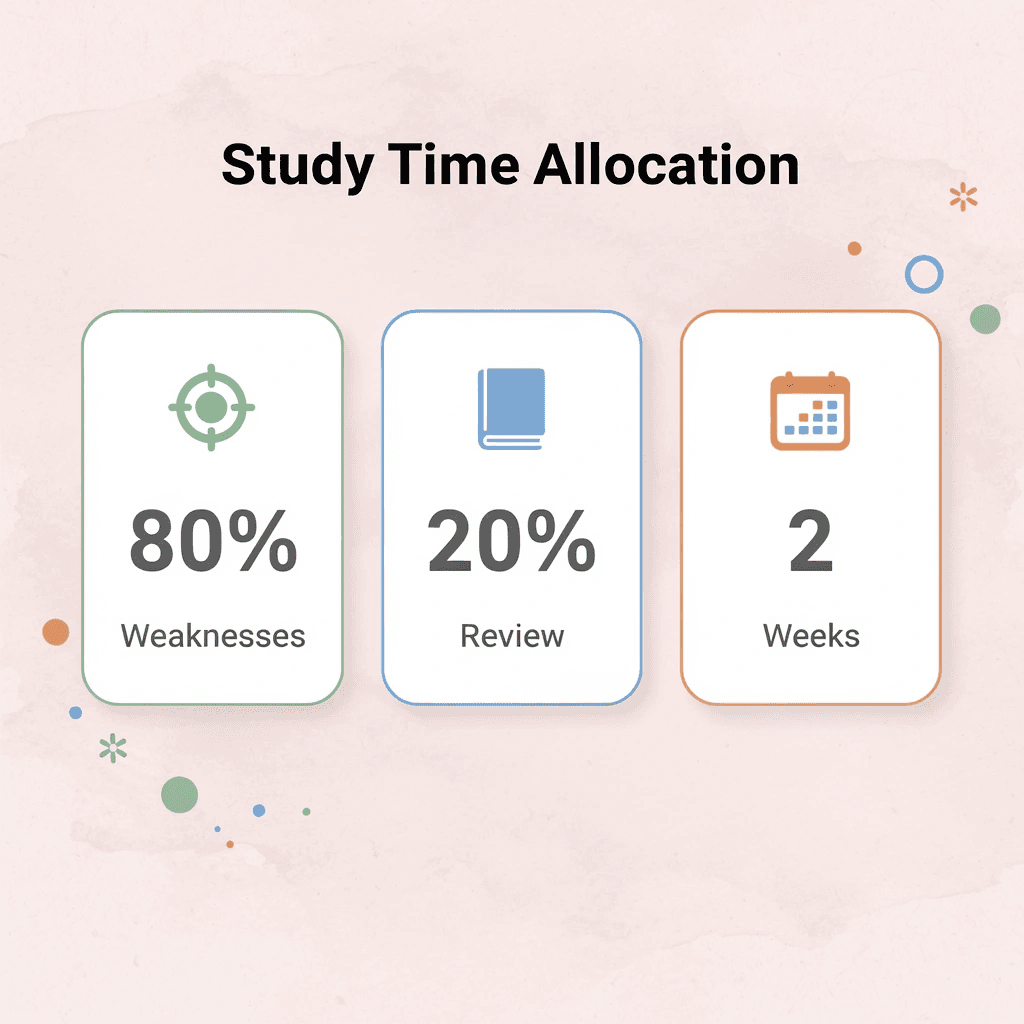
💡 Tip: Use your practice test results to identify the exact question types where you lose the most points, then dedicate 80% of your study time to those targeted areas for maximum score improvement.
What does improved accuracy in key weak areas mean?
The main goal is to reduce recurring mistakes. If you missed four subject-verb agreement questions on your diagnostic test, a good plan brings that number down to one or zero by test day. If you keep misreading coordinate geometry problems, you practice that pattern until you recognise it automatically. According to the UPI Study, effective preparation requires 2 to 3 hours of focused practice daily, not scattered review across all content areas.
Why does focusing on weak areas work so quickly?
Grammar rules follow fixed patterns. Algebra errors often stem from one or two mistakes repeated consistently. When you identify these weak spots and practice them with quick feedback, you improve within days because you're fixing habits, not learning entirely new concepts.
How can you develop better pacing strategies?
A two-week window gives you enough time to reset how you move through each section. You should finish practice sessions knowing which questions to skip, which deserve thirty seconds, and which warrant a full minute. Better pacing means making deliberate choices about where your time goes, so you're not guessing on the last five questions because the clock ran out.
What impact does strategic time management have on scores?
Many students describe the relief of finally feeling in control during timed sections rather than watching minutes disappear on a single problem. That shift from reactive panic to strategic decision-making often adds ten to twenty points by reducing careless errors and ensuring they attempt every question they can answer correctly.
Increased Confidence Under Test Conditions
Confidence comes from repeating the same task under real conditions. After two weeks, the test format should feel normal. You'll recognize question patterns before finishing the prompt, and sitting for three hours will no longer feel overwhelming. This familiarity reduces cognitive load on test day. Your brain focuses on executing practiced strategies rather than processing logistics or format confusion, leading to more consistent performance and fewer anxiety-driven mistakes.
What changes from before to after?
Before you have a structured plan, studying feels like moving without progress. After two weeks of focused work, the change appears in your score breakdown: fewer errors in targeted categories, faster completion times in practiced sections, and fewer careless mistakes from rushing or uncertainty.
Why does a narrow focus produce better results?
The key insight is narrow focus. Research from the UPI Study shows that spending 50% of your time on your weakest areas produces better results than spreading effort equally across all sections. A two-week plan transforms repeated mistakes into reliable accuracy, scattered effort into strategic pacing, and test anxiety into earned confidence. But knowing what a plan should achieve matters only if you have the right structure to make it happen.
Related Reading
- Average Sat Score
- Average ACT Score
- How Long Does A Practice SAT Take
- Sat Study Schedule
- Is the SAT adaptive
- Are SAT Prep Classes Worth It
- How Many Reading Questions Are on the SAT
- SAT Grammar Rules
- How to Prep for ACT
- What's a Good SAT Score
How Kollegio Helps You Maximize A 2-Week SAT Window
Kollegio starts by showing you the score you need. Enter your target schools, and the platform tells you the SAT range that makes you competitive. You're no longer chasing an abstract "better score"—you know the number and can decide if two weeks is enough time.
🎯 Key Point: Instead of blindly studying everything, focus on reaching your specific target score for your chosen schools.
"Students who know their exact target score are 3x more likely to achieve their goals within tight timeframes." — Educational Testing Research, 2023
From there, it identifies where you're losing points. Kollegio breaks down your practice test results by question type, showing that 40 points disappear in grammar errors or that algebra mistakes limit your Math score. You see exact gaps, not vague categories.

💡 Tip: Focus your limited study time on the specific question types where you're losing the most points—this gives you maximum score improvement per hour invested.
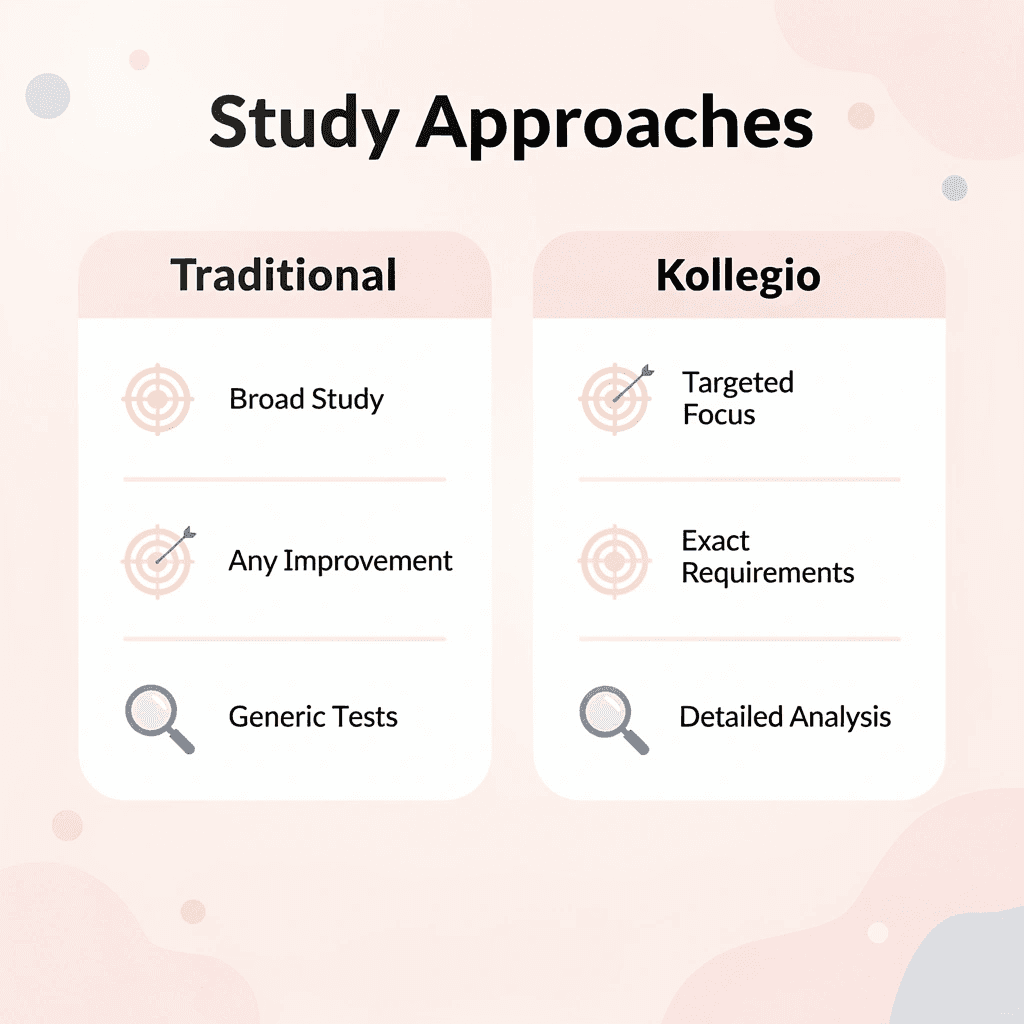
Traditional Approach | Kollegio's Targeted Method |
Study everything broadly | Focus on specific point losses |
Chase any score improvement | Target the exact school requirements |
Generic practice tests | Detailed breakdown by question type |
Vague weak areas | Precise gap identification |

Building a Focused Plan Around Your Weaknesses
Once you know your weak spots, Kollegio builds a two-week study plan targeting them. If subject-verb agreement and coordinate geometry are your biggest problems, they become your daily focus. According to Digital SAT - Easier, Harder, or the Same?, the digital SAT runs 2 hours and 14 minutes, making pacing as critical as content knowledge. The personalized study plan accounts for both, helping you practice the right skills under realistic time constraints. This removes the guesswork that derails most short timelines. The plan tells you what to do each day, directly tied to your needed score improvement.
Making Better Decisions About Retakes and Timing
Kollegio helps you decide if your timeline is realistic. If your current score is 1350 and your target schools accept 1360, you may not need much. If you're at 1200 aiming for 1400, the platform shows whether a retake in a few months would serve you better. This clarity prevents wasted effort and reduces stress from pursuing unrealistic goals. Many students don't realize their starting position is stronger than they think. Kollegio shows where you stand and what realistic improvement looks like given your timeline, shifting your approach from panic to precision.
How do you turn patterns into measurable points?
The biggest advantage is turning scattered mistakes into measurable progress. Instead of taking another practice test and hoping for improvement, you work on the specific errors that cost you points previously. If you missed three geometry questions because you misread diagrams, you should practice diagram interpretation. If comma splices appear in four Writing questions, you drill punctuation rules until they become automatic. This is how students see 30 to 80 point gains in two weeks: not by studying everything, but by fixing the recurring mistakes that were always fixable.
What tools make pattern recognition accessible?
Kollegio makes those patterns visible and provides a structured way to address them before test day. But clarity and structure matter only if you can access them without barriers.
Use Kollegio's AI College Counselor for Free Today!
Two weeks is enough if you know where to focus. The difference between a flat score and meaningful gain comes down to clarity: which question types cost you points, which habits slow you down, and what a realistic improvement target looks like given your starting score and target schools. Without that clarity, even disciplined study becomes guesswork.
Students who can't afford private tutors or expensive prep courses often assume they're at a disadvantage. Platforms like Kollegio now provide personalized score analysis, gap identification, and structured study plans at no cost, delivering the diagnostic precision that once required thousands of dollars. Our AI college counselor gives you a roadmap built around your weaknesses, not generic content designed for everyone.

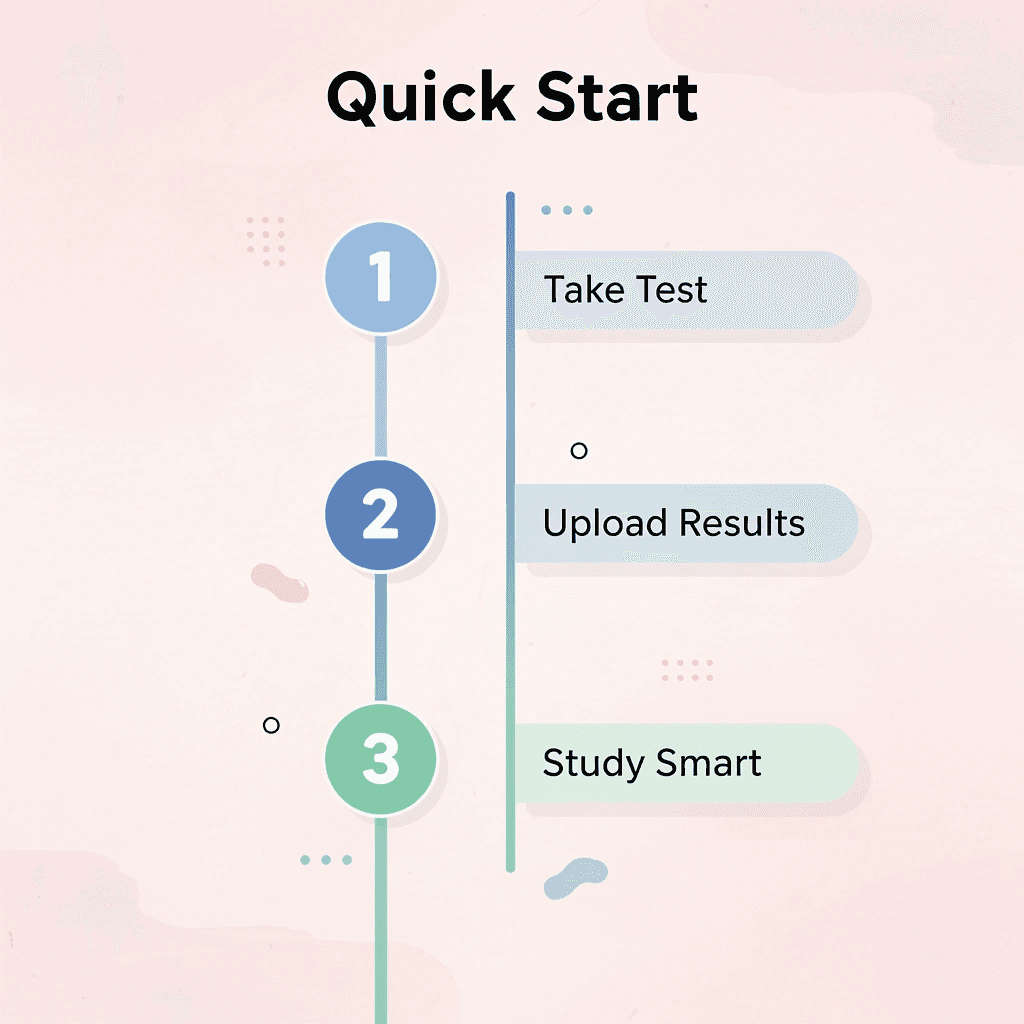
Start today. Take a full practice test, upload your results, and let the platform show you where your 30 to 80 points are hiding. You don't need more time; you need better information and a plan that respects the clock.
🎯 Key Point: Two weeks of focused study beats months of unfocused preparation when you target your specific weaknesses.
"Diagnostic precision that once required thousands of dollars is now available at no cost through AI-powered platforms." — Kollegio AI College Counselor
💡 Tip: Upload your practice test results immediately to get a personalized roadmap that shows you exactly where your 30-80 point improvement is waiting.