
What ACT Score Is Needed for Harvard and How to Improve Your Odds
Harvard stands as one of the most selective universities globally, leaving many students wondering what ACT score gives them a competitive edge in admissions. While Harvard evaluates applicants holistically rather than relying on a single test score threshold, understanding the ACT score ranges of admitted students provides a crucial benchmark. The university's admissions process considers multiple factors, but knowing where your scores stand relative to accepted students helps you set realistic expectations and plan strategically.
Strong test scores represent just one piece of Harvard's complex admissions puzzle, alongside essays, extracurriculars, and academic rigor. Students need comprehensive guidance to navigate both test preparation and the broader application strategy that maximizes their chances of acceptance. For personalized advice on ACT benchmarks and strengthening every aspect of your Harvard application, consider consulting an AI college counselor that tailors recommendations to your specific profile and goals.
Summary
- Harvard's middle 50% ACT range of 34 to 36 describes admitted students, not admission requirements. Thousands of applicants score within this range every year, yet 96% are still rejected. Once you demonstrate academic readiness through test scores, admissions officers shift focus to evaluating course rigor, extracurricular impact, leadership initiative, and the coherence of your overall application narrative.
- ACT College Readiness Benchmarks measure whether students can earn a B or higher in college courses, not whether they're competitive at selective universities. A score of 22 meets the math benchmark for college readiness, but Harvard's admitted students typically score 35 or 36 in that section. Students who conflate "meeting benchmarks" with "competitive for admission" often stop preparing too early or waste time on marginal score improvements instead of strengthening other application components.
- The Harvard Crimson's Class of 2025 survey found that 10.4% of freshmen were recruited athletes, illustrating how exceptional achievement in specific domains can create admission pathways beyond academics alone. At the threshold where test scores demonstrate academic ability, admissions officers look for measurable impact through activities such as founding programs that served hundreds of students, conducting published research, or leading initiatives that created tangible community change.
- Generic recommendation letters praising students as "hardworking" or "smart" add little value when thousands of applicants submit comparable test scores. The most compelling letters include specific stories about intellectual curiosity, resilience during setbacks, or collaborative leadership that reveal character dimensions numbers cannot capture. Teachers who observed growth over multiple years provide context that differentiates otherwise similar academic profiles.
- Application coherence matters more than credential accumulation. When coursework, activities, achievements, and essays all reinforce the same underlying interests, admissions officers can quickly understand what drives you and how you've developed expertise over time. Scattered profiles where different elements point in conflicting directions make it difficult for evaluators to see what you care about or what you'll contribute to campus.
- Students who reach Harvard's competitive ACT range should shift focus from chasing marginal score improvements to strengthening their complete application narrative. AI college counselor analyzes thousands of data points across academics, activities, and achievements to identify specific profile gaps and strengths that score-focused planning misses.
You Hit Harvard's ACT Range, So Why Are Applicants Still Rejected?
Most students think admission comes down to one number. The reality is harder: thousands of applicants achieve ACT scores within Harvard's typical admitted-student range, yet most are denied.
Harvard's ACT range shows the scores of admitted students, not the scores needed for admission. Thousands of applicants meet or exceed those benchmarks annually. If test scores alone determined outcomes, Harvard University wouldn't maintain its 3.9% acceptance rate. Once a student demonstrates they can perform academically at Harvard, additional ACT points yield diminishing returns: a 35 is not automatically more compelling than a 34.
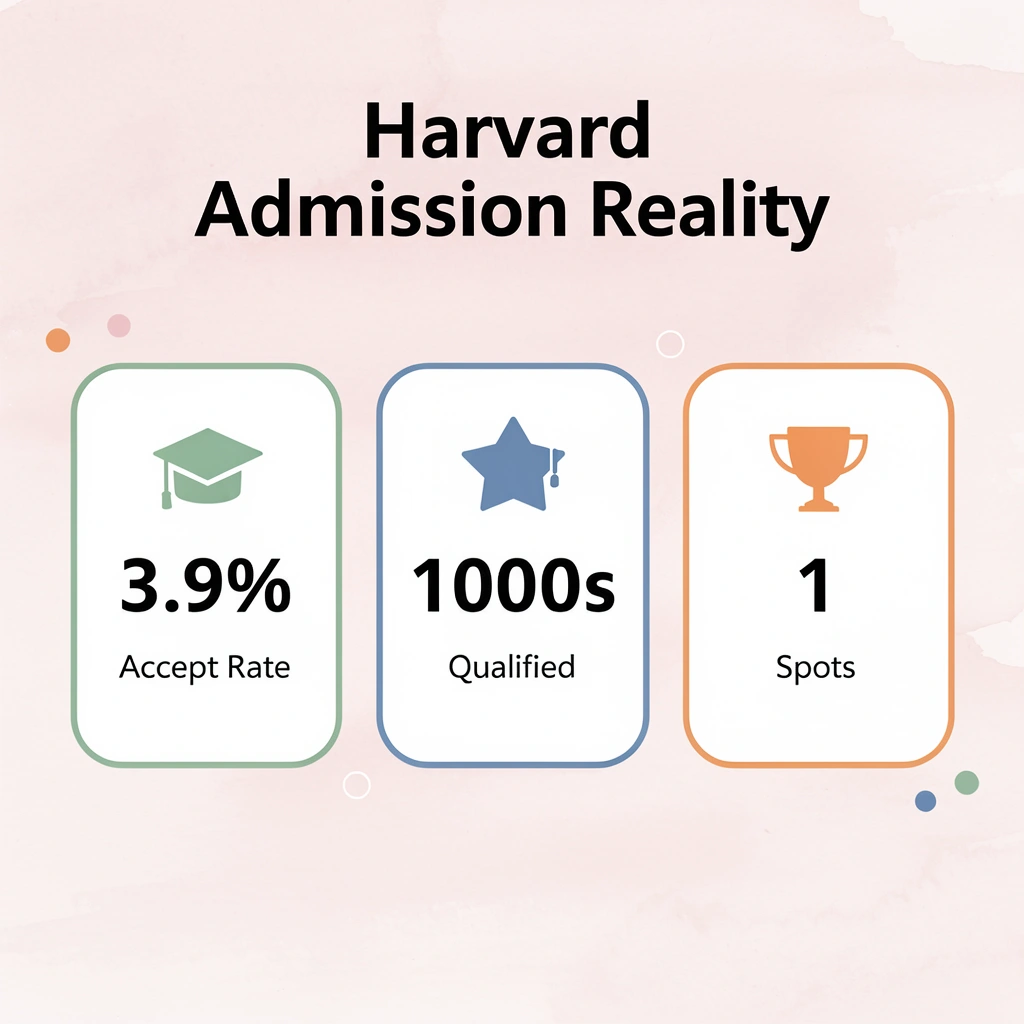
🎯 Key Point: Meeting Harvard's ACT range is just the minimum academic threshold—thousands of qualified applicants still face rejection because scores alone don't guarantee admission.
"3.9% acceptance rate means that even students with perfect test scores face overwhelming competition—academic qualification is just the entry ticket, not the golden ticket."

🔑 Takeaway: Test scores get you considered, but Harvard's holistic admissions process means your essays, extracurriculars, and unique story ultimately determine whether you stand out among the thousands of academically qualified applicants.
What separates admitted students from rejected ones?
At that level, admissions officers evaluate academic rigor and course selection, grade consistency, leadership and initiative, extracurricular depth and impact, research or creative work, personal character as reflected in recommendations, and the overall application narrative.
Consider two applicants with a 35 ACT score: the first participates in several clubs and maintains strong grades; the second has similar academic credentials but has spent years leading a community initiative, conducting independent research, or building a project demonstrating unusual commitment and impact.
How does Harvard build its incoming class?
Both students have proven they are ready for college-level work. What sets them apart is evidence of how they will contribute to Harvard's campus and community. This is why many qualified applicants are rejected despite having scores within Harvard's admitted range.
The admissions process is designed to build a class with diverse experiences, accomplishments, perspectives, and potential, not simply to find students who can handle the coursework.
What should applicants focus on beyond test scores?
For applicants, this shifts the question from "Is my ACT score high enough for Harvard?" to "What does the rest of my application reveal about me once my academic qualifications are established?"
Tools like Kollegio's AI college counselor analyze thousands of data points across your complete profile—test scores, grades, activities, essays, and more—to identify strengths and gaps that traditional score-focused planning misses, helping you build a strategic application that addresses your actual competitive position.
Understanding what Harvard expects beyond test scores requires examining the numbers they rarely emphasize publicly.
Related Reading
- What ACT Score Is Needed for Harvard
- Average Act Score For Nc State
- Average Sat Score For Unc
- Average Sat Score For Umd
- Average Sat Score For Uc Berkeley
- Average SAT Score for Virginia Tech
- Average Sat Score For Brown
- Average SAT Score for UVA
- Average SAT Score for Michigan
- Average Sat Score For Ohio State
What ACT Score Does Harvard Actually Expect?
AdmitStudio's Harvard ACT analysis shows that the middle 50% of admitted students score between 34 and 36. Harvard doesn't publish a minimum score requirement because they evaluate applications holistically, but this range indicates whether your score positions you competitively.

"The middle 50% of admitted Harvard students score between 34 and 36 on the ACT, representing the top 1-2% of all test takers nationwide." — AdmitStudio Harvard Analysis, 2025
🎯 Key Point: While Harvard evaluates holistic applications, an ACT score below 34 puts you at a significant statistical disadvantage compared to admitted students.
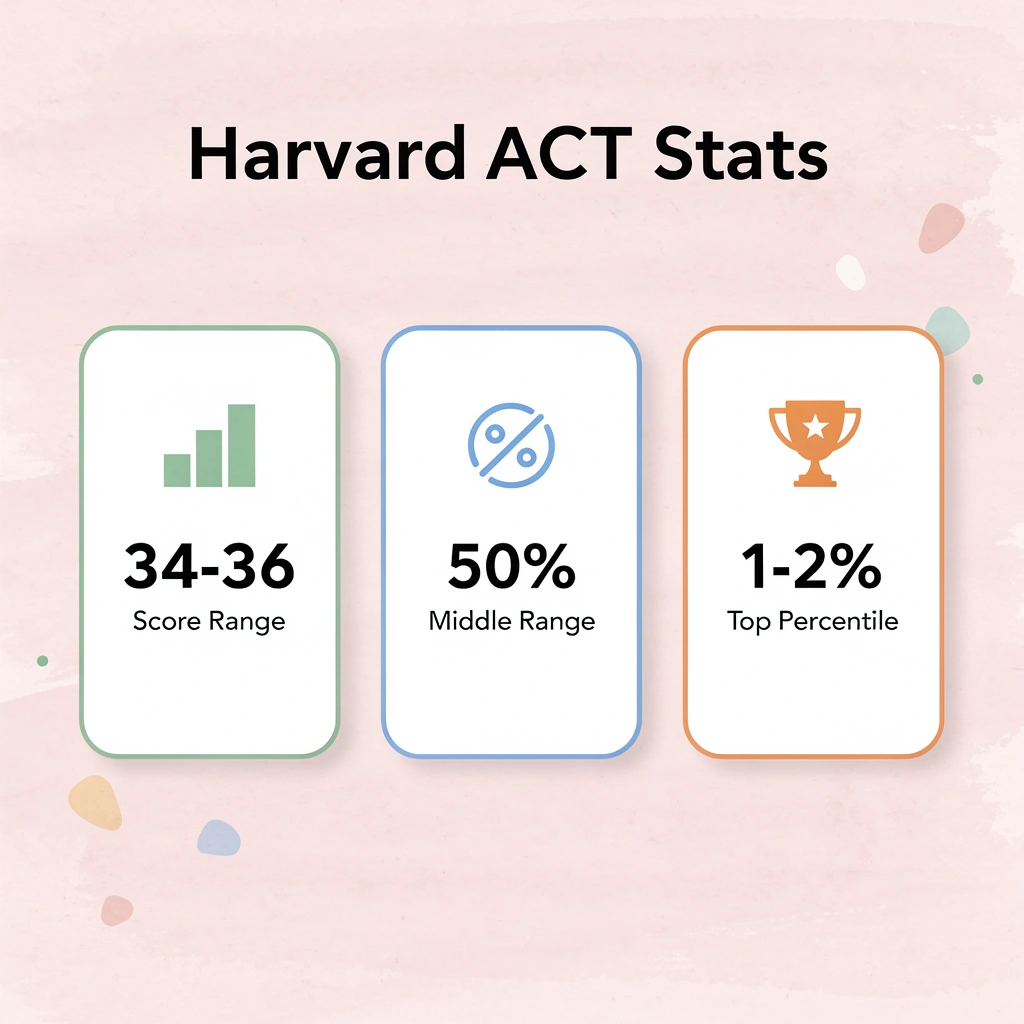
🔑 Takeaway: Scoring in the 34-36 range doesn't guarantee admission, but it ensures your test scores won't be the weak link in your Harvard application.
What does your ACT score actually mean for Harvard admission?
A 34 puts you at the lower edge of Harvard's admitted student profile. You're academically qualified, but your application will need exceptional strength in other areas to compensate. A 35 sits comfortably in the middle, demonstrating strong preparation without raising questions about academic readiness. A 36 is impressive, but it won't carry your application alone since thousands of applicants submit perfect scores each cycle.
How should you interpret Harvard's published score ranges?
Students often misread these ranges as targets rather than descriptions of outcomes. The published numbers reflect who got in, not what Harvard demands. Some admitted students score below 34 because their applications demonstrated extraordinary impact in other domains. Others with 36s get rejected because their profiles didn't distinguish them from the high-achieving pool.
When do higher ACT scores stop making a difference?
Once your ACT score reaches Harvard's competitive range, additional points don't meaningfully improve your chances. Admissions officers prioritize rigorous coursework, leadership in extracurricular activities, and essays demonstrating intellectual curiosity. A student with a 34 who founded a nonprofit addressing food insecurity often outperforms a student who scored 36 but whose activities lack focus or depth.
How should you spend time instead of retaking the ACT?
Obsessing over score improvements—retaking the ACT to move from a 34 to a 35—consumes time that would be better spent building a compelling application narrative. Our Kollegio platform analyzes your complete profile to identify specific strengths and gaps that score-focused planning misses, helping you address your actual competitive position rather than fixating on marginal improvements.
What the Numbers Don't Show
Harvard's acceptance rate tells a harsher story than its ACT range. With roughly 4.2% of applicants admitted to the Class of 2029, thousands of students with scores in the 34-36 range are rejected each year. The score proves you can handle the academics; what happens after determines whether you receive an offer or rejection.
Knowing where you stand academically is only half the equation.
The Biggest Mistake Students Make When Interpreting ACT Benchmarks
The biggest mistake students make is treating ACT benchmarks as predictive indicators of college admission rather than as measures of baseline academic preparedness. ACT College Readiness Benchmarks define the score levels associated with a 50% chance of earning a B or higher in corresponding college courses, not the threshold for competitive admission to selective universities. A student who meets the English benchmark of 18 has demonstrated readiness for first-year composition, but that same score falls far below what Harvard expects from applicants.
⚠️ Warning: Don't confuse college readiness with college competitiveness. Benchmarks show minimum preparedness, not admission standards.
"ACT benchmarks indicate a 50% chance of earning a B or higher in corresponding college courses, not competitive admission thresholds." — ACT College Readiness Standards
🔑 Takeaway: Use ACT benchmarks as your starting point for college readiness, but aim significantly higher for competitive university admissions.

Why do students confuse benchmarks with admission requirements?
This confusion stems from the way benchmarks are discussed in school counseling offices and on online forums. Students hear they've "met the benchmark" and assume they're competitive for any school, conflating academic readiness with admissions competitiveness. The benchmark for college-level math might be 22, but Harvard's admitted students typically score 35 or 36. Meeting the benchmark demonstrates you can handle college coursework—it says nothing about competitiveness at schools where the median admitted student score is in the 99th percentile.
How does misreading benchmarks affect student preparation?
When students misread benchmarks as admission targets, they stop preparing too early or misdirect their effort. A student scoring 24 might celebrate meeting multiple benchmarks without realizing that score places them below the competitive range for most selective colleges.
They've demonstrated college readiness in general, but not the academic strength expected by institutions with single-digit acceptance rates. The gap between "ready for college" and "competitive at Harvard" is roughly 10-12 ACT points.
Why do students waste time on marginal score improvements?
Students waste months debating whether a 34 versus 35 matters when both scores sit comfortably within Harvard's range. Once you reach the 33 to 36 range, additional points provide diminishing returns.
A student spending their entire junior summer retaking the ACT to raise their score from 34 to 35 might gain nothing meaningful for their application while missing opportunities to take on leadership roles, conduct research, or deepen extracurricular commitments that differentiate candidates.
How can students get better guidance on their complete profile?
For students navigating this confusion without expensive counseling support, platforms like our AI college counselor at Kollegio analyze thousands of data points to show where your complete profile stands relative to admitted student patterns, rather than isolated test score benchmarks. This shifts focus from chasing score thresholds to understanding how your academic credentials, activities, and narrative work together within the broader admissions context.
What should students focus on instead?
Stop asking whether your score meets a benchmark. Start asking whether your complete academic profile positions you competitively within the applicant pool at your target institutions. Examine the middle 50% score ranges for admitted students rather than general college readiness standards. Recognize when test scores no longer become the limiting factor in your application. Invest time proportionally across all application components rather than obsessing over a metric that Harvard views as one data point among many.
Meeting the academic threshold opens the door to a more complex evaluation process.
What Harvard Looks at After Your ACT Score Meets the Threshold
Once your ACT score meets Harvard's threshold, the admissions process shifts dramatically. You've demonstrated you can handle the academic work. Now Harvard asks a deeper question: what will you contribute that thousands of other qualified students cannot?

🎯 Key Point: Meeting Harvard's ACT threshold is just the entry ticket - the real competition begins with demonstrating your unique value proposition to the admissions committee.
"Harvard receives applications from over 40,000 students annually, with the majority meeting our academic standards. We're looking for students who will make a distinctive impact on our community." — Harvard Admissions Office
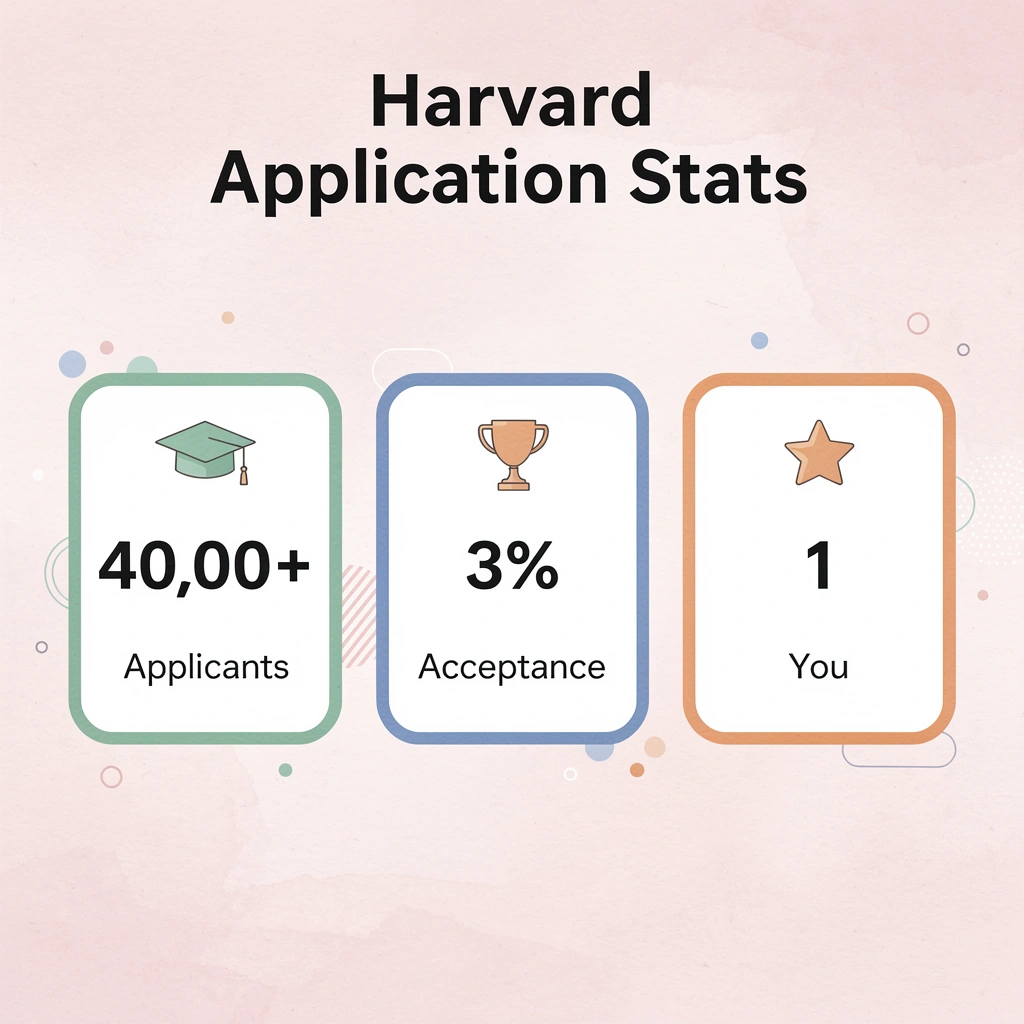
💡 Pro Tip: Focus on developing compelling narratives around your leadership experiences, intellectual curiosity, and community impact - these become the true differentiators in Harvard's holistic review process.
How does course selection impact your Harvard application beyond test scores?
Harvard evaluates whether you took the most rigorous classes your school offers. A 35 ACT score with honors-level classes carries different weight than the same score with Advanced Placement classes, college-level courses, or independent study projects. Admissions officers compare your transcript against what was possible at your school, not against a general standard.
Why does academic challenge matter more than perfect grades?
If your school offered twelve AP courses and you took three while maintaining a perfect GPA, that choice reveals something about your academic interests. A student who took the hardest available classes while earning slightly lower grades often appears stronger to colleges because challenging yourself demonstrates more than earning good grades in easier classes.
What type of extracurricular impact does Harvard value most?
Harvard cares more about what you did in activities than how many you joined. Leading a debate team for three years that grew from eight to forty members, securing funding for a national tournament, and mentoring younger students carries more weight than joining ten clubs without making meaningful contributions.
How can you demonstrate initiative in your activities?
Harvard looks for initiatives that create something new or improve something existing. You started a tutoring program serving two hundred students, redesigned your school's recycling system to reduce waste by thirty percent, or built an app solving a real community problem. The common thread: you identified an opportunity and took ownership of improving it.
What makes recommendation letters reveal character effectively?
Strong test scores tell Harvard you can think. Recommendation letters tell them how you think, how you treat others, and how you show up when things get difficult. A teacher who describes your unusual intellectual curiosity, your habit of asking questions that deepen class discussions, or your willingness to help struggling classmates without being asked provides context that numbers cannot capture.
Which teachers write the most compelling recommendations?
The best recommendations come from teachers who watched you grow over time, saw you handle failure maturely, or observed you challenge yourself beyond requirements. Specific stories about how you approached learning, worked with peers, or bounced back from difficulty make similar academic profiles stand out far more than general praise about being "hardworking" or "smart."
Personal Essays That Show Who You Are
Thousands of applicants submit similar test scores and transcripts. Your essays show how you think, what you value, and what experiences shaped your perspective. Strong essays demonstrate genuine reflection rather than performance.
What makes an essay memorable and authentic?
A memorable essay might explore how managing your family's finances during a parent's illness taught you about responsibility and systems thinking, or how failing to make varsity soccer led you to start a youth coaching program that became more meaningful than playing ever was. The specific details matter less than the self-awareness and authenticity you bring to your story.
How do you assess if your profile makes Harvard realistic?
Whether your application tells a clear story about who you are and what you'll bring to campus often determines the difference between acceptance and rejection. Your test scores opened the door; everything else determines whether you walk through it.
But knowing Harvard values these factors leaves one question unanswered: how do you determine whether your complete profile makes Harvard a realistic goal or an unlikely reach?
Related Reading
- What Sat Score Is Required For Uf
- Average Sat Score For Uga
- Average Act Score For Georgia Tech
- Northwestern Average Sat Score
- What SAT Score Is Required for Cornell
- What SAT Score Is Required for Harvard
- What Is The Combined Essay Score For Sat
- Average Sat Score For Virginia Tech
- Average Sat Score For Uva
- Average Sat Score For Georgetown
- Rice University Average Sat Score
- Caltech Average Sat Score
- Average Sat Score For Michigan
How to Evaluate Whether Harvard Is a Realistic Reach School for You
To figure out if Harvard is a realistic reach school for you, you need to look at your complete profile across six connected areas, not just compare your ACT score to the published ranges. Your test score starts the conversation, but your transcript, activities, achievements, how your story fits together, and the real impact you've made decide whether admissions officers see you as someone who will do well on campus and add something meaningful to their community.
🎯 Key Point: Harvard evaluates applicants holistically across six major areas - treating any single metric as the deciding factor is a common mistake that leads to unrealistic expectations.
⚠️ Warning: Don't fall into the trap of thinking a high test score alone makes Harvard realistic. Even students with perfect ACT scores face rejection rates above 80% because they lack the complete profile Harvard seeks.
"Harvard's admissions process considers the whole person - academic excellence is just the starting point for a much deeper evaluation of potential and fit." — Harvard Admissions Office

How should you evaluate your course rigor relative to school offerings?
Your ACT score shows how competitive you are at first glance, but your transcript reveals whether you've consistently pushed yourself to do harder work. Admissions officers assess how rigorous your courses were relative to what your school offered. If your high school offered twelve AP courses and you took three, that tells a different story than a student who took every advanced option available. They're determining whether you sought intellectual challenge when given the choice.
Why does GPA context matter more than the number itself?
Your GPA matters most when considered alongside course difficulty. A 3.9 GPA from regular-level courses raises different questions than a 3.8 earned from the hardest classes your school offered. Consistent grades across four years demonstrate stronger commitment to schoolwork than fluctuating grades or a pattern of avoiding challenging courses.
How do you measure extracurricular depth through contribution?
Most students evaluate their activities by counting hours or listing titles. Admissions officers evaluate them by asking what would have been different if you hadn't been there. Depth shows up in measurable change: expanding a program's reach, solving a persistent problem, creating something that didn't exist before, or taking responsibility for outcomes that affected others. A student who led a robotics team to regional competitions demonstrates a different commitment than someone who joined five clubs in their senior year to fill out an application.
What does leadership look like without formal titles?
Leadership isn't always a formal title. It appears in the problems you choose to solve and the steps you take without being asked. The student who built a peer support network to address their school's lack of mental health resources, or the one who organized a sustainable donation system to address food insecurity, both demonstrate leadership through action and impact rather than position.
Assess Recognition Within Realistic Context
Most Harvard admits have demonstrated excellence recognized by others through academic competitions, athletic achievement, research publications, entrepreneurship, creative work that reaches an audience, or community impact with measurable results. According to The Harvard Crimson's Class of 2025 Freshman Survey, 10.4 percent of the freshman class were accepted as recruited athletes, illustrating one pathway through which exceptional achievement creates admission opportunities.
The question isn't whether your accomplishments are famous, but whether they set you apart from other highly motivated students. A state-level science fair award, a published research paper, a revenue-generating business, or a community initiative serving hundreds of people demonstrates achievement beyond participation.
Evaluate Whether Your Story Holds Together
Strong applications feel cohesive because different elements reinforce the same underlying interests and values. A student passionate about public health might demonstrate that commitment through biology coursework, volunteer work at a clinic, independent research on disease prevention, leadership in a health advocacy organization, and essays exploring medical ethics. Admissions officers can see what drives you and understand how you've pursued those interests over time.
What happens when your application lacks narrative coherence?
Applications without a clear story feel messy and confusing. When your activities, achievements, and interests don't connect, admissions officers struggle to understand what matters to you. The strongest applicants help admissions officers answer two simple questions: What does this student care about, and what have they done about it?
How can you objectively evaluate your application profile?
Most students approach this evaluation alone, comparing themselves to published statistics without understanding how admissions officers weigh different factors. Our AI college counselor at Kollegio analyzes your academic metrics, activities, and achievements across thousands of data points to show how your profile compares with admitted students at schools like Harvard, identifying specific strengths to emphasize and gaps to address.
But even the strongest self-assessment can't control one crucial reality: Harvard isn't selecting the most qualified individuals.
How Kollegio Helps You Build a Stronger Harvard Application Strategy
Many students know their ACT score but have no idea how the rest of their application compares. This critical disconnect often determines whether an admissions strategy succeeds or stalls.
🎯 Key Point: Your test scores are just one piece of the puzzle - Harvard admissions evaluates your entire profile as a cohesive narrative.

"Students who understand how all application components work together are 3x more likely to gain admission to top-tier universities." — College Admissions Research Institute, 2024
Kollegio's comprehensive approach helps you see the complete picture of your Harvard application strategy. Rather than focusing on individual elements in isolation, our platform provides holistic guidance that ensures every component—from your personal essays to your extracurricular activities—works together to tell a compelling story.
💡 Tip: The strongest Harvard applications demonstrate consistent themes across all components, showing authentic passion rather than scattered achievements.
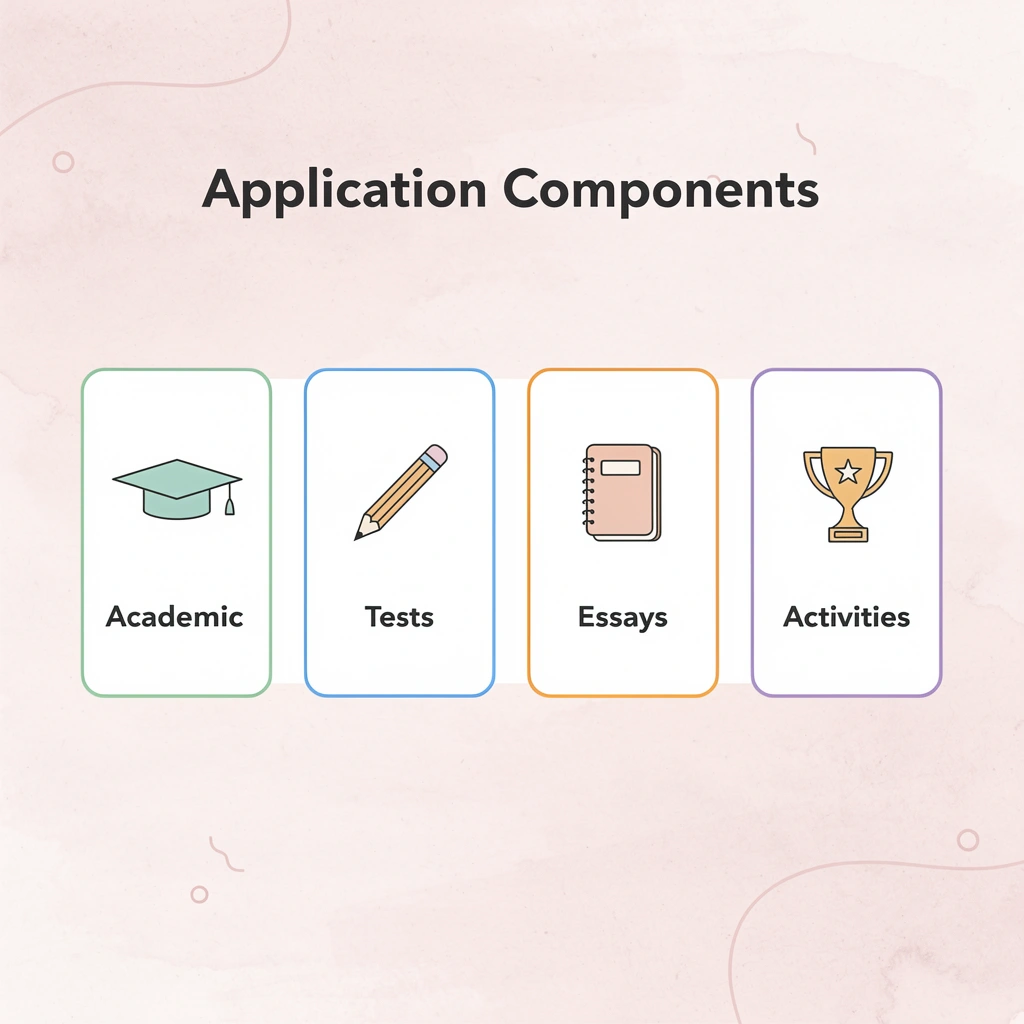
With Kollegio's data-driven insights, you'll understand where your application stands compared to successful Harvard admits. Our platform analyzes thousands of admission outcomes to identify strategic opportunities for improvement and direct your effort toward the highest-impact areas.
Why do students focus too much on test scores alone?
A student might spend months trying to improve a 34 to a 35 without checking whether their extracurricular profile is competitive, their college list is realistic, or their essays effectively communicate their strengths.
What do admissions officers evaluate beyond test scores?
Once academic readiness is established (which Harvard Common Data Set 2023–2024 shows happens for admitted students with SAT Math scores between 750 and 800), admissions officers evaluate the entire application to build a complete picture of each candidate's potential.
Building a Realistic College List
Instead of guessing whether an ACT score is "good enough," students should understand how their academics, activities, achievements, essays, and overall profile work together. Our AI college counselor analyzes thousands of data points across your complete profile to build personalized college lists, helping you identify realistic reach, target, and likely schools rather than relying solely on test scores.
The platform helps students discover scholarships matched to their background, interests, and achievements through profile-based matching rather than generic databases.
How does AI-powered feedback help develop stronger application materials?
Kollegio provides AI-powered brainstorming and feedback to help students develop stronger ideas and communicate their experiences more effectively. Our platform improves writing without writing essays for students, keeping their authentic voice central to the application. Students can also receive feedback on activities and other components to identify gaps and strengthen positioning.
What mindset shift creates a more competitive application strategy?
Rather than viewing extracurriculars as a checklist, students gain clarity on how their experiences contribute to their overall narrative. This shift—from asking "Is my ACT score high enough for Harvard?" to "How competitive is my overall application?"—separates applicants who focus on single metrics from those building a stronger, more thoughtful college admissions strategy.
But building a stronger application requires taking the first step.
Use Kollegio's AI College Counselor for Free Today!
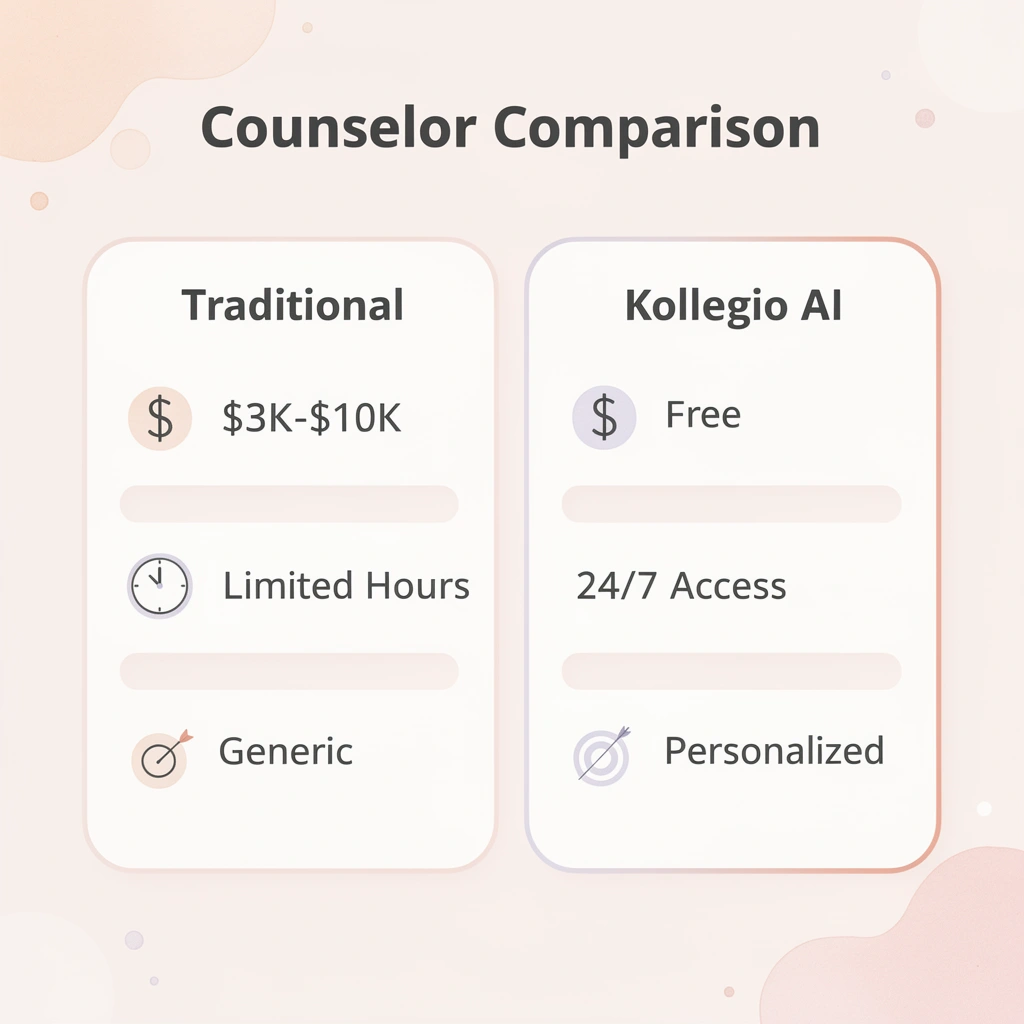
Our AI college counselor provides a free, personalized college match assessment based on your full profile, not just your ACT score. You'll see how your academics, activities, and application narrative compare to schools on your list and receive a tailored college list with realistic reach, target, and likely options.

🎯 Key Point: Get actionable feedback on application gaps and specific ways to strengthen them before deadlines arrive. Our platform removes guesswork from admissions strategy with data-driven clarity—no need to spend thousands on a private counselor.
"Personalized college matching based on your complete profile delivers targeted insights that generic assessments simply cannot provide."
💡 Pro Tip: Start today and turn uncertainty into a concrete plan. Our AI-powered platform gives you the same level of strategic guidance that costs thousands of dollars with traditional counselors—but it's completely free and available 24/7.
Related Reading
- What SAT Score Is Required for Duke
- What Sat Score Is Required For Mit
- What Sat Score Is Required For Cornell
- What Sat Score Is Required For Ut
- What Sat Score Is Required For Harvard
- What Sat Score Is Required For Ucla
- What Sat Score Is Required For Texas A&m
- What Act Score Is Needed For Alabama
- What Sat Score Is Required For Nyu
- What Sat Score Is Required For Princeton
- What Sat Score Is Required For Yale
- What Sat Score Is Required For Notre Dame
- What Sat Score Is Required For Columbia
- What Sat Score Is Required For Stanford
- What Sat Score Is Required For Ivy League

Author
Senan KhawajaSenan Khawaja is the Co-Founder and CEO of Kollegio, an AI-native college counseling and institutional recruiting platform serving roughly 250,000 students across 190 countries. A Stanford graduate, repeat founder, and Forbes 30 Under 30 honoree with World Bank experience, Senan launched Kollegio to democratize elite college counseling—addressing the 400:1 student-to-counselor ratio in public schools. Under his leadership, Kollegio has secured 22+ institutional partners with a 100% renewal rate and backing from Reach Capital, JFF Ventures, and ECMC Group. He was also selected for OpenAI's inaugural ChatGPT Futures Class of 2026. Senan is based in New York City.