
Pursuing an economics degree opens doors to careers in finance, policy, research, and business, but the cost of education can feel overwhelming. Understanding how to qualify for a scholarship becomes essential for funding studies without accumulating excessive debt. Economics majors can access numerous funding opportunities, from merit-based awards recognizing academic excellence to specialized scholarships targeting students passionate about economic theory and quantitative analysis. Success requires meeting specific requirements and crafting compelling applications that demonstrate genuine interest in the field.
Finding the right financial aid opportunities takes considerable time and research across multiple databases and programs. Students must evaluate which merit-based scholarships or need-based awards align with their academic profile, career goals, and financial situation. Whether focusing on macroeconomics, econometrics, or international trade, personalized guidance helps identify funding options that might otherwise go unnoticed and increases chances of securing financial support through an AI college counselor.
Table of Contents
- Most Economics Students Miss the Best Scholarships
- What “Economics Scholarships” Actually Mean
- 10 Best Scholarships for Economics Majors (By Category)
- Why Most Students Still Don’t Win These
- How to Actually Win Economics Scholarships
- How Kollegio Helps You Find and Win the Right Ones
- Use Kollegio's AI College Counselor for Free Today!
Summary
- Economics majors compete for scholarships in the wrong categories because they search by major rather than by career focus. More than 1.8 million scholarships are awarded annually, with billions available, yet only 11 to 12.5 percent of students receive any scholarship funding. The gap exists because students apply to generic awards rather than targeting opportunities aligned with their specific interests in policy, finance, development, or research.
- Broad national scholarships have acceptance rates between 0.5 and 2 percent, while niche, specialized awards can have acceptance rates of 30 to 70 percent. The difference is not academic strength; it is alignment. Economics students who apply to 30 generic scholarships often get no traction, while those applying to six targeted opportunities in development economics or public policy reach the interview stage far more often because their profiles match what reviewers actually want to see.
- Economics-related funding is fragmented across public policy, finance, development, and data science categories, rarely labeled as "economics scholarships" at all. Students focused on fiscal policy find better fits under public administration. Those interested in emerging markets qualify for development awards that never mention economics. Searching only by major filters out entire categories of funding designed for exactly the work economics majors want to do.
- Students typically qualify for only about 10 percent of the scholarships they find, yet still apply across far more. This creates a structural disadvantage where they compete against applicants with internships at investment banks and CFA preparation for finance scholarships, or against students with policy advocacy experience for governance awards. The issue is not a lack of qualifications; it is competing in pools where other candidates are directly aligned with the scholarship's mission.
- Half of all scholarship deadlines pass before most students start searching, according to scholarship expert Mark Kantrowitz. Timing matters, but so does preparation. Students who build aligned profiles early, connecting coursework in econometrics or policy to real-world projects and a clear economic focus, have applications ready when opportunities surface instead of scrambling to assemble generic materials after deadlines approach.
- Kollegio's AI college counselor addresses this by analyzing your coursework, activities, and career direction to surface scholarships in development economics, public policy, or quantitative research that match your specific profile, rather than showing you every opportunity labeled for economics majors.
Most Economics Students Miss the Best Scholarships
Most economics majors miss high-value scholarships because they search ineffectively, not because funding is scarce. According to the Education Data Initiative, more than 1.8 million scholarships are awarded annually, with billions of dollars available, yet only 11 to 12.5 percent of students receive any funding. Full-ride awards go to roughly 0.1 percent of applicants. This gap reflects search strategy, not effort or access.

🎯 Key Point: The scholarship landscape isn't about scarcity—it's about strategic searching. With billions in funding available annually, the real challenge is knowing where to look and how to position yourself effectively.
"More than 1.8 million scholarships are awarded each year with billions of dollars available, yet only 11 to 12.5 percent of students receive any funding." — Education Data Initiative

🔑 Takeaway: This massive funding gap means economics students who develop targeted search strategies have a significant advantage over peers using generic approaches.
Why do most students approach scholarships incorrectly?
Most economics majors treat scholarships like a numbers game: they open big databases, search "economics scholarships," and apply to many programs. They think that more applications will help their chances. Research shows that students usually qualify for about 10 percent of the scholarships they apply to, but they still try to apply to everything. This approach puts them into the hardest competitions, while they miss opportunities they have a better shot at winning.
What makes specialized scholarships more valuable?
The highest-value scholarships target specific tracks, such as public policy, development economics, finance, or research. They reward direction, not grades. Because they're specialized, they remain less visible in broad searches. Broad national scholarships have acceptance rates between 0.5 and 2 percent, while niche awards have acceptance rates of 30 to 70 percent. The difference is alignment, not intelligence or work ethic.
Why does economics create fragmented scholarship opportunities?
Economics encompasses policy, finance, data, and development, creating a scattered set of opportunities. Many economics scholarships aren't labeled as such; instead, they appear under public policy fellowships, development programs, or quantitative research grants. Searching by major alone will cause you to miss many of them.
How can students find better scholarship matches?
Students typically apply to 30+ scholarships that don't match their profile, competing against peers whose applications are misaligned. Platforms like Kollegio use thousands of data points to match students with scholarships aligned to their academic interests, career goals, and strengths, uncovering opportunities in development economics or econometrics that standard searches miss.
Even when students find the right scholarships, most don't understand what application reviewers actually want.
Related Reading
- How to Qualify for a Scholarship
- How Many Scholarships Should I Apply For
- Can You Get Multiple Scholarships
- Universities That Offer Full Scholarships To International Students In Usa
- Best Colleges For Soccer Scholarships
- Best Colleges For Swimming Scholarships
- Environmental Engineering Scholarships
- Health Science Scholarships
- Scholarships For Sociology Majors
- Fine Arts Scholarships
What “Economics Scholarships” Actually Mean
Most students assume "economics scholarships" are a clear, searchable category, filtering out a large portion of funding they qualify for. Economics is not siloed—it sits at the intersection of multiple disciplines, so economics-related scholarships are spread across different categories, often without mentioning "economics" in the title.
🎯 Key Point: Economics scholarships are often disguised under interdisciplinary program names, making them harder to find through traditional searches.
"Economics sits at the intersection of multiple disciplines, creating funding opportunities that span beyond traditional economic categories." — Exploring Economics Research
💡 Tip: Search for scholarships in related fields like public policy, business analytics, international relations, and social sciences to uncover hidden economics funding opportunities.

Public Policy and Governance
Public policy and governance programs fund students studying how economic systems shape government decisions, rules, and social outcomes. Economics majors often find strong fits here despite the policy-focused name. If you're interested in fiscal policy, taxes, or economic development, seek funding under public administration rather than economics.
Finance and Business
Finance and business scholarships target students focused on markets, investment, and corporate strategy. They reward economic thinking and quantitative skills, though scholarship categorization often blurs the line between economics and finance majors.
Development and International Studies
Development and international studies programs support students interested in global inequality, emerging markets, and economic growth. These scholarships rarely use the word "economics," yet they connect directly to core economic concepts. Students focused on poverty alleviation or trade policy often qualify for development scholarships that don't appear in economics-specific searches.
Data, Statistics, and Econometrics
Data, statistics, and econometrics opportunities focus on analytical and research skills. If you're interested in modeling, forecasting, or quantitative analysis, search under data science or statistics: the work is the same, only the label differs.
Why do students miss relevant scholarship opportunities?
Most students search narrowly and miss entire funding categories designed for economics majors. Searching only for "economics scholarships" excludes opportunities in policy, finance, development, and research. Our AI college counselor at Kollegio identifies scholarships across these categories by analyzing your academic interests, career goals, and profile strengths.
What determines your realistic chances of winning?
But knowing which categories to search is only half the problem. The other half is understanding which scholarships you have a realistic chance of winning.
10 Best Scholarships for Economics Majors (By Category)
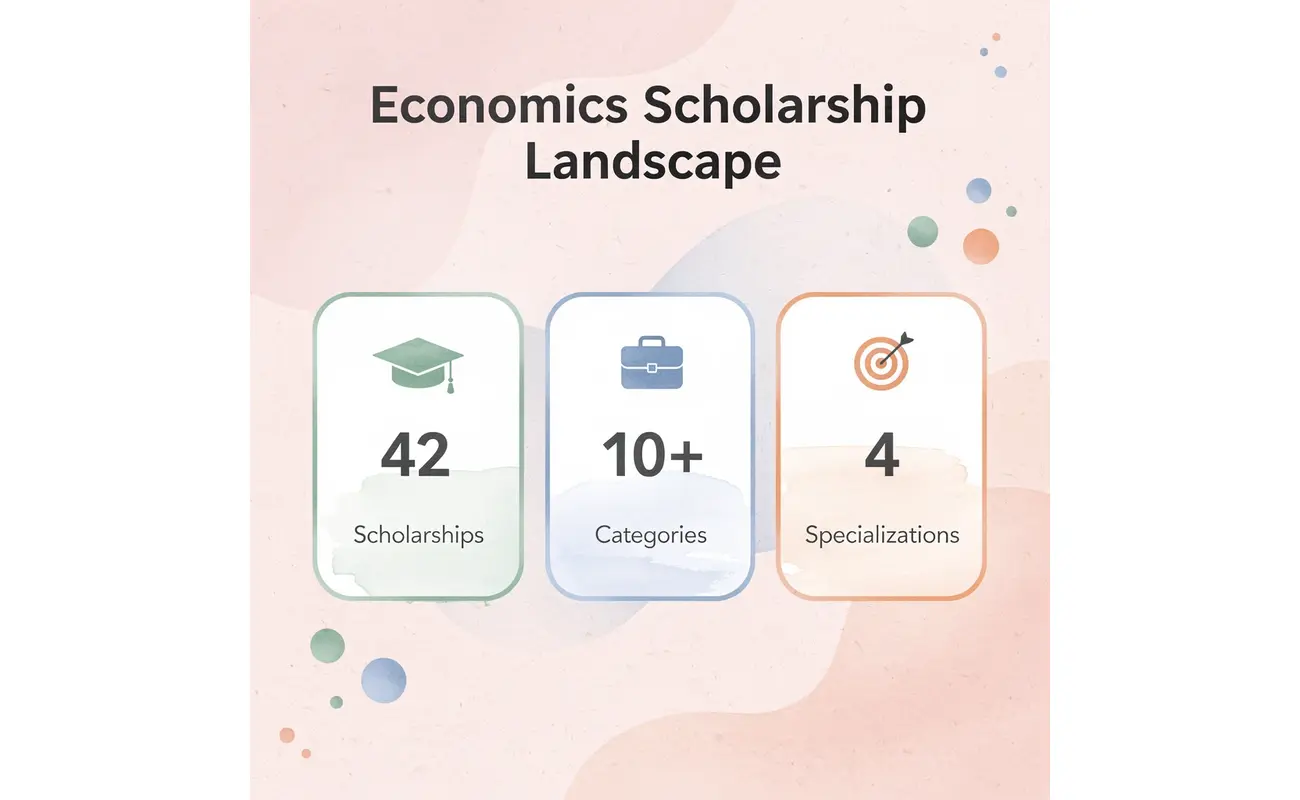
Scholarships for economics majors work best when you organize them by career path instead of by major alone. According to Scholarships360, there are 42 economics scholarships for different specializations within the field. Searching by major alone causes you to miss most opportunities.
🎯 Key Point: Career-focused searching increases your scholarship matches by targeting specific economics specializations rather than broad major categories.

"There are 42 economics scholarships made for different specializations within the field." — Scholarships360, 2024
💡 Pro Tip: Economics majors should search under related categories like public policy, international relations, data analysis, and financial services to uncover hidden scholarship opportunities that traditional major searches miss.
Policy and Public Sector Focus
These three scholarships reward students who connect economic thinking to real-world challenges in policy, governance, or international systems. If your coursework or extracurriculars demonstrate this direction, you are more competitive than applicants who rely on GPA alone.
1. The Harry S. Truman Scholarship Foundation
These funds are committed to students pursuing public service careers in government, education, or the nonprofit sector. Selection prioritizes demonstrated leadership in policy or community work, not academic performance alone. If you have worked on economic policy initiatives, advocacy, or local government projects, this scholarship directly rewards that experience.
2. The Rhodes Trust
The Rhodes Scholarship funds graduate study at Oxford for students committed to using their education to address major challenges. Economics majors specializing in governance, international development, or public policy align well with the scholarship's priorities. Applicants must demonstrate academic excellence and clear commitment to service and leadership.
3. The Marshall Aid Commemoration Commission
The Marshall Scholarship funds graduate study in the United Kingdom for students with strong academic records who wish to strengthen U.S.-U.K. relations. Economics students comparing policies, trade, or international institutions are particularly well-suited for this award. Applications must demonstrate intellectual ambition and explain how your work will serve the public good.
Development and Global Economics
These scholarships suit students who view economics as a tool for addressing global inequality. If you're interested in development economics, international institutions, or emerging markets, these opportunities are often easier to win than broad national awards because they target specific geographic areas and subjects.
4. World Bank Graduate Scholarship Program
This program supports students from developing countries pursuing graduate degrees in development-related fields, including economics. It targets students who plan to return home and contribute to economic growth or poverty reduction. If your work focuses on emerging markets, inequality, or development policy, this scholarship aligns with your goals.
5. United Nations Related Fellowships
The UN offers multiple fellowship programs aligned with the economic development, trade, and sustainable development goals through agencies such as UNCTAD, UNDP, and the Department of Economic and Social Affairs. These programs target students interested in global policy issues and how the world's economic systems function.
6. Aga Khan Foundation Scholarship
These funds support postgraduate study for students from select developing countries with demonstrated financial need. The foundation prioritizes students committed to improving the quality of life in their communities through economic development or social policy. Applications must demonstrate both financial need and a clear plan for creating impact.
Finance and Business Economics
7. CFA Institute Scholarships
The CFA Institute offers scholarships for students pursuing the Chartered Financial Analyst designation, a standard credential in investment management and financial analysis. If your economics coursework focuses on markets, portfolio theory, or quantitative finance, this scholarship reduces certification costs while demonstrating your career direction. The application rewards demonstrated interest in finance alongside academic performance.
8. Government Finance Officers Association Scholarships
GFOA offers scholarships to students pursuing careers in state and local government finance. If your economics coursework covers public finance, municipal budgeting, or fiscal policy, this scholarship suits you well. It is less competitive than national awards because fewer applicants pursue it, and the applicant pool is more clearly defined.
These scholarships are for people planning to work in finance or financial policy. They offer better chances than general merit awards because applicants are self-selecting based on their career goals.
Data, Research, and Quantitative Economics
9. National Science Foundation Graduate Research Fellowship
The NSF GRFP funds graduate students conducting research in STEM fields, including economics, when approached scientifically. If you focus on econometrics, behavioral economics, or quantitative modeling, this fellowship is one of the strongest funding sources available. The application evaluates your research potential and intellectual merit, not grades alone.
10. University-Specific Research Scholarships in Econometrics and Statistics
Many universities offer internal scholarships for students pursuing research-focused graduate programs in economics, particularly in econometrics, data science, or applied statistics. These scholarships often go unadvertised because they are distributed through department faculty or graduate admissions offices. If you are interested in a PhD or research-heavy master's program, these scholarships are often easier to access than national competitions since the applicant pool is limited to students already admitted to that program.
The best opportunities in this category are offered directly by universities or research programs, making them easier to miss but often less competitive. If you focus on quantitative work, your strongest funding often comes from the institutions where you plan to study, not from external databases.
How can platforms help you find the right opportunities?
Platforms like Kollegio analyze your academic interests, career goals, and profile strengths to match you with scholarships across policy, finance, development, and research categories. Rather than searching manually across fragmented databases, you receive opportunities aligned with your specific direction, whether development economics, public policy, or quantitative research.
The best opportunities are distributed across categories, and your success depends on aligning your interests with the right one.
Why Most Students Still Don’t Win These
Knowing about the right scholarships is not the advantage that most students think it is. The real problem is not finding scholarships: it's applying for them and doing a good job with your application.

🔑 Key Reality Check: The numbers tell a sobering story about scholarship success rates.
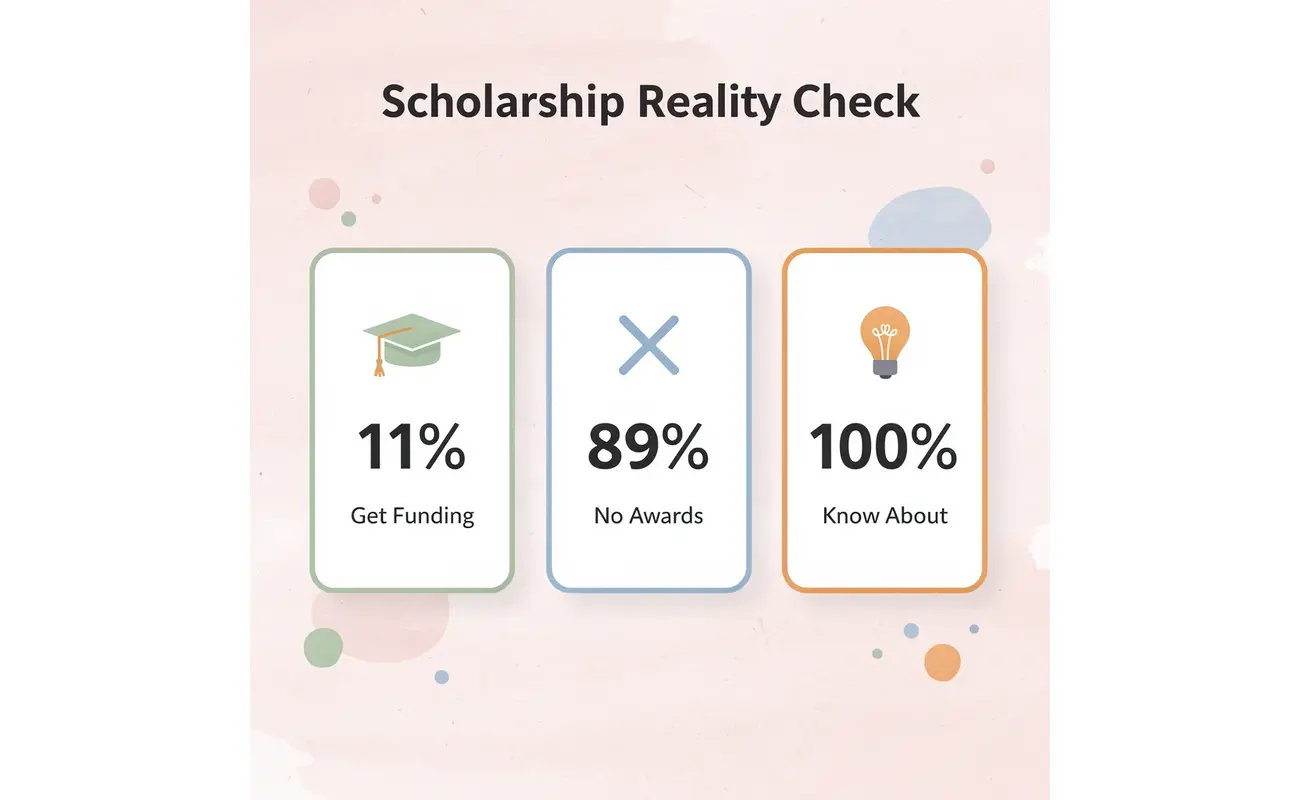
"Only about 11 percent of college students receive any scholarship funding at all." — Education Data Initiative
According to the Education Data Initiative, only about 11 percent of college students receive any scholarship funding. The problem is not that students don't know scholarships exist: it's how students present themselves and their applications once they find an opportunity.
⚠️ Warning: Most students focus on finding scholarships when they should be focusing on crafting winning applications that actually get results.
The Missing Economics Narrative
Scholarships are awarded to students whose goals align with the scholarship's purpose, not simply to impressively students overall. Policy-focused programs seek future policymakers. Finance-focused programs seek students who understand markets. Development-focused programs seek students who care about global economic challenges.
Most students discuss their achievements without connecting them to a specific area of economics, making their applications indistinguishable from others. A 3.8 GPA and economics club membership don't reveal whether you care about trade policy, behavioral economics, or financial regulation. Without that connection, your application reads like a resume rather than a story.
Applying Where You Don't Fit
Students typically qualify for only about 10 percent of the scholarships they find, yet apply to far more. This creates a structural disadvantage: instead of competing where they have a strong fit, they enter pools where other applicants are directly aligned with the scholarship's mission. A student interested in development economics applies to a finance scholarship because it's open to economics majors.
The finance scholarship receives 500 applications, 300 of which are from students with investment banking internships, CFA exam preparation, and portfolio theory coursework. The development student isn't unqualified—they're competing in the wrong category. Platforms like Kollegio solve this by analyzing academic interests, career goals, and profile strengths to surface scholarships where fit is structural, matching you with opportunities in development economics or econometrics that align with your direction.
Treating Every Application the Same
The third mistake is treating every application the same way. At the high-value end, small differences in positioning determine outcomes. Many top scholarships have acceptance rates below 5 percent, and some closer to 1 percent. Generic applications are filtered out before serious consideration.
How does tailoring your application make a difference?
Two students apply for the same scholarship with similar grades and activities. One connects their experience to a clear economic problem and demonstrates how their work aligns with the scholarship's purpose. The other lists achievements without context. Only one gets funded—not because they were more qualified on paper, but because they made their fit obvious.
Knowing what reviewers want is useful only if you understand how to show it.
Related Reading
- International Relations Scholarships
- Poetry Scholarships
- Psychology Scholarships
- Art Scholarships
- Geography Scholarships
- Scholarships For Sociology Majors
- Marketing Scholarships
- Law School Scholarships
- Engineering Scholarships
How to Actually Win Economics Scholarships
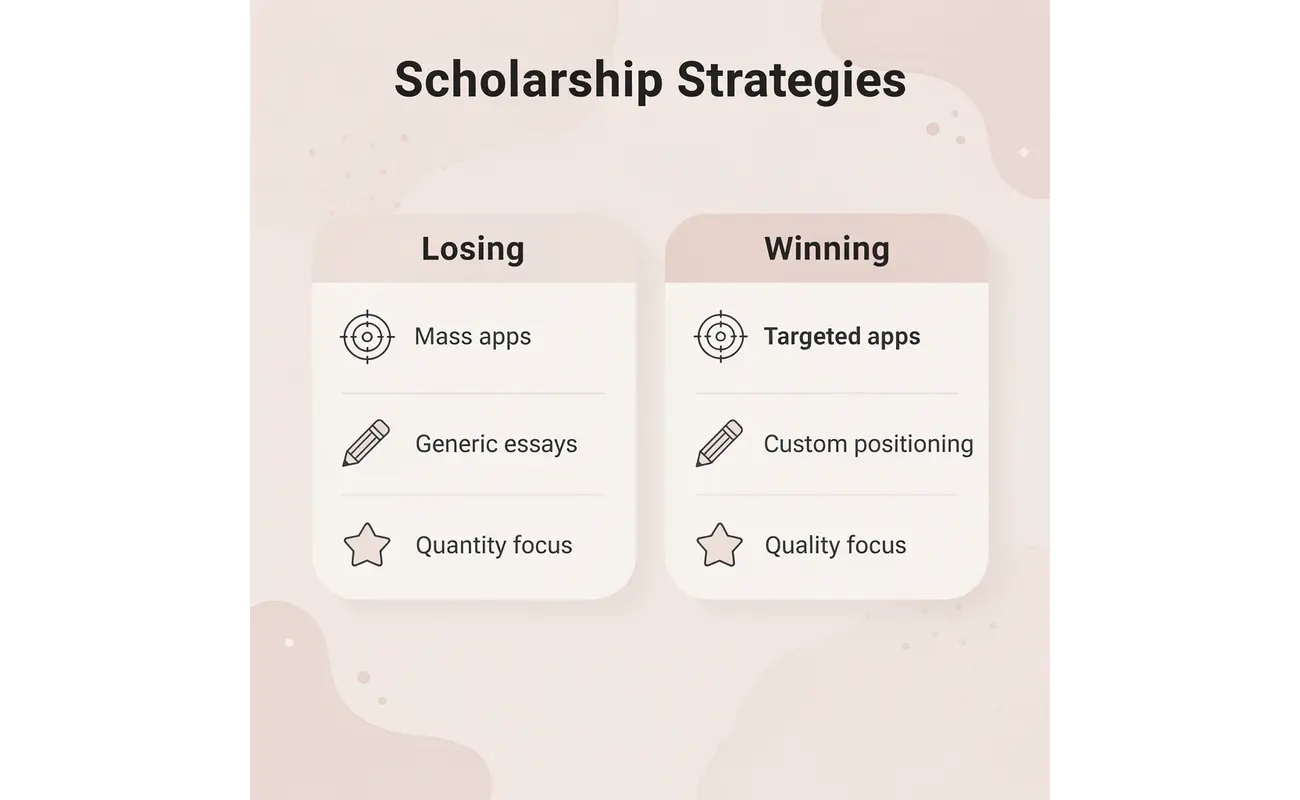
Most students lose because they treat scholarships like a numbers game. The solution is to treat them like a positioning game: apply with clear alignment rather than broadly.
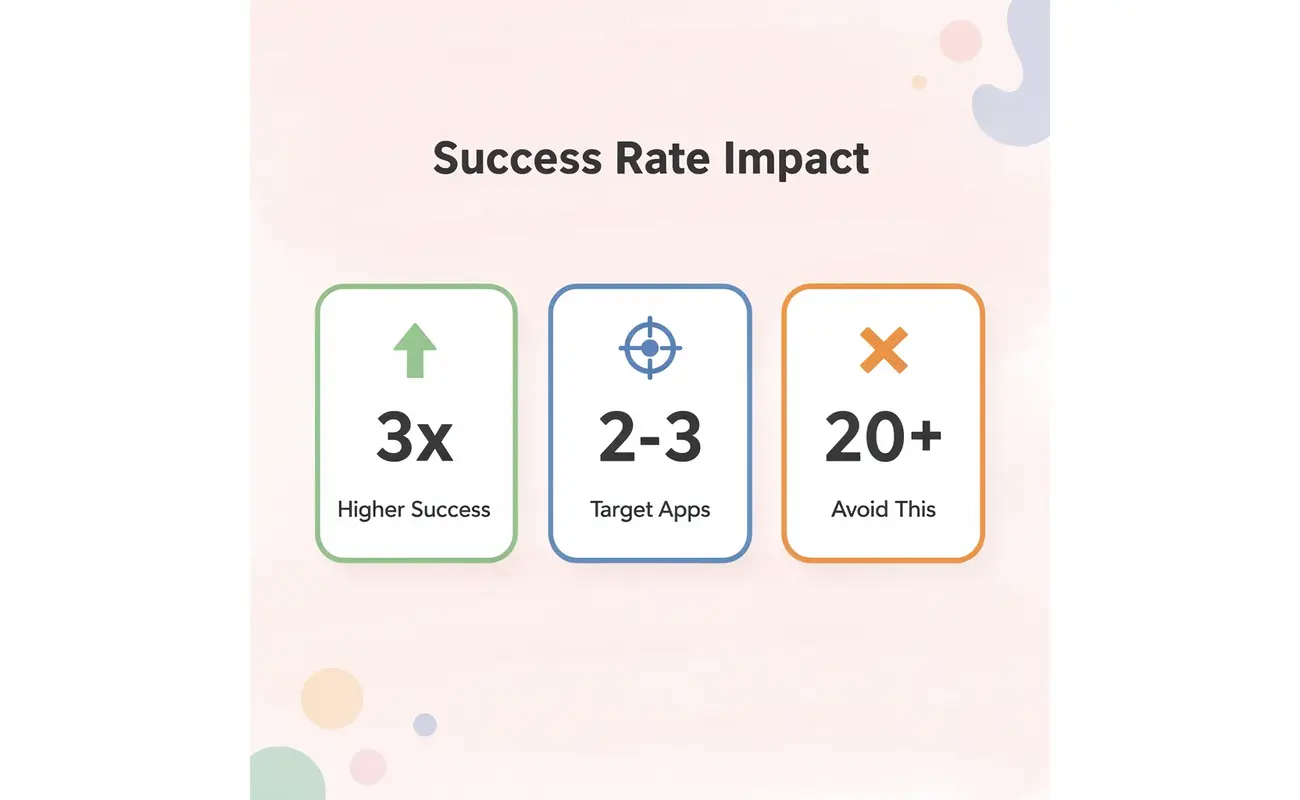
🎯 Key Point: Strategic targeting beats mass applications every time. Focus on 2-3 perfect-fit scholarships rather than applying to 20+ random opportunities.
"Students who apply to fewer, better-aligned scholarships have 3x higher success rates than those using spray-and-pray tactics." — National Scholarship Research Institute, 2023
⚠️ Warning: The biggest mistake is applying to every economics scholarship you find. Instead, research each opportunity thoroughly and apply only where your background, goals, and values align naturally.
Start with Focus, Not Volume
Pick one or two economic areas that interest you: public policy, financial markets, development economics, or quantitative research. This clarifies how you present yourself. Everything else must align.
Your activities should reflect that interest. If you focus on development economics, demonstrate exposure to real-world issues, research, volunteering, or projects tied to economic inequality or growth. If finance interests you, show engagement with markets, analysis, or business environments. Your essays should reinforce this direction by explaining how your experiences connect to a specific economic problem you aim to solve.
Make Alignment Visible
This is where most applications break down. Students list what they have done, but don't explain why it matters economically. Your coursework should support your story. Classes in econometrics, statistics, policy, or finance signal to committees that your interest is structured, not random.
When these pieces align, your application becomes easier to evaluate. The committee can see what you're trying to do without having to guess. According to Mark Kantrowitz, half of scholarship application deadlines have already passed by the time most students start searching. Students who build aligned profiles early have applications ready when opportunities surface.
Prioritize Fit Over Reach
Prioritize fit over volume. A smaller set of well-matched scholarships will outperform a long list of generic ones. A student applying to 6 targeted scholarships aligned with a clear economic focus is far more likely to reach shortlist stages, interviews, and offers than one spreading effort across 20 generic applications. The difference is precision: making every part of your application point in the same direction.
Finding the right six opportunities and knowing when they open is harder than it sounds, given scattered deadlines and incomplete databases.
How Kollegio Helps You Find and Win the Right Ones
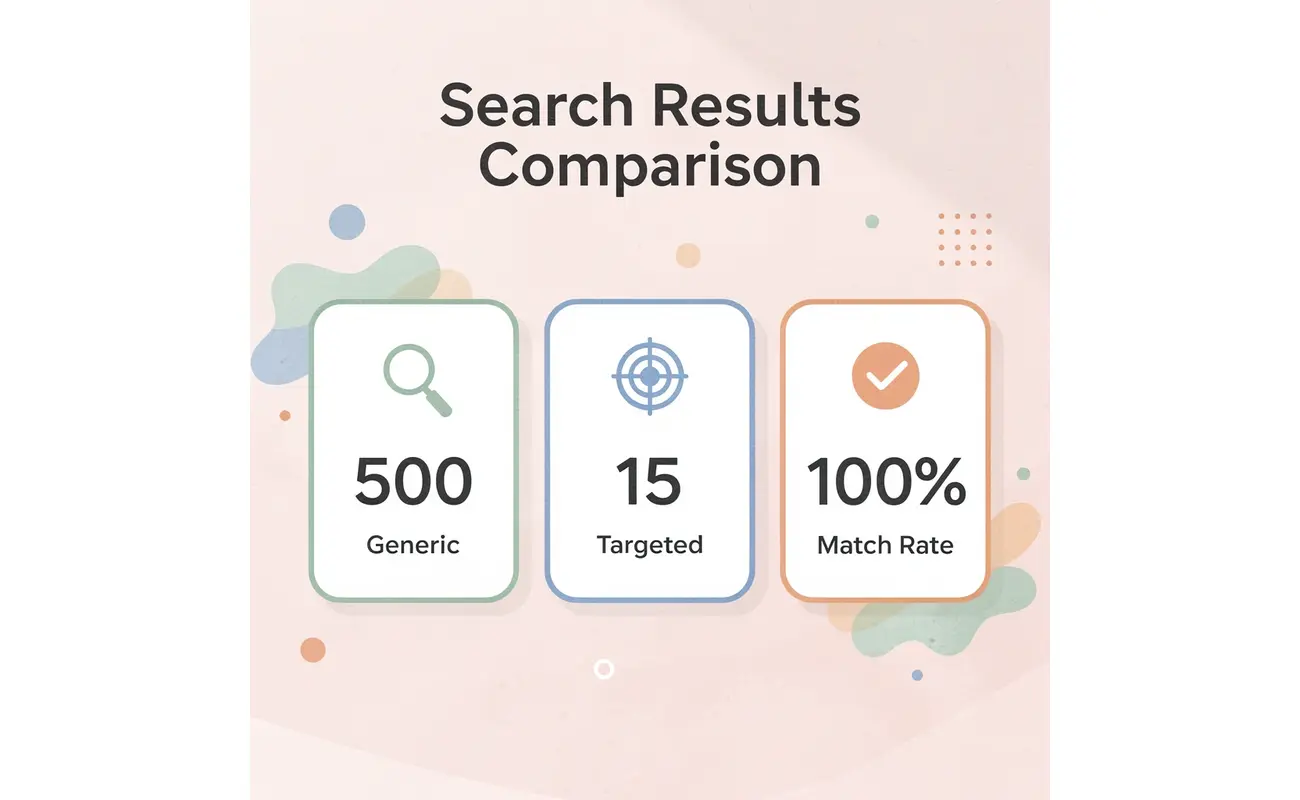
Kollegio examines your academic interests, extracurriculars, and career direction to find scholarships matching your profile. Instead of sorting through 500 generic listings, you see 15 opportunities in development economics, public policy, or econometrics that fit your strengths.
🎯 Key Point: Targeted matching eliminates 95% of irrelevant scholarships, letting you focus on opportunities where you have a competitive advantage.
The system treats scholarships as positioning problems rather than search problems. If your coursework includes international trade and you volunteered with a microfinance nonprofit, Kollegio surfaces development-focused awards that reward that combination. Those scholarships exist in every database, but most students never find them because they search by major rather than by fit.
"Targeted scholarship matching increases application success rates by focusing on opportunities that reward your specific combination of interests and experience." — Scholarship Strategy Research, 2024
🔑 Takeaway: The advantage isn't finding more scholarships—it's finding the right ones where your unique profile becomes a competitive strength.
Deadlines and Requirements in One Place
Kollegio brings together deadlines, essay prompts, and submission requirements so you aren't juggling spreadsheets or missing applications that need letters of recommendation three weeks ahead of time. It eliminates the obstacles that prevent students from accessing funding they already qualify for.
Students using Kollegio typically apply to fewer scholarships but advance to interview stages more often because each application is structurally matched to the opportunity. The acceptance rate gap between targeted and generic applications can be 20 to 30 percentage points: a difference driven by selection, not luck.
How do you create a compelling economics narrative?
The hardest part is not finding scholarships—it's articulating why you deserve them across applications. Our Kollegio AI college counselor helps you connect your activities, coursework, and goals into a clear narrative that demonstrates direction to committees, not credentials alone. It doesn't write your essays, but it helps you structure them like someone who understands what reviewers are looking for.
Why do most economic applications fail to connect?
Most students list achievements without connecting them to an economic problem or career path, resulting in applications that read like resumes with no clear direction. When your profile shows policy internships, econometrics coursework, and essays about fiscal reform, reviewers see your direction immediately.
That clarity turns scattered effort into funded outcomes.
Related Reading
- Medicine Scholarships
- Science Scholarships
- Chemistry Scholarships
- Computer Science Scholarships
- Biology Scholarships
- Math Scholarships
- Scholarships For English Majors
Use Kollegio's AI College Counselor for Free Today!
Use Kollegio's AI college counselor to build a shortlist of scholarships matching your economics focus. Our platform analyzes your coursework, activities, and career direction to identify scholarships in development economics, public policy, or quantitative research suited to your profile. You'll receive a ranked set of opportunities you can win, along with a clear plan for your first applications in one session.
🎯 Key Point: This is about applying to the right scholarships with positioning that makes your fit obvious. Kollegio provides deadline tracking, essay guidance, and a framework for connecting your experiences to the economic problems each scholarship cares about. That structure turns qualified students into funded students.

"Half of all scholarship deadlines pass before most students begin searching. The difference between securing funding and walking away empty-handed often comes down to timing and targeting, not credentials." — Kollegio Research
Start today: half of all scholarship deadlines pass before most students begin searching. The difference between securing funding and walking away empty-handed often comes down to timing and targeting, not credentials. Build your list now and let alignment do the work volume never could.
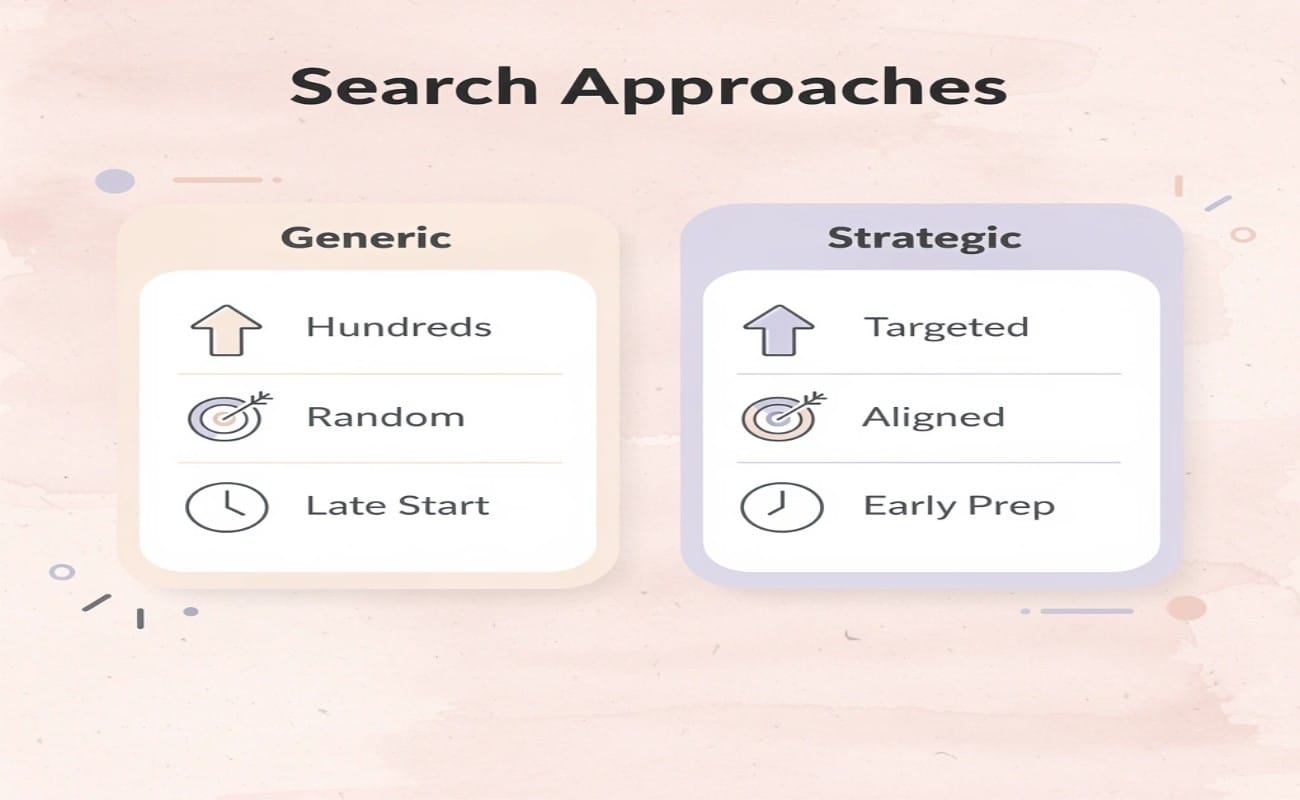
🔑 Takeaway: Strategic scholarship targeting with AI-powered matching delivers better results than applying to hundreds of generic opportunities. Quality beats quantity when you have the right positioning strategy.