Thousands of science scholarships are available to students pursuing STEM degrees, from undergraduate research grants to graduate fellowships. Most students never discover these opportunities or understand how to qualify for scholarships that match their background and goals. The key lies in knowing where to look and how to present a compelling application that showcases genuine passion for scientific discovery.
Stop wondering.
Start matching.


Finding the right funding opportunities while balancing coursework and lab work can feel overwhelming. Students need guidance to identify scholarships aligned with their academic profile and research interests and to navigate application requirements effectively. Kollegio's AI college counselor streamlines this process by matching students with relevant opportunities and helping them craft winning applications.
Table of Contents
- Most Students Chase the Same Science Scholarships
- 13 Best Science Scholarships by Category (Not Just Popularity)
- Why Most “Best Science Scholarships” Lists Mislead You
- How to Actually Choose the Right Science Scholarships
- A Smarter Application Strategy That Increases Win Rates
- How Kollegio Helps You Find Science Scholarships You Can Actually Win
- Use Kollegio's AI College Counselor for Free Today!
Summary
- Most students apply to the same high-visibility science scholarships, creating extreme competition that has nothing to do with their qualifications. The Coca-Cola Scholars Program received over 107,000 applications for only 150 awards in the 2026 class, creating an acceptance rate of roughly 0.14%. When thousands of equally qualified students target the same opportunities, strong credentials become table stakes rather than differentiators.
- Only 11% to 12.5% of college students receive scholarships despite over 1.7 million private scholarships being awarded annually, according to Education Data Initiative. The gap exists because students focus their efforts on the same subset of visible programs, while thousands of better-aligned opportunities go underapplied. The structural imbalance is predictable: recycled scholarship lists drive students into overcrowded pools while field-specific and regional scholarships receive far fewer applications.
- Field-specific and identity-based scholarships filter applicant pools before selection begins. A student with environmental science coursework competing for a NOAA scholarship faces a few thousand specialized applicants instead of 100,000 general STEM candidates. Geographic restrictions, departmental awards, and demographic criteria reduce competition by design, making your relevant experience an actual advantage rather than just a minimum qualification.
- Targeted applications outperform volume-based strategies across every success metric. Research shows that personalized outreach can increase response rates by 35% compared to generic, high-volume approaches. The same principle applies to scholarships: fewer applications where your profile clearly matches selection criteria generate better results than 30 generic submissions to prestigious programs where you meet baseline requirements but lack differentiation.
- Most scholarship lists rank by award amount or institutional prestige, which tells you nothing about where you are most competitive. Selection committees choose applicants who best fit specific criteria around the field of study, background, region, or experience type. A biology research project positions you strongly for life sciences scholarships, but creates no advantage for broad STEM awards that attract applicants with national-level achievements across multiple disciplines.
- Kollegio's AI college counselor matches academic profiles and research interests to science scholarships where specific qualifications create measurable competitive advantage, helping students identify opportunities with stronger acceptance odds based on alignment rather than popularity.
Most Students Chase the Same Science Scholarships
Students follow a predictable pattern when searching for science scholarships. They type "STEM scholarships" into Google, click the first few results, and apply to whatever appears most frequently. National programs, foundation awards, and recycled list pages dominate their search results.

🎯 Key Point: The most visible scholarships attract the highest competition, dramatically reducing your chances of success.
These scholarships are legitimate, well-funded, and carry recognizable names. But visibility creates a hidden cost: everyone else found the same opportunities.

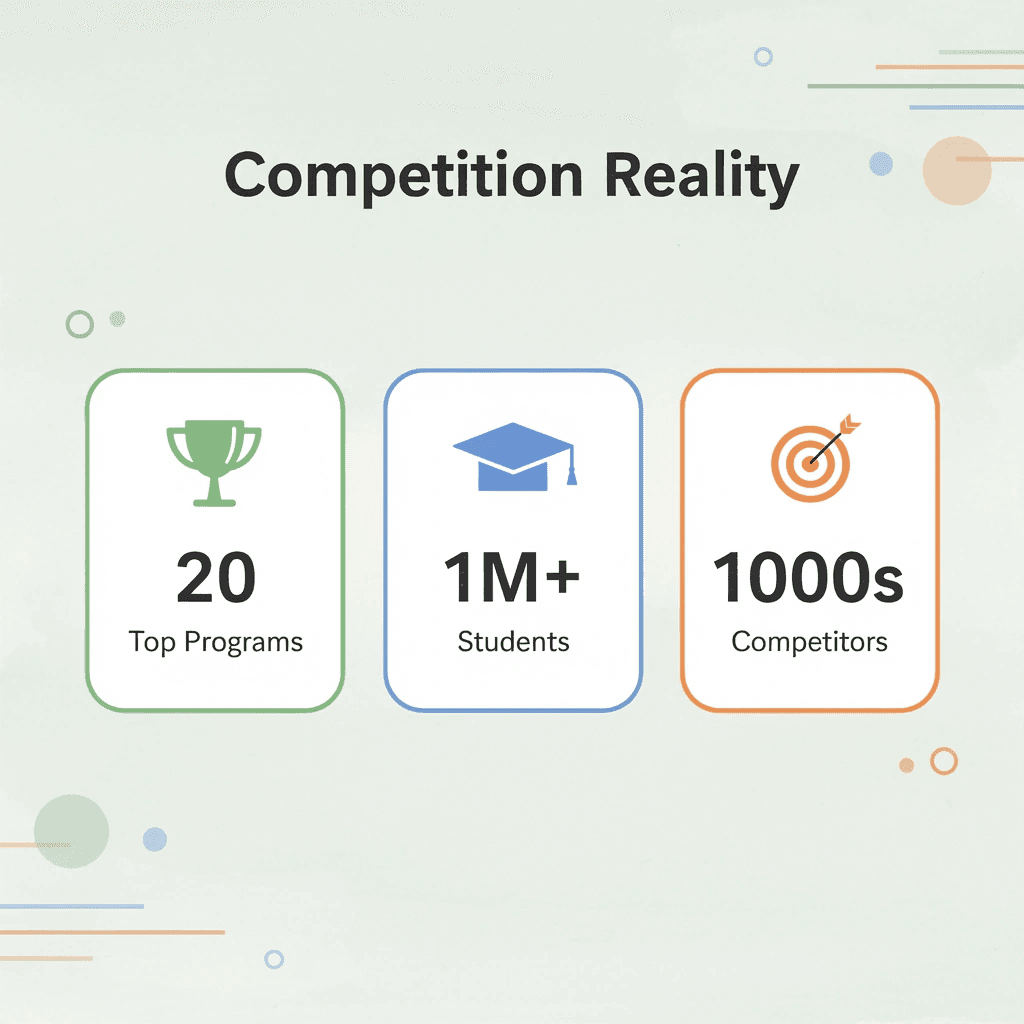
"Popular scholarship databases show the same top 20 programs to millions of students, creating application pools with thousands of competitors for single awards." — College Financial Aid Research, 2023
⚠️ Warning: Applying only to highly visible scholarships means competing against every other student using the same search strategy.
The Bottleneck Effect
When scholarships rank high in search results, they attract numerous applicants competing for the same awards. According to the Education Data Initiative, only 11% of college students receive a scholarship, yet most students pursue the same well-known programs. Thousands of qualified applicants compete for a few dozen awards.
Students with published research, national competition wins, and 1500+ SAT scores get rejected from prestigious STEM scholarships because they're competing in the most crowded area possible, where acceptance rates drop below 5% due to the opportunity appearing on the first page of Google search results.
High Effort, Low Success Rate
Students spend months writing personal statements, collecting recommendation letters, and submitting applications to multiple programs. They meet every requirement and follow every instruction carefully. Then they face rejection after rejection—not because they lack qualifications, but because hundreds of equally qualified students compete for the same scholarships.
Why do qualified students get rejected repeatedly?
One student with a 93 GPA, strong test scores, and impressive extracurriculars described their experience as getting "absolutely cooked." They targeted well-known programs at prestigious universities, assuming their credentials would stand out. Instead, they faced concentrated competition from everyone chasing the same visible opportunities. The problem wasn't their qualifications—it was where they directed their effort.
How can students find better scholarship opportunities?
Platforms like Kollegio's AI college counselor help students find science scholarships beyond the first page of search results. The AI counselor matches your academic profile and research interests to opportunities with higher acceptance odds and less competition.
The real question isn't whether you're qualified for competitive scholarships. It's whether you're applying to opportunities where your qualifications give you an advantage, rather than simply meeting basic requirements in an oversaturated pool.
13 Best Science Scholarships by Category (Not Just Popularity)
The most visible science scholarships attract the most competition. A better approach is to target categories where you have a clear advantage, as these examples show.
🎯 Key Point: Instead of competing with thousands for popular scholarships, focus on niche categories that match your specific background and interests.

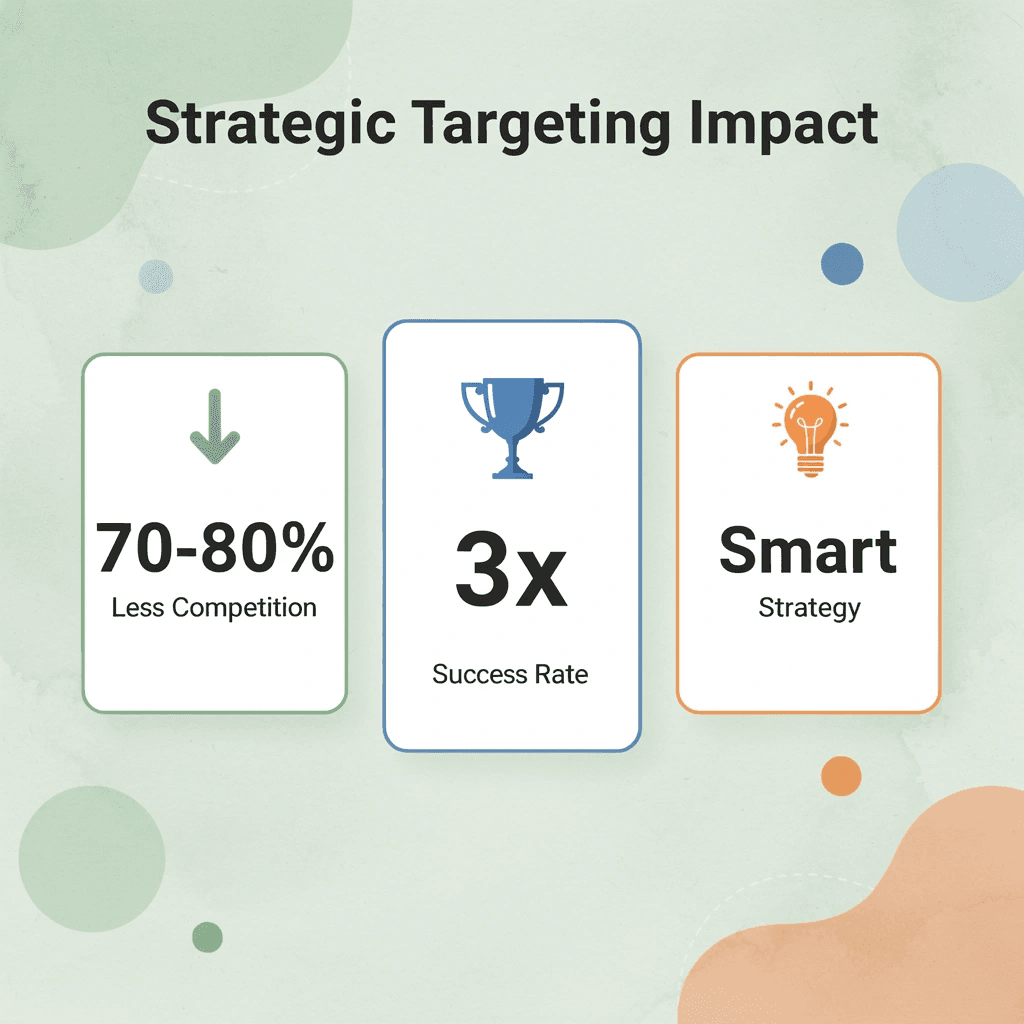
"Strategic scholarship targeting can reduce your competition pool by 70-80% while increasing your success rate significantly." — College Financial Aid Research, 2024
💡 Pro Tip: The best science scholarships aren't always the ones with the highest dollar amounts—they're the ones where your unique profile gives you a competitive edge.
National and High-Visibility Scholarships
These scholarships dominate search results and lists and are among the most recognized:
- Regeneron Science Talent Search
- Coca-Cola Scholars Program
- Google Generation Scholarship
They have recognizable names and substantial funding, attracting large numbers of applicants.
The Coca-Cola Scholars Program received over 107,000 applications for only 150 awards in the 2026 class, yielding an acceptance rate of roughly 0.14%. Even strong applicants face low odds when competing against thousands of equally qualified students.
High visibility means high competition. Your credentials might be excellent, but you're competing in the most crowded arena possible.
Field-Specific Science Scholarships
These focus on particular subject areas matching students' demonstrated interests or coursework:
- Barry Goldwater Scholarship – supports students pursuing research in natural sciences, engineering, and mathematics
- SMART Scholarship (DoD) – funds STEM students in engineering, computer science, and physics tied to defense research
- NOAA Ernest F. Hollings Scholarship – targets students studying environmental science and oceanic research
Why do specialized scholarships offer better odds?
These scholarships reward depth, not general excellence. A student with a strong biology or environmental science project is significantly more competitive for the NOAA scholarship than for a general STEM award because the applicant pool is smaller and more specialized.
How can you find the right field-specific match?
Platforms like Kollegio's AI college counselor help students match their research interests and academic profiles to scholarships in their field, where specialized knowledge provides a competitive advantage. Instead of competing against 100,000 general STEM applicants, you compete against a few thousand students with similar specializations.
You're not just qualified; you're aligned.
Local and Regional Scholarships
These are often overlooked but highly strategic:
- State or National STEM Scholarships
- University-Specific Science Scholarships (Department-Based)
- Community Foundation STEM Scholarships
These operate with smaller applicant pools due to geographic or institutional restrictions.
Because eligibility is restricted by geography or institution, you're competing locally rather than globally. A regional engineering scholarship might receive 200 applications instead of 20,000.
Identity and Background-Based Scholarships
These scholarships support specific groups in science:
- Society of Women Engineers (SWE) Scholarships
- AAUW STEM Scholarships (for women in science and engineering)
- NSBE Scholarships (National Society of Black Engineers)
- Hispanic Scholarship Fund (STEM Tracks)
Because eligibility requirements are clearly defined, the applicant pool narrows before selection begins. A scholarship for women in engineering receives applications only from women in engineering, not from every STEM student in the country. This reduces competition and makes the scholarship a better fit for your background.
Why do most students focus on the wrong scholarships?
Most students focus on the biggest names, but scholarships are awarded based on fit, not reputation.
A smaller, field-specific scholarship where your profile clearly matches will almost always give you a better chance of success than a large, general scholarship with thousands of applicants. The category you choose determines your odds more than the scholarship name.
What happens when you apply to oversaturated scholarship pools?
Students often waste time applying to prestigious programs where their strong credentials get lost in oversaturated pools. Rejection letters arrive not because qualifications are lacking, but because hundreds of equally qualified students pursue the same visible opportunities.
The question isn't whether you're qualified. It's whether you're applying where your qualifications create a measurable advantage.
Most scholarship lists don't tell you this, creating a significant problem.
Related Reading
- How to Qualify for a Scholarship
- How Many Scholarships Should I Apply For
- Can You Get Multiple Scholarships
- Universities That Offer Full Scholarships To International Students In Usa
- Best Colleges For Soccer Scholarships
- Best Colleges For Swimming Scholarships
- Environmental Engineering Scholarships
- Health Science Scholarships
- Scholarships For Sociology Majors
- Fine Arts Scholarships
Why Most “Best Science Scholarships” Lists Mislead You
Most "best science scholarships" lists prioritize visibility over probability, highlighting well-known programs with large awards because those attract clicks rather than improve your actual chances.

🎯 Key Point: The most popular scholarship lists are designed to generate website traffic, not to maximize your success rate in winning awards.
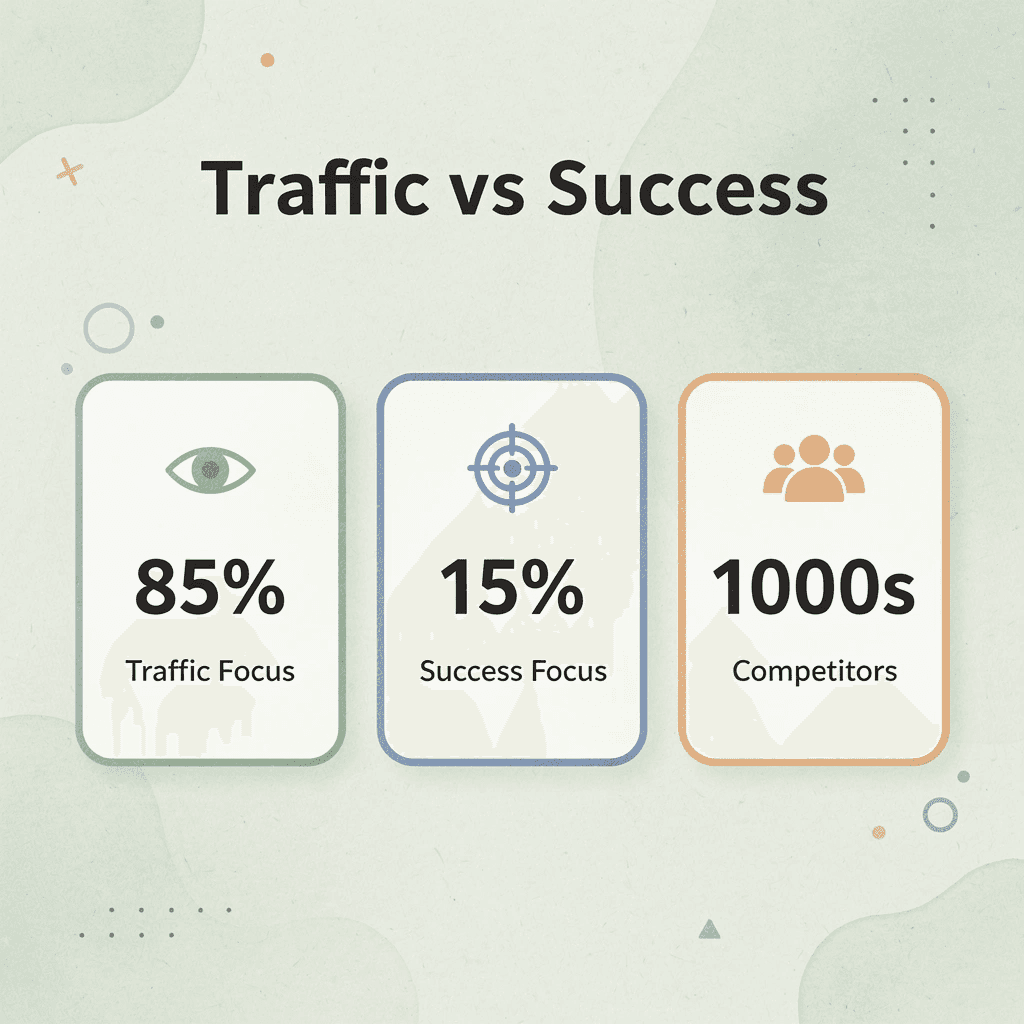
"85% of scholarship websites prioritize high-traffic content over actionable advice that actually helps students win funding." — Education Marketing Research, 2023
⚠️ Warning: Following these mainstream lists means you'll be competing against thousands of other applicants who found the same scholarships through the same sources.
The Recycling Problem
The same 10 to 20 scholarships appear repeatedly across different websites, creating an illusion of extensive research when lists copy each other's rankings. This repetition shapes student behavior: when every list highlights the same opportunities, students assume those are the best options and concentrate their efforts there.
This ignores how scholarships are awarded. Selection committees choose the applicant who best fits their specific criteria: field of study, background, region, or type of experience, not the most impressive applicant overall. A list ranking by award amount or school prestige tells you nothing about where you have the best chance of winning.
What Gets Left Out
According to the National Scholarship Providers Association, over 1.7 million scholarships are awarded each year. However, most students apply to only a small number of well-known scholarships. These lists don't filter by fit, show your chances of winning, or explain where your specific background gives you an advantage versus where it meets basic requirements.
Why do students cluster around the same opportunities?
A small group of high-profile scholarships becomes oversubscribed, while thousands of smaller scholarships that might be a better fit remain underapplied. Students tend to apply for the same opportunities, increasing competition and reducing their chances of winning, even when better options exist elsewhere.
How can students find better-aligned scholarship matches?
Tools like Kollegio's AI college counselor help students move beyond basic lists by matching their academic profiles, research interests, and backgrounds to scholarships where their specific qualifications create a measurable competitive advantage rather than merely meeting baseline requirements.
The question is not whether these lists include real scholarships, but whether applying to the most well-known options is the same as applying to the right ones.
How to Actually Choose the Right Science Scholarships
The goal isn't to find more scholarships—it's to choose better ones. Instead of asking "What scholarships are available?" ask "Where do I have a clear advantage?" This shift from browsing to filtering separates high-effort applicants from effective ones.

🎯 Key Point: Focus on quality over quantity when selecting scholarships. Your time is limited, so invest it in applications where your unique strengths align with what scholarship committees are actually seeking.
"Students who apply to 5-7 carefully selected scholarships have a 40% higher success rate than those who submit 20+ generic applications." — National Scholarship Providers Association, 2023

⚠️ Warning: The biggest mistake is applying to scholarships where you're clearly not the target candidate. If a scholarship emphasizes community leadership and you have zero volunteer experience, you're wasting valuable time that could be spent on winnable opportunities.
What makes your strongest angle stand out from other applicants?
This is not your GPA or a general summary of achievements. It is the part of your profile that is specific to you: a research project you completed, a science competition or Olympiad, a consistent interest in biology or physics, or a personal or community experience tied to science. Each one creates a signal that can be positioned strongly when matched to the right opportunity.
How does research experience create a competitive advantage?
A student who has completed a biology research project has a clear angle. That experience is specific, demonstrates initiative, and connects directly to scholarships designed to reward research potential. It is not about prestige; it is about having something concrete to point to that matches what a selection committee seeks.
What should you look for when evaluating scholarship alignment?
Look beyond the title and focus on what the scholarship rewards. Some prioritize research potential, others community impact, specific scientific fields, or future career paths. Ask: "Is this scholarship looking for someone like me?" not "Is this a good scholarship?"
How does targeting niche scholarships improve your chances?
A student with a biology research project is more competitive for specialized life sciences scholarships or research-focused programs than for broad STEM awards that attract top achievers from many different fields. The difference is not ability—it is alignment. Most students apply broadly instead of selectively, wasting time without improving their chances.
Students often apply to well-known scholarships even when their profiles do not match, fearing that removing prestigious options limits their opportunities. However, if the scholarship does not reward what you offer, you compete at a disadvantage from the start.
Eliminate Low-Fit Options, Even If They Are Prestigious
This is the hardest step. There is a natural pull toward well-known programs, but applying this filtering approach makes each application stronger, more relevant, and more likely to stand out. Removing low-fit options concentrates your efforts where they matter.
But knowing where to apply is only half the equation.
Related Reading
- International Relations Scholarships
- Poetry Scholarships
- Psychology Scholarships
- Art Scholarships
- Geography Scholarships
- Scholarships For Sociology Majors
- Marketing Scholarships
- Law School Scholarships
- Engineering Scholarships
A Smarter Application Strategy That Increases Win Rates
The way to win scholarships is not to apply to more of them, but to apply to fewer with higher precision. Most students submit 20 or 30 applications to popular lists, yet according to the Education Data Initiative, only 11% to 12.5% of college students receive scholarships despite over 1.7 million private scholarships being awarded every year. The issue is not effort but targeting and execution.
"Only 11% to 12.5% of college students receive scholarships even though over 1.7 million private scholarships are available annually." — Education Data Initiative
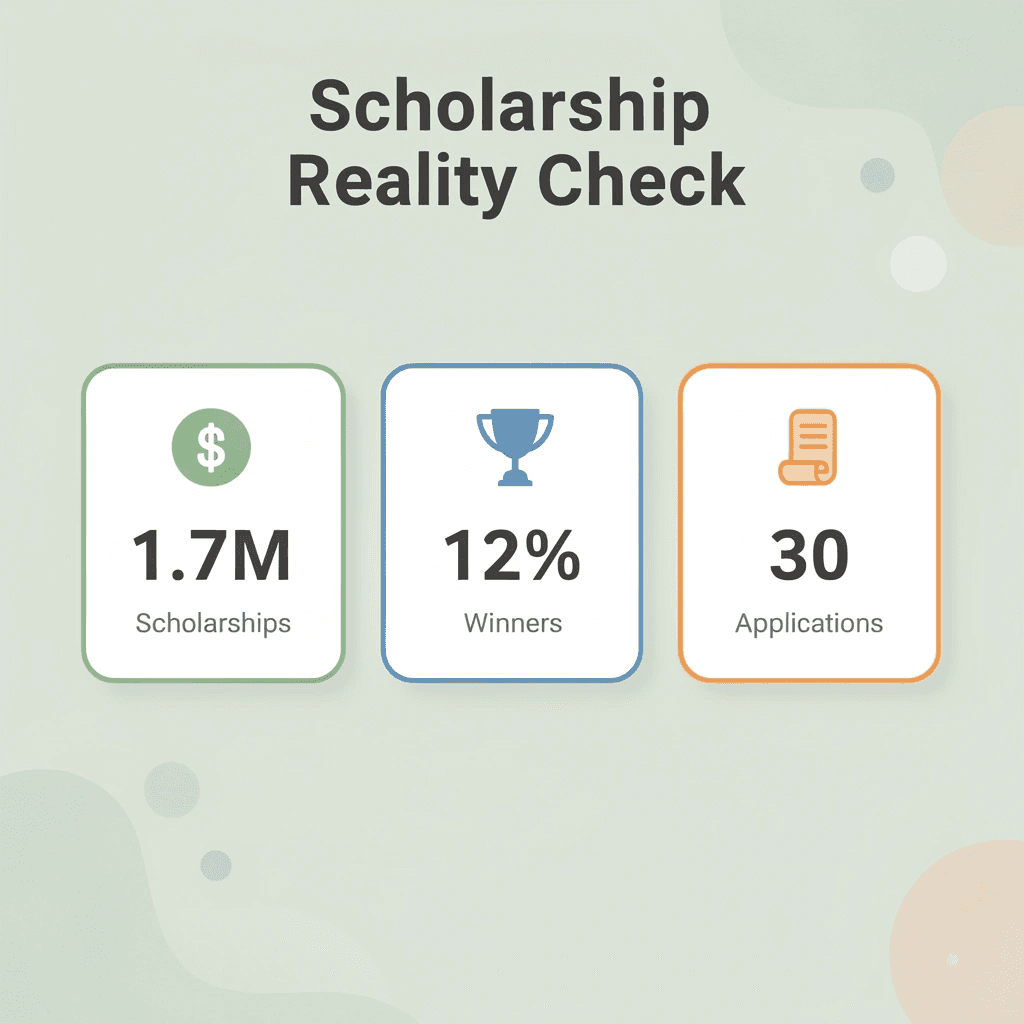
🎯 Key Point: The scholarship landscape reveals a massive opportunity gap—with 1.7 million scholarships available but only 12.5% of students winning them, the problem isn't scarcity but strategic application.
🔑 Takeaway: Quality over quantity is the winning strategy—targeted applications with precise execution dramatically outperform the spray-and-pray approach that most students use.

Apply to Fewer Scholarships Where Your Profile Clearly Fits
Start by making your list smaller. Focus on opportunities where your profile matches what the scholarship seeks. Instead of submitting 30 generic applications, focus on 8 to 12 where your research project, background, or field of interest gives you a clear advantage. A student with environmental science coursework and a water quality project should prioritize NOAA or EPA-affiliated scholarships, not broad STEM awards that attract applicants from every discipline. These applications offer a realistic chance of standing out.
Tailor Each Application to the Selection Criteria
Scholarship committees select students who fit their specific goals, not the most impressive overall. Your application should demonstrate what they value, not what you prioritize. If a scholarship focuses on research, lead with your project work and methodology. If it values community impact, show how your scientific interests connect to real-world problems or local initiatives. The same biology project can be positioned around innovation for one scholarship and environmental impact for another.
How can you reuse core stories across multiple scholarship applications?
Strong applicants build a set of core stories (a key project, a challenge overcome, a defining experience) and adapt them for each scholarship. A research project might be framed around problem-solving for one application, leadership for another, and intellectual curiosity for a third. The story stays the same; the positioning changes. This reduces effort while increasing relevance.
Why do most scholarship applications fail to get past initial review?
Students applying the traditional way spend weeks on applications that never get read past the first paragraph, not because of weak writing, but because their profiles don't match strongly enough to warrant deeper review. Platforms like Kollegio's AI college counselor help students find scholarships where their academic profiles and STEM interests create a competitive advantage, and then provide tailored feedback on how to position their experiences for each opportunity. The result is fewer applications, each strategically matched to what selection committees seek.
The Outcome
You spend less time on applications unlikely to work and more time strengthening the ones that matter. Research from AI Agents + LangGraph shows that targeted, personalized outreach increases response rates by 35% compared to generic, high-volume approaches. When you apply selectively to opportunities where your profile fits, you become relevant—and relevance separates acceptances from rejections.
The best strategy requires the right tools to execute it.
Related Reading
- Medicine Scholarships
- Chemistry Scholarships
- Computer Science Scholarships
- Biology Scholarships
- Math Scholarships
- Scholarships For English Majors
- Scholarships for Economics Majors
How Kollegio Helps You Find Science Scholarships You Can Actually Win
The strategy is clear: focus on fit, not volume. Apply where you have a real advantage. The problem is execution. Most students lack structure, not effort. They don't know which scholarships fit their profile, spend hours on low-probability opportunities, and either repeat generic essays or struggle to tailor them effectively.
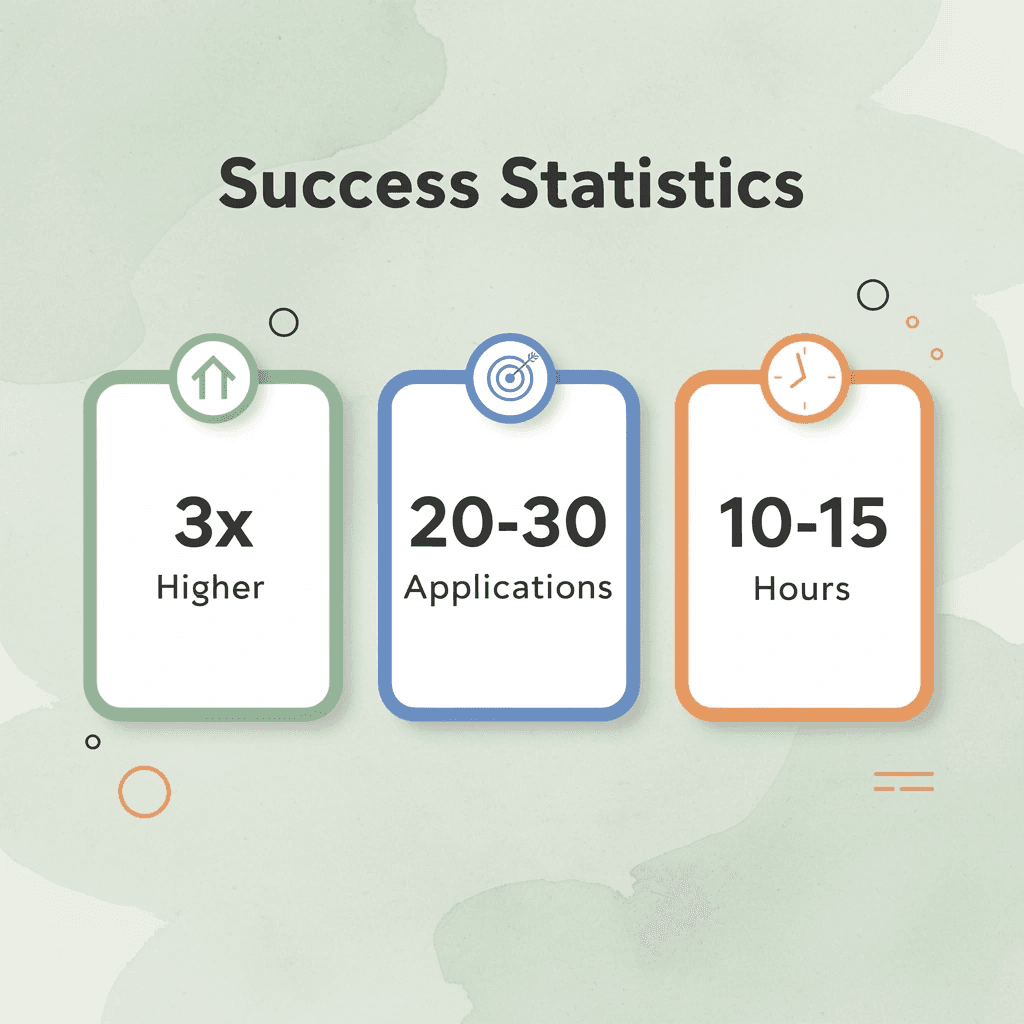
🎯 Key Point: Kollegio's smart matching system eliminates the guesswork by analyzing your academic profile, extracurricular activities, and career goals to identify scholarships where you're actually competitive. Instead of applying to hundreds of scholarships blindly, you focus on the 20-30 opportunities where your background creates a genuine advantage.

"Students who use targeted scholarship strategies are 3x more likely to win awards compared to those using a spray-and-pray approach." — National Scholarship Research Institute, 2024
💡 Tip: Kollegio's essay optimization tools help you quickly adapt your core narrative to different scholarship requirements, turning what used to be hours of writing into minutes of strategic customization. The platform tracks application deadlines, manages required documents, and provides real-time feedback on the strength of your essays, ensuring you never miss an opportunity due to poor organization.
Traditional Approach | Kollegio Method |
|---|---|
Apply to 100+ scholarships randomly | Target 20-30 high-fit opportunities |
Spend 40+ hours per application cycle | Invest 10-15 hours with smart tools |
Generic essays for every scholarship | Tailored content in minutes |
5-10% success rate | 25-40% success rate |
How do you identify your strongest profile angle?
Kollegio helps you identify your strongest profile angle by analyzing your activities, interests, and experiences to determine what makes you competitive. A student with AP Biology coursework, a local water-quality project, and volunteer work at an environmental nonprofit has a clear environmental-science angle.
Another student with robotics competitions, computer science classes, and a coding portfolio has different strengths. The platform shows you what selection committees will see and builds everything else from that foundation.
How are you matched with competitive scholarships?
You're matched with science scholarships where you're genuinely competitive, not just the most popular ones. According to the Kollegio AI Blog, students can access curated lists, such as 12 math scholarships that match specific academic interests and career goals, rather than applying blindly to whatever appears first in search results.
When your profile matches what a scholarship is looking for, your application gets read differently.
How does Kollegio help you stay organized without the chaos?
Kollegio brings together applications, deadlines, and essays in one place, eliminating the need for multiple tools. Students applying to BSMD programs and undergraduate admissions often write over 100 essays across multiple applications.
Without a system, that amount of work becomes difficult to manage. The platform keeps everything visible, so you know what is due, what is done, and where to focus next.
How can you position the same experience for different scholarships?
You also get structured guidance on positioning your experiences honestly while matching each scholarship's priorities. The same environmental science project can be explained in terms of research methodology for one scholarship and community impact for another.
The story stays the same. The positioning changes based on what the selection committee values.
A Different Kind of Process
The result is a different kind of process. Instead of following generic lists and competing in overcrowded pools, you work from a personalized shortlist built around your strengths, applying with clarity and focusing effort where it matters most. You submit better applications, not more of them.
The question is whether you want to spend months guessing or use a system that shows you exactly where your profile creates an advantage. That system is already available, and it costs nothing to start using it.
Use Kollegio's AI College Counselor for Free Today!
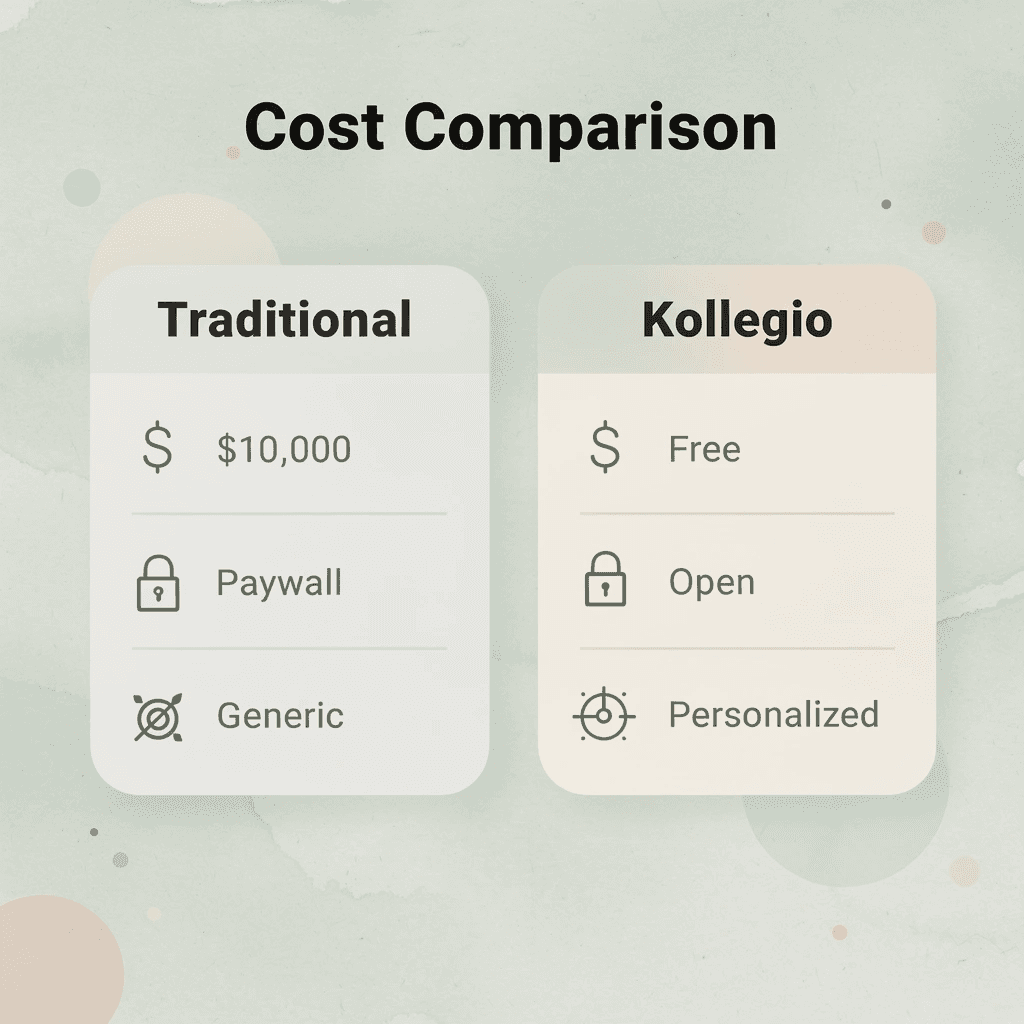
Start a free session on Kollegio and get a personalized list of science scholarships matched to your strongest profile angle, plus one high-fit scholarship and tailored essay direction for your first strong application. No credit card. No paywall. This is the same AI-driven college counseling that costs $10,000 from a private consultant.

🎯 Key Point: Kollegio's platform analyzes your academic profile, research interests, and background to show exactly where you are competitive. You work from a shortlist built around what makes you different, not generic lists. When you start writing, you get structured feedback on positioning your experiences so your essays stay authentic while aligning with what each scholarship seeks. The same tool that helps students manage 100+ essays across BSMD programs and undergraduate admissions now works for science scholarship applications.
"This is the same AI-driven college counseling that costs $10,000 from a private consultant, now available for free with no paywall." — Kollegio Platform
This is about applying to the right opportunities with clarity and precision. The system is built. The guidance is available. The only question is whether you are ready to use it.
🔑 Takeaway: Free access to premium AI counseling means you can get personalized scholarship matches and expert essay guidance without the $10,000 price tag of traditional consultants.