
A 1200 SAT score lands students in a competitive position, but understanding what this means for college admissions requires context. This score places test-takers above the national average and opens doors to many quality institutions, though it may fall short of requirements for highly selective schools. The key lies in understanding how this score aligns with specific college targets and personal academic goals.
Students with a 1200 SAT score should evaluate whether their target schools typically accept applicants within this range and consider whether retaking the test aligns with their timeline and improvement potential. Strengthening other application components like essays, extracurriculars, and grades can significantly impact admissions success regardless of test scores. For personalized guidance on college strategy and application planning, students can consult Kollegio's AI college counselor.
Summary
- A 1200 SAT score places students in the 75th percentile nationally, meaning they scored better than roughly three out of four test takers. According to College Board data, this sits well above the national average of 1050, but percentile rank alone doesn't determine college competitiveness since admissions offices compare scores against their specific applicant pools rather than national benchmarks.
- Students who retake the SAT improve their scores 68% of the time, making modest gains realistic rather than hypothetical. College Board research shows that 20 hours of structured practice correlates with an average 115-point improvement, which means targeted preparation can produce meaningful results when students commit to deliberate study rather than passive review.
- A 1200 becomes strategically valuable when it falls within or above the middle 50% range at target schools, allowing the rest of the application to carry full weight without the score creating doubt about academic readiness. At many state universities and moderately selective colleges, where admitted students typically score between 1100 and 1300, a 1200 position applicants right in the competitive range where essays, recommendations, and activities become the deciding factors.
- Retaking the SAT only makes strategic sense when a higher score changes tangible outcomes, such as admission chances at specific schools or access to merit scholarships with fixed score cutoffs. Some institutions set automatic awards at thresholds like 1250, 1300, or 1350, meaning a 50-point increase could translate to thousands of dollars in aid over four years rather than just a marginally stronger application.
- The traditional approach to evaluating score competitiveness requires manually visiting individual college websites, cross-referencing admission statistics across dozens of schools, and building spreadsheets to track where a 1200 fits within published ranges. Kollegio's AI college counselor addresses this by analyzing a 1200 alongside GPA, intended major, and preferences to surface colleges where students are genuinely competitive and flag scholarship thresholds within reach of a small score increase.
You Got a 1200, But Don’t Know What It Means
You received a 1200 on the SAT, but the score alone doesn't tell you much. Is it good? Average? Enough? The answer depends on your specific situation.

🎯 Key Point: A 1200 SAT score represents the 75th percentile nationally, meaning you scored higher than 75% of test-takers. While this is above average, whether it's "good enough" depends entirely on your target colleges and academic goals.
"A 1200 SAT score places students in the 75th percentile of all test-takers, making it a solid foundation for college applications." — College Board, 2024
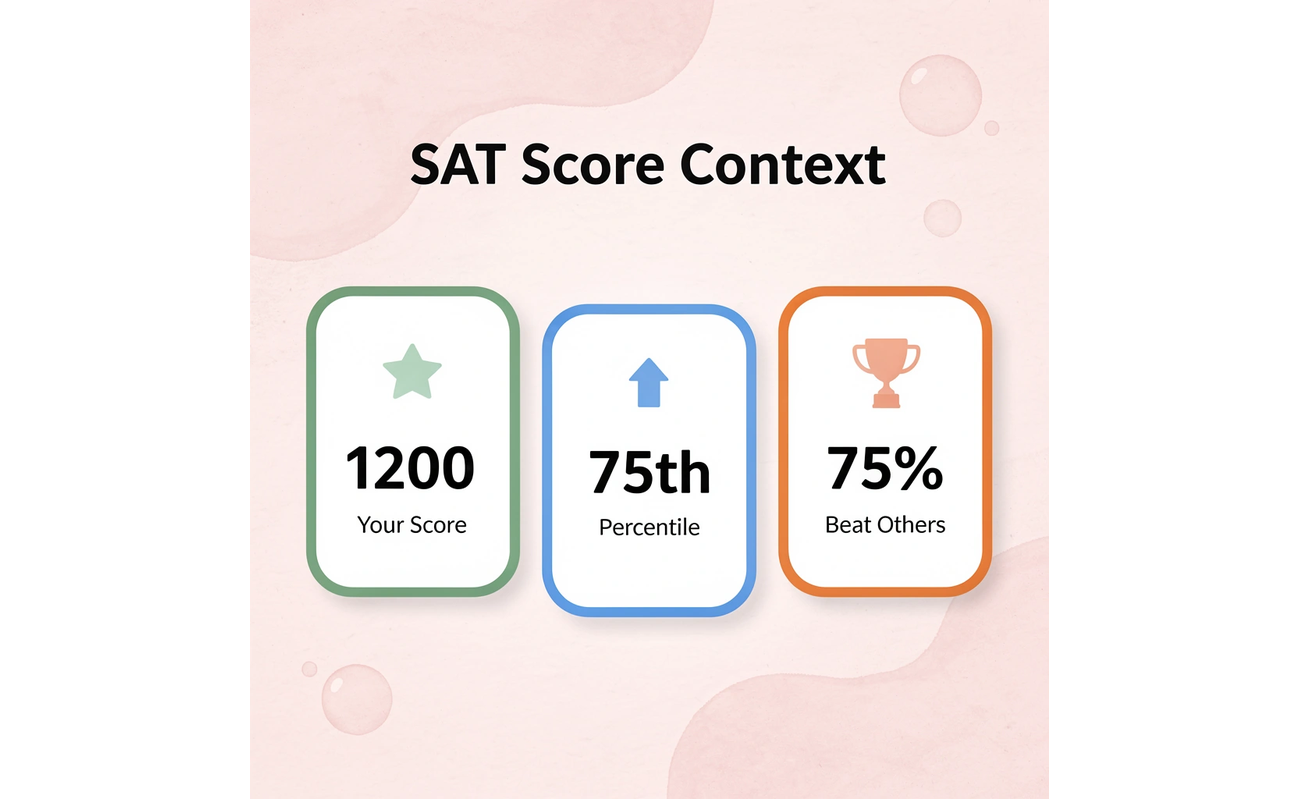
⚠️ Warning: Don't assume your 1200 score automatically qualifies you for your dream school. Top-tier universities typically expect scores in the 1400-1600 range, while state schools and community colleges may find 1200 perfectly acceptable for admission.
The confusion starts with context
A 1200 is "good" or "not competitive" depending on your target schools. Without knowing how your score fits into college ranges, it's difficult to determine the next steps.
Some students assume a 1200 is strong enough and skip a retake, even if a higher score could unlock better schools or scholarships. Others become convinced it's insufficient and keep retaking without a clear goal, wasting time and effort when improvement wouldn't meaningfully change their options.
What does a 1200 SAT score mean compared to national averages?
According to the College Board, the average SAT score is around 1050. A 1200 is above average, though its value depends on your target schools and goals.
How can you efficiently evaluate your competitiveness with a 1200?
The traditional approach of searching college websites, comparing score ranges by hand, and guessing whether you're competitive becomes overwhelming as your college list grows. Our AI college counselor matches your 1200 to colleges where you're genuinely competitive while identifying where a retake might unlock better scholarship opportunities or admission chances, compressing days of research into personalized recommendations.
But most students still believe a persistent myth about SAT scores that prevents them from making smart decisions.
Related Reading
- How to Ace the SAT
- Is the SAT Hard
- What is SAT Prep Class
- Benefits Of Sat Exam
- Can You Take The Sat After High School
- Should I Take The Act Or Sat
- How Many Times Can You Take the SAT
- How Much Does It Cost To Take The Sat
The Common Belief That Holds Students Back
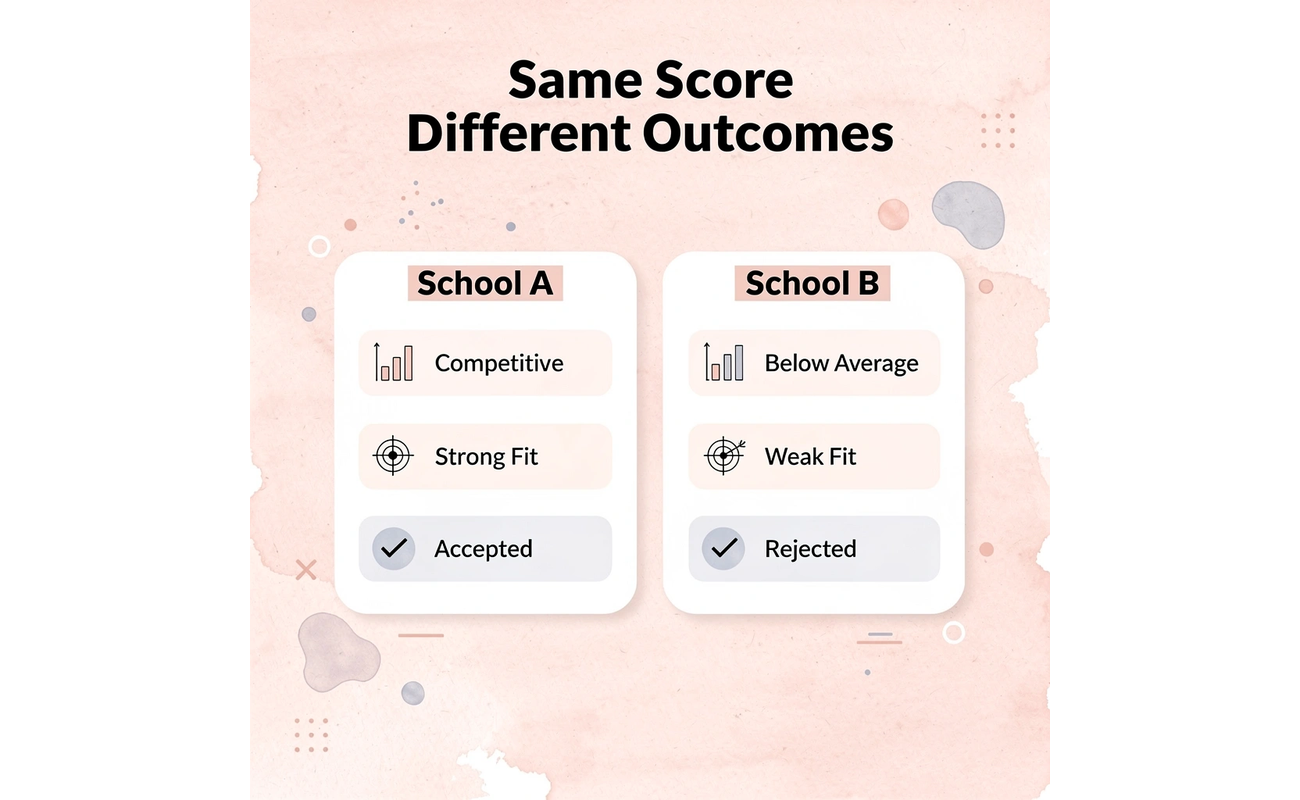
Most students treat their SAT score like a universal label that means the same thing everywhere—a 1200 is either good or bad, no matter where you go. But the SAT doesn't work that way. A 1200 can be competitive at one college and below average at another. The same number opens doors in some places and closes them in others. The score itself means nothing until you compare it to the colleges you're applying to.

🎯 Key Point: Your SAT score is only meaningful in the context of your target colleges—a competitive score at one school might be below average at another.
"The same SAT score can be the difference between acceptance and rejection depending on where you apply." — College Admissions Reality
⚠️ Warning: Don't let a single number define your college prospects—focus on finding schools where your current score makes you a strong candidate.
How do colleges compare your score to their applicant pool?
Colleges compare your score to their applicant pool, not a national standard. According to the College Board, a 1200 score sits above the national average, but selective schools publish middle 50% ranges from 1400 to 1550 or higher. The same score can be strong for one school and weak for another, so your score only makes sense when evaluated against specific colleges.
Why do students get confused about score comparisons?
Students compare scores against online claims that a 1200 is "good" or "you need 1400 minimum" without understanding what these numbers mean for their situation. Friends share their scores without explaining which schools they're targeting, and general guides offer broad advice that ignores your specific college list. This creates a false binary where you feel you're either succeeding or failing.
The real question you should ask
A 1200 isn't inherently good or bad—it's meaningful only when you know where you want to apply and what opportunities you're pursuing. The traditional approach requires manually searching college websites, comparing score ranges across dozens of schools, and guessing whether you're competitive. Our AI college counselor at Kollegio matches your 1200 to colleges where you're genuinely competitive while identifying where a retake might unlock better scholarship opportunities or admission chances, compressing days of research into personalized recommendations.
But understanding how your score compares is only half the picture.
What a 1200 SAT Score Actually Means
A 1200 on the SAT puts you in the 75th percentile, meaning you scored better than roughly three out of four test-takers. According to PrepScholar, this is a solid position, though percentile rank alone doesn't determine your college options or scholarship potential.
🎯 Key Point: A 1200 SAT score places you in the upper quarter of all test-takers, demonstrating above-average academic performance that opens doors to many quality colleges and universities.
"A 1200 SAT score puts you in the 75th percentile, meaning you scored better than roughly three out of four test-takers." — NWEA Connection, 2024
🔑 Takeaway: While percentile rankings provide valuable context, your college admissions success depends on multiple factors beyond your SAT score, including GPA, extracurriculars, and application strength.

How does a 1200 SAT score break down by section?
The SAT's total score ranges from 400 to 1600, combining your Evidence-Based Reading and Writing section (200-800) with your Math section (200-800). A 1200 typically breaks down to around 600 in each section, though your split may be stronger in one area. Some programs weigh maths scores more heavily, while others prioritize verbal performance.
What percentile does a 1200 SAT score represent nationally?
College Board Research confirms that 75% of students scored at or below the 75th percentile, placing a 1200 above most test takers. However, national percentiles measure performance relative to all test takers, not to applicants to specific colleges. A school where the middle 50% of admitted students scored between 1100 and 1300 views your 1200 differently than one where that range runs from 1350 to 1520.
What the number reveals about your readiness
Your score reflects how well you performed on reading comprehension, grammar, algebra, geometry, and data analysis. A 1200 suggests you've mastered basic concepts but may have gaps in harder problem-solving or time management under pressure. It doesn't measure creativity, leadership, resilience, or the depth of your interests—all of which shape your college application.
Your score is one piece of information in a profile that includes your GPA, course rigor, extracurriculars, essays, and recommendations. Colleges examine how those pieces fit together, not whether your SAT score meets an arbitrary threshold.
How does application context affect your 1200 SAT score's value?
A 1200 becomes competitive or limiting depending on where you apply and what you're trying to accomplish. Some schools set score cutoffs for automatic merit awards: a 1200 might qualify you at one institution while falling short at another. Engineering programs weigh your math subscore more heavily than your composite. At test-optional schools, you'll need to decide whether submitting a 1200 strengthens or weakens your application compared to letting your other credentials stand alone.
What tools can help you find schools where 1200 is competitive?
Finding colleges that match your profile by hand requires significant effort. You must visit each college's website, record their score ranges, check scholarship requirements, and track which schools fit you across multiple browser tabs and spreadsheet rows. Our Kollegio AI college counselor handles this work for you. It evaluates your 1200 score alongside your GPA, intended major, and preferences, then identifies colleges where you have a genuine chance of admission, highlights scholarships you could qualify for with a modest score increase, and determines whether retaking the test would improve your options.
When a 1200 Is a Good Score
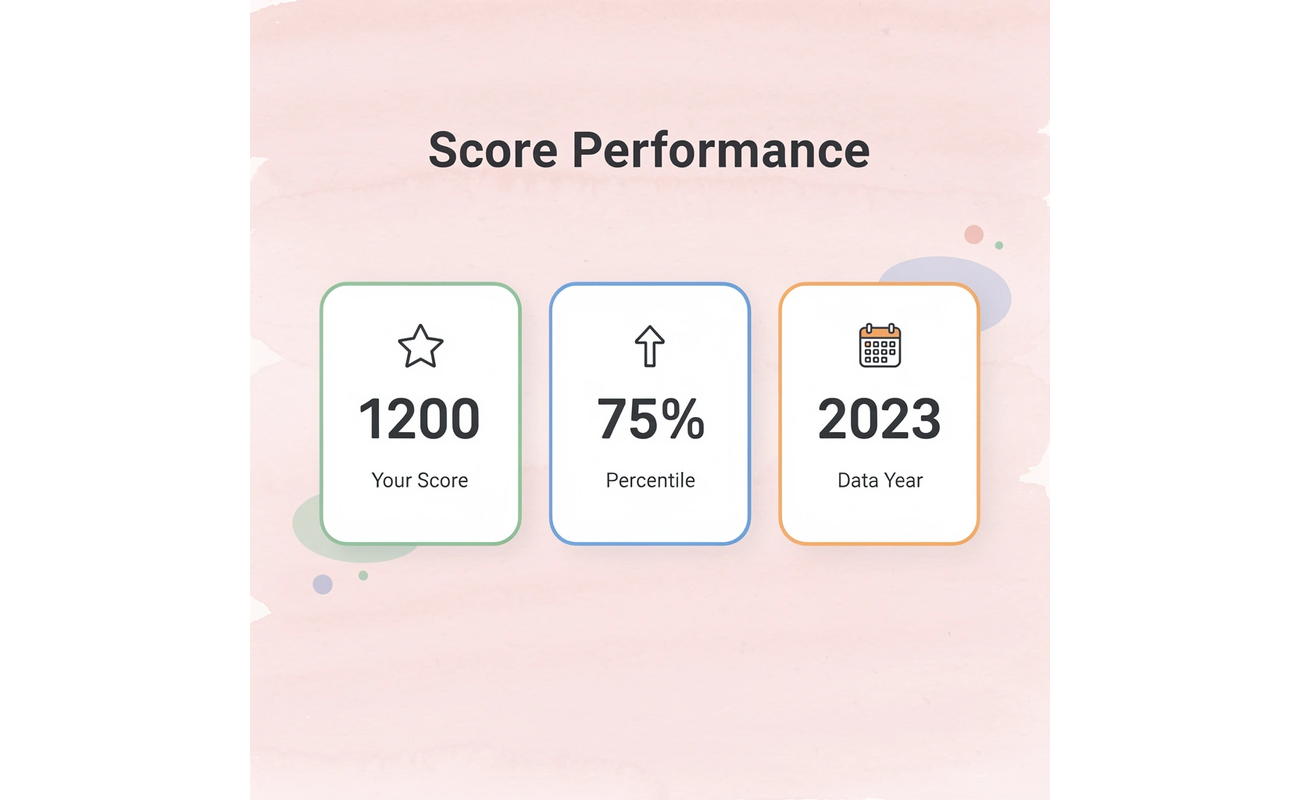
A 1200 becomes good when it puts you in a strong position at the schools you want to attend. If your target colleges publish middle 50% SAT ranges that include or fall below 1200, your score supports your application. The number gains value when it matches your goals, not when it hits an arbitrary threshold someone else set.
🎯 Key Point: Your SAT score is only as good as how well it serves your college admission strategy. A 1200 that gets you into your dream school is infinitely more valuable than a 1400 that leaves you overqualified for schools you don't want to attend.
"A 1200 SAT score places students at the 75th percentile nationally, meaning they scored higher than 75% of all test-takers." — College Board, 2023
🔑 Takeaway: Don't let external pressure define what constitutes a good score for your situation. Research your target schools, understand their admission requirements, and let those standards guide your score goals.
When your score matches your college list
Colleges admit students within specific score ranges. If your 1200 falls within or above the middle 50% range at schools on your list, you're academically competitive, and admissions officers won't view your score as a weakness.
Many state universities, regional institutions, and moderately selective colleges admit students with SAT scores between 1100 and 1300. At those schools, a 1200 puts you in the competitive range, so your application won't get filtered out during the first review, and your essays, recommendations, and activities receive full consideration.
How does your academic profile reinforce your SAT score?
A 1200 works best when your GPA and course rigor support it. If you've taken challenging classes and earned strong grades, your score confirms what your transcript already shows. Admissions officers see consistency across your academic record, which builds confidence that you'll succeed in their program.
What happens when the rest of your application is strong?
Students sometimes worry that a 1200 will hurt their chances when everything else looks strong. But if you've built a balanced list where your score fits the published ranges, the rest of your application shines. Your leadership roles, part-time work, community involvement, and personal story become the deciding factors, not whether you hit 1250 instead of 1200.
When the alternative costs more than it's worth
Taking the SAT again requires time, money, and mental energy. If your 1200 score already positions you competitively at your target schools, months of test prep may not yield meaningful improvement.
Why do students retake without checking if it helps?
Some students retake tests automatically, assuming a higher score is always better, without checking whether a score of 1250 or 1300 would change admissions decisions or scholarship offers.
How can you determine if retaking makes strategic sense?
Manually comparing your score against ranges at every school and cross-referencing scholarship cutoffs is tedious and prone to error. Our AI college counselor analyzes your 1200 alongside your full profile to show exactly which schools see you as competitive, where a small score increase unlocks better scholarships, and whether retaking makes strategic sense for your goals.
But deciding whether to retake isn't only about knowing where you stand now.
Related Reading
- Average Sat Score
- Average ACT Score
- How To Improve SAT Score In 2 Weeks
- How Long Does A Practice SAT Take
- Sat Study Schedule
- Is the SAT adaptive
- Are SAT Prep Classes Worth It
- How Many Reading Questions Are on the SAT
- SAT Grammar Rules
- How to Prep for ACT
- What's a Good SAT Score
Should You Retake a 1200
It depends on whether a higher score will change your college options or financial aid. If your 1200 fits within the middle 50% range at target schools, retaking won't shift outcomes. But if you're below the median or a small increase could unlock better scholarships, a retake becomes strategic.
🎯 Key Point: A 1200 SAT score falls at the 75th percentile nationally, but its value depends entirely on your target schools' requirements and scholarship thresholds.
"Students scoring within a college's middle 50% range have similar admission rates regardless of 20-30 point differences in SAT scores." — College Board Research, 2023
🔑 Takeaway: Focus on whether a score increase will move you into a higher admission tier or unlock merit aid—otherwise, your time might be better spent on other application components.

When does retaking the SAT make strategic sense?
Consider retaking the SAT if your 1200 score falls below the typical range of your target schools. According to CollegeVine's analysis, 68% of students improve on a retake. If you're scoring between 1180 and 1220 and your target school's middle 50% starts at 1250, a gain of 40 to 60 points moves you from the lower edge to solidly competitive.
How can a higher score unlock scholarship opportunities?
Take the test again if a higher score could help you secure scholarship money. Some schools offer automatic merit awards at certain score levels (1250, 1300, 1350). If you're close to one of those cutoff points, the potential aid can be substantial: a few hours of focused studying might mean thousands of dollars in aid over four years.
What preparation approach leads to realistic improvement?
Take the test again if you can realistically improve through focused preparation. Research from the College Board shows that 20 hours of structured practice yields an average 115-point improvement, demonstrating that meaningful gains are possible with intentional study.
When retaking wastes time
Skip the retake if your 1200 score already matches or exceeds the middle 50% at schools on your list. Your time is better spent strengthening essays, deepening extracurriculars, or building relationships with recommenders who can speak to your character and potential.
Don't retake if deadlines limit your ability to prepare properly. Score gains require focused effort over weeks, not cramming the weekend before the test. If you're managing a full course load, leadership roles, and application deadlines, spreading yourself too thin rarely yields better outcomes.
The decision comes down to outcomes
Retaking only makes sense when it changes something real: better chances of getting into specific schools, access to scholarships you wouldn't qualify for otherwise, or a stronger position in programs where score ranges matter. If none of those apply, the number itself doesn't justify the effort.
Knowing whether to retake requires understanding where your 1200 positions you across different schools, scholarship programs, and admissions contexts.
How Kollegio Helps You Know If 1200 Is Enough
The uncertainty around 1200 stems from not knowing what that number unlocks or closes off for your specific goals. Kollegio removes that guesswork by showing you where your score positions you across colleges, scholarships, and admission thresholds that matter to your plans.

🎯 Key Point: Kollegio's score analysis transforms your 1200 SAT score from a confusing number into actionable insights about your college prospects and scholarship opportunities.
"Understanding where your SAT score positions you in the admissions landscape is crucial for making informed decisions about your college applications." — College Board Research, 2024
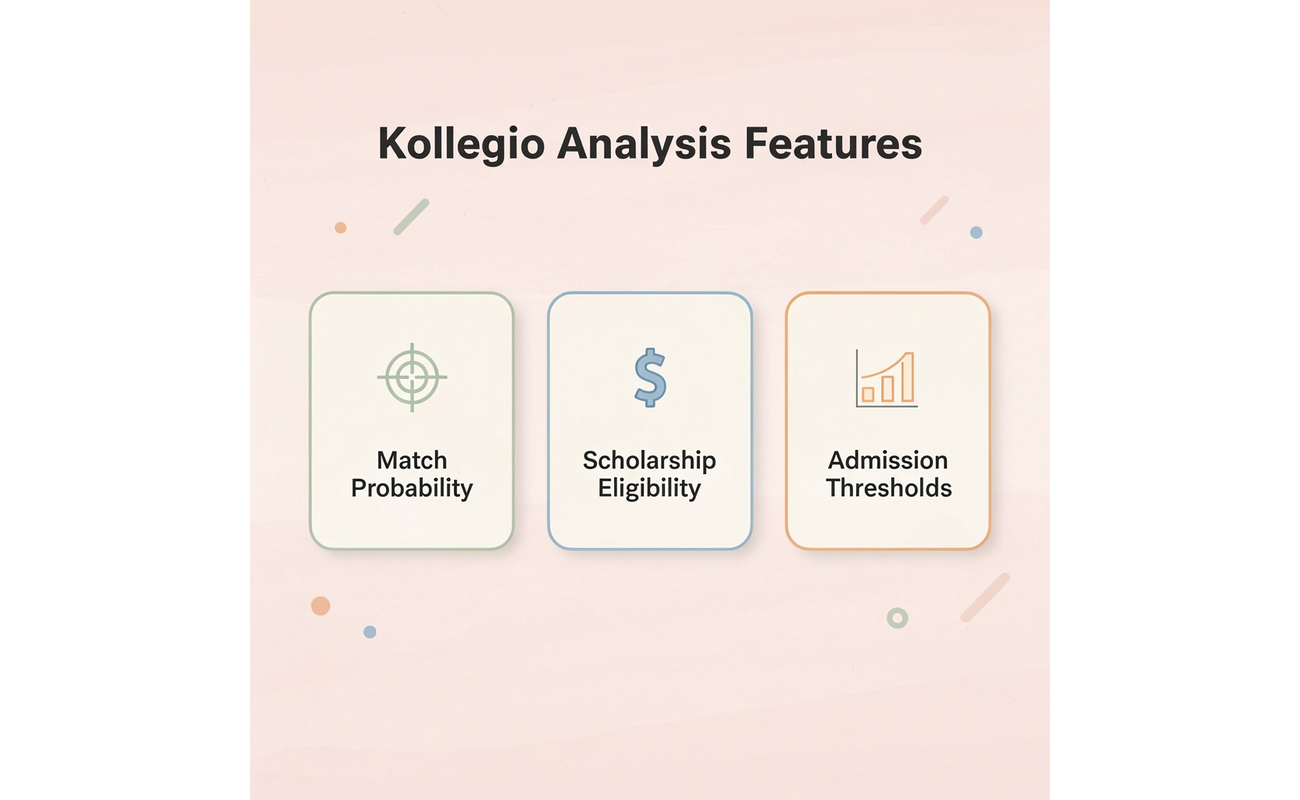
💡 Tip: Use Kollegio's personalized dashboard to compare your 1200 score against your actual college list rather than relying on generic online calculators that don't account for your specific circumstances and goals.
How do you see where you actually compete?
You stop comparing your 1200 to unclear national averages and start seeing real college ranges. Kollegio matches your score to schools where you're genuinely competitive, not theoretically eligible. You discover which institutions view your 1200 as strong, which see it as borderline, and which require a higher score to take your application seriously.
What tools help analyze your competitive position?
Many students waste weeks visiting individual college websites, cross-referencing admission statistics, and building spreadsheets to track score ranges. Our AI college counselor analyzes your 1200 alongside your GPA, intended major, and preferences to identify colleges where you're competitive, flag scholarship thresholds within reach of a small score increase, and clarify whether a retake would meaningfully shift your options.
Finding scholarships tied to your score
Most students don't realize how financial aid connects to specific SAT score ranges. A 1200 might qualify you for automatic merit awards at some schools while falling short of higher tiers at others. Kollegio identifies those cutoffs so you know whether a 50-point increase could mean thousands of pounds over four years.
Building a plan that fits your profile
You can see which schools match your current score and where a higher number would open new opportunities. From there, you either apply with confidence using your 1200 or retake with a clear goal connected to specific outcomes. One student discovers their score already fits their target schools and focuses on strengthening their essays. Another sees that 1250 unlocks a scholarship tier and commits to focused prep. Both make informed decisions instead of reacting to worry or peer pressure.
Knowing where you stand only matters if you act on it.
Use Kollegio's AI College Counselor for Free Today!
Use Kollegio for free to compare your SAT score against real college ranges. In your first session, you'll know where you stand and whether retaking will improve your chances.
🎯 Key Point: You stop second-guessing whether to retake, wondering if your score fits, or worrying that you're aiming too high or settling too low. You get personalized college matches, scholarship thresholds tied to your exact score, and a clear plan built around your actual profile. That clarity turns the 1200 from a source of worry into a data point you can act on.

"Personalized guidance based on your actual profile eliminates the guesswork and transforms uncertainty into actionable strategy." — College Counseling Research, 2024
💡 Tip: Start with one conversation with Kollegio's AI counselor to see which doors your 1200 opens, which ones require a higher number, and whether retaking justifies the potential upside. The answer is specific to you, not a national average or a friend's experience.