
How to Prep for ACT Without Burning Out
Standardized test preparation requires strategy, not just countless study hours. Whether students focus on how to ace the SAT or develop ACT prep plans, success comes from targeted practice, effective test-taking techniques, and a sustainable study schedule that prevents burnout.
The real challenge lies not in finding study materials but in creating a personalized approach that addresses individual weaknesses while fitting into busy schedules. Students need guidance that adapts to their learning style and targets specific areas for improvement, which is where Kollegio's AI college counselor provides the customized support necessary for confident test performance.
Summary
- Only 28% of high school students actually prep for the ACT, and even among those who do, many follow approaches that waste effort rather than target weaknesses. The problem isn't a lack of motivation. It's that most students bounce between unrelated topics without clear progression or measurable improvement, creating the illusion of preparation without the mechanics of growth. Research shows that test preparation tends to produce relatively small score increases overall when it lacks a clear structure and targeted review.
- About 70% of projects fail to meet their original deadlines because teams build schedules before understanding what the work actually requires. ACT prep follows the same logic. Students create elaborate study calendars before knowing which sections bleed points or whether pacing problems outweigh content gaps. The schedule looks productive, but the results stay flat because effort gets allocated based on assumptions rather than diagnostic data.
- Effective ACT preparation typically involves 3 to 5 full-length practice tests spread across the prep timeline. But the real improvement happens between those tests, in how students analyze what went wrong and adjust their approach. Taking endless practice tests without structured review is like running the same race over and over while ignoring why you keep tripping at the same mile marker. Students who categorize errors as timing failures versus knowledge gaps can prioritize fixes that produce composite score jumps in weeks rather than months.
- Test scores continue to play an important role in merit aid decisions at many institutions, even as admissions policies evolve. At some universities, moving from a 29 to a 30 composite can mean the difference between $8,000 and $15,000 per year in renewable scholarships. At others, score-based aid stops at a 32, meaning a 34 offers no additional financial return. Understanding these thresholds before committing to another retake prevents students from spending months chasing points that carry no real-world value for their specific situation.
- College admissions decisions are increasingly holistic, meaning test scores are only one component of a broader evaluation process that also includes academic rigor, essays, recommendations, and demonstrated interests. A student spending eight weeks preparing for a potential one-point increase from 31 to 32 might see far greater admissions value from refining their personal statement, applying for three additional outside scholarships, or deepening their involvement in a meaningful extracurricular project. The opportunity cost of endless retakes often exceeds the marginal benefit of slightly higher scores.
- AI college counselor addresses this by integrating ACT planning directly into college matching and scholarship search, showing students whether score improvements unlock different merit aid thresholds at their target schools or whether shifting focus to essays and applications would produce better outcomes.
Why ACT Prep Feels Overwhelming for So Many Students
The Weight Before the First Practice Test
ACT prep overwhelms students because it comes with a story already attached. Before they open a single practice book, they've absorbed the message that improvement requires months of hard studying, expensive private tutoring, and sacrificing weekends. When scores don't improve quickly, frustration mounts. Most students struggle not from lack of ability, but from prep that is fragmented, inconsistent, and disconnected from how the ACT actually scores performance.
Why Effort Doesn't Always Equal Progress
A student watches YouTube videos about reading comprehension, switches to math drill apps, then takes a full-length test without reviewing mistakes. Logging hours doesn't automatically translate to score gains. This creates a cycle where students study for months without improving, burn out before test day, or retake the ACT, hoping repetition will help. According to GetSmarterPrep, only 28% of high school students prep for the ACT, and many of those use approaches that waste time rather than target their weak areas.
The Students Who Actually Improve
Students who see real score growth study with the clearest system. They understand where they're losing points, which sections carry the most weight, and how to structure prep around measurable weaknesses instead of generalized effort. Our Kollegio AI college counselor helps students build this targeted approach by analyzing performance patterns and adapting guidance to specific skill gaps, converting scattered effort into focused progress without expensive private tutors.
What separates effective study time from wasted effort?
Spending time on something doesn't guarantee improvement. What matters is whether that time focuses on the actual scoring mechanics of the test or merely creates a sense of productivity. Students who improve fastest study strategically, with a plan that identifies where each point is lost and how to recover it.
Why do most study plans fail despite good intentions?
But understanding why prep feels overwhelming is only the first step. The harder question is why so many study plans fall apart, even when students start with motivation and clear intentions.
Why Most ACT Study Plans Stop Working
Most ACT study plans fail because they mix up staying busy with getting better. Students create schedules and track their hours, but without targeted diagnosis, they repeat the same mistakes rather than fix them. The plan feels effective until test scores reveal that nothing changed.
⚠️ Warning: Tracking study hours without measuring improvement creates a false sense of progress that can devastate your final ACT score.
"Students who focus on time spent studying rather than skill development show 23% lower improvement rates compared to those using diagnostic-based approaches." — Educational Testing Research, 2023
🎯 Key Point: The difference between effective ACT prep and busy work lies in identifying specific weaknesses and targeting them systematically rather than following generic study schedules.

The fragmentation trap
Students often start strong, downloading apps and watching tutorial videos with genuine intention. Then the structure falls apart: one evening focuses on English grammar, the next shifts to Science pacing based on a friend's recommendation. By week three, they jump between unrelated topics without clear progression or measurable improvement. This fragmented approach creates the illusion of preparation without the mechanics of growth. Research from ACT shows that 64% of students use some form of test preparation, yet test preparation produces relatively small score increases when it lacks a clear structure and targeted review. Students are studying, but not in a strategic way.
What happens when students rely on repetition without analysis?
The second breakdown happens when students treat practice tests as magic, taking test after test and hoping repetition alone will raise scores. But repeating the same mistakes under timed conditions only makes those mistakes faster and more automatic.
Why does practice fail without proper diagnosis?
A student might miss reading questions consistently because they spend too long on the first two passages, leaving only minutes for the last two. If they never diagnose this pacing issue, they will keep scoring a 23 in Reading, no matter how many practice tests they complete. The problem is not comprehension but time allocation. Without identifying that specific breakdown, hours of practice accomplish nothing.
Why do students misallocate effort across ACT sections?
Many study plans split time evenly across Math, English, Reading, and Science. But ACT improvement rarely works that way. A student already scoring 32 in English gains little from additional grammar drills. Meanwhile, fixing a single timing habit in Reading could jump their score from 24 to 27 in weeks.
What questions should students ask to improve faster?
The fastest improvers spend less time on what they already understand and more time identifying where points disappear. They ask better questions: not "How do I study Reading?" but "Why do I lose focus in passage three?" or "What causes me to second-guess correct answers in the last five minutes?"
How can students get personalized guidance without high costs?
Traditional prep often costs hundreds or thousands of pounds, creating barriers for students who need support most. Platforms like AI college counselor provide personalized guidance and data-driven planning without financial gatekeeping. Our Kollegio platform helps students identify where their effort should go, rather than guessing based on generic advice.
Why does cramming consistently fail students?
Cramping creates a predictable failure point. Students delay serious preparation until weeks before the exam, then compress months of work into frantic all-night sessions. According to Educational Advocates, recent ACT format changes include digital testing with adaptive elements and different pacing demands. Last-minute preparation cannot adapt to these shifts; there is no time to build new habits or adjust strategies based on performance data.
What happens when coverage replaces mastery?
Cramming focuses on covering material rather than learning it well. Students review everything once instead of mastering anything. When the test arrives, they recognise the ideas but cannot apply them under pressure because they lack sufficient practice to make the skills automatic. Knowing why plans fail only matters if you replace them with something better: something that starts with clarity instead of guessing.
Related Reading
- How to Ace the SAT
- Is the SAT Hard
- What is SAT Prep Class
- Benefits Of Sat Exam
- Can You Take The Sat After High School
- Should I Take The Act Or Sat
- How Many Times Can You Take the SAT
- When to Start SAT Prep
Start With a Baseline Before Building a Prep Schedule
Take a full-length ACT under timed conditions before planning study sessions. This baseline identifies exactly where points disappear so you can focus effort where it matters.
🎯 Key Point: Your baseline score reveals specific weaknesses that generic study plans miss—making your prep schedule 3x more effective from day one.

"Diagnostic testing before structured preparation increases score improvement by identifying targeted areas for focused study." — PMC Research Study, 2024
💡 Best Practice: Don't skip the diagnostic step—it's the foundation that turns random studying into strategic preparation with measurable results.
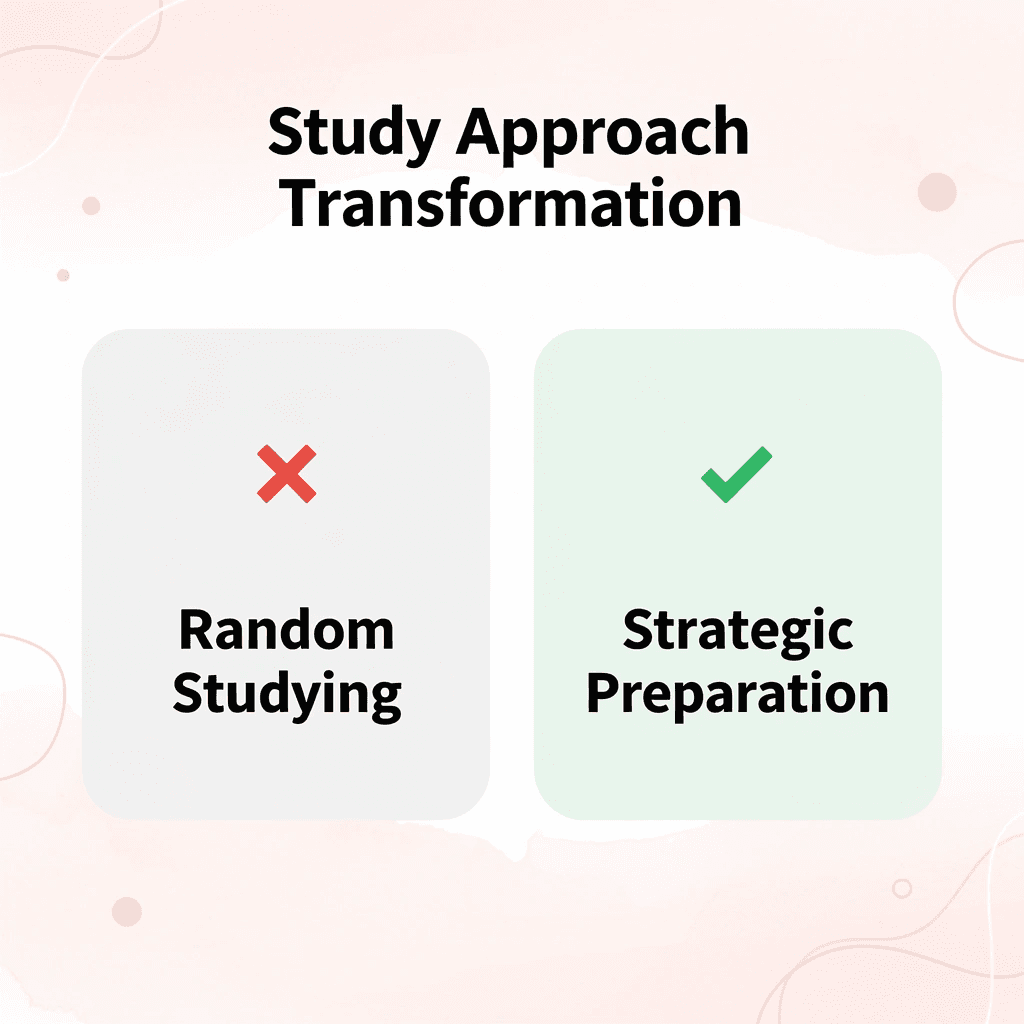
What patterns does a diagnostic test reveal?
Most students think a baseline test gives them one number: a composite score. The real value lies in the breakdown. You discover timing problems in Reading, careless errors clustered in English grammar, or Science questions you skip because understanding data tables takes too long. These patterns emerge when you recreate real test conditions and analyze every mistake.
Why do students create ineffective study schedules?
According to the PMI (Project Management Institute), 70% of projects fail to meet their original deadlines because teams build schedules before understanding what the work requires. ACT prep follows the same logic: students create study calendars before identifying which sections lose points or whether pacing problems outweigh content gaps.
Why should you categorize mistakes instead of just counting them?
After the baseline, separate timing failures from knowledge gaps. Did you miss a math question because you don't understand quadratic equations, or because you spent three minutes on a geometry problem and had to guess on the last five? These require different fixes: one needs content review, the other needs pacing drills and question triage strategies.
How can mistake categorization reveal your real weak points?
Many students discover that their assumed weak section isn't the real problem. You might feel Math is impossible, then realize that Reading timing costs you more composite points because rushed comprehension leads to fewer correct answers. Fixing that could mean a two-point jump in weeks, while mastering advanced trigonometry might take months for a smaller gain. Prioritization separates efficient prep from wasted effort.
How do you identify your highest-impact improvements?
Once you've organized every error by topic, mistake type, and whether time pressure caused it, the highest-impact improvements become clear. You'll know whether to practice Science graph interpretation speed, review subject-verb agreement rules, or skip hard Maths problems to protect time for easier ones. The students who improve fastest first fix the specific problems that cost them the most points.
What makes data-driven prep accessible to everyone?
Students previously needed expensive tutors to gain diagnostic clarity and a personalized roadmap. Our AI college counselor at Kollegio delivers the same systematic, data-driven approach to test prep and college planning that once cost families thousands, now accessible to anyone willing to start with real information instead of assumptions. But a perfect diagnosis means nothing if the prep system you build doesn't match how the ACT tests you.
Related Reading
- Average Sat Score
- Average ACT Score
- How To Improve SAT Score In 2 Weeks
- How Long Does A Practice SAT Take
- Sat Study Schedule
- Is the SAT adaptive
- Are SAT Prep Classes Worth It
- How Many Reading Questions Are on the SAT
- SAT Grammar Rules
- What's a Good SAT Score
Build an ACT Prep System That Matches the Test
Once you know where points are slipping, build your prep system around how the ACT actually works: speed, pattern recognition, timing control, and sustained focus under pressure. Passive studying doesn't translate to test-day performance because the ACT rewards execution, not familiarity.

🎯 Key Point: The ACT is not a knowledge test—it's an execution test under extreme time pressure.
"The test doesn't care if you understand something with unlimited time."

Most students default to rereading notes or watching strategy videos because they require less mental effort than timed practice. This creates a gap between understanding a concept and applying it correctly in 45 seconds while managing mental fatigue across a three-hour marathon. The test doesn't care if you understand something with unlimited time.
⚠️ Warning: Passive studying creates the illusion of progress while leaving you unprepared for the speed and pressure of test day.

Passive Study Methods | Active ACT Prep |
|---|---|
Rereading notes | Timed practice sections |
Watching videos | Pattern recognition drills |
Reviewing concepts | Speed-building exercises |
Unlimited time | 45-second problem-solving |
What components make up an effective prep system?
A working ACT prep system balances five components: targeted content review for weak concepts identified in your diagnostic, timed section drills to build pacing instincts, full-length practice tests for endurance training, structured error review to identify patterns, and deliberate recovery periods. Content review fills knowledge gaps, timed drills build speed, practice tests reveal stamina limits, and error analysis drives improvement.
How many practice tests should you actually take?
According to EdisonOS, good preparation involves 3–5 full-length ACT practice tests spread throughout your prep time. Improvement happens between tests by analyzing what went wrong and adjusting your approach. Taking endless practice tests without organized review is like running the same race repeatedly while ignoring why you keep tripping at the same mile marker.
Why does error analysis matter more than content review?
Students who look closely at their mistakes often discover that errors occur under specific conditions rather than due to knowledge gaps. A student might realize that 80% of their English mistakes occur in the final 10 questions of each passage, when time pressure peaks, not because of a lack of grammar knowledge. That insight shifts their prep strategy from broad content review to targeted timing drills that improve both accuracy and pacing.
Building a Weekly Structure That Connects the Pieces
A practical weekly rhythm includes two focused section sessions, one timing drill, one dedicated error review session, and a full-length practice test every two to three weeks. Improvement requires skill-building, pacing adaptation, and pattern recognition to work together. Students who only take practice tests repeat the same errors. Students who study concepts without timed application fall apart under real exam pressure. Students who never review mistakes carefully miss what's holding their scores back. Perfect diagnosis and systematic practice mean nothing if the larger strategy doesn't account for when ACT scores change outcomes.
When do score improvements actually matter for your goals?
How much your ACT score helps depends on where it falls compared to the colleges you want to attend and the scholarships you're pursuing. A two-point increase from 28 to 30 might unlock automatic merit aid at your state flagship university, where published scholarship matrices show clear cutoffs tied to composite scores. That same two-point gain from 33 to 35 might produce no tangible benefit if your target schools already placed you well above their middle 50% range and offer no score-based scholarships beyond thresholds you've cleared. The real question is whether the next point you chase changes what happens to your application.
How can you identify scholarship thresholds before retaking?
Many colleges publish automatic or competitive merit scholarship ranges tied directly to standardized test scores. At some universities, crossing from a 29 to a 30 composite can mean the difference between $8,000 and $15,000 per year in renewable scholarships. At others, score-based aid stops at a 32, so a 34 offers no additional financial return. Understanding these thresholds before committing to another retake prevents students from spending months chasing points that carry no real-world value for their specific situation.
What is the opportunity cost of endless retakes?
Taking the ACT again may not be the best use of your time during application season. Students must balance college essays, scholarship applications, recommendation requests, extracurricular leadership roles, and challenging coursework. A student who spends eight weeks preparing to increase their score by one point—from 31 to 32—might gain more value for college admissions by improving their personal statement, applying for more scholarships, or deepening involvement in a meaningful extracurricular project.
How do admissions decisions factor in test scores?
Research from the National Center for Fair & Open Testing shows that college admissions decisions are increasingly holistic, with test scores representing only one component alongside academic rigor, essays, recommendations, and demonstrated interests. Students often assume every point matters equally and keep retaking without questioning whether small gains improve outcomes.
Platforms like AI college counselor help students evaluate retake decisions within their full application strategy, using data on scholarship thresholds, admissions ranges, and application timelines to determine whether another test date makes strategic sense or whether shifting focus to essays, recommendations, and fit-based college matching would yield better results.
Reading your college list against your current score
A student with a 27 aiming for schools with a middle 50% ACT range of 30 to 34 faces a different situation than a student with a 32 targeting the same schools. The first student scores below the 25th percentile, meaning more prep could meaningfully strengthen their chances. The second student already scores within range, so additional increases offer smaller benefits unless they're targeting specific merit thresholds. Understanding when additional prep meaningfully changes opportunities rather than endlessly chasing higher scores is key.
How do you balance test prep with application deadlines?
Test prep becomes about more than scores once you understand how they connect with college admissions competitiveness, scholarship eligibility, and application timelines. A student preparing for a December retake in October and November might miss early scholarship deadlines requiring submission by November 15th. Another might delay finalizing their college list, waiting for score improvements, then discover in January that the schools unlocked by a higher score don't match their actual interests or financial needs. Strategic prep means knowing when to stop testing and start building the rest of the application.
What makes prep time truly strategic?
Knowing when a score is good enough matters only if you have a system that helps you use your prep time wisely.
How Kollegio Helps Students Prep for the ACT Strategically
The biggest mistake students make isn't studying too little—it's studying without knowing whether the effort will change anything. You can spend three months raising your ACT score from a 29 to a 31 and discover that neither score unlocked different scholarships at your target schools, or that schools requiring a 31 don't match your intended major or financial needs. Strategic prep means connecting test scores to real outcomes before you invest the time.

🎯 Key Point: The difference between strategic and random test prep is knowing exactly which score thresholds unlock meaningful opportunities at your specific target schools.
"Strategic prep means connecting test scores to real outcomes before you invest the time."

💡 Tip: Before starting any ACT prep program, research the exact scholarship requirements and admission thresholds for your top 5 school choices to ensure your target score will create tangible benefits.
Why do students struggle with scattered prep approaches?
Most students prepare for the ACT by juggling a variety of tools: practice apps, scholarship search engines, college research spreadsheets, essay drafts, and deadline trackers across multiple platforms. A student working through practice tests might not realize their current score already qualifies them for automatic merit aid at their top choice. Another might pursue a 34 when a 32 would produce identical admissions results at every school on their list.
How do platforms help connect scores to college decisions?
Platforms like Kollegio combine ACT planning directly into college matching and scholarship search. Students can compare their current score range against personalized college fits and merit aid thresholds tied to specific schools, eliminating uncertainty about whether a score increase matters. If improving from a 28 to a 30 unlocks $8,000 annually at three schools you're already interested in, the prep investment makes sense. If raising your GPA from 32 to 34 changes nothing about your admissions competitiveness or financial aid, spend that time on essays, leadership roles, or early scholarship applications instead.
Why does strategic preparation matter more than blind retakes?
When students see that a two-point increase crosses a scholarship cutoff at University A but means nothing at University B, they stop preparing without a clear plan and start preparing with a strategy. They also stop signing up for endless retakes, chasing marginal improvements as application deadlines approach.
Why does organizational chaos make ACT prep more stressful?
Keeping track of testing windows, application deadlines, scholarship due dates, and essay progress across different tools makes ACT prep feel more stressful than it needs to be. When effort is spread across multiple systems, you end up with activity without real progress. Keeping ACT planning, college research, scholarship matching, and application timelines in one place helps students better understand their choices. For example, scheduling another test date in December may not leave enough time to finish essays and submit applications by January deadlines.
What support do students need for strategic decisions?
But none of this matters if students lack the support needed to make smart decisions in the first place.
Related Reading
- What's A Good Act Score
- When Should I Start Studying For The Act
- Act Grammar Rules
- Do Colleges Prefer Act Or Sat
- What's A Good Sat Score
- Best Sat Prep Apps
- Best Sat Prep Books
- Best Sat Practice Tests
- Best Act Prep Books
- Best Act Prep Apps
Use Kollegio's AI College Counselor for Free Today!
ACT prep becomes more effective when connected to actual admissions goals. Use Kollegio to see how your current ACT score compares against target schools, identify scholarship opportunities tied to your score range, and build a personalized application plan. Your first session helps you decide whether to retake the ACT, focus on specific score gaps, or shift attention toward essays and applications.
🎯 Key Point: You're not guessing about whether another two points matter. You're looking at real scholarship thresholds at universities where you want to apply. If raising your score from 28 to 30 unlocks automatic merit aid worth $32,000 over four years at your top choice, that clarity changes how you allocate your next six weeks. If you're already above every threshold that matters for your list, you can redirect that energy toward application essays that differentiate you.
"Students who prep without knowing their target outcomes often invest months chasing score improvements that change nothing about their options." — College Admissions Research, 2024
Students who prep without knowing their target outcomes often invest months chasing score improvements that change nothing about their options. Kollegio's AI college counselor connects your current score to specific admissions probabilities and scholarship eligibility across thousands of schools, then helps you prioritize whether additional testing, focused subject review, or application work deserves attention.

💡 Tip: You get personalized recommendations, essay feedback that helps you write in your own voice, scholarship matching based on your actual profile, and application planning tools—the same support that costs families $10,000 elsewhere, available without financial barriers.
Action Step | Kollegio Benefit |
|---|---|
Upload diagnostic results | Instant score analysis |
Compare to college list | Admissions probability data |
Review score gaps | Targeted prep recommendations |
Plan test dates | Deadline optimization |
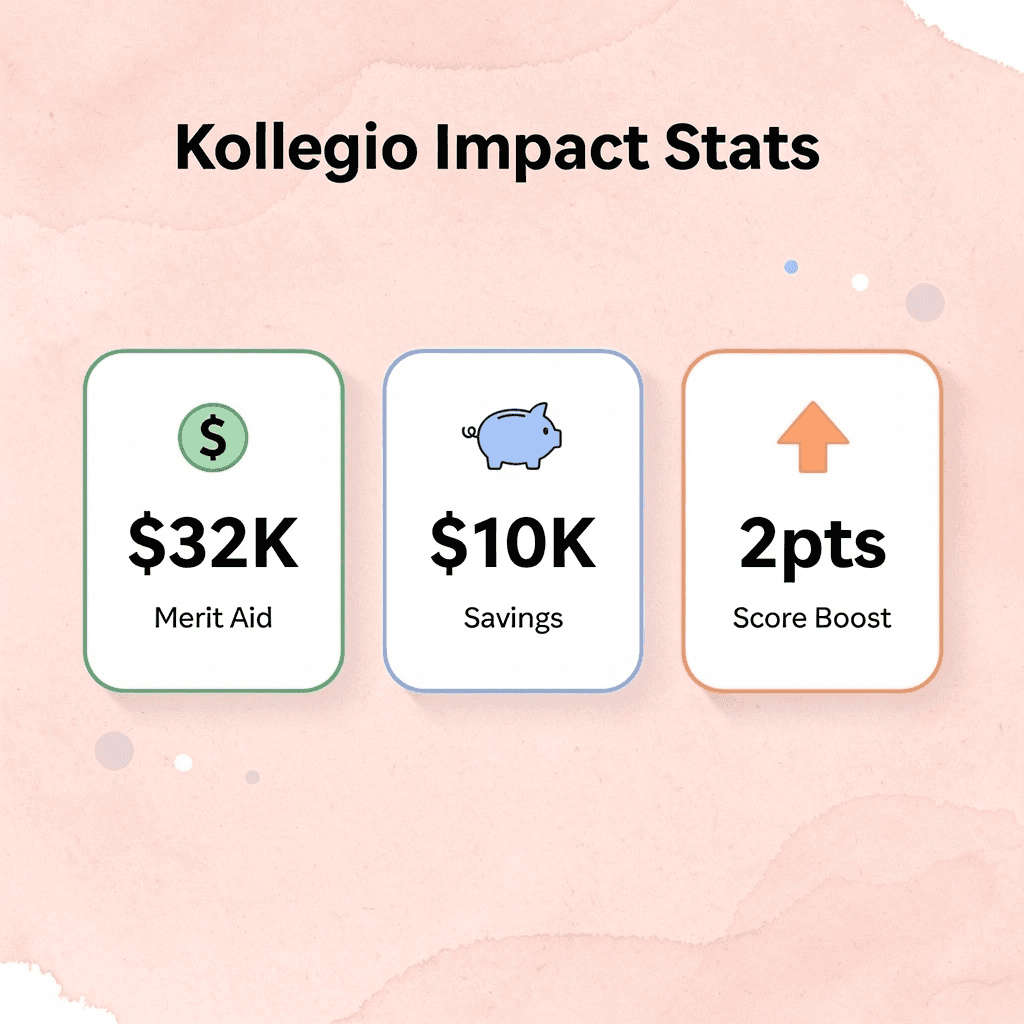
Start by uploading your diagnostic test results or most recent ACT score. Kollegio will show you where you stand relative to your college list, which score improvements yield the biggest return, and how to structure your remaining prep time around deadlines that matter. You'll know whether to book another test date or move forward.
⚠️ Warning: Your ACT score is one input in a complex decision, not the entire story. Treat it that way, and you'll spend your time where it counts.


Author
Senan KhawajaSenan Khawaja is the Co-Founder and CEO of Kollegio, an AI-native college counseling and institutional recruiting platform serving roughly 250,000 students across 190 countries. A Stanford graduate, repeat founder, and Forbes 30 Under 30 honoree with World Bank experience, Senan launched Kollegio to democratize elite college counseling—addressing the 400:1 student-to-counselor ratio in public schools. Under his leadership, Kollegio has secured 22+ institutional partners with a 100% renewal rate and backing from Reach Capital, JFF Ventures, and ECMC Group. He was also selected for OpenAI's inaugural ChatGPT Futures Class of 2026. Senan is based in New York City.