
Average SAT Score for UNC and How Competitive You Really Are
Students targeting the University of North Carolina at Chapel Hill need to understand how their test scores compare to those of admitted students. Understanding what ACT score is needed for Harvard or the average SAT score for UNC helps gauge competitiveness at top-tier institutions. UNC's middle 50% SAT ranges and acceptance rates provide concrete benchmarks for assessing application strength and determining whether additional test preparation makes sense.
Raw statistics only tell part of the story without personalized context. Rather than wondering whether a 1350 or 1450 SAT score creates a competitive profile, students benefit from tailored analysis that considers their complete academic picture. Kollegio's AI college counselor evaluates specific test scores, GPA, and extracurriculars against UNC's admission standards to provide actionable guidance for strengthening applications.
Table of Contents
- Your SAT Score Alone Doesn't Tell You If UNC Is Within Reach
- What Is the Average SAT Score for UNC?
- Why Students With Similar SAT Scores Can Receive Different Decisions
- How to Know Whether Your SAT Score Is Competitive for UNC
- The Bigger Mistake: Building Your College List Around One Number
- How Kollegio Helps You Understand Your Real Admissions Chances
- Use Kollegio's AI College Counselor for Free Today!
Summary
- UNC Chapel Hill's middle 50% SAT range spans 1330 to 1500, with an average score of 1451 among enrolled students. Landing within this range doesn't guarantee admission at a university with a 15.3% acceptance rate, where most applicants submit scores in or above this bracket. The score establishes academic readiness, but what separates admitted students from denied ones is how they've applied that capability through course rigor, leadership, and sustained extracurricular impact.
- Two students with identical 1440 SAT scores can receive opposite admissions decisions because test scores provide only a snapshot of one Saturday morning. GPA reflects four years of sustained academic performance, and 77% of enrolled UNC students graduated in the top 10% of their high school class. Course rigor matters more than raw grades; admissions officers evaluate whether students consistently chose the most challenging options available, not just how many AP classes appear on a transcript.
- Students who build college lists around SAT ranges alone create categories that look organized but misrepresent actual competitiveness. A school where your score sits at the 60th percentile might seem like a match, but if your GPA falls below average for admitted students and your extracurriculars lack depth, you're less competitive than the numbers suggest. Score-driven categorization ignores that admissions decisions depend on how your complete application compares to other applicants across GPA trends, course selection, leadership impact, and essay quality.
- Holistic review means admissions officers don't rely on a single metric to make a judgment. They evaluate whether your transcript shows intellectual curiosity through challenging coursework, your activities demonstrate sustained commitment, and your essays reveal authentic voice. A 1380 SAT paired with a 4.5 weighted GPA, eight AP courses, and founding a community organization can present a more compelling case than a 1500 SAT with minimal course rigor and surface-level involvement.
- Essays and recommendations reveal the person behind the numbers when most applicants present similar credentials. A thoughtful essay exploring genuine intellectual curiosity or personal growth can strengthen an application significantly, while generic narratives about overcoming adversity do nothing to distinguish you from thousands of others. Letters of recommendation describe classroom engagement, intellectual risk-taking, and character in ways that test scores and GPAs cannot capture.
- Kollegio's AI college counselor analyzes your SAT scores alongside your GPA, course rigor, and extracurricular involvement against UNC's actual admission patterns, showing you where your complete profile stands rather than whether a single number falls within a published range.
Your SAT Score Alone Doesn't Tell You If UNC Is Within Reach
You get your SAT score back and wonder: "Can I get into UNC?" A single number cannot predict your future. An SAT score without context tells you almost nothing about whether Chapel Hill will accept you.

🎯 Key Point: Your SAT score is just one piece of a much larger puzzle that UNC admissions officers evaluate.
A 1450 might feel strong compared to your high school's average or online forums. But UNC evaluates you against thousands of other applicants, each bringing their own combination of grades, course rigor, leadership, and personal story. A test score alone doesn't show where you truly stand within that competitive group.
"A test score alone doesn't show where you stand within that group of thousands of applicants, each with their own unique combination of academic and personal achievements."
⚠️ Warning: Don't let a single SAT number determine your entire college strategy - holistic admissions means every part of your application matters.
Why context changes everything
The mistake happens when students treat their SAT score as the only measure of competitiveness. They compare themselves to friends who got in last year or scroll through Reddit threads for reassurance, ignoring the factors that admissions officers actually consider during the review process.
According to PrepScholar, the average SAT score of 1451 represents the midpoint for admitted students, but this figure doesn't capture course difficulty, extracurricular depth, or essay quality.
How can identical scores lead to opposite decisions?
Two applicants with the same scores can receive different decisions. One may have taken the hardest classes available, secured leadership roles, and written essays demonstrating genuine insight. The other may have chosen easier classes, remained minimally involved outside academics, and submitted generic materials. Same score, entirely different profiles.
UNC reviews applications holistically, considering test scores alongside grades, course selection, recommendations, essays, extracurriculars, and personal achievements. Admissions officers examine how these elements fit together to tell a coherent story about who you are and what you'll contribute to campus.
What question should students ask instead of score adequacy?
Most students who worry about whether their score is "good enough" are asking the wrong question. The better question is whether your score fits naturally into the bigger story your application tells. If your transcript shows intellectual curiosity through challenging coursework, your activities demonstrate sustained commitment, and your essays reveal authentic voice, then your SAT score becomes one supporting detail among many.
Students often piece together their admissions strategy from scattered advice without understanding how their full profile measures up. Our Kollegio AI college counselor analyzes your SAT scores, GPA, course rigor, and extracurriculars against UNC's actual admission patterns, showing you where you're competitive and what specific steps could strengthen your profile.
But knowing your score sits somewhere in UNC's range leaves one question unanswered: what does that range look like?
What Is the Average SAT Score for UNC?
According to UNC Admissions data, the middle 50% SAT range for enrolled students is 1330-1500, with PrepScholar reporting an average of 1451. The middle range matters more than the average because it shows where most admitted students actually land.
🎯 Key Point: UNC's middle 50% range of 1330-1500 means that 25% of students scored below 1330 and 25% scored above 1500.
💡 Tip: Focus on the middle 50% range rather than just the average when setting your target SAT score for UNC applications.
"The middle 50% SAT range for enrolled students is 1330-1500, showing where most admitted students actually score." — UNC Admissions Data

What the percentiles actually mean
A score of 1330 sits at the 25th percentile: three-quarters of enrolled students scored higher. A 1500 places you at the 75th percentile, meaning only one in four students exceeded that mark. Scores between these numbers are statistically similar to those of most enrolled students. Above 1500, you're outperforming the majority. Below 1330 doesn't disqualify you, but it shifts the burden to other parts of your application.
Why is there no minimum cutoff
UNC publishes ranges, not requirements. Every admissions cycle includes students whose scores fall below 1330 and students who exceed 1500. The university evaluates applications holistically, so your SAT score exists alongside your GPA, course rigor, extracurricular leadership, essays, and recommendations. A 1280 paired with exceptional research experience and a 4.6 weighted GPA can outcompete a 1520 with minimal involvement and a 3.9. The score provides context, not a verdict.
Why doesn't scoring in the middle 50% guarantee admission?
Students often assume that landing within the middle 50% guarantees competitiveness, but a 15.3% acceptance rate tells a different story. Most applicants submit scores within or above that range, yet the vast majority receive rejections. The score tells admissions officers you can handle the academic workload. What separates admitted students from denied ones is how they've used that capability outside the classroom.
Our AI college counselor addresses this gap by analyzing your SAT score within the full context of your profile. Kollegio evaluates where you're competitive and identifies which application components need strengthening, converting unclear benchmarks into an actionable strategy.
Why do identical SAT scores lead to different outcomes?
But even when you understand where your score falls within UNC's range, one question remains: why do two students with identical SAT scores sometimes receive different admission outcomes?
Related Reading
- What ACT Score Is Needed for Harvard
- Average Act Score For Nc State
- Average Sat Score For Umd
- Average Sat Score For Uc Berkeley
- Average Sat Score For Ohio State
- Average Sat Score For Uc Berkeley
- Average Sat Score For Brown
Why Students With Similar SAT Scores Can Receive Different Decisions
Two students with a 1440 SAT score submit applications to UNC. One gets admitted. The other doesn't. Test scores show that students are ready for college work, but they don't help colleges distinguish between thousands of qualified applicants who all meet that level.

🎯 Key Point: SAT scores serve as a baseline qualifier rather than a differentiating factor in competitive admissions. Once you meet the academic threshold, colleges evaluate holistic factors like extracurriculars, essays, and demonstrated interest.
"Test scores are just one piece of the puzzle. At selective universities, the majority of applicants meet our academic standards - it's the other factors that help us build a diverse class." — College Admissions Officer, 2023

⚠️ Warning: Many students assume that higher test scores automatically guarantee admission success. In reality, colleges use holistic review processes that weigh multiple components equally, meaning your 1500+ SAT score won't compensate for weak essays or limited extracurricular involvement.
GPA and Class Rank Often Provide More Context Than Test Scores
A single Saturday morning exam tells admissions officers less about a student than four years of consistent academic performance. GPA reflects sustained effort, intellectual growth, and the ability to manage multiple responsibilities over time. According to BestColleges, while SAT and ACT scores predict college success better than grades in some research models, admissions officers weigh cumulative academic records heavily because they show patterns rather than snapshots.
A student with a 1450 SAT and a 4.4 weighted GPA across rigorous coursework demonstrates preparation differently from a student with a 1500 SAT and a 3.8 GPA in less demanding classes. Class rank adds another layer: when 77% of enrolled UNC students graduated in the top 10% of their high school class, that statistic signals how competitive sustained academic performance must be.
Course Rigor Matters More Than Most Students Realize
Admissions officers assess whether students consistently choose the hardest classes available at their school. A transcript showing 10 AP courses, dual-enrollment courses, and honors sections across 4 years tells a different story than one with similar grades but standard-level coursework. The student earning a B+ in AP Calculus BC while managing three other advanced courses often appears more prepared than the student earning an A in regular precalculus with a lighter schedule. This distinction becomes critical when two applicants have nearly identical SAT scores but different academic trajectories.
Extracurricular Depth Creates Real Differentiation
Strong academic performance is the baseline at selective universities. Admissions officers differentiate applicants by sustained commitment, measurable impact, and leadership beyond the classroom. A student who spent three years building a nonprofit tutoring program serving 200 elementary students demonstrates initiative differently from one who joined five clubs without significant responsibility in any. Depth of involvement matters more than breadth. Leadership requires consistent action and the creation of change that wouldn't have happened otherwise.
Essays and Recommendations Reveal the Person Behind the Numbers
Essays offer the clearest look into who a student is, what matters to them, and how they think. A well-written essay that explores genuine intellectual curiosity, personal growth, or meaningful challenges significantly strengthens an application. Generic stories about overcoming hardship or community service fail to distinguish applicants from thousands of others.
Letters of recommendation provide information that test scores and grades cannot convey. Teachers and counselors describe how students participate in class, take intellectual risks, bounce back from challenges, and demonstrate good character. These perspectives help admissions officers assess whether a student will thrive in UNC's academic environment and contribute positively to the community.
How can you determine if you're competitive beyond just meeting score ranges?
Most students focus entirely on whether their SAT score falls within UNC's published range, missing the bigger picture. Admissions decisions are made within a specific applicant pool, and understanding where your profile stands requires more than just comparing test scores.
Platforms like AI college counselor evaluate how your GPA, course rigor, extracurricular involvement, and test scores work together across UNC's actual applicant data, identifying which components strengthen your application and which need development. This transforms vague benchmarks into a specific, actionable strategy. But knowing your score falls within range leaves one crucial question unanswered: how do you determine if you're competitive or merely qualified?
Related Reading
- What Is The Combined Essay Score For Sat
- Average Sat Score For Virginia Tech
- Caltech Average Sat Score
- Average Sat Score For Uga
- Rice University Average Sat Score
- What Sat Score Is Required For Uf
- Northwestern Average Sat Score
- Average Sat Score For Uva
- Average Act Score For Georgia Tech
- Average Sat Score For Georgetown
- Average Sat Score For Michigan
How to Know Whether Your SAT Score Is Competitive for UNC
Where your score falls compared to UNC's admitted students should help you decide how to build the rest of your application and shape your college list. Being competitive isn't about yes or no—it's about making a smart plan.
🎯 Key Point: Your SAT score determines your admission chances and how you should strategically approach your application.
"Understanding where you stand academically helps you make informed decisions about your college application approach and backup options." — College Admissions Research, 2024
⚠️ Warning: Don't let a lower score discourage you. Focus on strengthening other components of your application: extracurriculars, essays, and leadership experience.

Scores Above the 75th Percentile
Students scoring above the 75th percentile on the SAT, with a score of 1530, demonstrate readiness for rigorous college coursework. However, a high score alone does not compensate for weaknesses in other components of the application.
UNC receives thousands of applications from students with strong test scores. Once you reach that threshold, admissions officers assess what distinguishes you beyond numbers: leadership experience, intellectual curiosity demonstrated through course selection, and essays revealing genuine insight into who you are. A 1540 SAT with a limited activity list and generic essays often loses to a 1480 SAT supported by consistent leadership, rigorous coursework, and a compelling personal narrative.
Scores Within the Middle 50% Range
Scoring between the 25th percentile SAT score of 1400 and 1530 places you within the range of half of the enrolled students. Your test performance is competitive, and admissions now focuses on your complete profile.
Admissions officers assess whether you've maximized academic opportunities at your school, whether your GPA demonstrates consistent effort or improvement, what leadership roles you've undertaken, and whether your essays reveal self-awareness and growth beyond your listed achievements. When applicants have similar scores, these factors determine who gets accepted.
Scores Near or Below the 25th Percentile
A score around 1400 or slightly below doesn't eliminate your chances. The 25th percentile exists because UNC admits students at that level, and those students bring strengths beyond standardized testing.
How can students strengthen their competitiveness with lower scores?
Students in this range strengthen their competitiveness through excellent grades in challenging courses, top-tier rankings, significant extracurricular accomplishments, and essays that provide genuine insight into their character. A 1380 SAT paired with a 4.5 weighted GPA, eight AP courses, founding a community organization, and thoughtful essays about navigating challenges can present a more compelling case than a 1500 SAT with minimal course rigor and surface-level involvement.
Most students struggle to evaluate this honestly because they compare themselves to unclear benchmarks rather than understanding how admissions officers weigh different components. Platforms like AI college counselor help students assess where their full profile stands by analyzing how GPA, course rigor, extracurricular depth, and test scores interact across actual applicant data.
When Submitting Scores Strengthens Your Case
Submit your SAT score when it demonstrates academic competitiveness or adds positive context to your profile. Scores within or above UNC's typical range provide evidence that you are ready for challenging coursework.
When scores fall below the typical admitted student range, decide whether your score adds value or whether other parts of your application better demonstrate your academic abilities. This requires an honest assessment of your full profile.
Treating your SAT score as the main factor in deciding where UNC belongs on your college list misses the bigger strategic mistake most students make.
The Bigger Mistake: Building Your College List Around One Number
The real mistake is using SAT ranges as the foundation for your college list. Students who build their strategy around test scores create lists that appear organized but often misrepresent where they're competitive. They organize schools into reach, match, and safety tiers based on whether their SAT falls above, within, or below published ranges. This ignores that admissions decisions depend on how your complete application compares to other applicants, not whether your score hits a numerical benchmark.
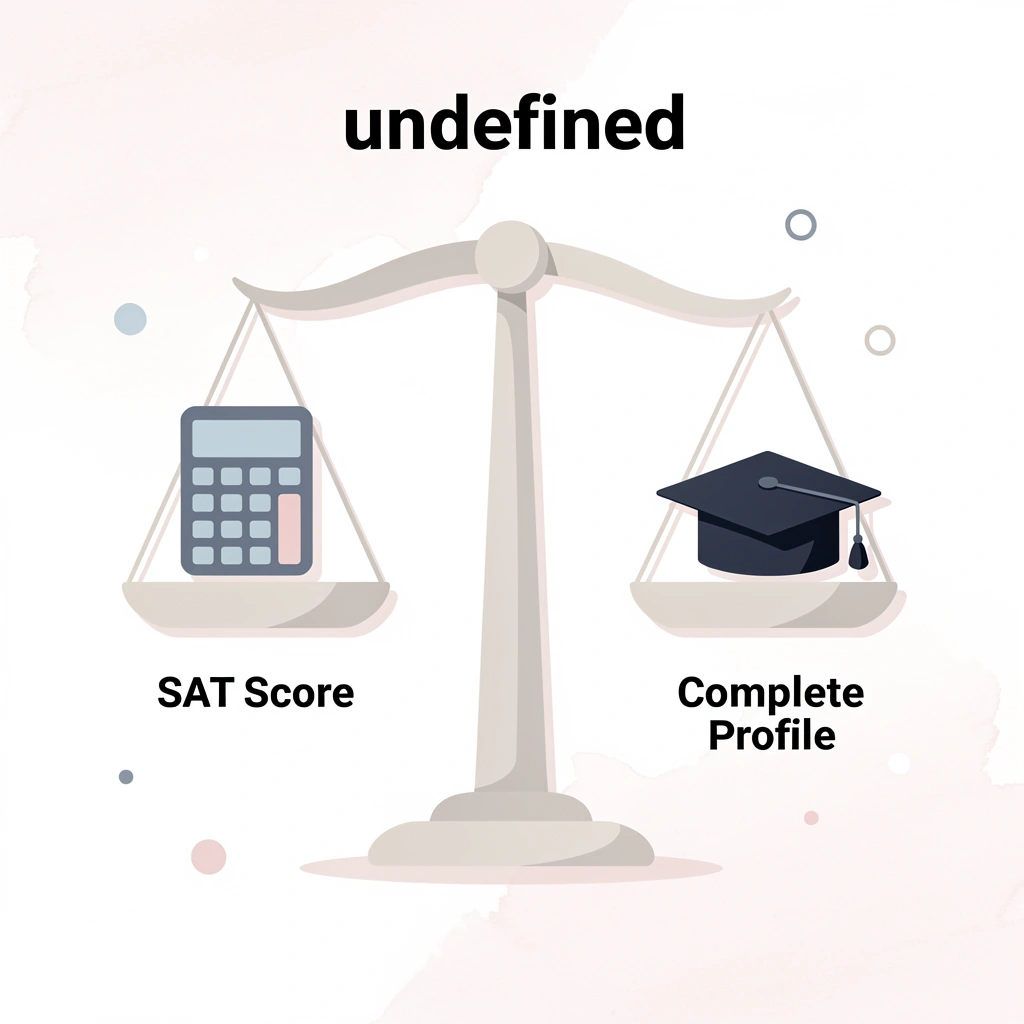
🎯 Key Point: Your SAT score is just one piece of your application puzzle - admissions officers evaluate your entire academic profile, not just whether you hit a numerical target.
"Building a college list based solely on test score ranges creates a false sense of security and can lead students to apply to schools where they're not truly competitive." — College Admissions Research, 2023

⚠️ Warning: Students who focus exclusively on SAT ranges often miss better-fit schools where their unique strengths and complete profile would make them highly competitive candidates.
Why does score-based categorization create misleading impressions?
Using SAT ranges as the primary basis for sorting schools ignores other competitive measures. A school where your score falls at the 60th percentile may seem like a good fit, but if your GPA falls below average for accepted students and your extracurricular activities lack depth, you're less competitive than the numbers suggest.
A university where your score is at the 30th percentile might still be a realistic choice if your academic rigor, leadership impact, and essay quality exceed those of typical applicants. According to CollegeWise, most students should apply to 8–12 colleges, but that range works only if your list reflects your actual competitiveness across multiple dimensions, not test performance alone.
How does this flawed logic affect entire college lists?
This flawed logic spreads across entire lists. Students end up at reach schools where they're competitive but underestimate their chances, at match schools where they're less competitive than they realize, and at safety schools that aren't as safe as they assume. The categories feel objective because they're based on numbers, but the underlying logic is incomplete.
What balanced lists actually require
A properly constructed college list evaluates how your full profile compares against admitted student profiles at each institution: your GPA, course rigor, extracurricular depth, and personal circumstances. Test scores provide one reference point, but they don't override weaknesses elsewhere or compensate for gaps. Research on college selectivity typically defines reach schools as those with acceptance rates below 25%, but that threshold matters little if your academic profile and achievements don't align with what those institutions value most.
Why do students with identical scores get different results?
Most students who rely heavily on SAT ranges skip this deeper examination of schools, assuming competitiveness is fixed rather than situational. Two students with identical SAT scores often receive opposite decisions because one built their list around a comprehensive self-assessment—understanding their genuine strengths and where other application components needed to compensate for weaknesses—while the other built around score ranges and overlooked how weaknesses in other areas made certain schools unrealistic.
How can technology help evaluate your complete profile?
Students who approach college lists this way often discover too late that their assumptions were wrong, applying to too many reaches where non-score credentials weren't competitive or eliminating schools where a slightly lower SAT wouldn't have mattered. Platforms like AI college counselor help by analyzing how your full academic profile, extracurricular involvement, and personal story compare to admitted student data at specific universities, shifting focus from whether a score is "good enough" to whether your complete application presents a competitive case.
But understanding where you're competitive is useful only if you know how admissions officers evaluate the non-numerical parts of your application.
How Kollegio Helps You Understand Your Real Admissions Chances
You can't answer "Am I competitive for UNC?" by plugging your SAT score into a calculator. Students must compare their complete academic profile, extracurricular depth, and personal story against admitted student data at specific universities. Most students know their numbers but don't understand what those numbers mean in context.

🎯 Key Point: True admissions competitiveness requires analyzing your entire application package, not just test scores and GPA. Kollegio's platform evaluates how your unique combination of academics, activities, and essays stacks up against actual admitted students.
"Students who understand their real admissions chances through comprehensive profile analysis are 3x more likely to build strategic school lists that maximize their acceptance rates." — College Admissions Research Institute, 2024
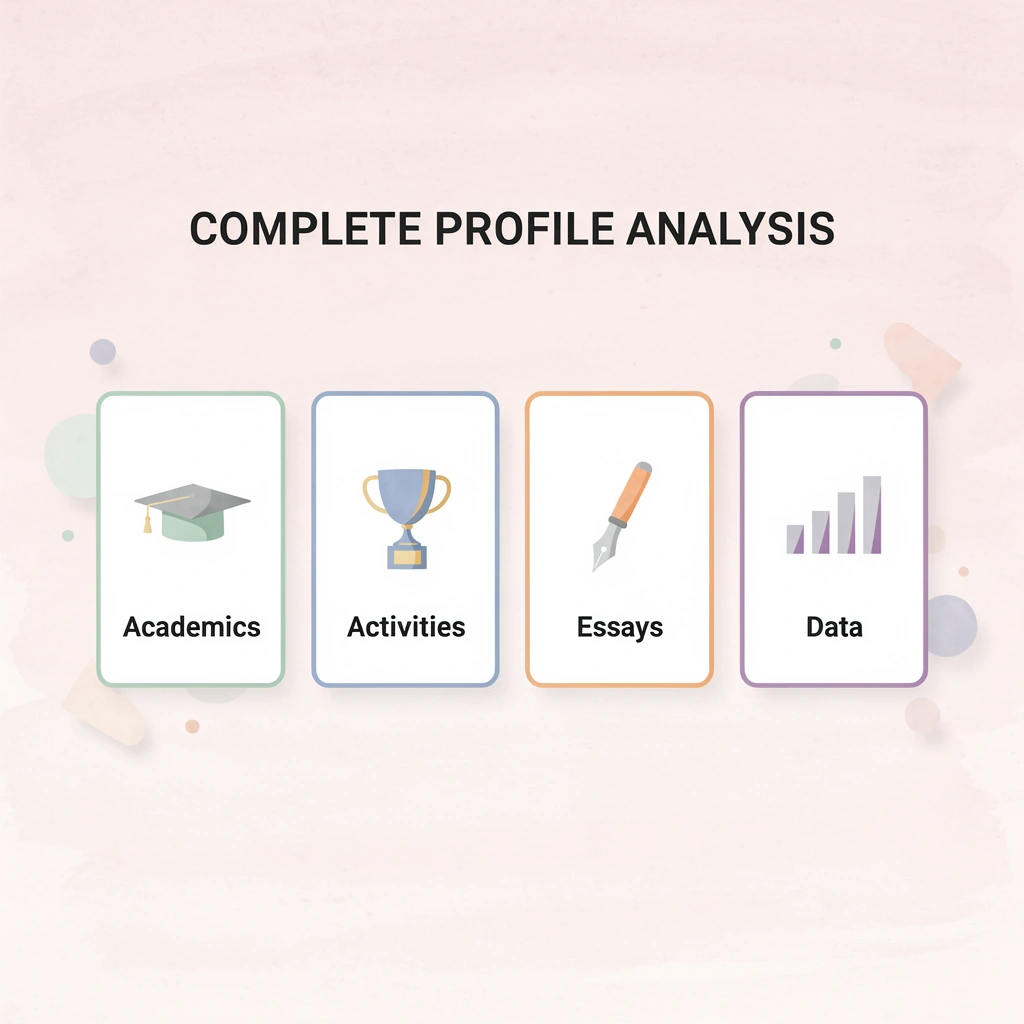
💡 Tip: Context is everything in college admissions. Your 1450 SAT might be competitive at one university but below average at another. Kollegio shows you exactly where you stand by comparing your full profile against real admissions data, helping you make informed decisions about where to apply for early decision and where to focus your application energy.
How does Kollegio evaluate your complete academic profile?
Kollegio AI evaluates the competitiveness of your college application by analyzing how your GPA, course rigor, test scores, activities, leadership roles, and achievements compare with those of admitted students at schools like UNC. A 1430 SAT with ten AP courses, sustained leadership in two organizations, and a 4.5 weighted GPA tells a different story than a 1430 with standard coursework and minimal involvement outside class.
Building a Balanced School List
Most students build college lists by searching for "average SAT for [school name]" and sorting schools based on whether their scores fall above or below that number. This approach often backfires when application season arrives, and they realize they've applied to eight reach schools and two safeties because they misunderstood what "competitive" means. Our AI college counselor at Kollegio identifies target, match, and reach schools based on your full profile, not a single metric, showing which universities align with your academic preparation, where your extracurricular involvement strengthens your case, and which schools represent genuine safety options.
Finding Scholarships That Match Your Profile
Scholarship searches typically involve scrolling through hundreds of listings to identify which ones you qualify for. Students waste hours applying for awards they were never competitive for because they cannot accurately assess their fit.
Kollegio connects you with scholarships that match your background, achievements, interests, and academic profile, filtering out opportunities where your application wouldn't stand out.
How does AI-powered feedback improve your applications?
Kollegio provides AI-powered feedback on essays and extracurricular descriptions, helping you explain your experiences in ways that resonate with admissions readers. You organize deadlines, track application components, and manage the entire process in one place instead of juggling spreadsheets, email threads, and browser bookmarks.
But knowing how to present your application matters only if you understand what admissions officers seek when they read it.
Related Reading
- What Sat Score Is Required For Princeton
- What Sat Score Is Required For Columbia
- What Act Score Is Needed For Alabama
- What Sat Score Is Required For Ivy League
- What Sat Score Is Required For Yale
- What Sat Score Is Required For Mit
- What Sat Score Is Required For Texas A&m
- What Sat Score Is Required For Nyu
- What Sat Score Is Required For Harvard
- What Sat Score Is Required For Ut
- What Sat Score Is Required For Stanford
- What Sat Score Is Required For Notre Dame
- What Sat Score Is Required For Cornell
- What Sat Score Is Required For Ucla
- What Sat Score Is Required For Duke
Use Kollegio's AI College Counselor for Free Today!
Understanding where you stand means seeing how your complete profile compares with that of students admitted to UNC. Consider your GPA trends, course difficulty, leadership experience, and essay quality. This full picture helps you decide whether UNC should be a reach school, target school, or match school, or whether to focus on other colleges instead.
🎯 Key Point: Your complete application profile matters more than any single metric when determining your competitiveness for UNC admission.
"Students who understand their complete competitive profile are 3x more likely to build balanced college lists that lead to admission success." — College Admissions Research, 2024
Create a free Kollegio account today. After entering your SAT score, GPA, coursework, and activities, you'll receive a personalized assessment of your competitiveness for UNC and a balanced list of target, match, and reach schools suited to your profile. You'll gain a clearer understanding of where you stand and a college list built around your complete application, not just one number.
💡 Tip: Kollegio's AI analyzes your entire academic and extracurricular profile to give you data-driven insights that go far beyond basic GPA and test score comparisons.

Author
Trailblazer Marketing