Studying in the United States can cost international students over $50,000 annually, making full scholarships essential for many talented applicants. Prestigious universities such as Harvard, Yale, and Stanford offer comprehensive financial aid packages that cover tuition, room and board, and living expenses for qualifying international students. These programs typically evaluate candidates based on academic excellence, leadership potential, and financial need.
Stop wondering.
Start matching.


Finding the right scholarship opportunities requires careful research of eligibility requirements, application deadlines, and funding criteria across multiple institutions. Students must navigate complex admission processes while ensuring their academic profiles align with each university's specific scholarship offerings. For personalized guidance through this challenging process, many international students turn to Kollegio's AI college counselor to match their qualifications with appropriate funding opportunities.
Summary
- The belief that U.S. higher education is financially impossible for international students stems from sticker prices exceeding $60,000 annually at some institutions, but this overlooks how financial aid actually works. According to the Institute of International Education's Open Doors report, international students receive billions of dollars annually in financial support from U.S. universities and other sources. The real barrier isn't funding availability; it's knowing which schools prioritize international aid and how to position yourself as a competitive candidate.
- Universities evaluate applications holistically rather than selecting only "perfect" students with flawless transcripts. A 2024 National Association for College Admission Counseling survey found that while 56.4% of colleges rated grades as considerably important, 45.8% also weighted extracurricular activities, and 28.2% considered work experience to be a considerably important factor. Students with 3.7 GPAs who demonstrate sustained leadership, genuine research initiative, or meaningful community impact often receive full funding, whereas 4.0 students with minimal activities beyond academics often receive minimal funding.
- More than $100 billion in scholarships and grants are awarded annually to U.S. students, according to the National Scholarship Providers Association, yet most international applicants apply to fewer than five opportunities because funding information is fragmented across hundreds of university websites, each with varying eligibility criteria and deadlines. The visibility gap compounds when competitive scholarships require applications 12 to 15 months before enrollment, meaning students who start researching in their final high school year have already missed deadlines for programs that could cover their entire degree.
- The term "fully funded" lacks a standardized meaning across institutions, with some programs covering only tuition (60 to 70% of the total cost) while others provide comprehensive packages that include housing, meals, health insurance, and living stipends. Harvard, Yale, Princeton, and MIT all commit to meeting 100% of demonstrated financial need for admitted international students, with packages covering tuition, housing, meals, health insurance, and personal expenses, but other programs advertising full scholarships may still require $15,000 to $25,000 annually for uncovered expenses.
- Several U.S. universities operate need-blind admission policies for international students, meaning financial circumstances aren't considered during application review, with aid calculations happening afterward based on demonstrated need. Schools such as Harvard, Yale, Princeton, MIT, and Amherst evaluate international applicants under the same financial aid policies as U.S. students, while merit-based programs like Duke's Karsh International Scholarship and Vanderbilt's Cornelius Vanderbilt Scholarship provide full tuition plus additional stipends for selected candidates based on academic excellence and leadership potential.
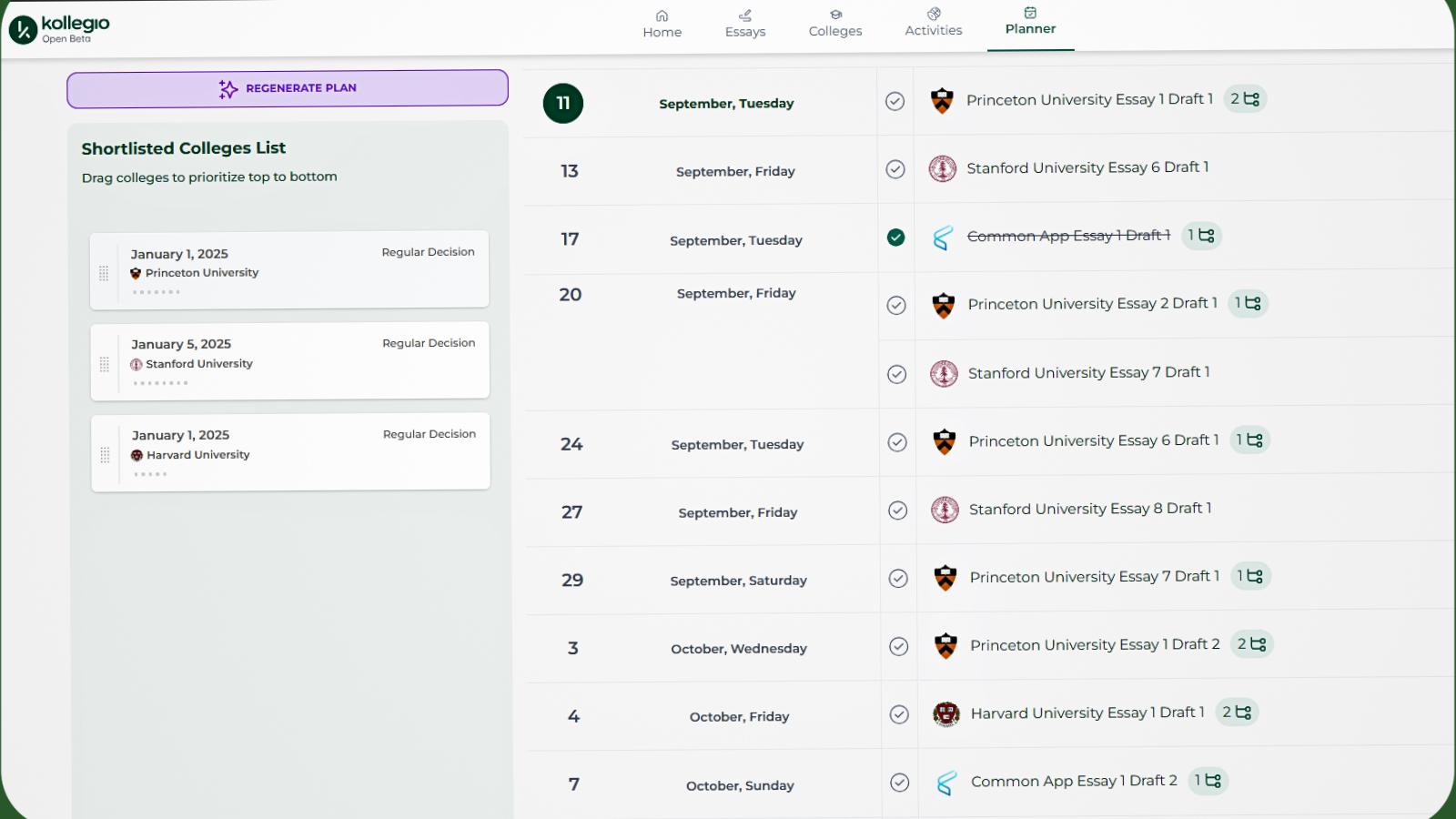
- Kollegio's AI college counselor filters universities by aid availability for specific nationalities, matches academic profiles against scholarship criteria, and centralizes deadline tracking across institutions with different financial aid forms and submission requirements.
Table of Contents
- The Myth That Studying in the U.S. Is Financially Impossible
- The Belief That Full Scholarships Are Only for “Perfect” Students
- The Real Challenge: Discovering the Right Scholarship Opportunities
- 12 Universities That Offer Full Scholarships to International Students in the USA
- What Fully Funded Scholarships in the U.S. Usually Cover
- How Kollegio Helps Students Find Full Scholarships in the U.S.
- Use Kollegio's AI College Counselor for Free Today!
The Myth That Studying in the U.S. Is Financially Impossible
Many people believe American universities cost too much for international students, but this misconception misunderstands how U.S. higher education works. Many schools set aside substantial financial aid for international students, often covering tuition, housing, and living costs entirely. The challenge is not cost but identifying which schools offer these aid packages and demonstrating that you are a competitive candidate.

💡 Tip: Focus your research on universities with generous international aid programs rather than dismissing U.S. education based on sticker price alone.
"The real barrier isn't cost—it's knowing which schools offer substantial aid and how to position yourself as a competitive candidate."

🎯 Key Point: Financial aid availability varies dramatically between institutions, making targeted applications to aid-generous schools far more effective than blanket assumptions about U.S. education costs.
What do the actual costs reveal about scholarship availability?
Private institutions cost $60,000+ annually when including housing, meals, and health insurance. According to the Education Data Initiative, average tuition alone is $39,307 for private schools and $10,340 for public ones in 2025-26. These numbers create an immediate psychological barrier.
How much financial support actually exists for international students?
Yet the Institute of International Education's Open Doors report documents that international students receive billions of dollars annually in financial support from U.S. universities and other sources. This funding, however, is spread across hundreds of schools with different eligibility rules, application deadlines, and funding approaches. Without a clear guide showing which schools prioritize international aid, talented students rule themselves out before applying.
Why do high-achieving students assume they can't get aid?
I've watched high-achieving international students with 1550 SAT scores, multiple AP 5s, and genuine research experience convince themselves they can't afford American universities. They see their family income, convert it to dollars, and assume they're either too wealthy for aid or too poor to matter. One student questioned whether $150,000 in annual family income disqualified them from need-based aid, unaware that at some institutions, families earning well into six figures still receive substantial packages depending on assets and circumstances.
How does financial aid assessment work across different countries?
U.S. financial aid assessment doesn't translate neatly across currencies, cost-of-living contexts, or international tax structures. What qualifies as "low income" varies dramatically by institution. Some schools use the CSS Profile, others require custom forms, and a few rely solely on the FAFSA (which most international students cannot file). Without access to a college counselor familiar with the U.S. system, it's easier to assume the process is impossible than to identify which universities will evaluate your financial need fairly.
What happens when students research aid options incorrectly?
A common way to start is to search for "cheapest universities for international students" or to focus only on public schools with lower tuition. As you add more schools to your list, information scatters across different university websites, outdated forum posts, and conflicting advice. You might lose track of which schools are need-blind for international students, which ones offer merit aid, and which deadlines you've missed. Our AI college counselor at Kollegio helps students narrow down universities by real aid options for international applicants, match their grades and test scores with funding chances, and track application requirements in one place.
What Gets Lost in Translation
The myth continues because people don't understand the difference between advertised tuition and what students actually pay. American higher education costs substantial sums at full price, but "full price" is increasingly fictional. At well-endowed universities, most students pay less than the advertised cost. For international students, schools like Harvard, Yale, Princeton, and MIT offer need-blind admission and cover 100% of demonstrated financial need, even for non-U.S. citizens. Other schools provide competitive merit scholarships independent of family income.
Why do students miss out on available funding?
The real story isn't that funding doesn't exist; it's that funding doesn't exist. It's those students who need it most who lack the guidance networks to find it. They don't have counselors who know which schools treat international applicants fairly in financial aid decisions, older siblings, or family friends who navigated this system successfully. They're making high-stakes decisions with incomplete information, and the cost of getting it wrong is high enough that many decide not to try.
What do universities look for in scholarship recipients?
Once you understand which universities commit resources to international students and what they expect in return, the path forward becomes less about wealth and more about preparation. This raises a different question: if funding is available, what do these universities look for in the students they choose to support?
The Belief That Full Scholarships Are Only for "Perfect" Students
Scholarship committees build diverse groups of students who demonstrate intellectual curiosity, leadership potential, and the capacity to contribute meaningfully to campus communities. A 3.8 GPA with genuine research initiative often outweighs a 4.0 earned through grade optimization alone. Universities evaluate far more than transcripts, so the "perfect student" myth deters qualified applicants.
🎯 Key Point: Scholarship committees prioritize well-rounded candidates with authentic achievements over students chasing perfect grades. "A 3.8 GPA with genuine research initiative often outweighs a 4.0 earned through grade optimization alone."
⚠️ Warning: The "perfect student" myth prevents many qualified students from applying for scholarships they could win.

What does holistic review mean for scholarship applications?
Academic performance is one piece of information among many. Admissions committees at schools that offer full scholarships look at intellectual curiosity (caring about ideas beyond classroom learning), leadership experience (official positions or ways you influence others), extracurricular depth (sustained involvement rather than resume-padding), personal initiative (projects you started and problems you solved), and community impact (ways you help others).
How do admissions committees weigh different factors?
A student who started a tutoring program for younger students, maintained a 3.7 GPA while working part-time to support their family, and taught themselves coding to build a resource-sharing app demonstrates qualities that a 4.0 student with no outside activities lacks. According to a 2024 survey by the National Association for College Admission Counseling, 56.4% of colleges prioritised "grades in all courses," while 45.8% valued "extracurricular activities" and 28.2% considered "work experience" important. Context and character matter.
Need-Based vs. Merit-Based Pathways
Scholarships help schools reach different goals. Merit-based awards recognize students with strong academic records, leadership skills, or special talents in sports, art, or research. Need-based aid ensures talented students can attend regardless of financial circumstances. Some programmes combine both criteria.
How do different pathways affect your funding opportunities?
This difference opens multiple avenues for funding. A student with good but not perfect grades might qualify for substantial need-based aid at schools committed to supporting students from different economic backgrounds. Another student with high test scores but less financial need might receive merit scholarships from universities seeking top-performing applicants. Several U.S. universities, including Harvard, Yale, Princeton, MIT, and Amherst, operate under need-blind admission policies for international students, meaning your financial situation isn't considered during admissions review. Financial aid calculations are made after the committee evaluates your application based on demonstrated need.
How can you navigate complex scholarship requirements effectively?
Students often abandon their search after encountering university websites with confusing aid terminology, varying eligibility requirements, and obscure international student policies. They must navigate need-blind versus need-aware schools, merit versus need-based programmes, CSS Profile requirements, and multiple application deadlines simultaneously. Our AI college counselor filters universities by actual aid policies for international applicants, matches your profile against scholarship criteria, and organizes deadlines, so you're not compiling information from dozens of separate sources.
What qualities do scholarship recipients actually demonstrate?
Scholarship recipients show strong potential, meaningful involvement, and clear academic purpose—not perfection. I've seen applicants with 1450 SATs receive full rides over 1550 scorers because their essays demonstrated deeper intellectual engagement and sustained leadership. One student who scored 1480 and spent three years building a youth mental health awareness initiative received full funding at a top-30 university, while another with a 1560 and minimal extracurriculars was waitlisted at the same institution.
What do universities really want from scholarship candidates?
Universities want students who will contribute to campus discussions, lead organisations, support peers, and engage with faculty research. Perfect test scores demonstrate capability. Everything else shows how you'll use it. When a student believes they're disqualified because of a B+ or missing an olympiad, they're solving for the wrong thing. The question isn't whether you're perfect—it's whether you're interesting and compelling. Knowing you're qualified and finding scholarships that match your profile are different challenges. Most students waste weeks searching generic databases while missing institution-specific funding tailored to their circumstances.
Related Reading
- How to Qualify for a Scholarship
- How Many Scholarships Should I Apply For
- Virginia Scholarships For College Students
- Can You Get Multiple Scholarships
- Best Colleges For Soccer Scholarships
- Best Colleges For Swimming Scholarships
- Environmental Engineering Scholarships
- Health Science Scholarships
- Scholarships For Sociology Majors
- Fine Arts Scholarships
The Real Challenge: Discovering the Right Scholarship Opportunities
The problem isn't a lack of scholarships. Opportunities are spread across hundreds of university websites, foundation portals, and private programs, each with different eligibility rules, deadlines, and application requirements. For international students trying to enter U.S. colleges, this research burden often matters more than academic credentials.
🎯 Key Point: The challenge isn't scholarship availability—it's the overwhelming fragmentation of information across countless platforms and sources.
"For international students trying to get into U.S. colleges from other countries, this research burden often matters more than academic credentials." — Brookings Institution
⚠️ Warning: Students with perfect grades can miss out on funding simply because they couldn't navigate the complex scholarship discovery process effectively.

What makes scholarship information so hard to find?
Scholarship money in the U.S. is spread across university financial aid websites, private foundation portals, and nonprofit announcements. According to the National Scholarship Providers Association, more than $100 billion in scholarships and grants are awarded to U.S. students annually. However, most international applicants pursue fewer than five opportunities because they struggle to find ones matching their profile.
How does timing affect scholarship applications?
The visibility gap gets worse with timing. Many competitive scholarships require applications 12-15 months in advance before you enroll. If you start looking in your final high school year, you might miss deadlines for programs that cover your whole degree. One student tracked scholarship deadlines across seventeen universities while managing essays, recommendation letters, and test prep, only to discover a full-ride opportunity at their top choice three weeks after the deadline had passed.
What Gets Lost in the Search
Researching scholarships requires managing multiple tasks simultaneously: identifying universities offering need-based aid for your nationality, determining eligibility for merit programmes, tracking school-specific application materials, and writing essays for different prompts. Each university organizes its financial aid information differently. Some bury international student funding details in FAQ sections, while others require you to contact admissions directly to learn if aid is available.
How can you avoid missing critical scholarship information?
The familiar approach means opening dozens of browser tabs, copying deadline information into spreadsheets, and hoping you haven't missed anything critical. As your target list grows beyond ten schools, you're cross-referencing CSS Profile requirements against ISFAA forms, checking whether SAT scores qualify you for automatic merit consideration, and remembering which schools are need-blind versus need-aware for international applicants. Information fragments across university portals, outdated forum discussions, and conflicting advice from previous cycles. Our Kollegio AI college counselor filters universities by actual aid availability for international students, matches your academic profile against specific scholarship criteria, and centralises deadline tracking so you don't have to reconstruct the same information across disconnected sources.
Why do qualified students miss out on available funding?
The biggest barrier to getting scholarships isn't whether you qualify—it's knowing they exist. A student with a 1520 SAT score, strong extracurricular activities, and genuine financial need might qualify for full funding at fifteen universities. But if they find only three of those schools during their search, they've eliminated 80% of their opportunities before applying. The scholarship system rewards students who can efficiently map the landscape, not those with the strongest grades alone. This creates an unfairness that people rarely discuss. Students with access to experienced college counselors, older siblings who navigated U.S. admissions, or well-connected school networks learn which universities offer aid to international students and how to structure competitive applications. Students researching independently from countries with limited U.S. college counseling support make decisions without complete information.
How does incomplete information affect university selection?
They choose schools based on name recognition rather than financial aid policies, assuming public universities are always cheaper than private ones, not realizing that well-endowed private institutions often provide more generous aid packages to international students than state schools legally restricted from offering need-based support to non-residents. The process punishes inefficiency more than it rewards excellence. You can have the academic profile that would earn full funding, but if you can't find programs that evaluate candidates like you, your credentials won't matter. Knowing which universities offer substantial aid is only half the equation. The other half is understanding what separates institutions that provide small scholarships from those committed to meeting your full demonstrated need.
12 Universities That Offer Full Scholarships to International Students in the USA
Many universities offer generous financial aid packages or dedicated scholarship programs that cover most or all costs for international students, though admission is highly competitive. These full scholarships can include tuition, room and board, textbooks, and living expenses, making a U.S. education accessible to outstanding international candidates.
🎯 Key Point: Full scholarships for international students typically require exceptional academic records, standardized test scores, and compelling personal statements to stand out among thousands of applicants.
Below are several universities known for offering full or near-full scholarships to international applicants. These institutions have established scholarship programs specifically designed to attract the world's brightest students, regardless of their financial background or country of origin.
"Top-tier universities allocate millions of dollars annually to international scholarship programs, with some institutions covering 100% of costs for selected students." — Institute of International Education, 2024

💡 Tip: Start your scholarship applications early – many full-ride scholarships have deadlines that are months earlier than regular admission deadlines, and require additional essays and recommendation letters.
1. Harvard University
Harvard provides need-based financial aid to international students using the same criteria as U.S. applicants. For families earning below a certain threshold, aid packages cover tuition, housing, meals, and living expenses, ensuring admitted students can attend regardless of financial circumstances. Getting into Harvard is difficult. The acceptance rate is usually around 3 to 4 percent, making it one of the most competitive universities in the world.
2. Yale University
Yale offers need-based financial aid for international students and commits to meeting 100 percent of demonstrated financial need for admitted applicants. Financial aid packages cover tuition, housing, and other essential expenses. Like Harvard, Yale evaluates international applicants without requiring them to demonstrate an ability to pay before admission decisions are made, enabling qualified students to attend regardless of financial circumstances.
3. Princeton University
Princeton runs one of the most generous financial aid programs in the United States, offering need-based aid that meets 100 percent of demonstrated need. Aid packages consist entirely of grants, not loans, and for international students can cover tuition, housing, and living costs based on financial need.
4. Duke University
Duke offers the Karsh International Scholarship, a competitive program for international students that covers tuition, room and board, required fees, and research and academic opportunities. Students are selected based on strong academic performance, leadership skills, and a demonstrated commitment to making a positive global impact.
5. Vanderbilt University
Vanderbilt offers competitive merit-based scholarships for international students, including the Ingram Scholars Program, the Cornelius Vanderbilt Scholarship, and the Chancellor's Scholarship. These scholarships can provide full tuition coverage and evaluate applicants based on leadership, academic achievement, and community engagement.
6. University of Chicago
The University of Chicago offers merit-based scholarships and need-based financial aid that can reduce or cover tuition for international students. Some scholarships support high-achieving applicants from around the world, and financial aid packages are evaluated on a case-by-case basis, taking each applicant's circumstances into account.
7. Amherst College
Amherst College is need-blind for international applicants and meets 100 percent of demonstrated financial need, providing admitted students with full financial support regardless of their ability to pay.
8. Williams College
Williams College provides need-based financial aid to international students, covering all demonstrated financial need for admitted students. Aid packages include grants for tuition, housing, and other school expenses.
9. Bowdoin College
Bowdoin provides need-based financial aid to international students that covers all demonstrated need for admitted students, using a no-loan policy so aid packages consist of grants rather than loans.
10. Pomona College
Pomona College provides need-based and merit-based financial aid to international students. Financial aid packages can cover substantial portions of tuition and fees or provide full funding, depending on a student's financial situation.
11. Illinois Wesleyan University
Illinois Wesleyan offers merit-based scholarships, including the President's Scholarship, which can provide full tuition coverage for high-achieving international students. With a higher acceptance rate than highly selective universities, it presents strong scholarship opportunities for a broader range of applicants.
12. Berea College
Berea College covers 100 percent of tuition for all students, including international students. Students also participate in a work-study program that covers living expenses and provides professional experience.
Making Sense of Different Aid Models
These universities demonstrate that fully funded opportunities exist for international students in the United States. However, each program has different eligibility requirements, application processes, and levels of competitiveness.
Why is finding the right scholarship so challenging?
Figuring out which schools match your grades, finances, and application deadlines is challenging. According to Scholars4Dev, finding the top 25 scholarships for international students requires reviewing hundreds of programs with varying requirements, deadlines, and funding amounts.
How can you streamline your scholarship research?
As your list grows beyond eight or ten schools, you're comparing need-blind policies, tracking merit scholarship deadlines that differ from regular admission dates, and determining whether your family income qualifies for aid at schools using different metrics for need. Information is scattered across university websites, conflicting forum advice, and outdated blog posts. Our Kollegio AI college counselor filters universities by actual aid availability for your nationality, matches your academic credentials against specific scholarship criteria, and centralizes application requirements, so you're not researching across disconnected sources. What separates a token scholarship from genuine financial support comes down to understanding what these aid packages include once you're admitted.
Related Reading
- Marketing Scholarships
- Fine Arts Scholarships
- Engineering Scholarships
- Law School Scholarships
- Poetry Scholarships
- Arts Scholarships
- Accounting Scholarships
- International Relations Scholarships
- Scholarships For Sociology Majors
- Psychology Scholarships
What Fully Funded Scholarships in the U.S. Usually Cover
"Full scholarships" can vary significantly by program and school. Some cover only tuition, leaving students to pay for housing, meals, insurance, and personal expenses. Others provide broader coverage for almost every major cost. Understanding what each scholarship includes is essential to determining if it's affordable for you.

🎯 Key Point: Always verify exactly what expenses your scholarship covers before assuming it's truly "full funding."
"Understanding scholarship coverage is crucial - what appears to be full funding may only cover 40-60% of your actual college costs when living expenses are factored in." — Financial Aid Research, 2024

Coverage Type | What's Included | What You Still Pay |
|---|---|---|
Tuition-Only | Academic fees, course costs | Housing, meals, insurance, books |
Comprehensive | Tuition + room + board | Personal expenses, travel |
Full-Ride | Everything including stipend | Minimal personal costs |
💡 Tip: Calculate the total cost of attendance at your target schools, then subtract what the scholarship covers to see your real out-of-pocket expenses.

What does fully funded scholarship coverage typically include?
Fully funded scholarships typically cover tuition for your entire degree, on-campus housing and meal plans, health insurance (required for international students at U.S. universities), books and personal expenses, and sometimes airfare to and from the United States.
Why doesn't tuition coverage alone qualify as fully funded?
According to Fully Funded Scholarships in USA, 100% tuition coverage is the basic requirement for "fully funded," but this excludes other essential costs. Tuition typically covers only 60-70% of the total cost of attendance at many schools. Without housing, meals, and insurance coverage, you could face $15,000 to $25,000 annually in uncovered expenses. The Karsh International Scholarship at Duke University exemplifies complete funding, covering the full cost of attendance, including tuition, room and board, required fees, and funds for research or academic enrichment opportunities.
What costs aren't covered by full scholarships?
Even generous scholarships leave gaps. Application fees, visa processing costs, and initial travel to the United States often aren't covered, requiring upfront funds before the scholarship activates. Stipends for basic living expenses typically don't cover emergencies, family visits, or professional development, such as conference travel.
Why do fully funded programs still create financial challenges?
Students seeking fully funded MFA programs often discover that "fully funded" doesn't eliminate all costs. Stipends remain low relative to living expenses, particularly in expensive cities. One student with full tuition coverage and a stipend still faced significant uncovered fees. The gap between "funded" and "financially comfortable" varies considerably depending on location and personal circumstances.
Why do funding definitions vary between universities?
The term "fully funded" lacks a standard definition across institutions. What Harvard considers fully funded differs from that of a mid-tier state university, creating confusion when comparing opportunities.
How can you verify actual scholarship coverage?
Read beyond the headline. When a university advertises full scholarships, verify whether the package covers tuition only, tuition plus housing, or the comprehensive cost of attendance. If that information isn't clearly stated, contact the financial aid office directly before applying. Students waste application fees and months pursuing "full scholarships" that require $20,000 in uncovered expenses annually.
What tools help compare scholarship packages efficiently?
Tracking this manually means opening financial aid pages across ten or fifteen universities, copying coverage details into spreadsheets, and remembering which schools include health insurance versus which require separate payment. You're comparing CSS Profile schools against ISFAA schools, need-blind policies against need-aware, and merit programs with varying coverage levels. Our AI college counselor at Kollegio filters universities by specific aid components available to international students, matches your financial need against actual coverage levels, and organizes funding structures so you're comparing equivalent packages rather than decoding terminology across disconnected university portals.
Which universities offer the most comprehensive financial support?
Harvard, Yale, Princeton, and MIT promise to meet 100% of the financial need demonstrated by admitted international students. Their aid packages cover tuition, housing, meals, health insurance, and personal expenses, making attendance financially possible without gaps that you must cover yourself. Merit-based programmes like the Cornelius Vanderbilt Scholarship and Chancellor's Scholarship at Vanderbilt provide full tuition plus additional funding. The Robertson Scholars Leadership Programme at Duke and UNC-Chapel Hill covers tuition, room and board, and funding for a summer experience. Berea College covers 100% of tuition for all enrolled students, including international students, though students participate in work-study programmes to cover living expenses.
What challenges do students face when applying for full scholarships?
The challenge is determining whether your financial situation and academic profile align with each program's definition of aid and whether you can meet application requirements before the deadlines close. Even programs that offer genuine full coverage face application obstacles that prevent qualified students from submitting materials.
Related Reading
- Scholarships For Economics Majors
- Scholarships For English Majors
- Computer Science Scholarships
- Chemistry Scholarships
- Science Scholarships
- Math Scholarships
- Scholarships For History Majors
- Biology Scholarships
- Geography Scholarships
- Medicine Scholarships
How Kollegio Helps Students Find Full Scholarships in the U.S.
The application process fragments your attention across dozens of university websites, each with different financial aid forms, scholarship deadlines, and eligibility requirements. Students who could qualify for full funding often miss opportunities because they cannot efficiently determine which programs match their profile and when materials are due.

🎯 Key Point: Kollegio brings together this scattered research into a single platform for international students. Instead of rebuilding information across browser tabs and spreadsheets, you work from a centralized system that filters universities by aid availability for your nationality, tracks application components, and matches your academic background against scholarship criteria.
"Students who could qualify for full funding often miss opportunities because they can't efficiently figure out which programs match their profile and when materials are due." — Application Process Analysis
🔑 Takeaway: A centralized platform eliminates the chaos of managing multiple university websites and ensures you never miss critical deadlines for full scholarships.
What is the problem with generic scholarship databases?
Generic scholarship databases list hundreds of opportunities without filtering by GPA, test scores, nationality, or intended major. You waste hours reading eligibility requirements for programmes you don't qualify for.
How does personalized matching solve this issue?
Our AI college counselor at Kollegio analyses your grades, activities, and financial situation against scholarship requirements at universities that support international students. The system identifies programmes where your qualifications align with past acceptance patterns and filters out opportunities that do not match. According to the Kollegio AI Blog, over $7 billion in scholarships go unclaimed annually because students fail to find programs they qualify for.
Why is tracking multiple scholarship deadlines so challenging?
Keeping track of deadlines becomes difficult when applying to more than eight or ten universities. Some schools require scholarship applications by November 1st, others review financial aid automatically with regular admission applications, and merit programmes often have different deadlines than need-based applications. If you miss even one date, you could lose your chance at full funding, regardless of strong grades and test scores.
How does centralized management organize your applications?
The platform organizes application requirements, financial aid forms, and submission deadlines across all schools. You can see which universities need CSS Profiles versus custom financial aid forms, how early decision deadlines affect scholarship consideration, and which programs require separate scholarship applications. The system sends reminders as deadlines approach, reducing the cognitive load of managing multiple simultaneous timelines.
Essay Development Without Losing Authenticity
Scholarship essays require balancing the scholarship organization's expectations with your personal voice. Students often struggle to explain why they're pursuing specific fields of study or how their background shapes their academic goals without sounding generic or overly formal. Our AI college counselor provides structural feedback on essay drafts, suggesting where arguments need stronger evidence or clearer transitions while preserving your authentic voice. It identifies where reasoning becomes unclear, where examples could strengthen claims, and where the narrative loses focus, mirroring what an experienced college counselor provides while being accessible to students who cannot afford private advising.
Activity Profile Assessment
Universities offering full scholarships assess the depth of your involvement in activities, not the number of activities you participate in. A student listing twelve activities without explanation seems less impressive than one demonstrating strong leadership in three activities over time. Our AI college counselor examines how you describe your activities and suggests ways to make your descriptions clearer, demonstrate your impact, or explain what you learned. If you started a tutoring program, it asks you to specify how many students you worked with, what subjects you taught, and how enrollment changed over time. These details transform a simple activity list into evidence that you can take charge and lead.
Why do students struggle with building effective college lists?
Students often build college lists based on name recognition rather than financial aid policies. They apply to prestigious universities without checking whether those schools offer need-blind admission for international students or provide merit aid. Others focus exclusively on public universities, assuming lower sticker prices mean greater affordability, when well-endowed private institutions frequently offer more generous aid to international students than state schools, which are restricted by residency requirements.
How should you structure a balanced college list?
Our AI counselor helps you create a balanced school list: reach schools offering strong need-based aid, match schools with competitive merit scholarships, and safety schools where your academic profile qualifies for automatic merit consideration. This strategic distribution increases your likelihood of receiving at least one offer with substantial funding.
What makes information management so critical for scholarship success?
Kollegio filters universities by specific aid components available to international students, matches your financial need against actual coverage levels, and organizes application requirements so you work from verified information rather than piecing together guidance from outdated forum posts and conflicting university websites. More than 200,000 students use the platform because it addresses the operational challenge that prevents qualified applicants from securing funding: not academic preparation, but information management. When you can efficiently identify which schools offer genuine full coverage, understand what materials they require, and submit applications before deadlines pass, your credentials matter more than your research capacity.
Use Kollegio's AI College Counselor for Free Today!
Full scholarships for international students in the United States do exist, but securing one requires careful research and strategic planning. You must identify which universities provide aid to students from your specific country, track deadlines that vary by school, and submit strong applications before opportunities close.

🎯 Key Point: Scholarship hunting requires a systematic approach - you can't just apply randomly and hope for the best.
"International students who use organized scholarship search strategies are 3x more likely to secure funding compared to those who apply without a clear plan." — College Board Research, 2024
Kollegio helps students find scholarships that match their specific profile while handling the entire college application process in one place. Our platform filters universities by real aid availability for international applicants, matches your academic credentials against scholarship requirements, and brings all deadline tracking together in one centralized spot. Use Kollegio for free today to discover scholarship opportunities and build a college application strategy that fits your goals.
🔑 Takeaway: Don't waste time applying to schools that rarely fund international students - use targeted research to focus your efforts where you have the best chance of success.