
How Long Is the ACT? A Guide to Timing and Sections
Students preparing for standardized tests often wonder whether the ACT might suit their testing style better than the SAT. Understanding the ACT's length, structure, and timing helps determine which sections of the test warrant focused preparation. The ACT's format and pacing differ significantly from the SAT, making timing a crucial factor in test selection.
Knowing the ACT's duration and section breakdown provides the foundation for effective preparation strategies. Students benefit from personalized guidance on test timing, section preparation, and determining which exam aligns with their strengths and college goals through an AI college counselor.
Table of Contents
- Why ACT Timing Feels More Confusing Than It Should
- How Long the ACT Is (Section by Section)
- The Real Test-Day Timeline (Including Breaks)
- Why Most Students Run Out of Time
- How to Manage ACT Timing Effectively
- How Kollegio Helps You Turn ACT Timing Into a Strategy
- Use Kollegio's AI College Counselor for Free Today!
Summary
- The ACT splits into four distinct sections with separate timers, creating a structure in which students manage four sprints back-to-back rather than one continuous test. English gives you 75 questions in 35 minutes (36 seconds each), while Reading compresses 40 questions into the same 35-minute window (52 seconds each), meaning identical time limits demand completely different pacing strategies depending on the section.
- Test day extends far beyond the 175 minutes of actual testing, with check-in, instructions, and breaks pushing your total time in the testing center to roughly four hours. The single 10 to 15-minute break comes after Math, leaving students to tackle Reading and Science (the two sections requiring the sharpest focus) when mental fatigue has already set in from 105 minutes of prior testing.
- Most students run out of time not because they lack content knowledge, but because they never practiced applying that knowledge at test speed under sustained pressure. Spending extra seconds on early questions to ensure accuracy creates a backlog that turns the final 20 questions into a guessing sprint, and the ACT only counts completed answers regardless of how carefully you approached the first half.
- Each section requires a different internal rhythm that students must shift between instantly when the proctor starts the next timer. Math allows a full minute per question, while Science demands you interpret unfamiliar charts in roughly 52 seconds after three hours of testing, and treating all four sections with identical pacing guarantees you'll either rush through one or run out of time in another.
- Strategic retesting decisions depend on understanding whether score improvements will actually change your college prospects. Students often drill and practice sections to gain two points without knowing if those improvements will shift scholarship eligibility or admissions odds, wasting months of effort on marginal gains that won't open new doors.
- Kollegio's AI college counselor maps your current ACT score to personalized college lists and scholarship opportunities, showing you which competitive options your performance already creates before you commit to retaking the test.
Why ACT Timing Feels More Confusing Than It Should
The ACT feels confusing because most students assume it's one continuous three-hour test. It's four distinct sections, each with its own clock and pacing strategy. You're managing four sprints back-to-back, with transitions between them that feel sudden.
🎯 Key Point: The ACT isn't one long test—it's four separate mini-tests requiring completely different mental approaches and pacing strategies.

The structure creates pressure through mismatched demands. According to Test Ninjas, English and Reading each receive 35 minutes, but English has 75 questions while Reading has 40. Same time limit, completely different pacing needs.
"English and Reading both get 35 minutes, but English has 75 questions while Reading has 40." — Test Ninjas, 2025
⚠️ Warning: Students who use the same pacing approach for English and Reading sections will struggle. English requires rapid-fire decisions, while Reading needs deeper comprehension time.
How does the mental load compound as you move through sections?
Math gets 45 minutes for 60 questions, giving you slightly more time per question than English. The shift in thinking from grammar rules to algebra and geometry doesn't happen instantly. Many students report still processing a difficult English question while facing a geometry problem, costing precious seconds. Science comes last with 35 minutes for 40 questions, testing how quickly you can understand data while fatigued.
What makes the optional Writing section so challenging?
The optional Writing section adds 40 minutes after the four core sections, extending the total test time to more than 3.5 hours. The challenge lies in the sustained focus required to switch between different skills every 35 to 45 minutes without errors or loss of performance.
Why do students misjudge their stamina on test day?
Students who don't practice under these exact conditions often misjudge their stamina. You might perform well on practice questions at home when fresh and taking one section at a time. The test day requires you to maintain that accuracy through section four when your brain is already fatigued. Timing feels harder than it should because it's not about knowing the material—it's about managing cognitive load across a fragmented, high-pressure structure. The challenge is understanding how those minutes are divided and where students lose time without noticing.
How Long the ACT Is (Section by Section)
The ACT is divided into four main sections, each with strict, separate timers: English (45 minutes, 75 questions), Math (60 minutes, 60 questions), Reading (35 minutes, 40 questions), and Science (35 minutes, 40 questions). That's 175 minutes of testing, or just under three hours, before the optional Writing section (40 minutes). Each section ends when time runs out, and you cannot go back to earlier sections.
Section | Time Limit | Questions |
|---|---|---|
English | 45 minutes | 75 questions |
Math | 60 minutes | 60 questions |
Reading | 35 minutes | 40 questions |
Science | 35 minutes | 40 questions |
Writing (optional) | 40 minutes | 1 essay |
🎯 Key Point: The ACT's strict timing means you have roughly 1 minute per question across most sections, making time management absolutely critical for success.
"The ACT's 175-minute core testing time creates intense pressure, with students averaging just 53 seconds per English question and 90 seconds per Math problem." — ACT Test Prep Research, 2024
⚠️ Warning: Once a section's timer expires, you're permanently locked out - there's no going back to finish incomplete questions or review your answers.

Why does time pressure vary so much between sections?
The real challenge isn't total duration—it's uneven time pressure. English gives you 36 seconds per question, Math a full minute, and Reading and Science roughly 52 seconds each. According to The Princeton Review, most students face 40 to 60 seconds per question, depending on the section, but some questions take 15 seconds, while others need two minutes, and you won't know which until you're reading.
The clock resets, but your brain doesn't
When the proctor announces the end of English and starts the Math timer, you must switch from grammar rules to quadratic equations immediately. Students often carry stress from unanswered English questions into Math, and that cognitive residue slows problem-solving in the first few minutes of the new section. The Math clock is already running.
How does fatigue affect the final sections?
The final two sections arrive when fatigue sets in. Reading and Science each contain 40 questions to answer in 35 minutes, requiring sustained focus after 105 minutes of testing. Science proves especially challenging for students who haven't practiced reading charts and graphs under pressure, as you must extract information quickly from unfamiliar formats while your brain seeks rest.
How can you manage test prep alongside college applications?
Most students preparing for college applications must balance test prep with essays, transcripts, and scholarship searches. Our Kollegio platform consolidates college recommendations, essay feedback, and admissions deadlines in one place, transforming test day from an isolated crisis into one goal within a structured plan.
What extends your time beyond the official sections?
The official section times tell only part of the story. The real test-day timeline includes breaks, instructions, and administrative tasks that extend your time in the testing center far beyond those 175 minutes.
Related Reading
- How to Ace the SAT
- Is the SAT Hard
- What is SAT Prep Class
- Benefits Of Sat Exam
- Can You Take The Sat After High School
- Should I Take The Act Or Sat
- How Many Times Can You Take the SAT
The Real Test-Day Timeline (Including Breaks)
When you walk into the test center, you're committing to roughly four hours total. Check-in takes 15 to 30 minutes for ID verification, phone collection, and seat assignment. By the time the instructions finish and the first timer starts, you've been sitting for close to half an hour without answering a question.
🎯 Key Point: The actual testing time is just part of your day - factor in check-in procedures and administrative tasks when planning your test day schedule.
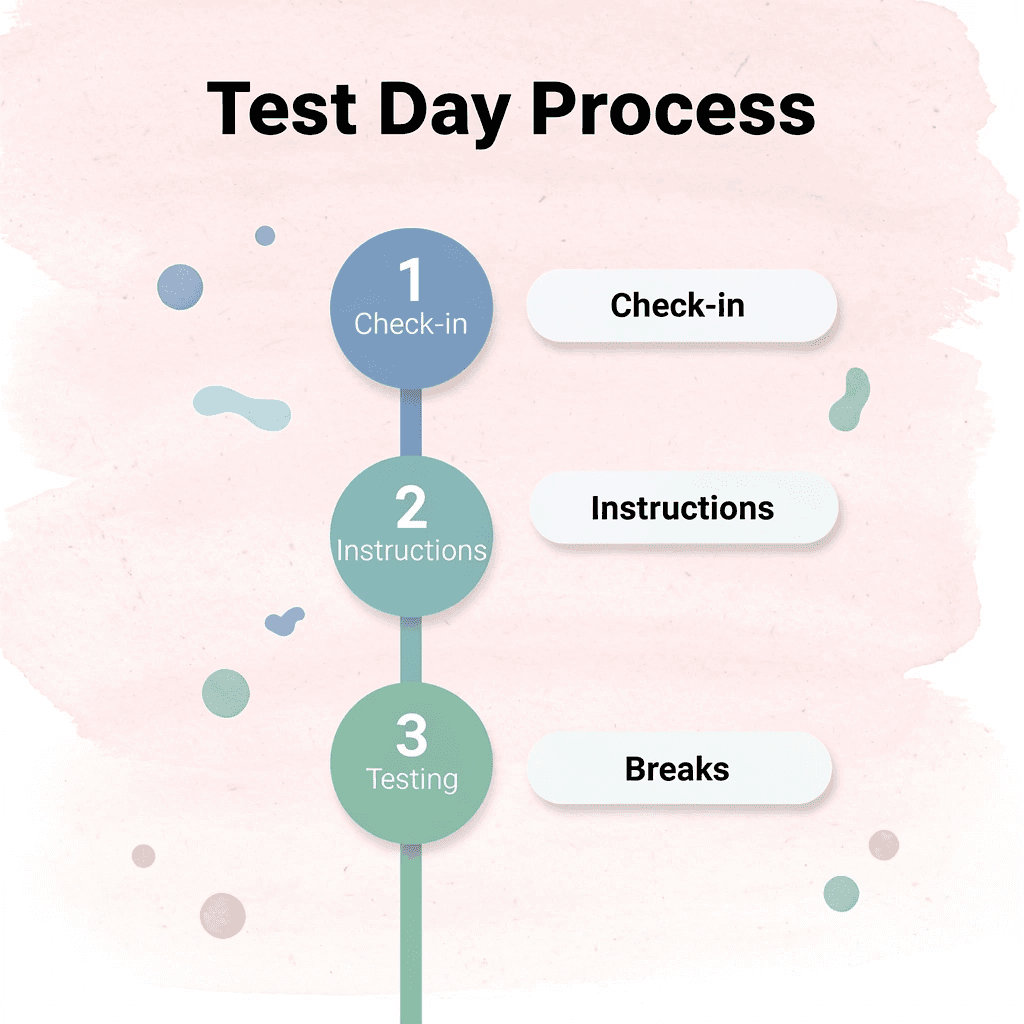
"Students often underestimate the total time commitment - the 4-hour reality includes significant non-testing periods that can affect mental stamina." — Test Prep Research, 2024
⚠️ Warning: Don't plan important activities immediately after your test. The extended timeline and mental fatigue from prolonged focus can leave you more drained than expected, even before you actually start answering test questions.
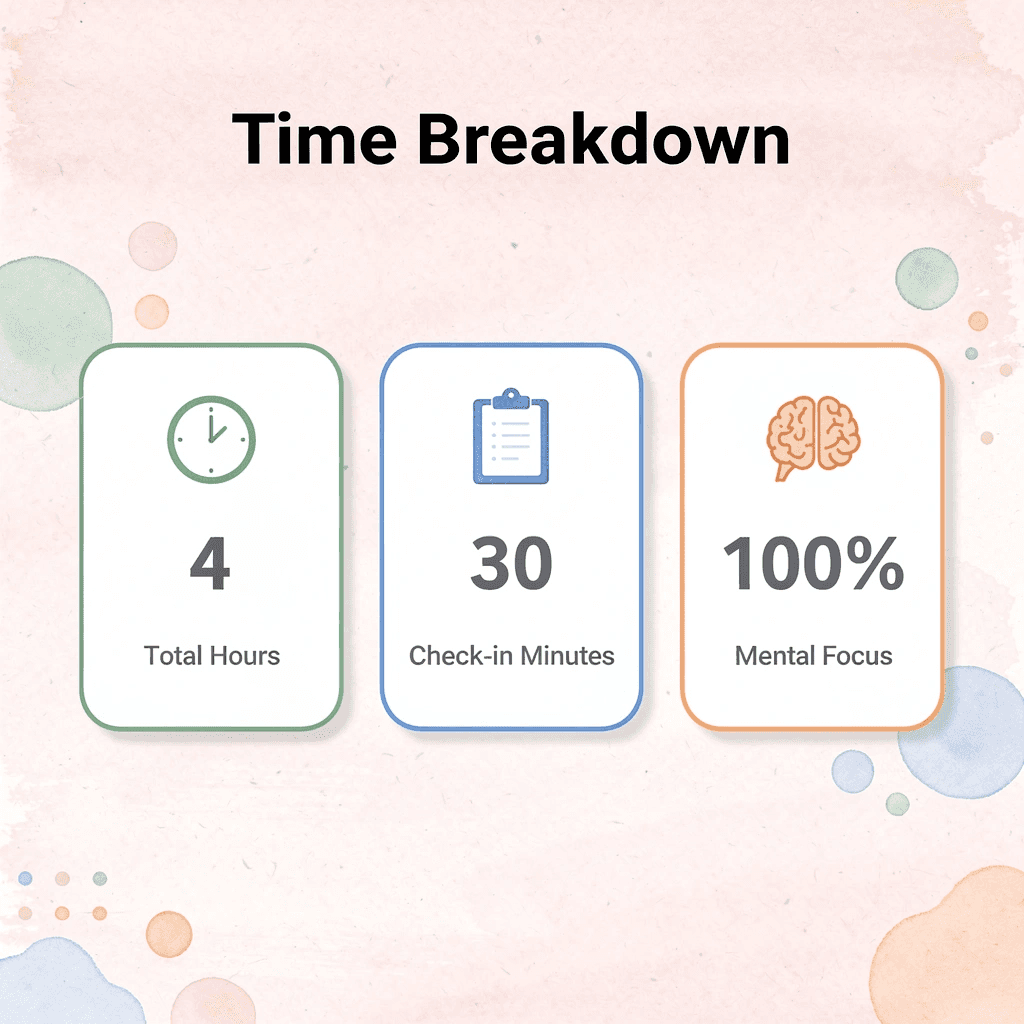
How do breaks affect your test performance?
The break structure creates its own challenge. After Math, you get 10 to 15 minutes to stand, stretch, use the restroom, and eat a snack—your only pause before Reading and Science, the two sections requiring your sharpest focus when you're already mentally tired. Students who skip the break or waste it scrolling on phones often regret it halfway through Science when their concentration falters.
How does fatigue impact your performance during the test?
By the Writing section, after three hours of testing, your brain isn't fresh. Your handwriting might get cramped. The essay prompt asks you to build a clear argument when you're running on discipline, not adrenaline. That 40-minute section feels longer than Math did. Transitions between sections drain mental stamina. Proctors read instructions before each section, and those 30 to 60 seconds of waiting—still tense, still requiring focus—accumulate across the test.
Why do students struggle with time management despite preparation?
Many students preparing for the ACT juggle college research, essay drafts, and scholarship applications simultaneously. Our Kollegio platform centralizes that workload by matching it with personalized college recommendations and tracking deadlines in one place, so test day becomes one well-timed milestone instead of an isolated panic point. Yet knowing the timeline doesn't explain why many students finish sections with unanswered questions, even after practicing every question type at home.
Why Most Students Run Out of Time
The problem isn't knowledge. You can learn every grammar rule, memorize quadratic formulas, and understand rhetorical strategies perfectly at home. But when the proctor starts the clock, all that knowledge must work at a speed most students have never practiced.

🎯 Key Point: The ACT doesn't reward what you know. It rewards how fast you can use what you know under sustained pressure.
"Speed under pressure is what separates high scorers from students who know the material but can't execute when it counts." — Test Prep Research, 2024
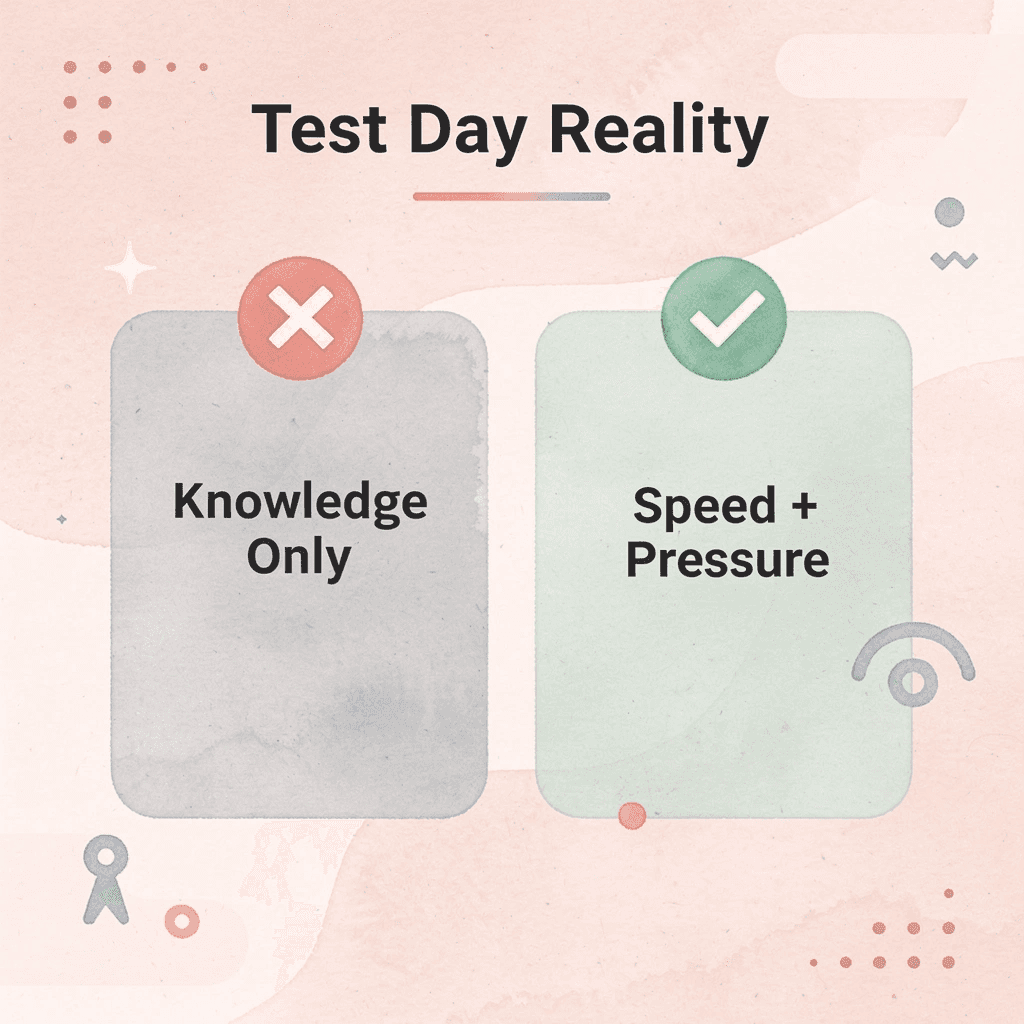
⚠️ Warning: Knowledge without speed is the most common reason students underperform on test day, even when they've mastered all the content.
Why does timed practice get overlooked so often?
Timed practice gets skipped more often than students admit. According to Education Week, education outcomes continue to decline as students face mounting academic pressures without corresponding support systems. Many students practice content until confident, then assume test day will simply demonstrate their learning. But confidence without speed creates a dangerous illusion. You might answer 50 questions correctly in an hour at home, yet on test day, you need to answer 75 questions in 45 minutes. Suddenly, that same accuracy falls apart under unfamiliar time constraints.
Why do early questions steal time from later ones?
The instinct to get every question right creates an unrecoverable backlog. Students slow down on questions one through ten, double-checking answers, rereading passages, and ensuring they haven't missed anything. That caution costs 30 extra seconds per question. By question 40, you're five minutes behind, and the final 20 questions become a guessing sprint. The ACT doesn't give partial credit for thoroughness. It only counts completed answers, and incomplete sections drag your score down regardless of how carefully you approached the first half.
How does pacing differ between ACT sections?
Each section requires a different pace. English allows 36 seconds per question. Math gives you a full minute. Reading squeezes passage analysis and question response into roughly 52 seconds per item. Science matches that pace while asking you to interpret unfamiliar charts after three hours of testing. If you don't adjust your internal clock between sections, you'll either rush through Math or run out of time in English.
Students juggling college applications face added complexity. While preparing for the ACT, they research schools, draft essays, and track scholarship deadlines across multiple platforms. Tools like Kollegio centralize this workload by matching students with personalized college recommendations and organizing application timelines in one place, transforming test prep from a chaotic juggling act into one focused task.
What makes the Reading and Science sections particularly challenging?
The hidden cost shows up in Reading and Science. Both sections require you to process information before answering questions, so your per-question time includes comprehension work that doesn't feel like question-solving. In Reading, you're expected to absorb passages and respond to 40 questions in 35 minutes. Students who don't practice this dual-demand often finish passages but leave questions blank because they underestimate how much time interpretation would take.
Related Reading
- Average Sat Score
- Average ACT Score
- How To Improve SAT Score In 2 Weeks
- How Long Does A Practice SAT Take
- Sat Study Schedule
- Is the SAT adaptive
- Are SAT Prep Classes Worth It
- How Many Reading Questions Are on the SAT
- SAT Grammar Rules
- How to Prep for ACT
- What's a Good SAT Score
How to Manage ACT Timing Effectively
Full-length timed practice builds the endurance and internal rhythm that short drills cannot develop. HighScores.ai breaks down the reality: you get 35 seconds per question on ACT Math and 53 seconds per question on Reading. Those numbers remain abstract until you've practiced moving at that exact speed for 35 consecutive minutes while your brain is already fatigued from two previous sections.
🎯 Key Point: Real ACT timing isn't just about individual question speed—it's about maintaining a consistent pace when your mental energy is depleted, and pressure is mounting.

"You get 35 seconds per question on ACT Math and 53 seconds per question on Reading—but those numbers mean nothing without full-length practice." — HighScores.ai Analysis
ACT Section | Time Per Question | Endurance Factor |
|---|---|---|
Math | 35 seconds | 60 minutes total |
Reading | 53 seconds | 35 minutes total |
English | 36 seconds | 45 minutes total |
Science | 52 seconds | 35 minutes total |
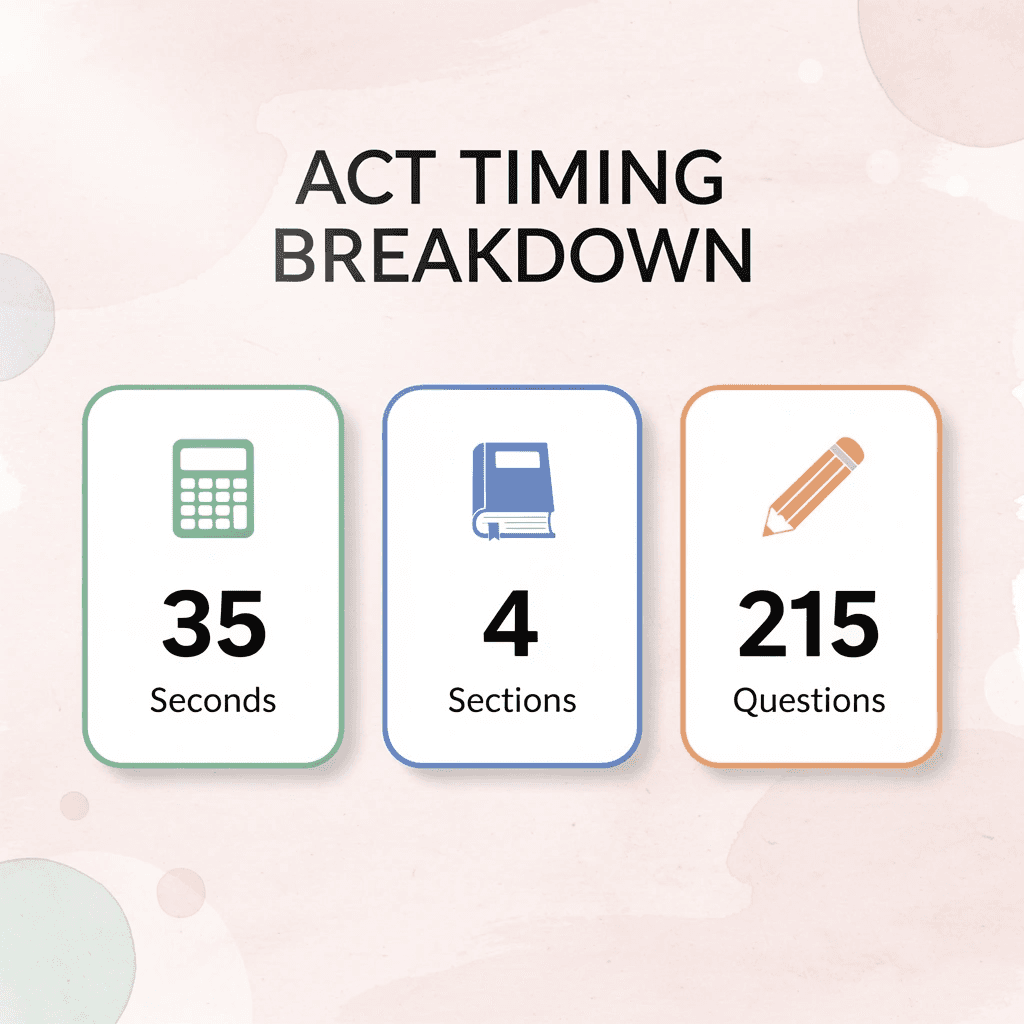
⚠️ Warning: Short practice drills create a false sense of timing confidence. The real challenge is maintaining question pace when you're mentally fatigued from multiple sections.
When should you strategically skip a question?
Finishing every question in order creates the backlog that kills your score. When a question exceeds your section's average difficulty, mark it and return only if time allows. Spending two minutes on one trigonometry problem costs you three algebra questions you could answer in 30 seconds each. The ACT rewards students who recognize when to move forward and when to commit, not stubbornness.
How does timing differ across ACT sections?
Each section needs its own internal clock. English moves fast because questions are short and pattern-based. Math allows slightly more breathing room per problem. Reading and Science require you to process information before answering, so your per-question time includes comprehension work that doesn't show on the timer. Treating all four sections with the same rhythm guarantees you'll rush through one or run out of time in another.
How do you simulate the real conditions that break most students?
Practicing without distractions, using a timer, and refusing to pause between sections builds the stamina that content mastery alone cannot develop. The closer your practice mirrors test day, the less your brain must adjust when the proctor starts the clock. Students who practice one section at a time often collapse in Reading or Science because they never rehearsed maintaining focus after 105 minutes of testing.
How can you organize your broader admissions strategy?
Most students preparing for the ACT juggle college research, essay drafts, and scholarship deadlines across multiple platforms. Kollegio consolidates this work by matching students with personalized college recommendations and organizing application timelines in one place. When you know exactly where the ACT fits into your college admissions plan, you can spend practice time more strategically instead of cramming at the last minute. But even perfect timing won't help if you're training with the wrong strategy for your specific weaknesses.
How Kollegio Helps You Turn ACT Timing Into a Strategy
Most students focus on finishing ACT sections faster during test prep, but never ask the critical question: how much does that time improvement matter? Strategy separates from busywork here.
🎯 Key Point: Raw speed without strategic time allocation is like running fast in the wrong direction - you'll finish quickly but with lower scores.

"Strategic timing isn't about racing through questions - it's about maximizing points per minute and knowing when to invest versus when to move on." — ACT Strategy Research, 2024
💡 Pro Tip: The difference between a 28 and a 32 on the ACT often comes down to smart time management, not just content knowledge or speed.
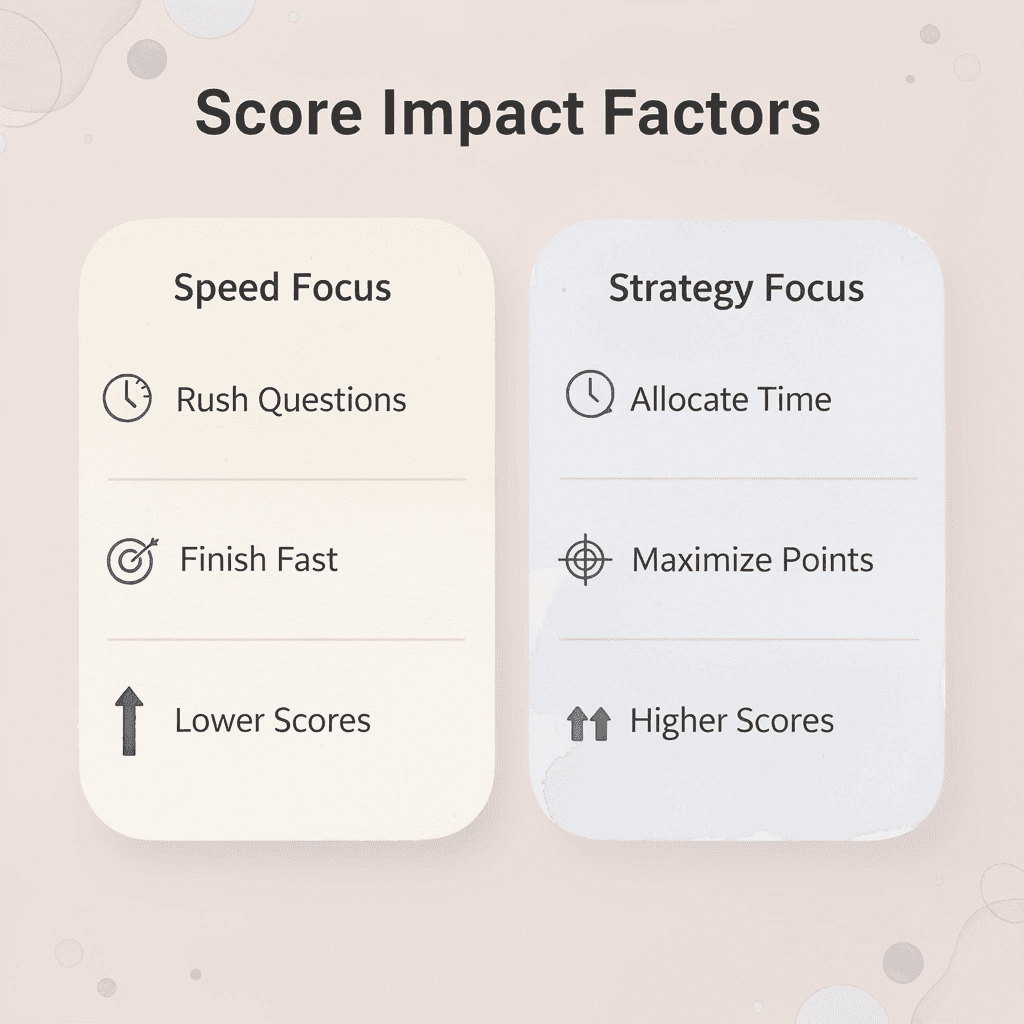
How does connecting ACT performance to real outcomes change your approach?
The shift happens when you connect ACT performance to what matters. Instead of chasing abstract score improvements, you can see exactly what your current score unlocks: which schools consider you competitive, which scholarships you qualify for, and whether retaking the test will meaningfully change your options. This shifts timing from a technical skill into a strategic decision. If your current score already opens the doors you want, the pressure to squeeze out small gains disappears.
When timing becomes part of a bigger picture
Many students take the ACT test multiple times, practicing sections repeatedly to save 30 seconds or gain two points. However, they don't always understand whether these improvements will change their chances of college admission. According to Testing Timers, you have 45 minutes to answer 75 questions in English. But if those extra seconds won't affect whether you receive a scholarship or gain admission, that effort—however it appears—is wasted.
How can students work strategically instead of just harder?
Platforms like Kollegio help students build personalized college lists based on current or projected scores, surfacing scholarships tied to specific score ranges. Our AI college counselor identifies schools where students' current scores are already competitive, eliminating the need to retake tests for marginal timing improvements. This saves time, reduces stress, and lets them focus on what matters: essays, extracurriculars, and applications to aligned schools. One student might spend three months drilling ACT practice tests, hoping to jump from a 28 to a 30. Another use of that time is to strengthen their application narrative, secure recommendation letters, and apply to schools where a 28 already places them competitively. Both worked hard, but only one worked strategically.
What shift do most students miss about timing?
Timing becomes part of a decision framework instead of an isolated metric: not just how fast you can finish, but whether improving your timing will change your results. This shift determines whether test prep becomes a tool or a treadmill.
Use Kollegio's AI College Counselor for Free Today!
Use Kollegio to match your ACT score to a personalized college list and scholarship opportunities. In your first session, you'll see where your score works and whether you need to retake the test, so you can focus your effort where it counts.
🎯 Key Point: Kollegio's AI counselor eliminates the guesswork by showing you precisely which colleges and scholarships match your current ACT performance — no more wondering if you're aiming too high or too low.

"Personalized college matching based on your actual test scores helps students make informed decisions about where to apply and how to allocate their preparation time." — College Admissions Research, 2024
What You Get | How It Helps |
|---|---|
Personalized college matches | See exactly which schools fit your ACT score |
Scholarship opportunities | Discover funding options you qualify for right now |
Retake guidance | Know whether improving your score is worth the effort |
Strategic focus | Direct your preparation time where it will have maximum impact |
💡 Tip: Don't spend months wondering if your ACT score is competitive — get instant clarity on your college prospects and make data-driven decisions about your test prep strategy.
Related Reading

Author
Senan KhawajaSenan Khawaja is the Co-Founder and CEO of Kollegio, an AI-native college counseling and institutional recruiting platform serving roughly 250,000 students across 190 countries. A Stanford graduate, repeat founder, and Forbes 30 Under 30 honoree with World Bank experience, Senan launched Kollegio to democratize elite college counseling—addressing the 400:1 student-to-counselor ratio in public schools. Under his leadership, Kollegio has secured 22+ institutional partners with a 100% renewal rate and backing from Reach Capital, JFF Ventures, and ECMC Group. He was also selected for OpenAI's inaugural ChatGPT Futures Class of 2026. Senan is based in New York City.