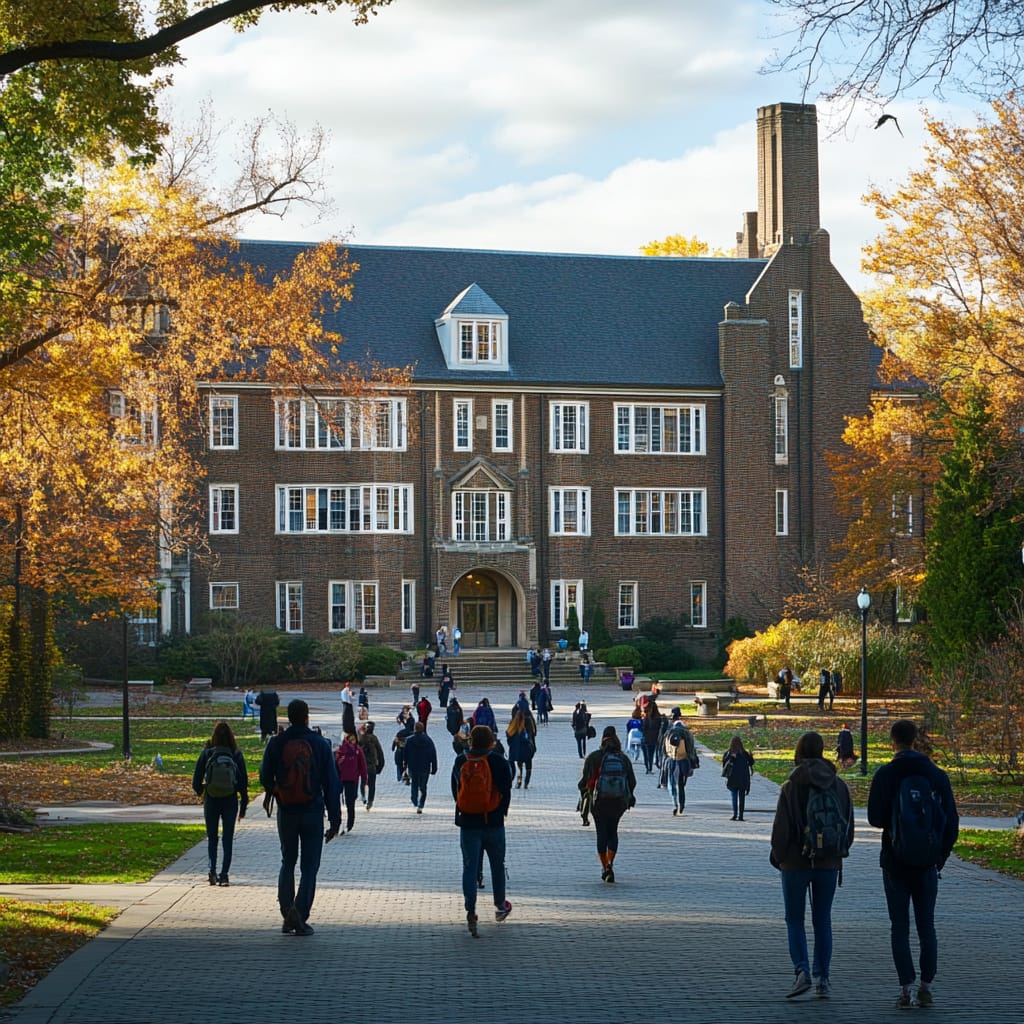
When it comes to choosing a college, students often focus on location, tuition, and campus culture. But for ambitious undergraduates, research opportunities can make or break a college experience. Undergraduate research doesn’t just prepare you for graduate school, it also sharpens critical thinking skills, boosts resumes, and provides students with the chance to solve real-world problems alongside experienced faculty.
Stop wondering.
Start matching.


In this post, we'll explore the top undergraduate research universities in the U.S. in 2025. These schools not only offer state-of-the-art labs and funding, but they also prioritize hands-on experiences for undergraduate and graduate students alike. Whether you're interested in medicine, engineering, humanities, or the social sciences, these institutions are leading the way in undergraduate research opportunities.
What Makes a Great Undergraduate Research University?
Before diving into our list, let’s define what we mean by a top undergraduate research institution:
- Accessible Research Opportunities: Are undergraduates encouraged and supported to participate in research?
- Faculty Mentorship: Do students work closely with professors rather than being handed off to graduate students?
- Funding and Grants: Are there stipends, fellowships, or grants available specifically for undergraduate researchers?
- Dedicated Research Programs: Is there a structured program or office that helps connect students to research projects?
- Publication and Presentation: Can undergraduates present at conferences or co-author papers?
1. Massachusetts Institute of Technology (MIT)
MIT is renowned worldwide for its innovation and rigorous academics. But what sets it apart is the Undergraduate Research Opportunities Program (UROP), one of the first formalized research programs for undergrads. With Nobel laureates and industry leaders among its faculty, students at MIT are immersed in world-changing research from the start.
- UROP Participation: Over 90% of undergraduates participate in research through UROP.
- Funding: MIT offers paid research positions even for first-year students.
- Fields of Study: Everything from mechanical engineering to brain and cognitive sciences.
2. Stanford University
Stanford’s close ties to Silicon Valley mean students often work on cutting-edge research in technology, medicine, and entrepreneurship. Whether you're into artificial intelligence or sustainable development, Stanford's research infrastructure is exceptional.
- VPUE Research Grants: The Office of the Vice Provost for Undergraduate Education offers summer and academic-year grants.
- Cardinal Quarter: Encourages public service research with global impact.
- Interdisciplinary Focus: Programs like Bio-X allow undergraduates to work across disciplines.
3. Harvard University
Harvard’s Institute for Quantitative Social Science and the Harvard College Research Program make it easy for students to explore research across a range of fields.
- Early Access: Many students start research projects as early as freshman year.
- Diverse Fields: Students engage in everything from medical research at Harvard Medical School to humanities work in the Widener Library archives.
- Summer Research: Harvard offers the Summer Undergraduate Research Village to support immersive experiences.
4. University of California, Berkeley
Berkeley stands out for its commitment to undergraduate research across all disciplines, whether you’re interested in medicine or the arts. The university’s public mission and rich resources make it a top destination for hands-on learning.
- URAP (Undergraduate Research Apprentice Program): Students work with faculty on ongoing research projects.
- SURF (Summer Undergraduate Research Fellowship): Supports independent student-led research.
- STEM and Beyond: From nuclear engineering to English literature, research is open to students of almost any field.
5. Duke University
Duke has a reputation for strong faculty mentorship and a thriving undergraduate research culture. With strengths in global health, policy, and engineering, this university prepares students to be change-makers.
- Bass Connections: Interdisciplinary research teams tackle real-world problems.
- Vertically Integrated Projects: Students stay on long-term research teams.
- Funding: Duke provides travel grants and summer stipends for student researchers.
6. University of Michigan - Ann Arbor
Michigan’s Undergraduate Research Opportunity Program (UROP) connects more than 1,300 first- and second-year students to research projects each year. UMichigan’s large scale and even larger support systems make it a powerful place for aspiring researchers.
- Inclusive Access: UROP is focused on making research accessible to first-generation and underrepresented students.
- Summer Research: The SROP and SURF programs offer summer immersion.
- Wide Scope: Research is available across all 19 colleges and schools.
7. California Institute of Technology (Caltech)
Despite its small size, Caltech packs a big punch when it comes to undergraduate research. For students who want a rigorous, research-focused education, this university is a top contender.
- SURF Program: Modeled after the grant-seeking process, SURF students write proposals and conduct research under mentorship.
- Research First: 90%+ of students engage in research before graduation.
- Faculty Access: Low student-to-faculty ratio ensures direct mentorship.
8. Princeton University
Princeton integrates independent research into its curriculum in ways unique to them. Their liberal arts focus blends seamlessly with the scholarly work that many students take part in on campus.
- Junior Papers and Senior Theses: Every student conducts original research to graduate.
- Funding and Support: Princeton offers research grants, travel stipends, and summer opportunities.
- Faculty Engagement: Personalized mentorship is a cornerstone of the experience.
9. Northwestern University
With over $900 million in annual research funding, Northwestern provides rich research opportunities in both STEM and humanities.
- Office of Undergraduate Research: Helps students find projects and funding.
- Interdisciplinary Centers: Such as the Institute for Policy Research and NU-Q for global media research.
- Presentation Opportunities: Students showcase work at the Undergraduate Research and Arts Expo.
10. Johns Hopkins University
As the #1 university in the U.S. for research spending, Johns Hopkins is a natural fit for aspiring scientists. With research deeply woven into the university’s identity, undergraduates are true contributors.
- First-Year Focus: Students are encouraged to start research immediately.
- Research Centers: Home to the Applied Physics Lab and Bloomberg School of Public Health.
- Opportunities Beyond STEM: Students conduct research in writing, film, and more.
Why: SERP competitors like US News and Washington Monthly prominently feature ranking methodology and multi-metric criteria (research expenditure, faculty involvement, program formalization), which the live post entirely omits — adding this builds EEAT credibility and directly satisfies a top SERP must-have signal.
How These Universities Are Ranked: Methodology and Metrics That Matter
Not all rankings measure the same thing, and understanding what goes into a ranking helps you decide how much weight to give it. The universities on this list were evaluated using a combination of sources, including research expenditure data, faculty-to-student ratios, and formal undergraduate research program structures, metrics that directly reflect a student's opportunity to participate in hands-on research.
Why Global Rankings Don't Tell the Whole Story
Systems like the Times Higher Education World University Rankings measure research-intensive universities across all their core missions, teaching, research, knowledge transfer, and international outlook, using a weighted, multi-pillar scoring framework. But as THE's own methodology page notes, those pillars cover research volume, citation impact, industry income, and international diversity. None of them isolate undergraduate research opportunity, mentorship access, or student-faculty collaboration. A university can sit near the top of a global ranking and still funnel the vast majority of its research activity through graduate students and postdoctoral fellows, leaving undergraduates on the sideline.
The Metrics That Actually Matter for Undergraduates
For undergraduates, the most meaningful indicators are: total annual research expenditure (which signals how much active research is happening on campus), the presence of a formal undergraduate research office or program, faculty openness to mentoring students outside of graduate programs, and whether the institution guarantees or actively facilitates research opportunities as part of the degree experience. The Association of American Universities tracks verified research expenditure data across its member institutions, providing a standardized baseline for comparison. Cross-referencing that data with program-level offerings gives a more complete picture than any single ranking score.
How to Use These Rankings in Your College Search
Rankings are a starting point, not a verdict. The right research university for you depends on your intended field, your access to faculty mentors, and whether the campus culture supports undergraduate involvement in labs and projects. If you want a faster way to match your academic interests and profile to schools where you can participate in research, Kollegio's AI College Recommender uses thousands of data points to find schools that align with your specific goals, not just a generic prestige tier.
Why: Competitors consistently surface concrete research expenditure data as a trust anchor (a key SERP must-have), while the live post only mentions Northwestern's $900M and Johns Hopkins' #1 ranking in passing — a dedicated section with verified per-institution figures closes a significant factual gap and gives readers a scannable, decision-ready comparison.
Research Funding by the Numbers: What Each University Actually Spends
Research spending is one of the clearest proxies for research activity on campus. A higher annual expenditure generally means more active labs, more funded projects, and more real opportunities for undergraduates to get involved. The figures below are drawn from Washington Monthly's college research rankings and AAU institutional reporting.
Top Spenders: Where the Research Dollars Are Concentrated
Johns Hopkins University holds the number one position in research expenditures among U.S. universities, a distinction that reflects its deep integration of research across undergraduate, graduate, and professional programs. Northwestern University spends approximately $900 million annually on research, placing it among the nation's most research-active campuses. MIT, Stanford, and UC Berkeley each invest billions across their research enterprise, with expenditure spread across engineering, life sciences, social sciences, and interdisciplinary programs. The Association of American Universities continues to track and publish these figures as the primary standardized benchmark for comparing institutional research capacity.
What Research Spending Means for You as an Applicant
High institutional spending does not automatically translate into undergraduate research access. It does, however, signal a campus environment where research is central rather than peripheral, which increases the probability that faculty are running active projects and that formal undergraduate research programs are funded and staffed. When comparing schools, look for how expenditure figures map onto specific undergraduate opportunities like honors thesis programs, summer research fellowships, and faculty-mentored independent study options. Spending data is one input; the student experience on the ground is another.
Matching Research Strengths to Your Academic Interests
A university that leads in biomedical research expenditure may not be the right fit if your passion is environmental policy or computational linguistics. The more useful question is whether the research happening at a given school aligns with what you want to study and contribute to. Kollegio's personalized college quiz and recommendations tool is built to help you move past the spending headlines and find schools where your academic profile, interests, and research goals line up, including schools that may not appear on a standard prestige list but offer exceptional undergraduate research access in your specific field.
Tips for Finding the Right Undergraduate Research Fit
- Start Early: Don’t think that you have to wait until junior year to conduct research. Some schools offer programs for first-years that might be worth checking out.
- Look Beyond Rankings: Not all great research happens at the most famous schools. Smaller, lower ranked schools might have greater opportunities to research in a field you’re passionate about.
- Ask Questions: When touring colleges, ask current students and professors about undergraduate research.
- Check Faculty Interests: See if professors at specific universities are doing research you care about.
- Review Program Websites: Explore offices dedicated to undergraduate research, as they might have the answers to a lot of the questions you may have.
Choosing a university with strong undergraduate research opportunities can transform your college experience. From Ivy Leagues to top public schools, the best institutions are those that invest in their undergraduates as researchers, collaborators, and future leaders. Whether you're aiming for a PhD, med school, or a competitive job, these research experiences will set you apart.
If you want to learn more about schools that are the right fit for you, be sure to check out Kollegio AI today!
By Parker Manci