
College Board says 2 to 4 weeks. Your scores almost certainly arrive in 13 days. Here is every 2026 release date and what to do the moment results land.
Weekend SAT scores for 2026 follow a pattern that is far more predictable than most students realize. College Board publishes every test date alongside its corresponding score release date in advance, yet the default reaction is still to treat release day as a mystery. That gap between what is knowable and what students actually know costs real planning time. According to College Board's official SAT Scores Percentiles release schedule, every 2026 weekend SAT administration has a fixed release date published well before test day. Here is the complete calendar, sourced directly from College Board:
13 days Consistent gap between every 2026 SAT test and score release
Key takeaways
- Weekend SAT scores typically post around 13 days after test day, not the 2-to-4-week window College Board officially quotes.
- Score release times run in batches starting around 6–8 AM ET, which means you can plan that morning like a scheduled appointment, not a random event.
- SAT School Day scores follow a separate release schedule that runs 3–4 weeks out. If your classmates have scores and you don't, that's the system working correctly, not a delay.
- Most score delays fall into a small number of known categories, each with a specific fix; treating them as unpredictable is the mistake that costs the most time.
- Your score release date is a hard deadline trigger: students who arrive at release morning with a school list built and a score-send queue ready move through the decision in under an hour; students who don't lose days.
- Sending scores strategically, knowing which schools to send to, when, and why, matters more than the score itself in the 48 hours after release.
- Kollegio.ai closes the gap between "my scores just dropped" and "I know exactly where to apply" by pairing your score with personalized college recommendations, essay feedback, and direct connections to schools, so release day becomes a launchpad, not a waiting room.
How Long Does It Take to Get SAT Scores After Test Day?
The gap between when scores actually arrive and what College Board officially states trips up more students than it should, and the confusion tends to hit hardest on score release morning when classmates start posting results and your portal still shows nothing. This section breaks down the real 13-day turnaround for standard Saturday administrations, why College Board's stated window is wider than most students will experience, and what is actually happening when your score appears later than a friend's.

The 13-Day SAT Score Turnaround vs. College Board's Official Window
SAT scores for a weekend test typically arrive approximately 13 days after test day, not the full four weeks College Board lists as its official window. According to College Board's score release dates page (2025), the 2 to 4 week range exists as a processing buffer, covering edge cases like security reviews or question validity investigations. For most students on a standard Saturday administration, the real wait lands at the shorter end of that range.
A student who tested on October 3, for example, can reasonably expect scores around October 16, not November. The gap between the 13-day reality and the 4-week official statement trips up a lot of students. They either over-relax, assuming the full month is normal, or panic when scores haven't appeared by day 10.
Both reactions waste energy. The honest limitation here: if your test site flags an irregularity, your individual score can be held longer with no guaranteed resolution date, and College Board will not accelerate that review.
Batch Release Mechanics — Why Your Classmate's Score Appears Before Yours
The most common source of score-morning panic is not a delay at all. It is a queue. One of the sharpest anxieties students face at this stage is seeing a classmate post their score in a group chat while their own portal still shows nothing, and immediately spiraling into worst-case interpretations.
That anxiety is understandable and almost always unfounded. College Board releases scores in rolling batches throughout release day, meaning two students who sat in the same room on the same Saturday can see their scores hours apart. Checking once mid-morning is more productive than refreshing at midnight or 5 AM.
This is also a natural moment to redirect energy productively. While scores are in transit, students working with an AI college counselor can use the waiting period to build out their Student Profile, the first step in Kollegio's onboarding process, completed before any college recommendations are generated, so that the moment scores arrive, the platform's College Finder and personalized college recommendations already reflect an accurate, complete picture of their goals. Getting detailed feedback on essays and identifying scholarship matches through Kollegio's personalized financial aid tools are similarly good uses of the days before a score lands.
What Time SAT Scores Drop and What That Means Across Time Zones
According to College Board's score release information (2025), batches begin rolling out around 6 to 8 AM Eastern Time. A student in Boston might catch their score with morning coffee. A student in Seattle should expect to wake up before 3 AM PT if they want to be in the first batch window, or simply check during a reasonable mid-morning hour rather than setting a pre-dawn alarm. Once a score is in hand, the next decision, which schools to target, whether to retest, how that score affects financial aid positioning, is where real college planning begins. Kollegio's personalized college recommendations match students to schools based on their full profile and goals, so a score update can immediately feed into a smarter, more realistic college list rather than a stressful round of guesswork.
Where Can I Check My SAT Scores? How to Access Your College Board Account
The score report sitting in your College Board account contains far more strategic information than most students expect, and knowing where to find each layer before you log in turns a confusing morning into a clear decision in under an hour. One of the most consistent gaps we see among students navigating this process for the first time is a basic uncertainty about where official scores actually live, and that uncertainty, left unaddressed, costs students valuable decision-making time at exactly the moment they need clarity most.

Where to Find Your SAT Scores in Your College Board Account
Students rarely discuss how to access their College Board account or check SAT scores at all, which suggests a real gap in awareness of where the official score-checking resources live.
Your scores are available at collegeboard.org/scores, by logging into your account and selecting "My SAT," then "Scores." That is the only official location. College Board does not push results to third-party apps or school portals on release day.
One honest limitation: the portal can slow down on high-traffic release mornings, so a failed page load does not mean scores are missing. Wait a few minutes and refresh rather than assuming something went wrong. This is the kind of process detail that seems minor until the morning it matters, and it is precisely the navigational complexity that makes guided support through the college admissions process so valuable.
At Kollegio, your onboarding profile captures your testing timeline at the very start of onboarding, before any college recommendations are generated, so your score data feeds directly into personalized college recommendations rather than sitting in isolation in a portal you checked once.
What the Digital SAT Score Report Actually Contains (It Is More Than One Number)
The digital SAT report includes a total composite score, separate section scores for Reading and Writing and for Math, subscores within each section, and cross-test scores that measure skills applied across both sections. There is no essay score; the digital SAT removed that component entirely. For a detailed breakdown of how each score layer is structured, industry research on digital SAT scoring is a useful companion reference.
The composite tells you where you landed; the percentile range tells you what that landing means for each specific school; and the subscores diagnose exactly which skills drove the outcome, making them the most precise input for a retake decision, because they tell you not just whether to retest, but exactly which content areas are worth your study time before you do. This is where the college admissions process can feel genuinely overwhelming: translating a score into a school list requires holding your subscores, each institution's published ranges, and your application timeline in mind at once. Kollegio's College Finder and AI College Recommender map your score data against real school targets, and the Plan Applications feature keeps your full timeline visible so nothing slips, including the window between score release and application deadlines where retake decisions need to be made.
For families where a parent wants to stay informed without creating conflict with their student, that shared visibility into the timeline removes the friction that tends to build when everyone is working from different information. The score report is the starting point, not the conclusion. Reading it well, and connecting it immediately to a live, personalized school list, is what separates a stressful release morning from a productive one.
Key takeaway: A composite score only becomes actionable when read alongside two other data sources simultaneously — your target schools' 25th–75th percentile bands and your own subscores.
When Do SAT School Day Scores Come Out? The In-School Testing Schedule
SAT School Day scores follow a completely different release logic than weekend scores, and understanding that difference is the fastest way to stop second-guessing yourself. If your classmates are posting their numbers online and your portal still shows nothing, that silence is not a warning sign. It is the system working exactly as designed.

SAT School Day Scores Take 3–4 Weeks — The Structural Reason Why
SAT School Day scores take 3–4 weeks after the test date to become available, compared to roughly two weeks for weekend test-takers. The reason is structural, not administrative backlog. Before College Board can begin scoring, your school must physically collect and submit all answer materials.
That submission step does not exist for weekend testers, whose materials move directly into the scoring pipeline. The clock for School Day students starts later by design, and no amount of portal-refreshing changes that. This waiting period is genuinely hard.
Students who sit the School Day SAT in, say, April routinely discover their scores won't appear until May, a stretch of weeks where uncertainty about college prospects sits unresolved. That gap feels long not because you're being impatient, but because decisions about college lists, application timelines, and whether to retest all hinge on a number you simply don't have yet. College Board does not publish a precise minute-by-minute release time, only a date window, which makes the wait feel even more open-ended.
Knowing the structural reason doesn't make the wait shorter, but it does make it something you can plan around rather than something you have to fear.
The 2026 SAT School Day Score Release Windows
College Board publishes three specific submission-to-availability windows for SAT School Day. If your school submits by October 9, 2026, student scores become available October 20. A submission deadline of October 23, 2026 produces a student availability date of November 3.
Schools submitting by October 30, 2026 have scores ready for students by November 10. Each window is predictable once you know your school's submission deadline, so ask your test coordinator if you are unsure which window applies to you. One detail that catches students off guard: the release date that surfaces on peer timelines may not match yours at all.
A classmate who took a makeup or in-school test on a different date may be working from an entirely different submission window, meaning their score could post two weeks before or after yours with no relationship to performance or processing priority.
Why Your Wait Has Nothing to Do With Your Classmates' Timeline
The two tracks are structurally incomparable: weekend scores release on a fixed post-test calendar, while in-school SAT scores release on a school-submission calendar. Comparing them is like tracking two packages shipped by entirely different carriers with different pickup schedules. One arriving first tells you nothing about the other.
What you can do in this window is use the time purposefully. While scores are pending, your college list, application essays, and activities profile don't have to be. Kollegio's AI Essay Planner lets you draft and review essays that sound authentic and stand out, work that belongs on your plate regardless of what score eventually appears.
Your Kollegio onboarding profile and the Activity Feedback tool help you document and frame what you've already accomplished, so the moment scores post you're not starting from zero on applications. If you're unsure which schools belong on your list in the first place, Kollegio's College Finder and AI College Recommender surface recommendations matched to your profile before scores even enter the picture. The wait, reframed, is preparation time, and the students who arrive at score-release day with essays drafted and a college list already stress-tested are the ones who move fastest when the number finally lands.
Why Haven't My SAT Scores Been Released Yet? Common Causes of Delays
Score delays are almost never the catastrophe they feel like at 7 AM when your classmates are posting their numbers and your portal still says nothing. The common assumption is that score release is an unpredictable waiting game, and that once scores arrive the next steps will sort themselves out naturally. In reality, most delays fall into a small number of known categories, each with a specific cause and a predictable resolution window.
Treating your delay as a diagnostic problem rather than a verdict keeps you from making irreversible decisions, like canceling your scores, before you have the full picture. One thing that catches many students off guard: even after scores do arrive, there is a second gap in understanding, specifically, what to do next. Knowing your score is one step; knowing which colleges to send it to, and how to evaluate whether that score works for your target list, is where students genuinely get stuck.
That is the moment where having a personalized, profile-matched college list, the kind Kollegio's College Finder and AI College Recommender generate, becomes practically useful rather than just nice to have. Rather than scrambling to research fit after scores land, students who have already built out their Kollegio profile can immediately cross-reference their score against recommendations that were matched to their goals from the very start of onboarding.
1. A Security or Misconduct Investigation Flagged Your Test
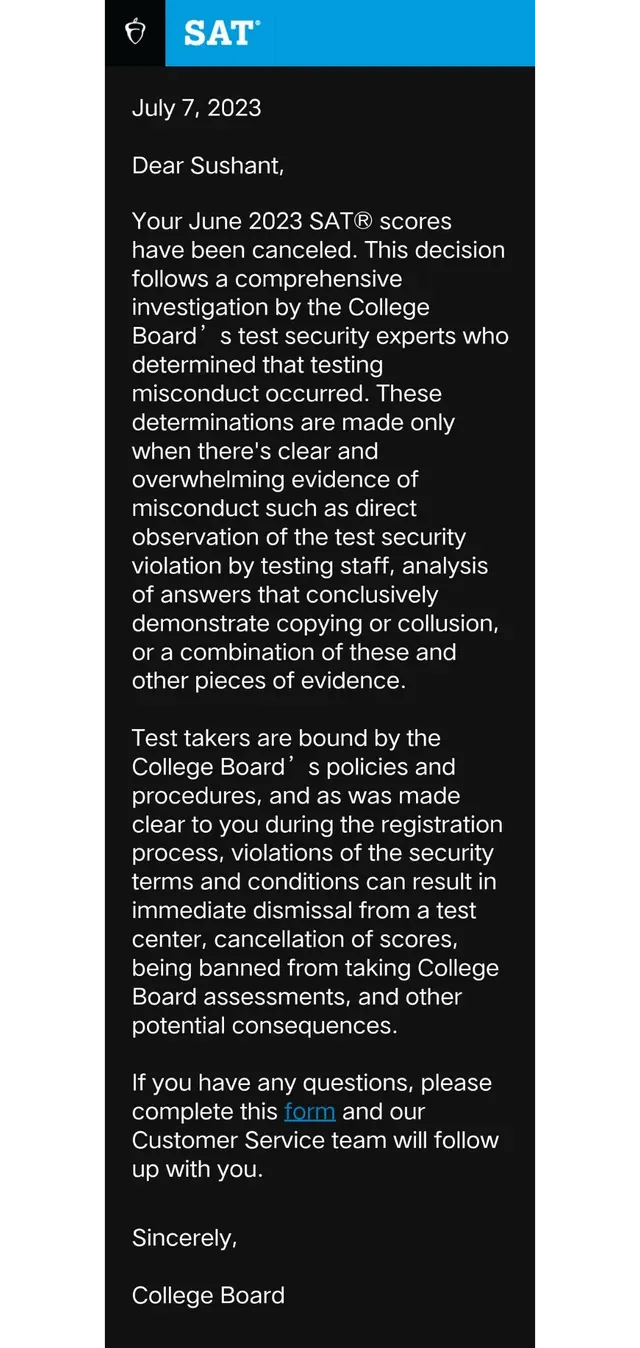
College Board places score holds on individual students when testing irregularities or suspected misconduct are detected during or after an exam. These investigations can extend the release window by several weeks beyond the standard schedule. A hold is not a cancellation. College Board notifies affected students by email, so check your inbox before assuming the worst. Most investigations resolve without score cancellation.
2. An Unusually Large Score Jump Triggered an Automatic Review
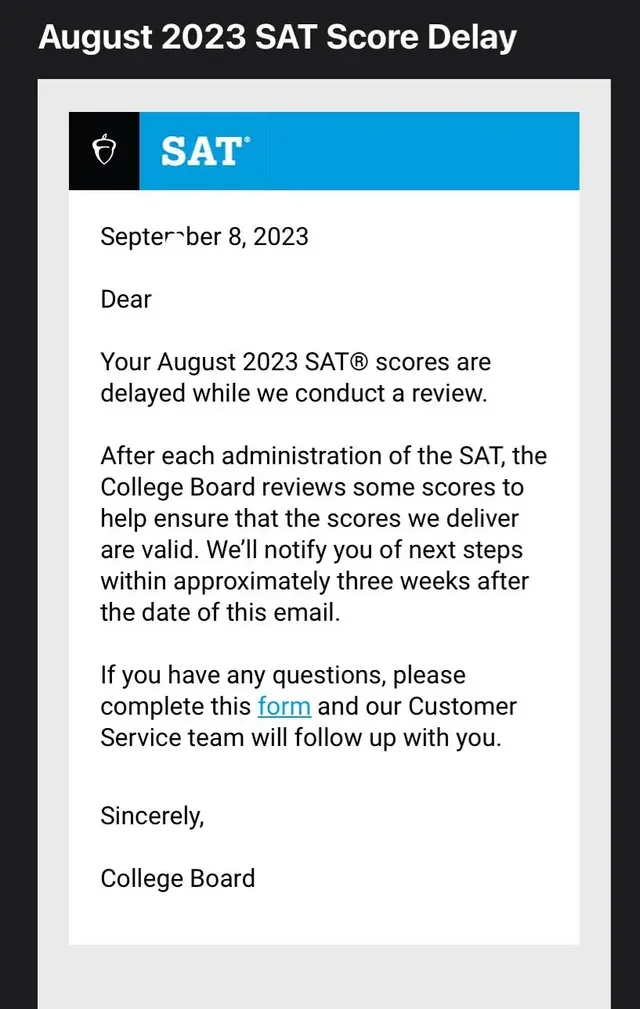
A significant improvement from one test to the next can trigger an automatic review flag. This is a known, documented process, not an accusation. Students who prepped seriously and genuinely improved often land in this review queue. The outcome is usually score release with no further action required.
3. Technical or Device Issues During the Digital SAT Exam
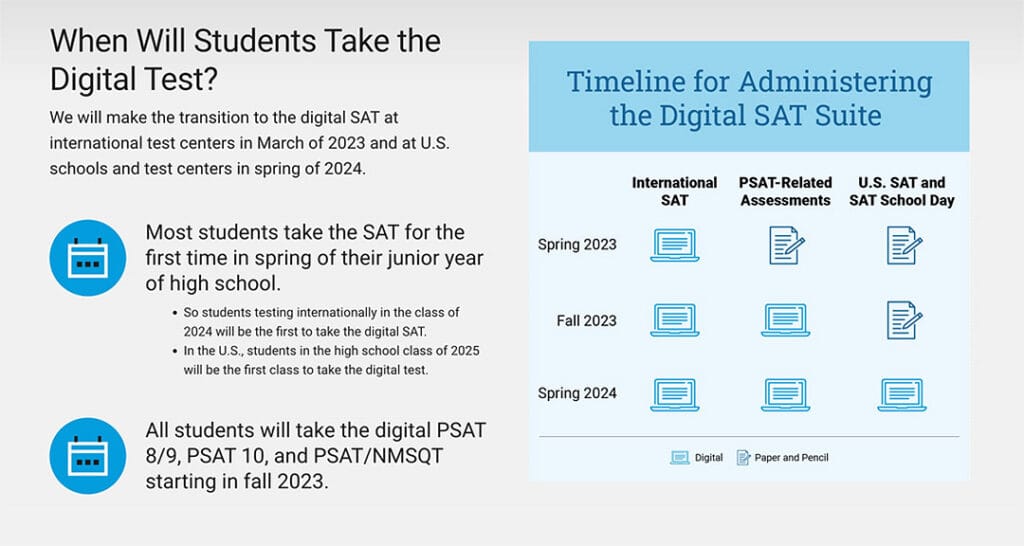
With the shift to the Digital SAT, device malfunctions, such as a screen going partially black, display errors, or connectivity problems during testing, can cause College Board to hold scores for review. Even if a proctor acknowledged the issue and allowed the student to continue, the system may still flag the session. Students affected should document any technical problems they experienced as evidence during any appeal process.
4. Missing or Incomplete Registration Information on File
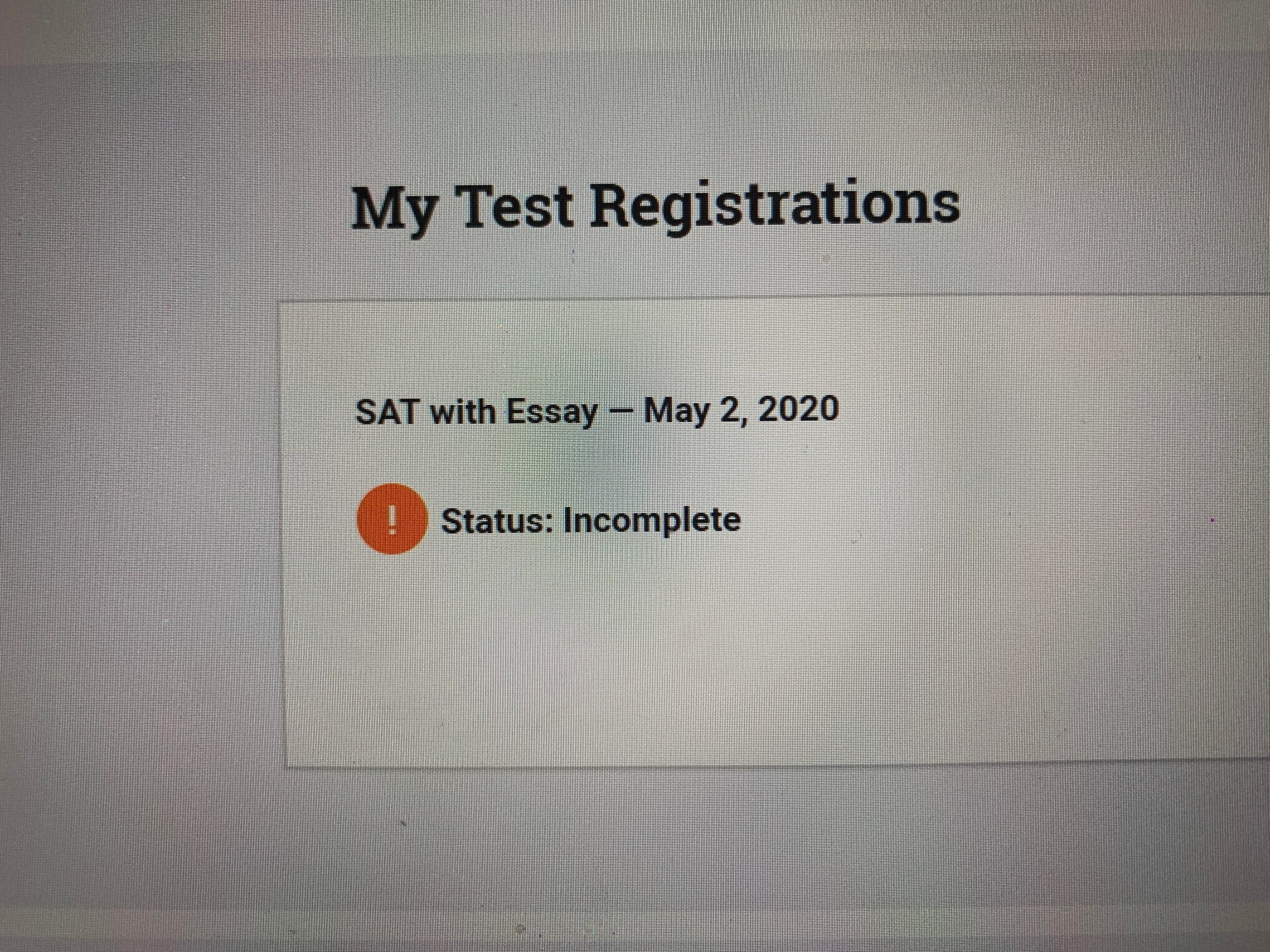
A mismatch between the name on your registration and your ID, an unverified email address, or an incomplete profile can all pause score delivery. Log into your College Board account, confirm your personal information is accurate, and verify the email address on file is one you actively check. A quick correction often resolves the hold faster than any investigation would. This is also a useful reminder: the same care you put into your College Board profile should go into the student profile you build on Kollegio. Accurate information at the start of onboarding is what makes personalized college recommendations and scholarship matches genuinely relevant to your situation.
5. Test-Wide Score Holds Due to Test Center Irregularities
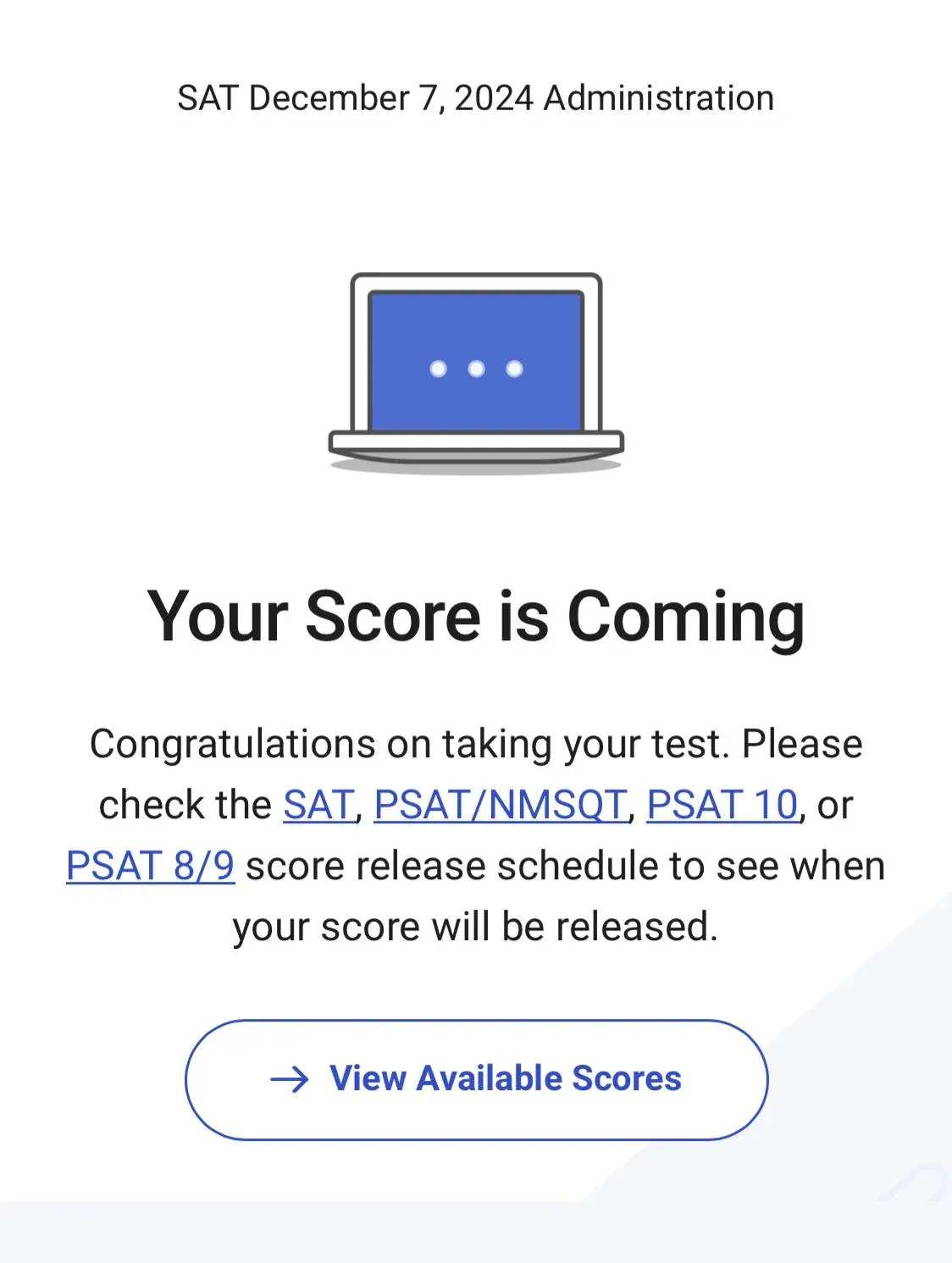
If College Board identifies irregularities at an entire test center, such as a proctor error or a security breach, it can place a site-wide hold affecting every student who tested there. Individual students cannot speed up the process. College Board posts updates on its official score release dates page when site-wide holds are in effect, so checking that page directly, rather than relying on social media speculation, is the fastest way to confirm whether a delay is affecting your entire test center or only your individual score.
For broader context on when SAT scores are typically released by test date, College Board's score release blog is the authoritative reference. Once the hold clears and your score is in hand, the next question, which colleges should actually receive it, is one students consistently underestimate in complexity. Kollegio's College Finder, Plan Applications feature, and Scholarship Finder exist precisely to make that post-score window purposeful rather than panicked, connecting your real numbers to a college list and financial aid search that were built around your profile and goals from day one.
Sending SAT Scores to Colleges — What to Do the Moment Scores Drop
The moment your SAT scores land in your College Board account, the planning window you built before test day either pays off or its absence becomes painfully apparent. Application deadlines are fixed and score-send fees are real, so students who arrive at release morning with a clear school list, a mapped score submission calendar, and a send queue ready to confirm move through the decision in under an hour. Students who start that research after scores post spend time they did not budget for, often in the days closest to a deadline.
One struggle we see constantly: a student earns a 1470, feels confident, and then discovers that a strong score alone does not guarantee admission or early action acceptance. That gap, between "I have a good score" and "I know exactly where and how to apply it," is where students lose ground. A score is only one input into a holistic admissions decision, and knowing which schools are genuinely well-matched to your full profile before scores even release is what makes the send decision clean rather than frantic.

Kollegio's College Finder and personalized college recommendations are built for exactly this moment: when you build your Student Profile before scores drop, the platform can surface schools where your projected score range, academic profile, and goals align, so you walk into release day with a list that already makes sense, not one you are assembling under deadline pressure.
Free Score Sends vs. Paid Sends — The College Board Two-Tier System Explained
Here is the synthesis most students miss: because College Board publishes exact score release dates for every administration in advance and requires students to commit free score sends before seeing their results, the window between test day and score release is not passive waiting; it is the only window in which a zero-cost score-send strategy can be built. Students who treat that window as dead time are not just unprepared; they are forfeiting money. By every measure across the market, students receive four free score sends, but only if they designate recipients at registration or on test day, before scores are ever released.
Once scores are posted, every send costs $13 per school. That gap is not a technicality. It is a structural incentive to plan in advance.
Students who wait to "see the number first" forfeit those free sends entirely, paying out of pocket for every school on their list. The passive posture has a literal dollar cost, and it compounds fast if your list has eight or ten schools. This is where completing your Kollegio Student Profile early, at the very start of the onboarding process, before recommendations are generated, pays a direct financial dividend.
When your college list is already built and refined against your profile and goals, you know which four schools deserve your free sends on test day. You are not guessing; you are confirming.
How to Decide Whether to Submit at All — The 50th-Percentile Threshold Rule
The test-optional landscape has shifted significantly. A large share of four-year colleges still accept and consider SAT scores even when submission is not required, which means withholding a score is a real strategic choice, not a default. A practical starting rule: if your score falls at or above a school's 50th percentile (the midpoint of its reported range), submitting generally helps.
Below the 25th percentile, withholding is usually safer. A student scoring 1380 applying to a school with a 1350 median should send. That same student applying to a school with a 1500 median should think carefully before submitting.
What makes this rule hard to apply in practice is that students often do not know their schools' score ranges well enough to run the comparison quickly on release morning. The personalized college recommendations Kollegio generates, matched to your profile and goals, include the context you need to make that call per school, not in the abstract. Knowing before scores drop which schools on your list sit above, at, or below your expected range means the submit-or-withhold decision on release day is a confirmation, not a research sprint.
Superscoring Changes Which Scores You Send and When
Superscoring means a college takes your highest section scores across multiple test dates and combines them into a single composite. If you scored 750 in Math on your October test and 720 in Evidence-Based Reading and Writing on your December test, many schools will read that as a 1470, not two separate lower composites. What most teams working in college admissions prep consistently report is that a majority of four-year colleges now superscore the SAT, which means sending scores from multiple test dates is often strategically advantageous, not redundant.
The trade-off: not every school superscores, and a handful of institutions will review all submitted score reports in full rather than selecting only your highest sections. Before sending scores from multiple test dates, confirm each school's superscore policy on its admissions website. The practice is common but not universal. Keep in mind that even a superscore composite does not operate in isolation.
Admissions decisions are holistic, and a student with a strong superscore who also brings a well-documented activities record, thoughtful essays, and a profile that matches a school's stated priorities is in a meaningfully stronger position than one relying on the number alone. Kollegio's Activity Feedback, AI Essay Planner, and Plan Applications tools exist to make sure the rest of the file is as prepared as the score report, so that when the send queue is confirmed, the full application is moving forward at the same pace.
Related Reading
- Boston University SAT Scores
- UPenn SAT Scores
- UF SAT Scores
- UCLA SAT Scores
- Clemson SAT Scores
- Northwestern SAT Scores
- Villanova SAT Scores
- Georgetown SAT Scores
- Vanderbilt SAT Scores
- Boston College SAT Scores
- Purdue SAT Scores
- Johns Hopkins SAT Scores
- Brown SAT Scores
Turn Your Score Release Date Into a College Planning Trigger — Not Just a Notification
Most students treat a score release date as a calendar notification and nothing else. What it actually is, is a planning anchor that connects your test timeline to your application deadlines, your score delivery windows, and whether your college list is even built to absorb the results you get. Getting that sequence right before scores drop is what separates students who have options from students who are scrambling.

Why Your Score Release Date Is Also an Application Deadline Countdown
College Board publishes confirmed score release dates for every SAT administration before the testing cycle begins, according to the College Board SAT Suite score release calendar. That predictability is the whole opportunity. A student planning to apply Early Decision to a school with a November 1 deadline can check the October 3 test date, see that scores release October 16, and immediately know whether that window gives enough time to send scores before the cutoff. Students who skip this step often discover the misalignment only after scores arrive, at which point the deadline is already close or gone.
How to Map Each Release Window Against Your Target Schools' Score Submission Cutoffs
The mapping exercise is straightforward but almost nobody does it before test day. Pull your target school list, note each school's EA, ED, or RD deadline, then subtract the time it takes for College Board to deliver scores after a send request. Rush delivery typically takes two to three business days; standard delivery runs once per week.
That means the real deadline for your score to influence an admissions decision is four to ten business days before the application cutoff, not the cutoff itself. Students who learn this after scores drop often find they have less runway than they thought. That crunch is especially costly when the college list itself hasn't been built around a student's full academic profile, interests, and family financial situation.
When the school list is vague or aspirational-only, a score-release deadline lands without a clear plan of action. Students scramble to figure out which schools to send to rather than executing a plan they already built. Kollegio's College Finder and AI College Recommender are designed to solve exactly that: at the very start of the Kollegio onboarding process, before recommendations are generated, your onboarding profile captures academic profile, interests, and financial situation so the resulting college list is balanced and realistic, meaning that when scores drop, every school on the list already has a strategic purpose.
The 25th to 75th Percentile Check You Should Run the Moment Scores Drop
A raw score number means very little without context. A score only becomes strategically useful when compared against a school's 25th to 75th percentile range, because that band tells you whether your score strengthens, fits, or weakens your application at each specific school. Running this check school by school on release morning determines which scores to send immediately, which schools to reconsider, and whether a retake is worth the calendar math.
One of the most common struggles students face on release morning is being blindsided by how their score sits in context, not just the raw number, but how scaling and normalization decisions interact with a specific school's range. A student who scored identically to a peer on a different test administration can land in a meaningfully different percentile position at a target school. Without a framework prepared in advance, the raw number alone triggers either false confidence or unnecessary panic.
The students Kollegio works with are equipped before that moment: the onboarding profile and personalized college list, built during onboarding, already attach each school's competitive band to the student's profile, so the 25th–75th check on release morning is a confirmation step in a running plan, not a cold-start Google search. According to guidance on aligning fall SAT scores with college applications, acting strategically on score release requires exactly this kind of pre-built context rather than reactive research after the fact.
How Kollegio Turns Your Release Date Into a Personalized Planning Trigger
Most students handle score release morning by Googling their number against a generic average. That approach produces a feeling, relief or disappointment, but not a decision. The students who move fastest and most confidently on release day are the ones who already have a college list tied to their academic profile, a financial picture factored in, and a plan that connects each school's deadline to the score-send timeline.
Kollegio is built for that second group. The onboarding profile, completed at the start of onboarding before any recommendations are generated, feeds the College Finder and AI College Recommender so the resulting list reflects a student's real academic standing, genuine interests, and family financial situation, not a wishlist. From there, the Plan Applications feature structures the downstream action: which schools to prioritize, in what order, and against which deadlines.
When scores release, Kollegio's Scholarship Finder and financial aid tools can be layered in immediately, because the financial dimension of the college list was already part of the profile, with no scrambling to recalculate affordability under deadline pressure. The result is that score release morning becomes a trigger for executing a plan that was already built, not the starting gun for building one from scratch.
What Time of Day Are SAT Scores Released? And What to Do While You Wait
Score release morning feels like a surprise event, but it is actually one of the most predictable mornings in your entire application calendar. SAT scores begin posting in batches around 6 to 8 AM ET on release day, which means you can plan around it the same way you would plan for a scheduled exam.

Scores Drop Around 6 to 8 AM ET in Batches, Not All at Once
The Digital SAT delivers a single consolidated score release, no essay, no staggered components, yet that score still arrives in batches beginning around 6 AM ET, as documented on College Board's score release dates page. This means the moment scores "drop" is not a single universal event but a rolling window that can span hours, and in some cycles, scores continue arriving across Friday, Saturday, and Sunday rather than all at once on a single morning. One of the most common sources of anxiety we see among students going through this process is exactly this: your classmate posts their score by 7 AM, and your portal still shows nothing at 9 AM.
That gap does not mean something went wrong with your test. It is the normal mechanics of a batch release. Students who do not understand this spend hours in a state of genuine distress, assuming their score was delayed or flagged, when in reality they are simply in a later batch.
College Board's own blog reinforces that release timing varies by student and is not simultaneous. Knowing this in advance converts an anxiety spiral into a waiting period you can actually use.
West Coast and International Students — Convert ET Before You Set Your Alarm
A 6 AM ET release is 3 AM PT. West Coast students who set a 6 AM alarm in their own time zone are already two to three hours late to the window. International students face a wider gap: London checks around 11 AM GMT; Seoul checks around 8 PM KST. Confirm your local equivalent against the official score release dates the night before, not the morning of.
What to Do in the Hours Before Your Score Arrives
The most productive use of score-release morning is not refreshing your portal. It is confirming the pre-work you should have completed before test day. The students who handle score release best are the ones who already have a decision framework built. That means:
- Your target school list is current, with the 25th to 75th percentile score ranges for each school already mapped.
- Kollegio's College Finder and AI College Recommender surface those ranges as part of your student profile so you are not scrambling to pull them from individual school sites on the morning your score lands.
- Your College Board Score Send queue is open and pre-loaded so you can confirm recipients in a single session once your score posts.
If you have not done this yet, do it now. Kollegio's Plan Applications feature is built for exactly this cross-referencing, so the deadline pressure is visible before it becomes urgent. By the time your score appears in your portal, the decision about where to send it should require confirmation, not research.
Students who arrive at score release morning without that framework tend to make reactive choices under time pressure, exactly the scenario a structured application plan is designed to prevent. The prolonged uncertainty of a batch release window is real. The antidote is not a faster portal refresh rate. It is having your college list, score-send targets, and submission deadlines already locked before the window opens, so the score itself is the only variable left to resolve.
Next steps
If your score sits in your College Board account but you have no framework to act on it, the path forward starts with treating your release date as a planning deadline you already missed once and cannot afford to miss again. Start with our AI college counselor.
The four free score sends College Board offers disappear the moment scores post, meaning every day of uncertainty before test day carries a literal dollar cost. And because colleges receive scores on a structured delivery schedule that runs four to ten business days behind your application deadline, the effective cutoff for your score to reach an admissions office is not the date on the portal. Together, those two realities point to one logical next step: building your college list, score-send targets, and submission deadlines before the release window opens, not after your number lands.
For students who want to go deeper on how to turn a score into a sequenced decision, consult an AI college counselor for further guidance on matching your score to the right schools before the send queue closes.
Frequently Asked Questions
What time do SAT scores come out on release day?
Scores begin rolling out in batches around 6 to 8 AM Eastern Time. That means a student on the West Coast would need to be up before 3 AM Pacific to catch the first batch window; most students are better off checking mid-morning rather than setting a pre-dawn alarm.
Why did my classmate get their SAT scores before me if we took the same test?
College Board releases scores in rolling batches throughout the day, so two students who sat in the same room on the same Saturday can see their scores hours apart. Your position in the batch is not a signal about your performance or your test's validity.
Are SAT scores released all at once or do some students wait longer?
Scores are not released all at once; they go out in rolling batches starting around 6 to 8 AM Eastern on release day. In addition, if your test site flags an irregularity, your individual score can be held longer with no guaranteed resolution date, and College Board will not accelerate that review.
Do School Day SAT scores come out at the same time as weekend SAT scores?
No, School Day scores take 3 to 4 weeks to become available, compared to roughly two weeks for weekend test-takers. The delay is structural: your school must physically collect and submit all answer materials before College Board can begin scoring, so the clock starts later by design.
Can SAT scores come out later than the published release date?
The published 13-day release date applies to the standard processing cycle, but College Board's official window is 2 to 4 weeks to account for edge cases like security reviews or question validity investigations. If your test site flags an irregularity, your score can be held beyond the standard release date with no guaranteed resolution timeline.