
Wake Forest's average SAT looks like a cutoff. It isn't. Here's what the full middle-50% range, superscore policy, and holistic review actually mean for your chances.
Stop wondering.
Start matching.


Wake Forest's published average SAT for the Class of 2029 looks like a threshold, but Wake Forest's own admissions data tells a more layered story, one where that figure is a starting point rather than a verdict. Students who understand the full picture make smarter decisions about where to apply and how to present themselves. The average SAT for admitted students in the Class of 2029 sits near the midpoint of the middle-50% range of 1410 to 1520. See our AI college counselor for how this works in practice.
The ACT average sits in the low-to-mid 30s. Those figures come from Wake Forest's own admissions reporting and are the most current published benchmarks available. What they do not tell you is that a significant portion of the admitted cohort ranked near the top of their class on dimensions that have nothing to do with test scores, including course rigor, essays, and extracurricular depth, as Wake Forest's admissions office confirmed in a March 2025 update.

A student with a 1430 SAT, a demanding AP course load, and a compelling personal essay can present a stronger profile than a student with a 1510 and a thin record outside the classroom. The average flattens that distinction entirely. Wake Forest received nearly 20,000 applications for the Class of 2029, a new record pool, and admitted a highly selective share of applicants.
That roughly 21–22% acceptance rate places Wake Forest firmly in the highly selective tier, meaningfully harder than many Southern liberal arts peers, though not as difficult as Vanderbilt or Georgetown. At that scale, the admissions committee is not simply sorting by score; it is building a class. The honest read on Wake Forest's admissions data is that no single stat predicts admission.
Key takeaways
- Wake Forest's middle-50% SAT range for the Class of 2029 is 1410–1520; sitting below that band doesn't disqualify you, and sitting above it doesn't guarantee anything.
- Wake Forest's test-optional policy is a permanent structural commitment, not a holdover; submitting scores only helps if they're competitive with enrolled students, not just above average.
- The ACT score Wake Forest evaluates is almost never the composite on your score report; superscore policy changes the strategic math entirely.
- Admitted students carry GPAs in the 3.85–4.01 range, but that number reflects course rigor as much as raw GPA: a 3.9 in easy classes reads differently than a 3.7 in a loaded AP schedule.
- Wake Forest's 21–22% acceptance rate places it in a precise middle selectivity band, harder than most Southern peers, meaningfully more accessible than Vanderbilt or Georgetown.
- No combination of published averages tells you how your specific profile — GPA, rigor, activities, scores together — actually stacks up against the admitted class.
- Kollegio's College Finder lets you enter your academic stats, activities, and interests in one structured flow so the AI can give you a personalized competitiveness read on Wake Forest, the same data-driven analysis that used to require a $10,000 private counselor.
Wake Forest SAT Score Ranges — Middle 50%, Section Breakdowns, and What They Mean for You
The middle-50% SAT composite range for Wake Forest's Class of 2029 is 1410 to 1520, according to data published by Wake Forest admissions and corroborated by multiple industry sources. That single band contains a lot of information students routinely misread. It does not mean 1410 is the entry price. It means half the admitted class scored between those two numbers. The other half split evenly: 25% scored below 1410, and 25% scored above 1520.
The Score Range, Broken Down
The table below shows the confirmed ranges across composite and section scores, drawn from Wake Forest's own admissions data for the Class of 2029.

What the Range Actually Tells You
A student scoring 680 EBRW and 730 Math lands at a 1410 composite, sitting exactly at the 25th percentile. That student is in the pool, not outside it. Admitted students exist at both ends and beyond them, because Wake Forest uses holistic review. Rejected applicants exist above 1520 for the same reason. The section-level breakdown matters more than most students realize. A 1410 built from 700 EBRW and 710 Math reads differently than a 1410 built from 640 EBRW and 770 Math.
Admissions readers see both numbers. A lopsided section split can raise questions about academic preparation in a specific area, while a balanced split at the same composite reads as more consistent preparation. One of the most common struggles students bring to Kollegio is exactly this: they find a single published number, compare their score to it in isolation, and draw the wrong conclusion about fit.
Kollegio's College Finder is designed to catch that mistake early, at the very start of the onboarding process, before any college recommendations are generated: the platform maps your scores alongside the full distribution context for each school you are considering, so your list reflects realistic positioning rather than a misread of a midpoint average.
The Hidden Comparison Problem
Here is where most students miscalculate: they compare their single-sitting composite to the published 1470 average without knowing that Wake Forest superscores the SAT. The school combines your best section scores across all test dates. That means the 1470 average in the admitted class is almost certainly built from superscored composites, not single-sitting results.
If you took the SAT twice and scored differently across sections, your effective competitive composite is higher than any single sitting suggests, and that changes how you should read your fit with Wake Forest entirely. Kollegio's College Finder and AI College Recommender surface this kind of nuance when building your list, reaching students at the moment they are actively searching and comparing schools. Rather than presenting Wake Forest as a reach or a match based on a raw score alone, the platform factors in superscore potential and section balance when generating recommendations.
From there, Plan Applications keeps your school list organized alongside the strategic context behind each choice, so you are never making decisions from incomplete data.
Wake Forest ACT Scores and Superscore Policy — What the 33 Average Really Means
Wake Forest's ACT middle 50% range for the Class of 2029 is 32 to 34, with an average near 33, according to data published by Wake Forest admissions and corroborated by Oriel Admissions. Those three numbers look simple. The strategic picture underneath them is not, because the score Wake Forest actually evaluates is almost never the composite printed on your score report.

ACT Middle 50% Range (32–34): Why the Ceiling Matters
The lower end of Wake Forest's ACT range is where most students focus their anxiety. The upper end deserves equal attention. Scoring above the 75th percentile places you in the top quarter of admitted students on this metric, which creates a meaningful signal in holistic review.
Scoring below the 25th percentile does not disqualify you, but it shifts the burden to the rest of your profile. The range is a probability map, not a gate. One of the most common struggles students face at this stage is not knowing whether their current score profile, composite plus superscore potential, makes Wake Forest a realistic reach, a stretch, or a poor fit altogether.
That uncertainty leads to wasted application cycles and misaligned effort. Kollegio's College Finder and AI College Recommender are designed specifically to remove that ambiguity: when you build your profile at the very start of the Kollegio onboarding process, before recommendations are generated, the platform maps your ACT range against the real middle 50% data at schools like Wake Forest and returns college recommendations that genuinely match where you stand, not where you wish you stood. The result is a list that reflects your actual competitive position, informed by the same Oriel Admissions data that underpins this analysis.
Wake Forest Superscores the ACT — The Official Policy Explained in Plain Language
Wake Forest superscores the ACT. That means the school takes your highest individual section score from each test sitting and combines them into a new composite. If you sat for the ACT three times, Wake Forest is not averaging those composites or choosing the highest one. It is pulling the best English score from any date, the best Math score from any date, the best Reading score from any date, and the best Science score from any date, then adding them together.
The result is almost always higher than any single sitting's composite. Understanding this policy matters most when you are deciding how many times to test and which sections to prioritize in your next sitting. Students working through Kollegio's Plan Applications feature can log each test attempt, identify which sections are dragging their superscore down, and build a retesting plan around the specific gaps, rather than preparing blindly for a full composite improvement.
How ACT Superscoring Works Mechanically, Section by Section
The ACT has four scored sections: English, Mathematics, Reading, and Science. Each is scored on a 1 to 36 scale. The composite is the average of those four.
Under superscore policy, Wake Forest recombines your personal best on each section regardless of which test date it came from, as confirmed by Oriel Admissions. A student who scored English 34 and Math 28 on one sitting, then Math 32 and Science 35 on a second sitting, carries a superscore that reflects English 34, Math 32, Reading 33, and Science 35, none of which appeared together on a single score report. That mechanical reality has a direct implication: a student sitting at a 31 composite may already have a 33 superscore waiting to be assembled from section bests across multiple dates.
Recognizing that gap, and knowing which section to target next, is exactly the kind of personalized insight Kollegio's platform surfaces when your test history is entered into the College Finder profile. Knowing your superscore ceiling before you submit is the difference between a well-timed application and one filed too early.
Is Wake Forest Test-Optional — and Should YOU Submit Scores?
Most high school students think they just need to know if their SAT score is above or below Wake Forest's average; that number, they assume, tells them whether they have a real shot. Here is a reality most applicants never confront: Wake Forest's test-optional policy is not a pandemic-era concession or a quiet asterisk buried in the fine print. It is a structural commitment the university made in 2008, and the Class of 2029 enrollment data proves the policy has real teeth. Understanding exactly what that means for your specific score is the difference between a strategic application and a guessing game.

Wake Forest Has Been Test-Optional Since 2008, Not Since COVID
Wake Forest announced its test-optional admissions policy in May 2008, according to a letter published by Wake Forest News, making it one of the earliest selective universities to adopt this approach. That is nearly two decades before the COVID-19 pandemic pushed most schools into temporary test-optional windows. This matters because the policy was built into Wake Forest's admissions philosophy from the ground up, not retrofitted under pressure. Admissions readers at Wake Forest have evaluated holistic profiles without test scores for longer than most current applicants have been alive.
Only About 22% of Enrolled Students Submitted SAT Scores
According to Wake Forest's admissions office, only approximately 22% of enrolled students in the Class of 2029 submitted SAT scores. That means roughly 78% of the admitted class was evaluated with no standardized test score on file at all. This is not a loophole.
It is the intended outcome of a policy designed to widen access and reward students whose strengths show up in coursework, essays, and activities rather than a single testing session. The submit-or-not question becomes much cleaner when you compare your score to the same benchmark Wake Forest published for the Class of 2029. Three bands follow from that range.
A score above 1520 is a genuine asset; submit it, because it places you in the top quarter of admitted students and adds a concrete positive signal. A score below 1410 is a liability; withholding it protects your file, since published analyses of test-optional outcomes, including work by FairTest and institutional studies from early adopters, have found that scores well below a school's 25th percentile tend to add negative signal rather than neutral weight even when submission is voluntary.
Scores in the 1410 to 1520 Range — How to Make the Call
That decision hinges on a clear-eyed read of your academic profile as a whole. A 32 ACT superscore does not exist in isolation; it lands inside a context built from GPA, course rigor, extracurricular depth, and the strength of your essays. When that surrounding context is strong, a 32 can anchor the application rather than drag it.
When the rest of the profile is already competitive and the score sits at the lower edge of Wake Forest's middle 50 percent, withholding it lets the stronger elements carry more weight. This is precisely where a complete, well-built student profile makes the difference, and where most applicants underestimate how much groundwork the decision requires. At Kollegio, the Student Profile Builder is the first step in the onboarding process, completed before any college recommendations are generated, because the submit-or-withhold question cannot be answered in isolation from the rest of your file.
Once your profile is built, the College Finder surfaces personalized recommendations matched to your actual academic context and goals, not a generic list, so you can see exactly how Wake Forest fits relative to your full range of options. Activity Feedback helps you articulate the extracurricular depth that carries extra weight when a score is withheld, and the AI Essay Planner supports the essay work that becomes the loudest signal in a test-optional file. Each of these tools draws on the same profile, so the advice you receive about whether to submit a score is grounded in the same picture Wake Forest's readers will see.
Related Reading
- Boston University SAT Scores
- UF SAT Scores
- UCLA SAT Scores
- Johns Hopkins SAT Scores
- Clemson SAT Scores
- Northwestern SAT Scores
- Villanova SAT Scores
- Georgetown SAT Scores
- UPenn SAT Scores
- Boston College SAT Scores
- Vanderbilt SAT Scores
- Purdue SAT Scores
Wake Forest GPA Requirements and Holistic Review — What Gets Students In Beyond Test Scores
Your SAT score tells Wake Forest one thing. Your academic record tells them something much harder to fake.

What GPA Admitted Wake Forest Students Actually Have
Students are frustrated by the opacity of Wake Forest's holistic review process; even direct questions to admissions reps yield non-answers, which makes it hard to understand what truly matters beyond grades and scores.
The GPA needed for Wake Forest sits in the 3.85 to 4.01 range for admitted students, according to data compiled by Oriel Admissions. That range reflects weighted and unweighted figures across a class where most admitted students carried demanding course loads, not just strong grades. The number alone, though, undersells what admissions readers are actually evaluating.
A 3.9 built across five or six AP classes reads very differently from a 3.9 built on standard coursework. One reason students struggle to go deeper than these surface figures: Wake Forest does not release a Common Data Set. That means there is no public breakdown of waitlist admission rates, no granular GPA distribution by admit tier, and no official threshold you can point to and say "this is where the floor is."
When students ask admissions representatives directly, the answers are deliberately general. That opacity is not accidental; it is structural, and it puts applicants in the position of making high-stakes list decisions with incomplete information. This is precisely why personalized, data-informed guidance matters at the profile-building stage, before you have committed to a school list.
Why Curriculum Rigor Counts as Much as the GPA Number
Wake Forest's holistic review framework treats curriculum rigor as an independent signal, not a footnote to GPA, as noted by Ivy Coach. Admissions readers are asking whether a student has pushed themselves relative to what their school offers. A student who maxes out available honors and AP coursework at a smaller school with fewer options often earns more credit than a student at a large school who took the easier path.
The GPA number opens the file; the course list is what keeps the reader engaged. Because Wake Forest gives no public rubric for how it weighs rigor, students working through Kollegio's College Finder surface exactly this dimension early — course load, school context, and grade trajectory — so that the personalized college recommendations the platform generates are calibrated to how selective schools actually read academic records, not just to raw GPA or test score inputs.
The 1400 SAT Plus 4.0 GPA vs. 1500 SAT Plus 3.6 GPA Problem
Here is the comparison that surprises most applicants. Profile A: a 1400 SAT, a 4.0 unweighted GPA, and six AP courses. Profile B: a 1500 SAT, a 3.6 GPA, and standard coursework.
By the holistic framework Wake Forest describes in its admissions materials, which explicitly weights curriculum rigor alongside GPA, Profile A presents the stronger academic narrative, a point reinforced by Ivy Coach's analysis of Wake Forest's GPA requirements. A 4.0 in rigorous coursework signals readiness for Wake Forest's academic environment. The score-obsessed framing of the published 1470 average causes the stronger student to self-select out while the weaker one applies with misplaced confidence.
This misread of competitive position is one of the most common and costly mistakes in list-building. Kollegio's College Finder and AI College Recommender are designed to surface exactly this kind of profile-to-school fit gap, so students see where they genuinely stand before they start planning applications, not after a deferral.
Where Wake Forest Sits on the Reach, Match, and Safety Spectrum
The practical dividing line is roughly a 3.85 unweighted GPA. Students below it should treat Wake Forest as a reach regardless of their SAT score. Students at or above it with rigorous coursework and a strong holistic profile can reasonably place it as a match. For calibration, Wake Forest sits in the same difficulty tier as Tulane and Lehigh, and one step below Davidson, whose acceptance rate has been consistently reported in the mid-teens in recent admissions cycles, a gap meaningful enough to affect list-building strategy.
Students deferred from Wake Forest ED face a particular version of this uncertainty: grade updates and additional materials submitted during RD review enter a process with no public feedback loop, and there is no reliable signal that any of it is being weighed. For deferred students managing that window, having structured essay feedback and a clear plan for what to submit, and what not to, is the difference between a purposeful RD campaign and anxious guessing. Kollegio's AI Essay Planner and detailed essay feedback tools are built for exactly that moment, giving deferred applicants a concrete way to strengthen their file rather than simply wait.
How Hard Is It to Get Into Wake Forest — and Where Does It Sit on Your College List?
Placing Wake Forest on your college list without a clear sense of its selectivity tier is one of the most common list-building mistakes applicants make. A 21–22% acceptance rate sounds approachable until you realize that number sits in a precise middle band of difficulty, harder than many Southern peers but meaningfully more accessible than institutions like Vanderbilt or Georgetown, whose acceptance rates have been reported significantly lower, a distinction that shapes how Wake Forest should sit on any balanced list.

Wake Forest's 21–22% Acceptance Rate in Context
One of the compounding difficulties here is that Wake Forest does not release its Common Data Set, making it genuinely hard for applicants to pin down the actual acceptance rate or gauge waitlist conversion. That opacity creates real uncertainty when you are trying to calibrate risk. You cannot simply pull up a CDS table and read off the numbers the way you can for most peer institutions. Wake Forest's Class of 2029 acceptance rate was approximately 21–22% on nearly 20,000 applications, meaning the vast majority of applicants, including many with strong SAT scores, are rejected.
That volume matters. At that scale, even strong candidates face real competition. The school is not a long shot like an Ivy, but it is not a soft reach either. Students who treat it as a backup because it is not in the top 10 nationally are making a calibration error that can leave their list dangerously thin on true safety options.
Wake Forest's record-low acceptance rate means that clearing the SAT middle-50% ceiling does not make admission probable. The score range functions as a floor for serious consideration, not a ticket in. This is precisely the kind of nuance that gets lost when families build a college list by comparing a single SAT score to a published average in isolation. A balanced, realistic list has to account for GPA trajectory, course rigor, extracurricular depth, and, in Wake Forest's case, the added uncertainty of limited public data.
Why Wake Forest Is Not a Safe Backup School — Acceptance Rate Reality
A likely match means your stats are competitive, not that admission is expected. At a 21–22% acceptance rate drawn from a pool of more than 20,000 applications, the majority of applicants with strong numbers are still declined. Most students build their list by comparing a single SAT score to a published average in isolation, which ignores GPA trajectory, course rigor, essay strength, and extracurricular depth.
That gap is exactly where Kollegio provides structured support. The College Finder and AI College Recommender generate recommendations matched to a student's specific academic profile, interests, and family financial situation, surfacing schools that function as genuine matches and true safeties, not just aspirational names. The AI Essay Planner and Essay Review tools provide direct feedback to sharpen application essays, and the Scholarship Finder and financial aid tools ensure that financial fit is weighted alongside academic fit when the final list takes shape.
Together, these tools replace the guesswork that Wake Forest's limited public data creates with a calibrated, evidence-grounded list built around the student, not around a single acceptance-rate number.
Stop Guessing Your Odds — How to Get a Personalized Wake Forest Competitiveness Read
Spend enough hours cross-referencing College Board data, Wake Forest's admissions page, and scattered forum threads, and you still end up in the same place: uncertain. That feeling is not a research failure. It is a structural problem. Published averages describe an entire admitted class in aggregate; they cannot tell you whether your specific combination of GPA, course rigor, activities, and test score adds up to a competitive profile at Wake Forest.

The Test-Optional Submit Decision Is Personal
Most students approach the submit-or-withhold question by comparing their score to the published middle-50% range and stopping there. That approach misses the interaction effect. Whether a 1460 strengthens your application depends on what your GPA, rigor, and essay narrative look like alongside it. Submitting a score that sits in a neutral range when your other profile elements are exceptional may actually dilute your strongest signals.
How Kollegio's College Finder Delivers a Personalized Read
Kollegio's College Finder takes your GPA, course rigor, activities, and test history as a single structured input and returns a read on how those variables interact at each school on your list. The hidden cost of doing this yourself is that guessing at how multiple variables interact is where most self-guided applicants go wrong, not on any single number.
Wake Forest Application Requirements — The Full Checklist Beyond Test Scores
Every required piece of Wake Forest's first-year application serves a distinct purpose in holistic review. Checking each box matters, but understanding what each component signals to the admissions committee is what separates a complete application from a competitive one. One of the most common mistakes students, and their parents, make is treating this checklist as purely administrative. It is not. Each element is an evaluative signal, and missing or underbuilding any one of them can quietly cost an acceptance.
1. The Common Application — Your Gateway to Wake Forest
Image: Wake Forest SAT Scores — the Common Application as the gateway to Wake Forest
Wake Forest accepts the Common App and Coalition App for first-year applicants. This is your structural foundation: biographical data, course history, and activity list all live here. The critical detail most students overlook is that the platform also carries your personal essay, which means your Common App is never just administrative paperwork.
A thin or unfocused activities section here quietly undermines everything else. Kollegio's Activity Feedback tools are built precisely for this moment, helping students articulate what they actually did, the scope of their role, and the impact they had, rather than leaving 150-character activity slots half-filled. For parents trying to stay informed without micromanaging, Kollegio's dashboard surfaces exactly where a student's file stands against the Wake Forest first-year checklist without requiring you to hover over every login session. Deadline visibility is built in so that critical requirements, and financial aid windows, don't slip past unnoticed.
Wake Forest has been test-optional since 2008, and the policy is real. The honest trade-off: if you choose not to submit scores, your transcript, essays, and recommendations carry the full evaluative weight. Scores at or above the 75th percentile generally add value; scores below the 25th percentile often do not. When building a student profile in Kollegio, one of the first steps in the onboarding process before any college recommendations are generated, the College Finder profile captures testing context alongside GPA and curriculum data so that the College Finder's personalized recommendations reflect whether a test-optional or test-submitted strategy makes sense for that specific student against schools like Wake Forest.
2. Test-Optional Policy — SAT Scores Are Genuinely Optional at Wake Forest

Wake Forest has maintained a test-optional policy, meaning Wake Forest SAT scores and ACT results are not required for admission consideration. Applicants who believe their scores strengthen their profile may submit them, but those who don't are evaluated on equal footing. The real tradeoff: without scores, other application components like GPA, essays, and recommendations must work harder to demonstrate academic readiness.
3. Official High School Transcript — The Academic Backbone of Your File
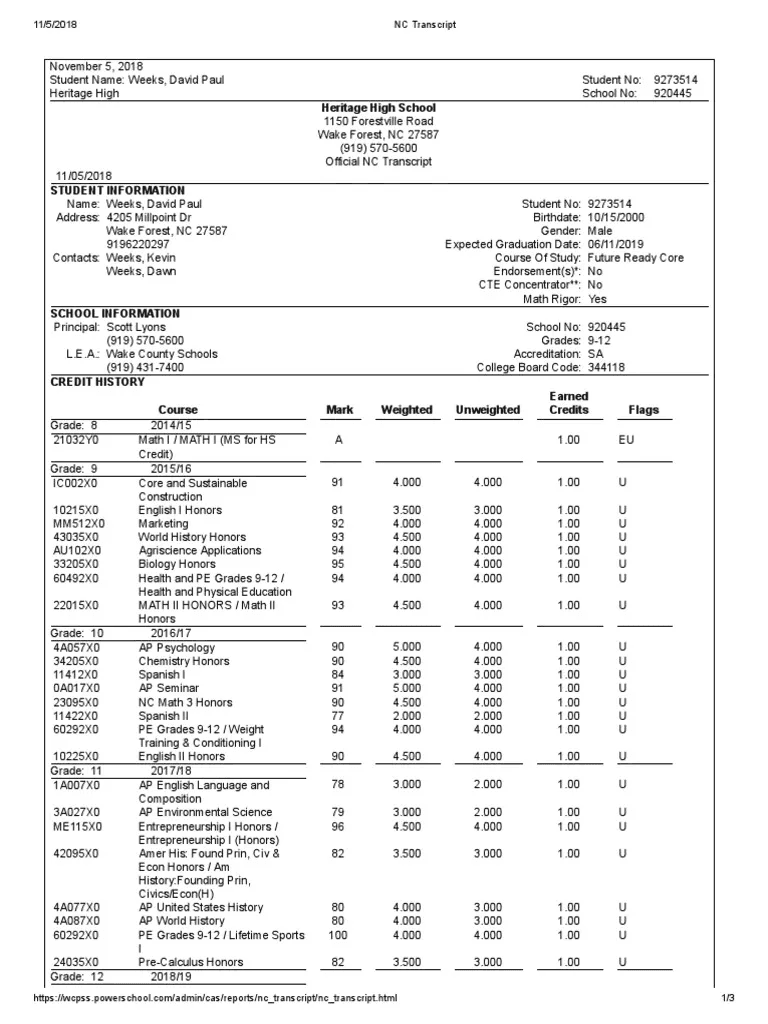
Your transcript is the single component reviewers spend the most time with. Wake Forest weighs curriculum rigor alongside raw GPA, meaning a 3.85 in AP and IB courses reads differently than a 4.0 in standard coursework. Grade trends matter too: a junior-year surge after a soft sophomore year tells a story a flat transcript cannot. This is the one component you cannot revise after submission, making course selection in 9th and 10th grade a genuine admissions decision.
4. Counselor Recommendation Letter — The Institutional Voice on Your Behalf
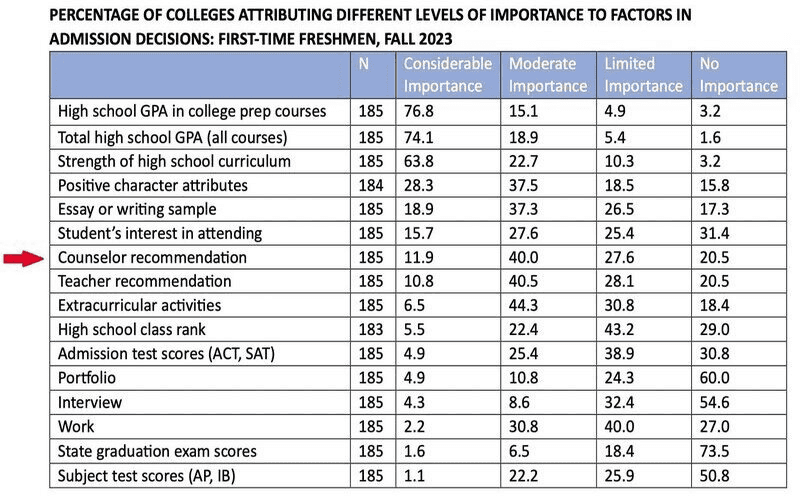
The counselor letter is Wake Forest's institutional check on everything else in your file. It contextualizes your transcript within your school's grading culture and speaks to character in ways no other component can. Kollegio's Recommendation Letter Co-pilot helps students approach these conversations strategically: understanding what information to share with their counselor, how to frame their story, and how to make the counselor's job easier so the resulting letter reflects the student's full context rather than a generic paragraph. The Co-pilot coaches the student through the process; it does not draft letters on their behalf.
For families monitoring the full picture, the Wake Forest first-year checklist on the admissions site is the authoritative reference for what is required and when, and Kollegio's Plan Applications feature maps those deadlines directly into the student's timeline so nothing is missed.
One honest note: if you are working through the transfer process, applying to graduate or professional programs, or looking for a tool that will draft application materials for you rather than coach you through building them yourself, Kollegio is not the right fit. It is built specifically for high school students navigating US undergraduate admissions who want to strengthen their own work, not outsource it.
5. Two Teacher Recommendations — Subject-Matter Credibility from the Classroom
Wake Forest requires two teacher recommendations, ideally from core academic subject instructors who can speak to your intellectual curiosity and classroom engagement. Choosing teachers who know you well in subjects aligned with your intended major adds strategic value. The tradeoff: a glowing but generic letter from a beloved teacher who doesn't know your work deeply is far less effective than a specific, anecdote-rich letter from a more demanding instructor.
6. Wake Forest Supplemental Essays — Where Fit and Voice Are Proven

Wake Forest's supplemental essay prompts are designed to assess genuine fit with the university's Pro Humanitate ethos and community values. These essays go beyond restating your resume; admissions readers want to see specific knowledge of Wake Forest programs, faculty, and culture. The key tradeoff: vague or templated responses that could apply to any school are immediately transparent and actively hurt your candidacy in a competitive applicant pool.
7. Extracurricular Activities and Leadership Record — Depth Over Breadth
Image: Wake Forest SAT Scores — extracurricular activities and leadership record
Wake Forest values students who will contribute meaningfully to campus life, and the activities section of your application is where that potential is assessed. Admissions officers favor sustained commitment and leadership in a few areas over a laundry list of shallow involvements. With over 200 student organizations on campus, Wake Forest expects incoming students to be ready to engage. The tradeoff: applicants without formal leadership titles must frame impact and initiative in other compelling ways.
Related Reading
- NC State SAT Scores
- Auburn SAT Scores
- Columbia SAT Scores
- Ivy League SAT Scores
- Carnegie Mellon SAT Scores
- Tufts SAT Scores
- UC Berkeley SAT Scores
- UNC SAT Scores
- University of Michigan SAT Scores
- UConn SAT Scores
- Good ACT and SAT Scores
Next steps
If your college list is built around a single published SAT average, the path forward starts with understanding what that average actually describes. Wake Forest's widely-cited 1470 figure is drawn almost entirely from the 22% of enrolled students who submitted scores at all, meaning it statistically misrepresents what a typical admitted student looks like. Most applicants are comparing their score to a number that reflects a small minority of the class. Start with our AI college counselor.
That misread compounds in two directions. A student with a 1400 SAT and a rigorous AP course load is, by Wake Forest's own holistic criteria, a stronger academic candidate than a student with a 1500 and a standard-level transcript, yet the score-obsessed framing of the published average causes the stronger student to self-select out. At the same time, Wake Forest's record-low 18% acceptance rate on more than 21,000 applications means that clearing the SAT ceiling does not make admission likely. The score range sets a floor for consideration, not a finish line. Together, those two realities point to the same next step: getting a competitiveness read built around your full profile, not a single percentile comparison.
For a deeper look at how holistic profile factors interact with score ranges at selective schools, the AI college counselor at Kollegio is worth exploring as a starting point.
Frequently Asked Questions
What is Wake Forest's ACT score range, and does the school superscore?
Wake Forest's middle 50% ACT range for the Class of 2029 is 32 to 34. The school does superscore the ACT, meaning it pulls your best English, Math, Reading, and Science scores from across all test dates and combines them, so your effective competitive composite is often higher than any single sitting suggests.
Can I realistically get into Wake Forest with a 1400 SAT?
Yes, a 1400 places you just below Wake Forest's 25th percentile of 1410, which means you are in the pool, not outside it; admitted students exist at both ends of the range and beyond them because Wake Forest uses holistic review. A demanding course load, strong essays, and meaningful extracurricular depth can present a more competitive profile than a higher score paired with a thinner record outside the classroom.
Should I submit my SAT or ACT score if Wake Forest is test-optional?
It depends on where your score falls relative to Wake Forest's middle-50% SAT band of 1410 to 1520. A score above 1520 is a genuine asset worth submitting; a score below 1410 is generally a liability and withholding it protects your file; a score within the band is genuinely neutral, and the right call hinges on how strong the rest of your profile — GPA, rigor, essays, and activities — is on its own.
How long has Wake Forest been test-optional, and is the policy real or just on paper?
Wake Forest adopted its test-optional policy in May 2008, nearly two decades before the COVID-19 pandemic pushed most schools into temporary test-optional windows. The policy has real teeth: only approximately 22% of enrolled students in the Class of 2029 submitted SAT scores, meaning roughly 78% of the admitted class was evaluated with no standardized test score on file.
How does Wake Forest's admissions difficulty compare to peer schools like Vanderbilt or Georgetown?
Wake Forest sits firmly in the highly selective tier, meaningfully harder to get into than many Southern liberal arts peers, though not as difficult as Vanderbilt or Georgetown. The school received nearly 20,000 applications for the Class of 2029, a new record pool, and admitted a highly selective share of that group.