STEM (Science, Technology, Engineering, and Math) is where some of the coolest innovations are happening, but there's a serious gender imbalance that needs fixing. Data shows that women make up only about 29.2% of the STEM workforce. That's a problem, not just for women missing out on amazing careers, but for all of us missing out on diverse perspectives.
Stop wondering.
Start matching.


Think about it: when only one type of person designs the tech we all use, we get products that work great for that one type of person. More women in STEM means more inclusive innovation, better problem-solving, and honestly, just cooler stuff getting made.
The good news? Colleges across the U.S. are stepping up their game to support women entering these fields. Choosing the right school can literally transform your experience from "lone girl in the lab" to "part of a powerful community of women scientists and innovators." In this article, I will explain what makes a college great for women and talk about the top US colleges for women in STEM.
What Makes a College Great for Women in STEM?
Not all STEM programs are created equal when it comes to supporting women. The best colleges go beyond just having good science and tech programs—they create environments where women can truly thrive.
Look for schools with:
- Female professors who can serve as mentors and role models (seeing someone who looks like you in positions you aspire to is huge!)
- Active women-in-STEM organizations where you can find your people
- Research opportunities specifically recruiting women participants
- Scholarships targeting women in underrepresented fields
- Programming that addresses the unique challenges women face
These factors create a totally different vibe than just being one of three girls in a lecture hall of 200. The right environment doesn't just teach you equations—it builds your confidence, connects you with mentors, and helps you see yourself as belonging in these spaces.
Challenges Women Still Face in STEM and How the Right College Can Help
Even at the best schools, you might encounter some frustrating situations. There's still implicit bias in classrooms (like when a professor automatically assumes the guys know more), fewer role models who look like you, and sometimes that isolating feeling of being the only woman in the room.
But here's where choosing the right college makes all the difference. The best schools don't pretend these issues don't exist—they actively work to address them. They create communities where you can discuss these challenges, connect with mentors who've navigated them successfully, and develop the confidence to push through barriers.
College is where you'll build the networks and identity that will carry you through your entire career. The friendships you make with other women in your program might just become your future business partners or the colleagues who recommend you for your dream job ten years from now.
10 Best U.S. Colleges Supporting Women in STEM
MIT (Massachusetts Institute of Technology) – Cambridge, MA
The OG tech powerhouse now has women making up nearly half of its undergraduate population, a massive shift from just decades ago. Their Women's Technology Program brings high school girls to campus for intensive engineering and computer science experiences. Plus, their Women in STEM mentorship programs connect you with both peers and industry professionals. When MIT puts its resources behind something, amazing things happen.
Harvey Mudd College – Claremont, CA
This small but mighty STEM-focused college has one of the highest percentages of women engineering students in the nation. They completely revamped their computer science program to be more inclusive and saw female CS majors skyrocket. Their supportive community and hands-on approach make this a standout choice for women who want to dive deep into technical fields.
Stanford University – Stanford, CA
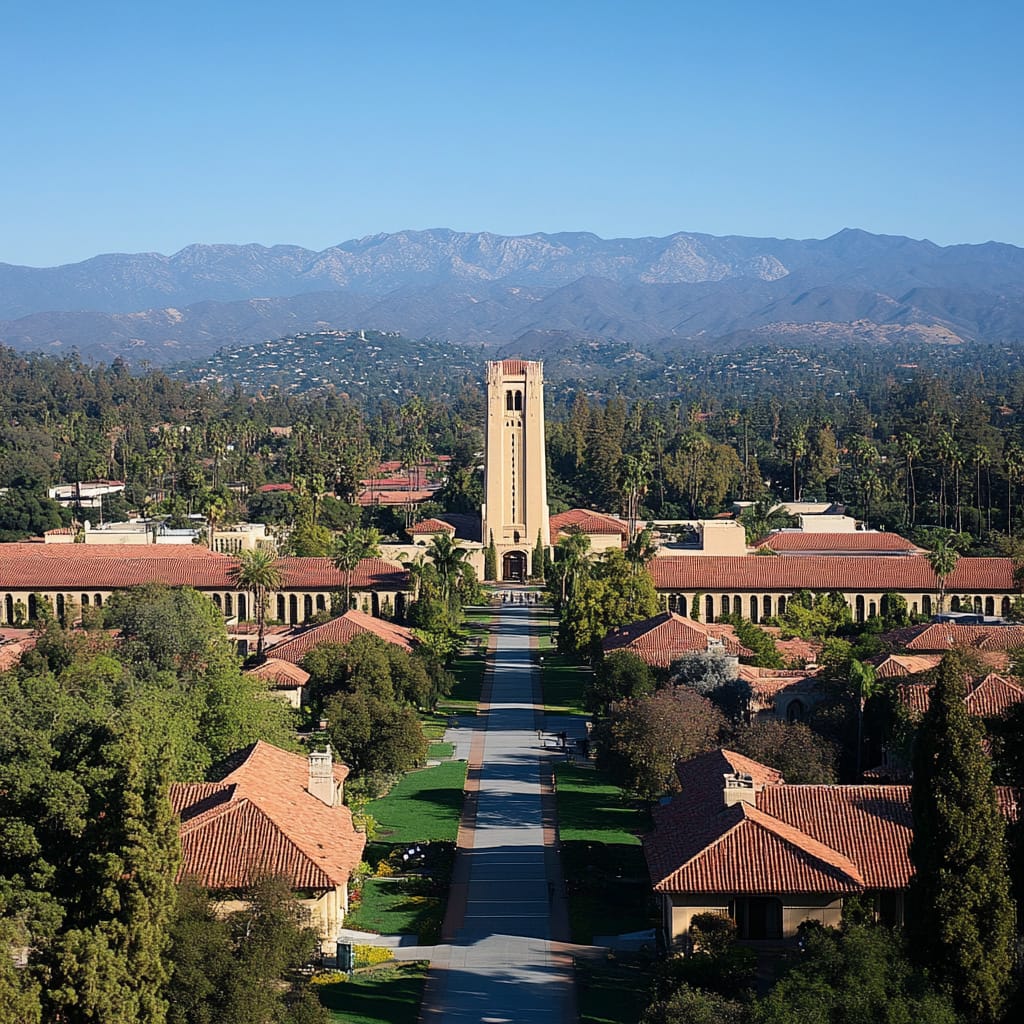
Located in the heart of Silicon Valley, Stanford is one of the top colleges in California that combines academic excellence with real connections to the tech industry. Their Women in STEM speaker series brings in legends of the field to inspire the next generation. The Stanford Women in Computer Science group hosts hackathons, mentorship programs, and social events that create a powerful community.
Smith College – Northampton, MA
As a women's college with exceptional STEM programs, Smith creates a unique environment where women lead in every lab, every research project, and every student organization. Their Picker Engineering Program was the first engineering program at a women's college, and their Science Center offers funded research fellowships specifically for undergrads. Smith graduates enter the workforce with unshakeable confidence in their abilities.
Georgia Institute of Technology – Atlanta, GA
Georgia Tech has made incredible strides in supporting women in STEM through programs like Women in Engineering (WIE) and its vibrant chapter of the Society of Women Engineers. It’s also one of the top colleges in Georgia. Their peer mentoring system pairs first-years with upperclassmen who can show them the ropes. Tech's co-op program lets you alternate semesters of study with paid industry work—giving you real-world experience before you even graduate.
Carnegie Mellon University – Pittsburgh, PA
CMU has literally transformed the gender balance in computer science, going from single-digit female enrollment to over 50% women in some computing programs. Their Women@SCS (School of Computer Science) organization creates leadership opportunities, outreach programs, and a supportive community. Their Center for Diversity and Inclusion in STEM works to make every student feel they belong in these challenging fields.
University of California, Berkeley – Berkeley, CA
Berkeley combines world-class research with a strong culture of inclusion through organizations like Berkeley Women in Science and Engineering (BWISE). Students get hands-on research experience starting freshman year and can join programs like Girls Who Code to help mentor the next generation. Berkeley's Bay Area location also puts you at the doorstep of countless tech opportunities.
Barnard College – New York, NY
This women's liberal arts college has a unique partnership with Columbia University, giving students access to an Ivy League engineering program while maintaining a home base in a women-centered community. The Barnard Computational Science Center supports students across disciplines who want to build technical skills. Their NYC location means internships at major tech and science organizations are just a subway ride away.
University of Michigan – Ann Arbor, MI
Michigan's Women in Science and Engineering Residential Program (WISE RP) creates a living-learning community where women in STEM fields live, study, and collaborate together. This built-in support system makes the transition to college smoother and creates bonds that last throughout your academic career. Michigan's extensive alumni network also means mentorship opportunities with women who've already succeeded in your field.
Caltech (California Institute of Technology) – Pasadena, CA
Though small in size, Caltech's impact on science is enormous. Their PRISM program supports first-generation students, women, and minorities in science fields through mentorship and community. The Caltech Women's Club has over a century of history supporting women at the institution. The school's small size means you'll have direct access to world-class researchers and a tight-knit community of fellow science enthusiasts.
Which Schools Actually Graduate the Most Women in STEM? (The Data Might Surprise You)
Picking a prestigious name is not the same as picking the school that will actually graduate you in a STEM field. When you look at outcome data instead of rankings, the picture shifts in ways most students never see during the college search.
School Type Matters More Than Brand Name
Institutional culture, support structures, and national policy environment are primary drivers of female STEM graduation rates — not simply whether a school carries a prestigious label. A striking data point from outside the U.S. illustrates this clearly: 42.6% of STEM graduates in India are women, according to EY Careers India — a figure that dwarfs the roughly 22% of U.S. engineering degrees awarded to women. That gap is not explained by Indian schools being more selective or better resourced. It reflects how much systemic factors, from classroom culture to economic incentives, shape who actually finishes a STEM degree.
Women's Colleges vs. Large Research Universities: What the Numbers Show
Women's colleges like Smith and Barnard — both on the list above — consistently produce above-average shares of female STEM graduates relative to their size. That is not a coincidence. Smaller class sizes, faculty mentorship ratios designed around a single-gender student body, and a campus culture where women occupy every leadership role in science clubs and research labs remove many of the subtle friction points that cause women at co-ed institutions to switch out of STEM majors before graduation.
Large research universities such as MIT, Georgia Tech, and UC Berkeley graduate the highest raw numbers of women in STEM annually, but their overall female STEM enrollment percentages are often lower than those at women's colleges. Neither school type is objectively better — the right fit depends on whether a student thrives in a smaller, mission-focused environment or wants access to billion-dollar research infrastructure. That is precisely the kind of nuanced profile-to-school matching that Kollegio AI's College Finder is built to surface, using thousands of data points so you see schools that align with how you actually learn and what you want from a STEM program.
The Takeaway: Look Beyond the Rankings Table
A school ranked in the top 10 nationally may still have a campus climate where women in STEM feel isolated or underrepresented at the faculty level. Before committing to any school on this list, ask specifically about female faculty representation in your intended department, undergraduate research participation rates for women, and retention rates from freshman year to graduation in STEM majors. Those numbers tell you more about your likely outcome than a U.S. News ranking ever will.
What Can You Actually Earn? STEM Career Outcomes and Salary Data for Women
Understanding which schools support women in STEM is only half the question. The other half is what a STEM degree actually does for your earnings and financial future — because not all STEM fields pay the same, and the field you choose matters as much as the school you attend.
STEM Raises Earnings — But the Field You Choose Is the Real Variable
Research consistently shows that women who earn STEM degrees have better earnings outcomes than women who do not. But treating STEM as one earnings category is a mistake. Peer-reviewed research published in Studies in Higher Education found that gender pay gaps among STEM graduates vary significantly by specific field of study, with engineering and computer science graduates facing a different earnings and loan-repayment trajectory than biological science graduates. In short, a biology degree and a computer engineering degree are both STEM — but they do not produce the same starting salary.
A Residual Pay Gap Persists Even Within the Same Field
Even after controlling for field of study, research finds a residual gender pay gap for female STEM graduates, meaning a STEM degree alone does not fully close the earnings difference between men and women with identical majors. This is not a reason to avoid STEM — it is a reason to go in with clear eyes and choose a school with strong alumni networks, career placement programs, and mentorship pipelines that actively work to close that gap. The colleges highlighted earlier in this post were evaluated in part on exactly those support structures.
How to Factor Earnings Into Your College List
When you are building your college list, factor in each school's reported median earnings for graduates in your intended STEM major, not just the school's overall salary data. Kollegio AI's personalized college recommendations pull from thousands of data points — including program-level outcomes — so you can compare schools based on your specific academic profile and intended field, not just a school-wide average that may not reflect your situation at all.
Scholarships and Resources Every STEM-Minded Girl Should Know
Don't wait until senior year to explore financial support options! Check out these game-changing opportunities:
- Society of Women Engineers (SWE) Scholarships: Ranging from $1,000 to $15,000 for women pursuing engineering and technology degrees
- Google Women Techmakers Scholarship: Provides funding and mentorship for women in computer science
- AAUW (American Association of University Women) fellowships: Supporting women in a variety of STEM fields
- NASA Internships: Look into their specialized programs for women and minorities
- GirlsWhoCode Summer Immersion Program: Perfect pre-college tech experience
Many of the colleges listed above also offer their own scholarships specifically for women entering STEM fields. Always reach out to admissions offices to ask about these opportunities!
Conclusion
Choosing the right college is about more than just picking a name-brand school—it's about finding a place where you can thrive, build confidence, and develop the skills that will launch your career. The gender gap in STEM isn't going to close itself—it's going to take brilliant, determined young women like you to change the equation.
Yes, there will be challenges. Yes, you might sometimes be the only woman in the room. But with the right support system and education behind you, you'll be equipped to break through barriers and maybe even shatter a glass ceiling or two.
Start exploring these programs now. Reach out to current students, especially women in your field of interest. Visit campuses when you can and ask specific questions about how they support women in STEM.
If you're feeling overwhelmed by all the options, platforms like Kollegio can help match your interests and goals with schools that might be the perfect fit. Your STEM journey is just beginning, and the world needs your unique perspective and talent. The future is waiting for you to code it, design it, or engineer it into something amazing.