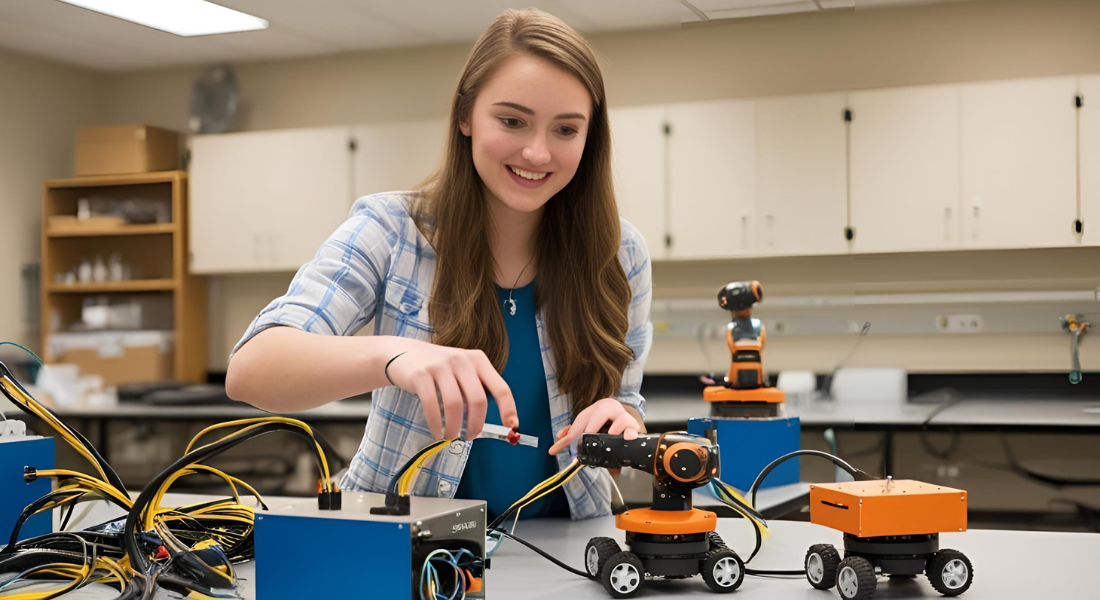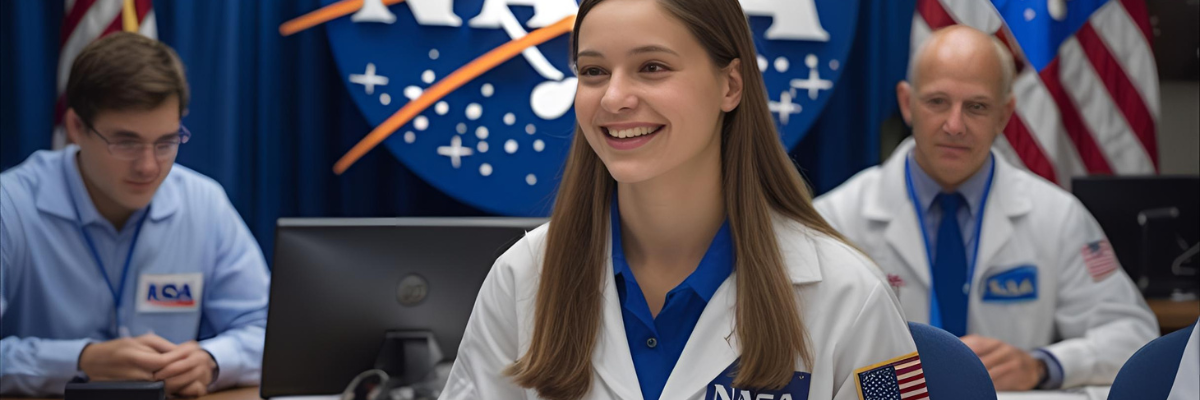
Do you think internships are just for college students? Nope. In 2025, high school seniors can get real technical roles in places such as federal labs or major research centers. If you're pursuing engineering, computer science, biotech, environmental science, or any area in STEM, then these opportunities can transform your college application. And with Kollegio, you can track experiences, refine your essay, and enhance your Activities section, making sure your college application is in the best shape. Ready to see how deep your passion can go before you're even in college?
Stop wondering.
Start matching.


Here are top 10 Internships for high school seniors in 2025:
1. NASA OSTEM Internships
- NASA OSTEM internship is for 8–10 weeks at NASA centers all across the US.
- Interns working on real projects in aerospace, robotics, environmental science, or mission communications with the guidance of professional mentors.
- This is open to U.S. students aged 16+ that have a 3.0+ GPA.
- The deadline for Summer 2025 deadline is February 28.
2. Science & Engineering Apprenticeship Program (SEAP)
- SEAP is a paid 8 week program in Navy R&D labs focusing on cybersecurity, robotics, materials science, and more.
- Open to U.S. students that are aged 16+.
- First year interns earn $4,000 and returning interns earn $4,500.
- Applications open November 1st.
3. Idaho National Laboratory High School Internship
- Idaho National Laboratory High School Internship is a paid summer program that is 6–8 weeks at DOE’s nuclear energy and cybersecurity research hub.
- Interns work on real world projects under INL scientists.
- This is open to U.S. citizens/permanent residents, 16+ with a 3.0+ GPA.
- The application deadline is February 28.
4. NSA High School Work Study Program
- NSA High School Work Study Program is a part-time or summer internship in technical fields at NSA in different areas such as computer science, engineering, and graphics.
- Open to U.S. juniors and seniors age 16+.
- This covers pay and security clearance.
5. Princeton Plasma Physics Lab High School Summer Internship
- Princeton Plasma Physics Lab High School Summer Internship is from June 30 to August 1, 2025 involving work on plasma physics, fusion energy, or computational modeling in the U.S. DOE national lab.
- Interns are high school seniors, 16+, U.S. citizens or residents, and work full time under staff scientists.
6. Johns Hopkins APL ASPIRE Internship
- ASPIRE is an unpaid 10 week internship at the Applied Physics Laboratory working with cybersecurity, systems engineering, and defense tech.
- This is open to high school juniors and seniors that are at least 15 years old by June 1st and have a minimum 2.8 GPA.
7. MITRE High School R&D Internship
- There are paid internships with projects in AI, cybersecurity, biotech, and systems analysis under professional mentorship.
- These are open to motivated high school seniors.
8. NASA GISS Climate Research Internship
- In this internship, interns work on Earth science, climate modeling, and data analysis at the Goddard Institute for Space Studies.
- This opportunity is open to U.S. juniors and seniors with a 3.0+ GPA.
9. AFRL High School Internship
- AFRL is a paid eight week summer internship at the Air Force Research Laboratory that includes aerospace, avionics, or materials research under scientist mentorship.
- Open to U.S. juniors and seniors.
10. Fred Hutch SHIP High School Internship
- An eight week paid internship that is designed for students that are underrepresented in biomedical sciences.
- This internship focused on cancer biology, immunotherapy, and data science.
- Open to rising seniors.
- It includes lab training, seminars, presentations, and more.
Eligibility and Requirements: Who Can Actually Apply
Before you spend hours drafting an application, make sure you actually qualify. Most competitive STEM internships for high school students share a core set of eligibility filters, and checking them upfront will save you significant time. The requirements below reflect the patterns found across the ten programs listed in this post.
Grade Level, Age, and Enrollment Status
The majority of research-track and government-sponsored STEM internships are designed for rising juniors and seniors, typically students who are 16 to 18 years old and currently enrolled in high school. A handful of programs, including some consortium-based options, accept students as young as 14, but those tend to be introductory rather than research-intensive placements. You must be actively enrolled in a U.S. high school at the time of application; gap-year students or recent graduates are generally ineligible. Some programs, such as city-level consortium networks, also carry a residency requirement, for example, the NYC Science Research Mentoring Consortium (SRMC) is open to New York City students specifically.
GPA, Citizenship, and Subject Prerequisites
Federal and national-lab programs, including SEAP, NSA, and AFRL, almost universally require U.S. citizenship or permanent residency, and many involve a security clearance component. A competitive GPA in science or math coursework (commonly 3.0 or higher, though many programs are more selective in practice) is a standard filter. Some programs ask for teacher or counselor recommendations, a brief personal statement, and evidence of prior coursework in biology, chemistry, physics, or computer science. Reviewing each program's individual portal before you start any materials is non-negotiable: as one high school internship guide notes, eligibility often specifies grade level, age, residency, and school enrollment status simultaneously.
Pay and Program Format
Many STEM internships are paid. The NYC SRMC, for instance, explicitly states that students get paid for their time while earning real-world experience, a detail that surprises many applicants who assume high school research placements are volunteer-only. Program formats range from six-week summer intensives to year-long part-time placements running alongside the school year. Clarifying pay status, hours per week, and whether the experience is in-person, hybrid, or remote is part of the eligibility check, not an afterthought.
Why These Internships Matter
Real Projects are Real Skills
These roles involve actual engineering, research, and development, not shadowing or fluff. You're doing work that contributes to real teams.
Extended Engagement Shows Commitment
Internships range from six weeks to a full summer, showing colleges your ability to stay deep and stick with challenges.
Mentorship Builds Strong Recommendations
A recommendation from a NASA engineer, NSA analyst, or DOE scientist carries more weight than a regular school reference.
Story Worthy Experiences
These roles create amazing stories that are perfect for your essays, interviews, and resume.
How to Find and Apply for STEM Internships as a High Schooler
The ten programs in this list are strong starting points, but they are not the full picture. Knowing where else to look and how to put together a competitive application will open more doors than any single list can. Here is a practical process you can follow right now.
Where to Look Beyond Individual Company Pages
Searching individual employer career pages is one of the least efficient ways to find STEM internships at the high school level. Most placements are channeled through institutional portals, consortium networks, and program directories that aggregate multiple opportunities in one place. City-level consortium networks are a strong example: the NYC Science Research Mentoring Consortium spans multiple institutions across New York City and lists opportunities that would never appear on a standard job board. Federal agencies publish their student programs through USAJobs and agency-specific portals (NASA, NSF, DOE), while university research offices often maintain their own high school outreach pages. Bookmark three or four of these portals and check them each fall — most competitive programs open applications between September and January for summer placements.
What a Strong Application Actually Includes
Most STEM internship applications require a personal statement or short essay, a transcript, two letters of recommendation (at least one from a science or math teacher), and a resume that highlights relevant coursework, projects, and extracurricular activities. One Reddit user who went through this process noted that Kollegio AI gives the extra bonus of using AI to help you incorporate your extracurriculars into your essay — a reminder that the activities you list and how you frame them in writing are two separate skills worth developing before application season. Presenting your involvement in a compelling, organized way matters as much as the activities themselves.
Turning Your Application Materials Into College App Assets
The work you put into an internship application — articulating your interests, organizing your activities, and requesting recommendation letters — directly overlaps with your college application. Kollegio's Activities Showcase feature lets you input and highlight your extracurricular involvement so colleges can evaluate you holistically, while the AI Essay Planner provides step-by-step guidance to help you write essays that sound authentic and stand out. Using those tools while you are actively doing the internship means you document the experience as it happens rather than trying to reconstruct it senior year under deadline pressure.
Make it a College App Move
Here's how to use these experiences to turn your college application into gold with Kollegio:
- Activities Section: Be specific, “NASA OSTEM intern; designed Mars rover algorithm using Python; presented findings to center researchers.”
- Essays: Pick a moment of failure or challenge from your internship and show how you tackled it, like debugging a robotic script or analyzing data.
- Recommendations: Ask your mentor for a letter that highlights your drive and how you contributed.
- School Match: Kollegio can suggest colleges strong in your internship field such as aerospace or cybersecurity.
- Stay Organized: Track deadlines, drafts, and submissions for college applications in one place.
Conclusion
These 10 internships aren’t just filler for your resume, they're your ticket to valued STEM work before college. You'll gain skills, connections, and stories that show you’re not just interested in STEM. Pair these with a thoughtful college application with help from Kollegio, written in essays, and backed up by strong recommendations, and you’ve got a standout application. 2025 could be the time you change your future, everything is in your hands.
By Uzair Nasir