“Why should I even do a computer science internship? I am just a high school student?”
The above is a question that many students ask, and if you're a student asking this question, you're not alone. Why should high schoolers take time out of their lives to do free work for big companies/organizations?
Stop wondering.
Start matching.


The answer is straightforward, and even more logical
Think about it this way: high schoolers are often made to do housework by their parents, not because their parents want free labor but because they want to teach and instill in them skills that will help them in their own lives when they become adults.
Internships offer a similar experience, although in a more professional setting, for the same purpose: the purpose of teaching students valuable skills that will greatly help them in their careers.
This professional development is a reason why internships are so coveted by college admissions officers; these admissions officers love to see students who have taken the initiative of developing their careers, especially at such a young age.
Computer Science internships, more specifically, allow students to get real-world experience early, giving them an incredible head start. Whether they are coding a simple app or working on AI models, internships not only teach professional skills but also give students exposure and confidence, and arguably most importantly, a competitive edge for high school students.
In this blog, we have handpicked 10 standout computer science internship opportunities for high schoolers in 2025. These options range to hit most of the niches of computer science, so don’t feel disappointed if you can’t find something that interests you within the first couple options. Read until the end for a bonus tip that will also save your college application, and it even applies to those who don’t plan on going into computer science
Selection Criteria
All the internships listed here:
- Accept High School students (Grades 9-12)
- Focus on computer science, coding, AI, or data science
- Are scheduled for summer 2025 or accept rolling applications
- Include hands-on experience, mentorship, or project work
- All programs can be easily found on the internet, visit their website to learn more about them and whether they are a good fit for you.
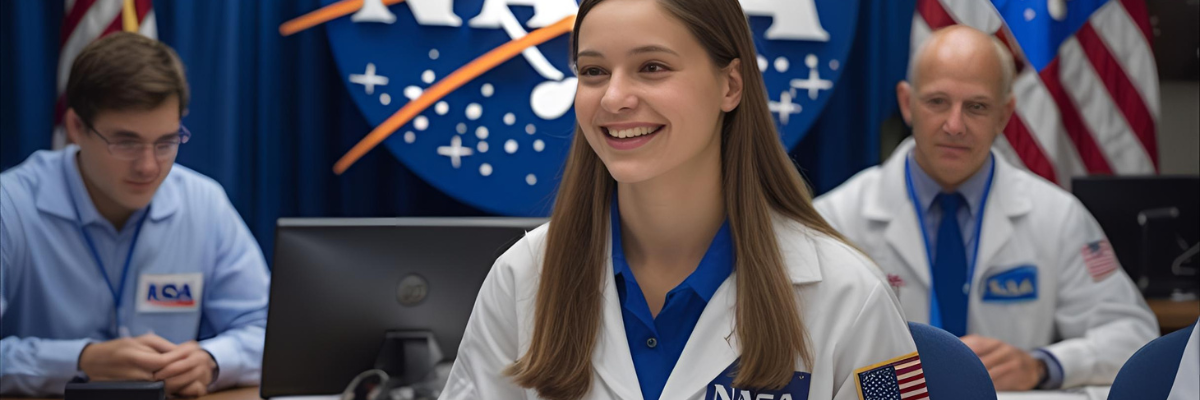
NASA High School Internship Program
Location: Various NASA Centers (U.S.)
Overview: A prestigious and highly respected paid opportunity to work alongside scientists at NASA. Interns contribute to real-world projects in aerospace, robotics, data science, and much more.
Eligibility: U.S. citizens in high school (age 16+), GPA 3.0+, recommendation required.
Google Computer Science Summer Institute (CSSI)
Location: Virtual
Overview: A 3-week summer program designed for rising high school seniors, favoring underrepresented backgrounds, in computer science. The program aims to inspire, educate, and facilitate the careers of high school students looking to go into computer science.
Eligibility: Must be a Rising High School Senior.
Ladder Internships – Tech Track
Location: Remote
Overview: A startup-focused internship program that aligns high schoolers with real companies in the AI space. Students get the opportunity to work for startups on impactful projects with personalized mentorship.
Eligibility: High school students aged 14 - 18
NYU CS4CS (Computer Science for Cyber Security)
Location: NYU Tandon School of Engineering, New York (in-person)
Overview: A free, three-week program that focuses on the world of cybersecurity and CS fundamentals.
Eligibility: High school students in NYC; priority for women and minority students.
Girls Who Code Summer Immersion Program
Location: Virtual
Overview: A two-week beginner-friendly virtual program for high school students that introduces them to the world of computer science and real computer science-related careers.
Eligibility: High school girls and non-binary students (ages 14–18)
NIST High School Internship Program
Location: Maryland, Colorado, and other NIST labs
Overview: Work on federal hands-on research projects in cybersecurity, AI, and software engineering.
Eligibility: U.S. citizens currently enrolled in high school; must be 16 years or older
Boston University RISE Program
Location: Boston, MA (in-person)
Overview: A six-week research internship program in which students work with university staff on active computer science-related research projects
Eligibility: Rising seniors (current juniors) with a strong academic background.
NYU ARISE (Applied Research Innovation in Science and Engineering)
Location: New York (Hybrid)
Overview: A 7-week program that pairs students with NYU graduates in AI, Machine Learning, and more.
Eligibility: NYC students currently in 10th or 11th grade; preference for underrepresented backgrounds.
AFRL Scholars Program (Air Force Research Laboratory)
Location: Multiple US Air Force Research Lab Locations
Overview: Paid full-time summer research internship that allows students to work in cybersecurity, software development, and aerospace computing, giving students tasks similar to those they would face in their career.
Eligibility: High school juniors/seniors who are U.S. citizens.
Palantir Meritocracy Fellowship
Location: Remote
Overview: A 4-month paid internship for students who skip college but have graduated with academic excellence, the internship offers progression opportunities for high achieving interns.
Eligibility: Recent grads (by summer 2025) with top SAT (≥1460) or ACT (≥33) scores.
Paid vs. Unpaid: What to Expect From High School CS Internships
Before you apply to any program on this list, you need to know whether it pays you, because that distinction changes everything about whether you can realistically commit. Competitor roundups like the one at StandOut Connect list programs alongside apprenticeships without ever clarifying which come with a stipend and which do not, leaving students to find out too late.
Which Programs on This List Are Paid?
Among the programs covered above, NASA, NIST, AFRL Scholars, and BU RISE are federally or institutionally funded and typically include stipends or hourly pay. Google CSSI and Palantir's fellowship have historically offered paid formats as well. Girls Who Code's Summer Immersion Program and NYU's programs are often unpaid but may cover program costs, always verify current-year compensation directly on the program's official site before applying, since structures change annually.
When Unpaid Still Makes Sense
An unpaid program is worth considering when it provides structured mentorship, a verifiable credential, or research output, such as a co-authored paper or a project you can demo. The key question is whether the experience gives you a concrete story to tell in your college applications. If it does, the opportunity cost may be justified. If it doesn't, a self-directed project or cold-outreach role (covered below) may serve your application better.
A Note on Apprenticeships vs. Internships
Registered apprenticeships in the U.S. are required to include wage progression under Department of Labor standards, meaning they are paid by definition. Internships carry no such requirement and can be either paid or unpaid. When a resource lists both in the same category without distinguishing them, treat any listed opportunity as unverified for compensation until you confirm it directly with the program.
How to Actually Land a Computer Science Internship as a High Schooler (Cold Outreach Guide)
Acceptance rates for top-tier programs like Google CSSI and MIT Beaver Works can fall below 5–10%, which means the majority of applicants will need a backup plan. Cold outreach — contacting local startups, small tech companies, or university research labs directly — is one of the most underused and highest-yield paths available to high school students who do not get into a structured program. It works, and the evidence is real: one student on Reddit documented cold-emailing their way into a paid CS research internship at $15 per hour in high school.
How to Find the Right Targets
Start local and small. A Series A startup with a five-person engineering team is far more likely to say yes to a motivated high schooler than a Fortune 500 company with a formal recruiting pipeline. Use LinkedIn to search for software engineers or CTOs at companies within 30 miles of your city. University research labs are an equally strong target — most computer science department websites list active faculty research projects, and professors running small teams often welcome extra help. Look for professors whose work overlaps with something you have already built or studied.
Make a short list of 10 to 15 targets before you write a single email. Quality of targeting matters more than volume — a personalized note to 10 well-chosen recipients will outperform a generic message sent to 50.
How to Write a Cold Email That Gets a Response
Keep the email to four short paragraphs: (1) one sentence on who you are and what you can do technically, (2) one sentence showing you have done real homework on their product or research, (3) a specific, low-friction ask — shadowing, a part-time project role, or a 15-minute call — and (4) a link to a GitHub portfolio or a project you have built. Do not ask for a favor in the first email. Ask for a conversation.
Subject lines that reference something specific — a recent product launch, a published paper, or a GitHub repo they maintain — consistently outperform generic subject lines like 'Internship Inquiry.' Specificity signals that you are a serious candidate, not a mass applicant.
How to Use What You Build as an Application Asset
Whether you land a formal role or complete an independent project, what matters for college admissions is how you frame the experience. Admissions readers are evaluating impact, initiative, and what you learned — not just the name of the company. Once you have a project or role to write about, you need to translate it into compelling application content. Kollegio's Activities Showcase feature lets you input and organize your extracurriculars so colleges can evaluate them in full context, and the AI Essay Planner provides step-by-step guidance to help you write about those experiences in a way that sounds like you. As one student noted on Reddit, 'Kollegio AI even gives the extra bonus of using AI to help you incorporate your extracurriculars into your essay.' The tool guides you as a counselor would — it does not write the essay for you.
Your very own “internship”
If these internships and some others feel out of reach, consider working on your own CS project. These projects demonstrate similar skills of career and workforce readiness while allowing you to build a project that tells your story, not work for a company with whom you may not be entirely connected to you.
Bonus Tip
Want to power up your college journey? Try Kollegio’s AI powered College Counselor.
Looking to make the most of your internships when applying to college. Kollegio’s collaborative AI can help you showcase your CS experience with its activity rewriter, helping you truly demonstrate the prowess of your achievements.
Unsure of what college you want to go to? Kollegio’s personalized college matcher allows you to find the perfect college for you, whether you want the prestige of a top university, the beauty of one located far from a city or the bustle of one located in a major city.
Ready to level up your college application?
Combine your experience with the powerful tools of Kollegio AI to make a strategic, stand-out application, without the expensive price tag of a counselor.
Empower your story, streamline your process, and make your CS journey shine.
By Gaurav Hemrajani